
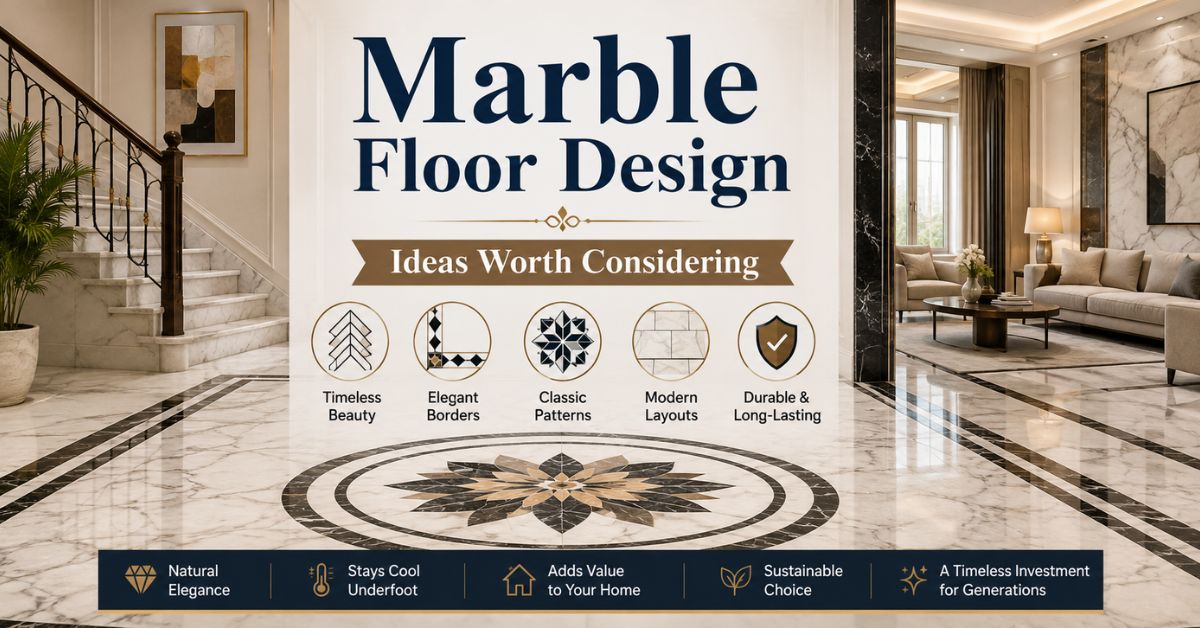
Few flooring materials carry the same lasting appeal as marble, and marble floor design continues to top the wish list for homeowners wanting a genuinely elegant, timeless finish underfoot. The natural veining running through each slab means no two floors ever look completely identical, giving every installation a genuine sense of individuality that manufactured alternatives struggle to replicate. This guide walks through the patterns, borders, and planning decisions that shape strong marble floor design, along with the practical details worth checking before you commit to this material for your own home.
Why Marble Remains a Timeless Flooring Choice
Marble earns its lasting popularity through a rare combination of natural beauty, genuine durability, and the way it ages gracefully rather than looking dated the way trend-driven materials sometimes do. A well-installed marble floor design tends to hold its value and appeal for decades, making it less a passing style choice and more a genuine long-term investment in the home. The material’s natural coolness also suits India’s warmer climate particularly well, since marble stays comfortably cool underfoot even during peak summer months. Beyond these practical benefits, marble carries a certain prestige that few other flooring options achieve, which explains why it remains a consistent choice across both premium residential projects and more modest homes wanting a touch of lasting elegance.
Also Read- SPC Flooring Ideas and Everything You Should Know
Popular Patterns and Layouts Worth Knowing
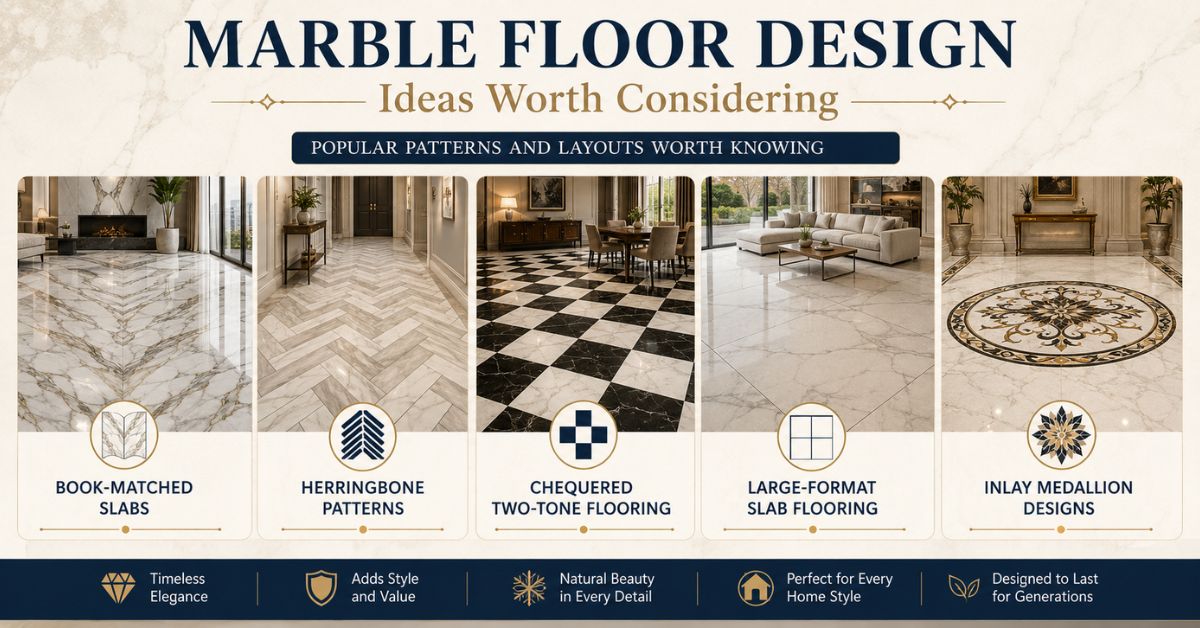
Marble floor design today spans a genuinely wide range of layout approaches, moving well beyond simple single-slab tiling into more considered compositions. Reviewing these options helps clarify which direction might suit your own home and taste.
- Book-matched slabs – adjacent pieces of marble arranged so their veining mirrors symmetrically for a dramatic effect
- Herringbone patterns – rectangular pieces laid in a classic zigzag arrangement, popular for entryways and hallways
- Chequered two-tone flooring – alternating light and dark marble tiles for a bold, classic contrast pattern
- Large-format slab flooring – oversized pieces that minimise visible joints for a seamless, expansive appearance
- Inlay medallion designs – a decorative centrepiece pattern, often used in a formal living or dining area
Choosing between these patterns generally depends on the room’s size and function, since a bold herringbone or medallion pattern suits a spacious entryway well, while a simpler large-format layout often suits bedrooms or more intimate spaces better.
Adding Definition With Border Details
Border floor marble design brings a genuine sense of structure and intentionality to a room, framing the main flooring area much the way a picture frame defines a piece of art. Modern marble floor border design tends to favour clean, simple lines over the heavily ornate borders once common in more traditional interiors, often using a single contrasting marble strip rather than elaborate inlay work. This border treatment works particularly well in larger rooms, since it visually anchors the space and prevents an expansive marble floor from feeling like one undifferentiated surface. Many homeowners also use a border to transition gracefully between rooms with different flooring materials, creating a considered boundary rather than an abrupt material change underfoot.
Also Read- Bedroom Floor Tiles Design Ideas Worth Exploring
Choosing the Right Tone for Your Home
White marble floor design remains one of the most consistently popular choices, since the light tone reflects natural and artificial light beautifully, making rooms feel noticeably brighter and more spacious. Floor marble tiles design in white or near-white tones also pairs easily with almost any wall colour or furniture palette, offering genuine flexibility as decor choices evolve over the years. Darker marble tones, including black, grey, or deep beige, suit homes wanting a more dramatic, formal atmosphere, though these shades show dust and footprints more visibly than lighter alternatives. Many homeowners specifically choose marble floor design for home entryways and living rooms in lighter tones, reserving richer, darker marble for smaller accent areas or bathrooms where the bolder look reads as more intentional.
What’s New in Marble Flooring Design
Latest marble flooring design trends reflect a growing interest in bold veining and natural imperfection over the perfectly uniform, calibrated look once favoured in commercial and residential projects alike. Homeowners increasingly request slabs with pronounced, dramatic veining, treating the marble almost as a piece of natural art rather than a purely functional surface. Matte and honed finishes have also grown in popularity over high-gloss polish, offering a softer, more contemporary appearance alongside genuinely better slip resistance underfoot. Mixed material pairings, combining marble flooring with wood or metal accents in furniture and trim, represent another emerging direction, softening marble’s traditionally formal character for a more relaxed, layered interior style.
Also Read- Floor Colors Guide: Best Shades to Transform Any Room
Choosing Granite Accents Within Marble Layouts
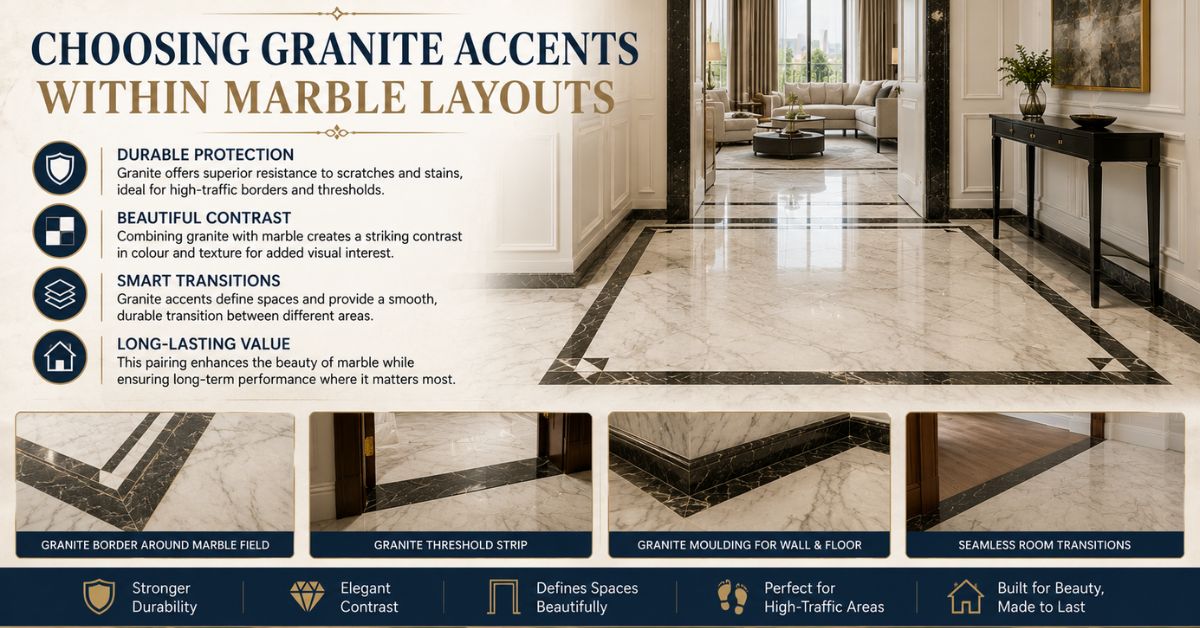
Granite moulding designs in wall panel applications sometimes extend down into the flooring plan too, particularly where homeowners want a durable, high-traffic border around a more delicate marble field. Granite offers stronger resistance to scratching and staining than marble in some cases, making it a practical choice for threshold strips or entryway borders that see the heaviest daily wear. Combining granite accents with a marble floor design creates genuine material contrast, both in colour and texture, adding visual interest without requiring an elaborate inlay pattern. This pairing works particularly well at transition points between rooms, where the added durability of granite protects the marble field from the concentrated wear a doorway threshold typically experiences.
Key Factors to Check Before You Finalise Your Design
Before committing to any particular marble floor design, a handful of practical checks can help you avoid costly mistakes later.
- Slab consistency – source enough marble from a single batch to avoid visible colour or veining mismatches
- Finish and slip resistance – choose honed or matte finishes over high-gloss polish for better grip underfoot
- Sealing requirements – confirm the specific marble type’s porosity and sealing needs before installation
- Subfloor preparation – ensure the base surface is properly levelled, since marble requires a stable foundation
- Room lighting – view slab samples under your home’s actual lighting before finalising a tone
- Installer experience – choose a fabricator with genuine marble installation experience, not general tiling alone
Also Read- Terrazzo Flooring: The Timeless Trend Making a Big Comeback in Modern Homes
Maintenance Tips for Long-Lasting Marble Floors
Even a beautifully installed marble floor design benefits from some basic ongoing care to preserve its finish over many years. Sweep or dust mop regularly to prevent grit from acting as an abrasive underfoot, since this small habit meaningfully extends the polished surface’s lifespan. Reseal marble periodically, generally every one to two years depending on the specific stone’s porosity, to maintain resistance against staining from spills. Avoid acidic cleaners, since these can etch and dull marble’s surface with repeated exposure over time. Address any chips or cracks promptly with professional repair, since small damage left unaddressed tends to worsen under continued daily foot traffic.
Common Mistakes to Avoid in Marble Flooring Selection
Many homeowners choose marble purely from a small showroom sample, without considering how the veining and colour will read across a full room under their home’s actual lighting. Avoid choosing a high-gloss polished finish without weighing slip risk, particularly in households with young children or elderly residents using the space daily. Do not overlook sourcing slabs from a consistent batch, since mismatched veining between sections becomes especially obvious on larger, unbroken floor areas. Skipping proper sealing and maintenance planning is another common misstep, often leading to staining or dulling within just a few years of installation.
Bringing It All Together
Marble floor design brings together natural beauty and genuine durability, making it a flooring choice worth careful research rather than a rushed decision. From selecting the right pattern and border treatment to choosing a tone suited to your home’s lighting and layout, every decision shapes how the finished floor looks and performs for years to come. Taking the time to compare a few slab options, check practical factors like sealing needs and slip resistance, and work with an experienced installer ensures the marble floor design you choose serves your home beautifully for a long time ahead.
Explore Express Builders ongoing residential projects across Noida and Greater Noida West. See the quality and planning behind every home firsthand.
Book a free site visit today with Express Builders. Walk through our ongoing projects and see construction quality up close. Check out floor plans, amenities, and location advantages in person. Meet our team and get your property-related questions answered directly. Schedule a visit at your convenience.
Frequently Asked Questions
1. Is marble flooring suitable for Indian homes?
Yes, marble’s natural coolness suits India’s warmer climate well, and it remains a popular, long-lasting flooring choice across the country.
2. What is the difference between polished and honed marble finishes?
Polished marble has a glossy, reflective surface, while honed marble offers a matte finish with better slip resistance underfoot.
3. How often does a marble floor need resealing?
Most marble floors need resealing every one to two years, though this varies depending on the specific stone’s porosity.
4. Is white marble floor design better than darker tones?
It depends on preference, though white generally reflects more light and shows less visible dust than darker marble tones.
5. Can granite be combined with marble in the same floor design?
Yes, granite accents or borders pair well with marble, adding durability and contrast at high-traffic transition points.
