
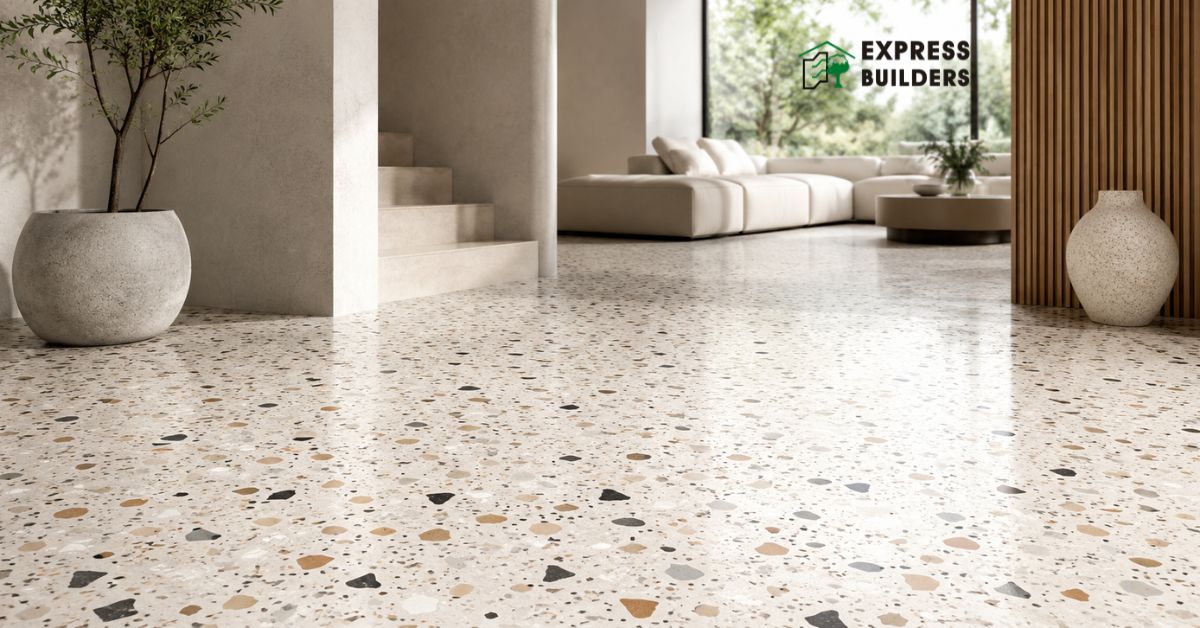
Walk into a stylish café or a newly renovated home today, and you’ll likely spot it. Speckled, polished, and full of character. That’s terrazzo flooring. It once lined the halls of old schools and government buildings. Now it’s back, and this time, it’s showing up in living rooms, kitchens, and bathrooms too.
If you’re planning a renovation or building a new home, terrazzo deserves a serious look. It blends old-world craftsmanship with a fresh, modern feel. This guide breaks down everything you need to know before you decide.
What Exactly Is Terrazzo Flooring?
Terrazzo is a composite flooring material. It combines chips of marble, quartz, granite, or glass with a binding agent. That binder is usually cement or epoxy. Once poured, the mixture is ground down and polished. The result is a smooth, glossy surface with a beautiful speckled pattern.
The technique dates back over 500 years. Venetian craftsmen created it by accident. They reused leftover marble scraps from other projects. Instead of throwing away the chips, they mixed them with clay and pressed them into their own terrace floors. That’s actually where the name comes from.
Today, the process has evolved. Modern terrazzo uses advanced binders and precision grinding tools. The finish looks cleaner and more refined than ever before.
Why Terrazzo Flooring Is Trending Again
Design trends move in cycles, and terrazzo is proof of that. Here’s why homeowners and designers are choosing it again.
It fits minimalist interiors. Terrazzo adds texture without overwhelming a space. It works beautifully with neutral color palettes and clean lines.
It lasts for decades. This flooring resists scratches, stains, and heavy foot traffic. Once installed correctly, it rarely needs replacement.
It offers endless customization. You can choose the aggregate size, color combination, and finish. No two terrazzo floors ever look exactly alike.
It supports sustainable building. Many manufacturers now use recycled glass and stone chips. This reduces waste and lowers the environmental impact of your flooring choice.
It photographs well. Social media has played a real role in its revival. That speckled pattern looks striking in photos, and interior design pages can’t stop sharing it.
Types of Terrazzo Flooring
Not all terrazzo is the same. Picking the right type depends on your space and budget.
Cement-based terrazzo is the traditional option. It uses Portland cement as the binder. This type is thick, heavy, and extremely durable. It works well in high-traffic commercial spaces and outdoor areas.
Epoxy terrazzo uses resin instead of cement. It’s thinner, lighter, and easier to install. Designers love it for the flexibility it offers with colors and patterns. However, it doesn’t hold up well outdoors because sunlight can cause fading.
Precast terrazzo tiles are made off-site and installed like regular tiles. They cost less and install faster than poured terrazzo. The trade-off is a slightly less seamless look compared to a fully poured floor.
How Terrazzo Flooring Is Installed
Installing terrazzo is a detailed, skill-heavy process. It isn’t a weekend DIY project.
First, installers inspect and prepare the subfloor. Any cracks or moisture issues get fixed before work begins. A clean, stable base is essential for long-term durability.
Next, they pour the terrazzo mixture across the surface. Metal or plastic divider strips are often added first. These strips create clean sections and help control cracking as the floor settles.
Once the mixture cures, the real transformation begins. Heavy-duty grinders polish the surface in multiple passes. Each pass uses a finer grit, gradually revealing that signature glossy shine.
Finally, the floor gets sealed. Sealing protects it from stains and moisture. It also enhances the natural color of the aggregate chips.
The entire process can take several days, depending on the size of the space. Patience matters here. Rushing the curing or polishing stage weakens the final result.
How Much Does Terrazzo Flooring Cost?
Cost varies based on the type you choose and the complexity of the design. Poured terrazzo tends to cost more than precast tiles because of the labor involved. Epoxy terrazzo generally costs less than cement-based terrazzo, though it depends on your region and installer.
Custom patterns, intricate borders, and larger aggregate chips also increase the price. If budget is a concern, precast tiles offer a similar look at a more accessible cost.
It’s wise to get quotes from multiple installers before committing. Ask for a breakdown of material and labor costs separately. This helps you understand exactly where your money goes.
Maintaining Your Terrazzo Floor
One of the biggest perks of terrazzo is how easy it is to maintain. Regular sweeping keeps dust and grit from scratching the surface. For deeper cleaning, a damp mop with mild, pH-neutral soap works best.
Avoid harsh acidic cleaners. They can wear down the sealant over time and dull the shine. Resealing every couple of years keeps the floor protected against stains and moisture.
Spills should be wiped up quickly, especially on cement-based terrazzo, since it’s more porous than the epoxy version. With consistent care, a terrazzo floor can stay beautiful for generations.
Is Terrazzo Right for Your Home?
Terrazzo works well in kitchens, bathrooms, hallways, and living rooms. It handles moisture reasonably well, though proper sealing is essential in wet areas.
Keep in mind that terrazzo can feel cold underfoot, especially in winter. Pairing it with underfloor heating solves this problem in colder climates. It can also be slightly slippery when wet, so consider textured finishes for bathrooms or entryways.
If you value durability, timeless design, and low long-term maintenance, terrazzo is worth the investment. It costs more upfront than standard tile or vinyl, but its lifespan and visual appeal often justify the price.
Ready to bring timeless style and lasting durability into your space? Explore trusted flooring options, compare designs, and connect with experienced professionals who can guide you through every step of your renovation journey. Start planning your dream floor today and turn your vision into reality.
Looking for verified 1, 2 and 3BHK apartments for sale in Greater Noida? Get in touch with our team to schedule a personalised site visit and if you’re also considering more space, take a look at our 3 BHK flats in Greater Noida buying guide.
Frequently Asked Questions
What is terrazzo flooring?
Terrazzo flooring is a composite material made from marble, quartz, granite, or glass chips mixed with cement or epoxy binder. Once poured, it’s ground and polished into a smooth, speckled, glossy surface used in homes and commercial spaces.
How much does terrazzo flooring cost?
Costs vary by type and design complexity. Poured terrazzo costs more due to labor-intensive installation, while precast tiles are more budget-friendly. Custom patterns and larger aggregate chips also raise the overall price.
How to clean terrazzo floors?
Sweep regularly to remove grit, then mop with a damp cloth and mild, pH-neutral soap. Avoid acidic or abrasive cleaners, as they damage the sealant. Reseal every two to three years for lasting protection.
How to do terrazzo flooring?
Prepare and clean the subfloor first, then pour the terrazzo mixture, often with divider strips. Let it cure fully, grind it in multiple stages for a smooth finish, and seal the surface to protect it.
How to make a terrazzo floor?
Mix marble, glass, or stone chips with a cement or epoxy binder, then pour the mixture over a prepared subfloor. After curing, grind the surface in progressive stages and apply a protective sealant for shine and durability.
