
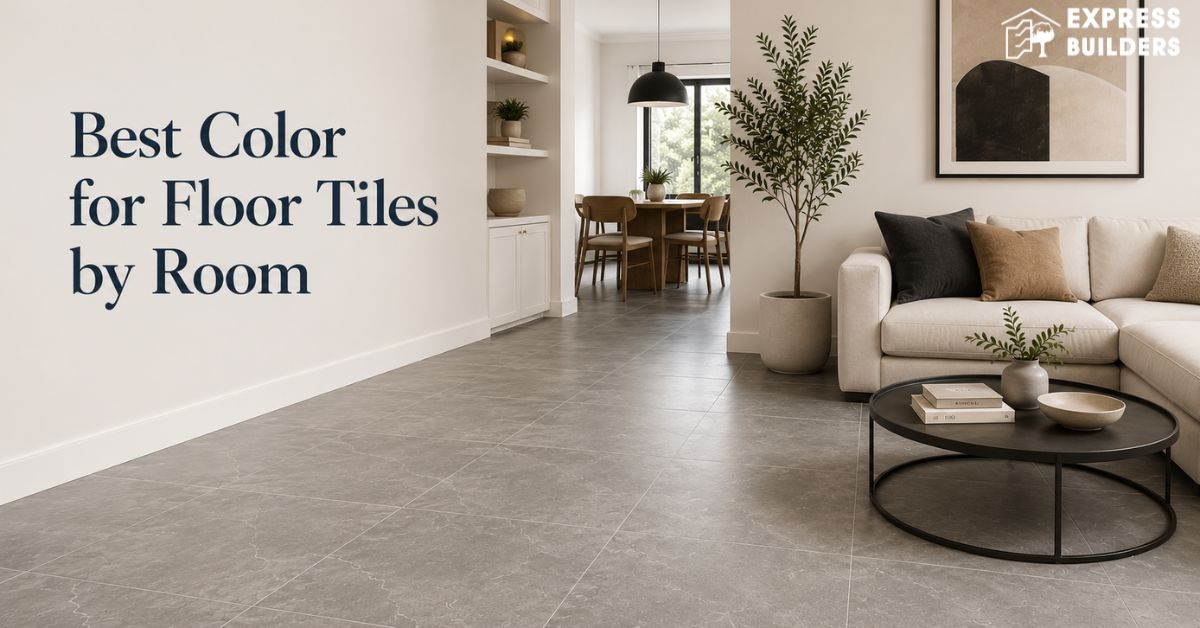
Choosing the right floor color is one of the most overlooked design decisions in home renovation. Walls get repainted often. Furniture gets swapped every few years. But floors stay the same for a decade or more. That single choice sets the tone for every room above it.
A well-picked floor color can make a small room feel open. It can make a large room feel warm and grounded. The wrong shade, though, can clash with everything else you own. This guide breaks down how to choose floor colors with confidence, whether you’re working with tiles, wood, or epoxy coatings.
Why Floor Color Deserves More Attention
Most people focus on wall paint first. That’s backwards. Floors cover more visible surface area than any wall. They anchor the room’s color palette. Every other choice, from curtains to couches, gets built around them.
Lighter floors reflect more light. They make compact spaces feel airy. Darker floors absorb light. They add drama and coziness but can shrink the visual size of a room. Neutral floor colors give you flexibility. They let you change wall colors and decor without a full renovation.
Before picking a shade, think about how much natural light your space gets. A north-facing room with limited sunlight often benefits from lighter floor colors. A bright, sun-soaked room can handle bolder, darker tones without feeling heavy.
How to Choose the Right Floor Colors
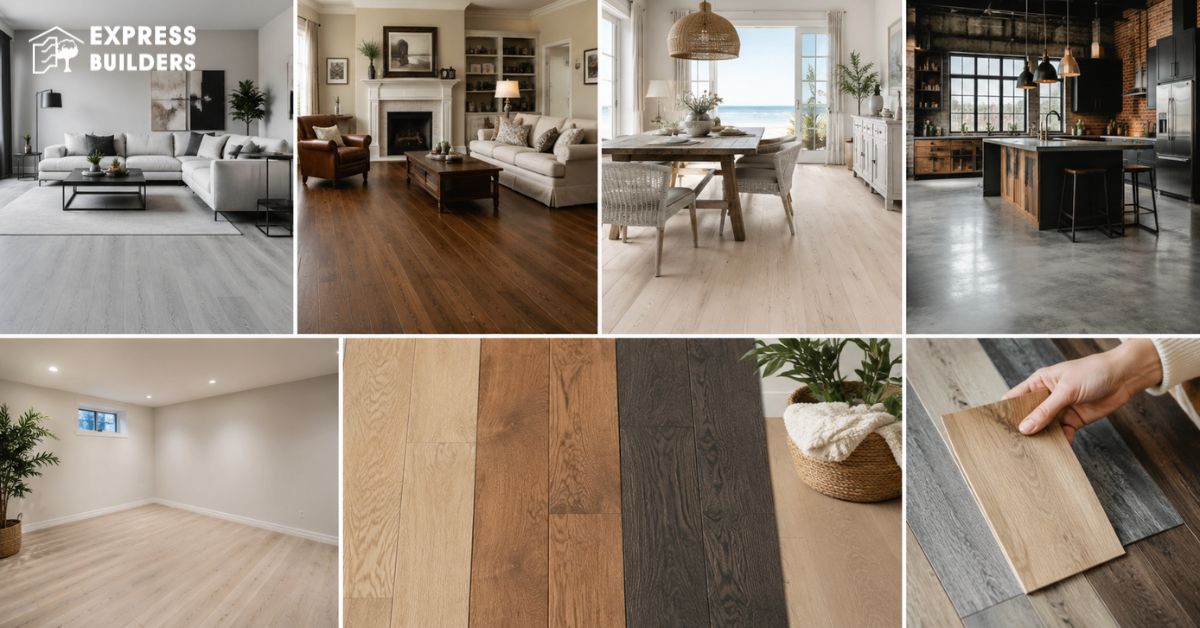
Start with your home’s overall style. A modern home leans toward cool grays and crisp whites. A traditional home often suits warm browns and honey tones. Coastal interiors favor light, sandy shades. Industrial spaces work well with concrete grays or matte blacks.
Next, consider your ceiling height. Low ceilings pair better with lighter floors, since dark flooring can make a room feel boxed in. High ceilings can support richer, deeper tones without overwhelming the space.
Think about maintenance too. Lighter floors show dust more easily. Darker floors reveal scratches and pet hair faster. Mid-tone floor colors often hide daily wear better than either extreme, which makes them a practical pick for busy households.
Finally, test samples in your actual space. Lighting in a showroom differs completely from lighting at home. Bring a swatch home. Look at it in the morning. Look at it again at night. Colors shift dramatically under different bulbs and daylight angles.
Epoxy Floor Colors: A Growing Trend
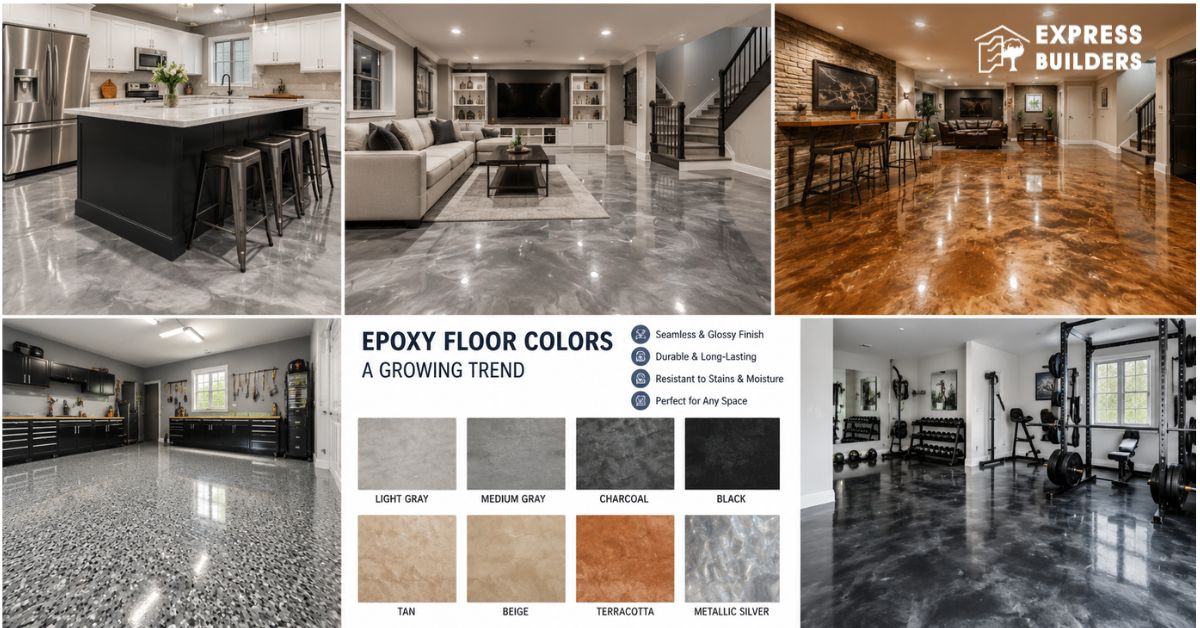
Epoxy flooring has moved far beyond garages and warehouses. Homeowners now use it in kitchens, basements, and even living rooms. Part of the appeal comes from the range of epoxy floor colors available today.
Epoxy coatings offer a glossy, seamless finish that traditional flooring can’t match. You can choose solid colors for a clean, modern look. Metallic epoxy finishes add depth and movement, almost like a marbled effect. Flake systems blend multiple colors for a speckled, textured appearance that hides minor imperfections well.
Gray and charcoal epoxy floor colors remain the most popular choice for contemporary spaces. They pair easily with stainless steel appliances and minimalist furniture. Warmer epoxy tones, like tan or terracotta, work well in spaces aiming for a cozier feel.
One major advantage of epoxy is durability. It resists stains, moisture, and heavy foot traffic far better than standard tile or wood. That makes it a smart option for high-use areas like entryways, kitchens, and home gyms.
Best Color for Floor Tiles by Room
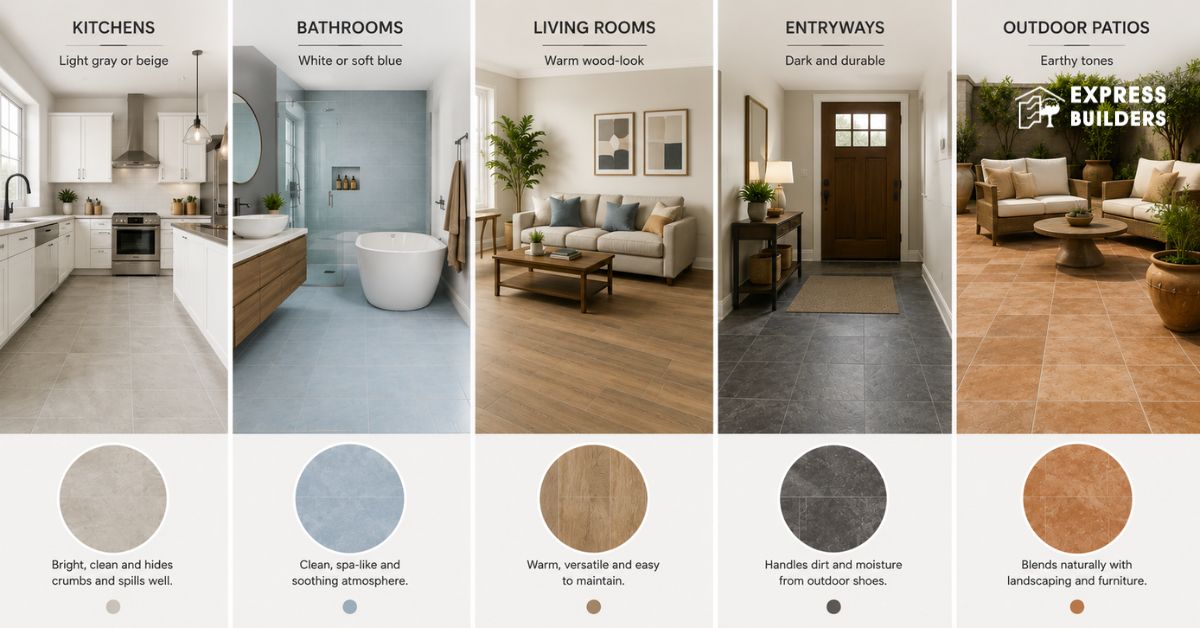
Different rooms call for different tile strategies. Here’s a practical breakdown.
Kitchens: Light gray or beige tiles hide crumbs and spills reasonably well. They also reflect light, which keeps cooking spaces feeling bright throughout the day.
Bathrooms: White or soft blue tiles create a clean, spa-like atmosphere. Darker tiles work too, especially in powder rooms where heavy traffic isn’t a daily concern.
Living Rooms: Warm wood-look tiles bring comfort without the maintenance of real hardwood. They suit nearly every furniture style, from modern to traditional.
Entryways: Durable, darker tiles handle dirt and moisture from outdoor shoes far better than pale options. Slate gray and deep brown are common, reliable picks.
Outdoor Patios: Earthy tones like terracotta or sand blend naturally with landscaping and outdoor furniture, creating a seamless indoor-outdoor flow.
When picking the best color for floor tiles, always factor in foot traffic. High-traffic zones benefit from mid-tone or textured tiles that mask scuffs and dirt between cleanings.
Matching Floor Colors With the Rest of Your Home
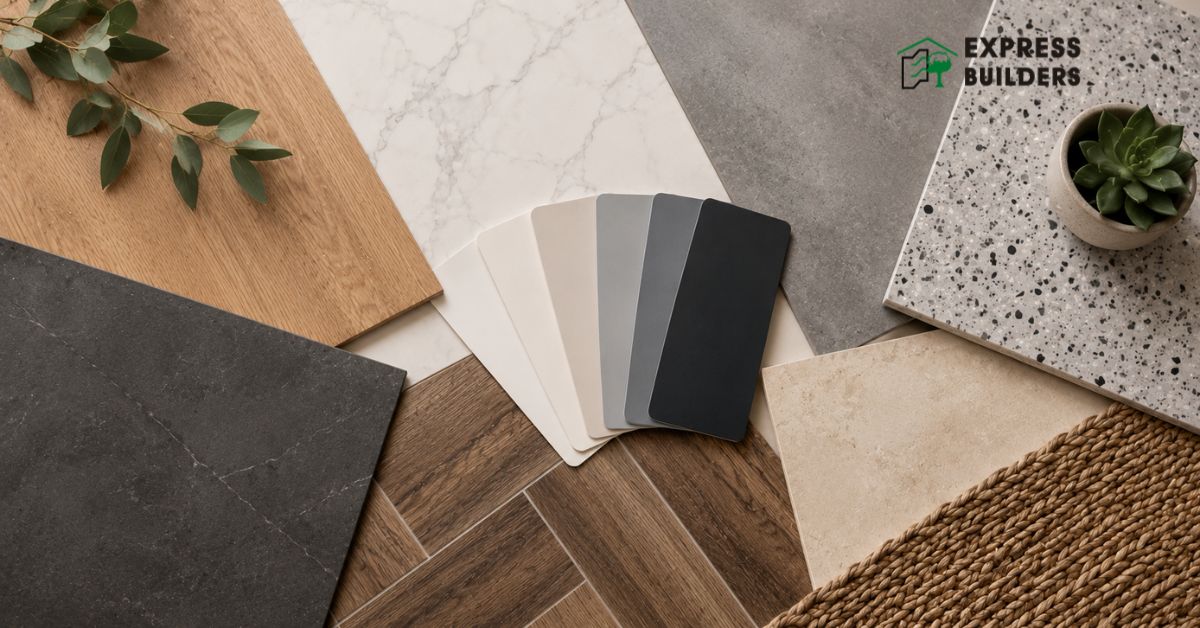
A cohesive home doesn’t mean every room matches perfectly. It means each space flows logically into the next. Consistent flooring tones between connected rooms, like a living room and hallway, create a sense of continuity.
If you’re mixing materials, such as wood in one room and tile in another, aim for similar undertones. Warm wood pairs better with warm-toned tile. Cool gray wood pairs better with cool-toned tile or stone.
Furniture and rugs can bridge two different floor colors if a home has varied flooring throughout. A patterned rug that pulls colors from both spaces helps the transition feel intentional rather than accidental.
Read More: https://expressbuildersltd.com/blog/wooden-finish-floor-tiles/
Final Thoughts
Floor color shapes a room more than most people realize. It influences light, mood, and how every other element in the space comes together. Whether you’re drawn to classic wood tones, versatile tiles, or modern epoxy finishes, the right shade should match your lifestyle as much as your aesthetic.
Take your time with samples. Consider your lighting, your traffic patterns, and your long-term style goals. A thoughtful choice today saves you from a costly redo years down the line.
Ready to transform your space with the perfect floor color? Start by testing a few samples in your own lighting, compare textures and tones, and choose a shade that fits your lifestyle. Your dream floor is closer than you think, take the first step today.
Looking for verified 1, 2 and 3BHK apartments for sale in Greater Noida? Get in touch with our team to schedule a personalised site visit and if you’re also considering more space, take a look at our 3 BHK flats in Greater Noida buying guide.
Frequently Asked Questions
How do you match wall color with wood floor?
Pick wall colors that share the wood’s undertone. Warm wood floors pair well with soft whites, greiges, or earthy greens. Cool-toned wood suits crisp whites or muted blues. Always test paint swatches next to the actual flooring before committing.
What color furniture goes with grey flooring?
Grey flooring works with almost any furniture tone. Warm woods like oak or walnut add contrast and coziness. Bold furniture colors, like navy or mustard, pop nicely against neutral grey without clashing.
What color goes with gray floors?
Soft whites, blush pinks, and muted blues complement gray floors beautifully. For a bolder look, deep greens or charcoal accents add richness while keeping the palette balanced and modern.
What color wood floor works with dark furniture?
Lighter wood floors, like natural oak or ash, create contrast against dark furniture and prevent a room from feeling too heavy. Medium honey tones also work well, adding warmth without competing for attention.
What colors go with terracotta floor tiles?
Terracotta pairs naturally with cream, sage green, and warm mustard tones. Deep blues also work as an accent color, creating a striking contrast against the tile’s earthy, warm undertone.
