
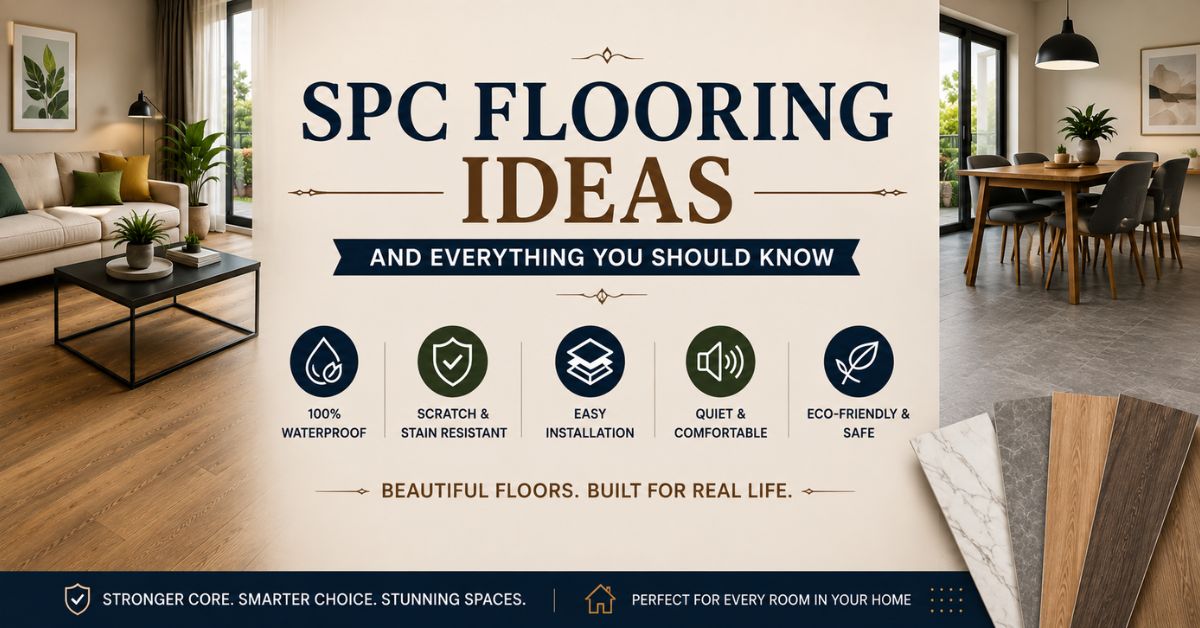
Flooring technology has advanced considerably over the past decade, and SPC flooring stands out as one of the more genuinely useful developments to reach Indian homes in recent years. This rigid, engineered material combines strength, water resistance, and a wide range of visual finishes in a way traditional laminate or natural wood often struggles to match within a similar budget. This guide walks through what SPC flooring actually is, the styles worth knowing, and the practical details worth checking before you choose this material for your own home.
What Is SPC Flooring and Why It’s Gaining Ground
SPC stands for Stone Plastic Composite, a layered flooring material built around a rigid core made primarily from limestone powder combined with PVC stabilisers. This core gives an spc floor exceptional dimensional stability, resisting expansion, contraction, and warping far better than traditional laminate when exposed to temperature and humidity changes throughout the year. A wear layer sits above the core, printed with a photographic design and protected by a transparent coating that resists scratches and daily foot traffic. Because the core contains no organic wood fibres, SPC flooring performs remarkably well in areas laminate simply cannot handle, including kitchens, bathrooms, and balconies where moisture exposure remains a constant concern.
What Makes Up an SPC Floor
Understanding the layered construction behind an spc floor helps clarify why the material performs so differently from older options. The base layer, often called the IXPE or EVA underlayment, provides cushioning and sound absorption, reducing the hollow echo sometimes associated with rigid flooring over a hard subfloor. Above this sits the rigid SPC core, responsible for the material’s strength and stability, followed by the printed design layer that determines the floor’s final appearance. A clear wear layer caps the structure, with thickness varying between products and directly affecting scratch resistance over years of use. Many SPC products also include a UV-cured coating, adding protection against scuffing while making cleaning easier.
Also Read- Bedroom Floor Tiles Design Ideas Worth Exploring
Types and Styles Worth Knowing
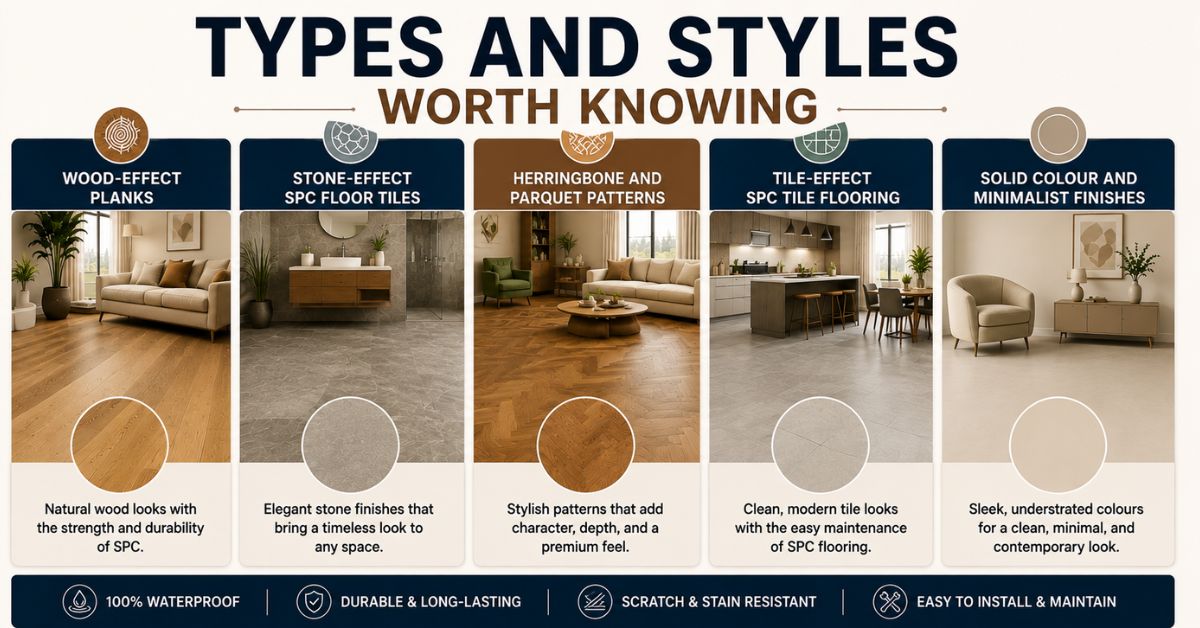
SPC flooring comes in a genuinely wide range of visual finishes, moving well beyond a single generic look into options suited to almost any interior style. Reviewing these categories helps clarify which direction might suit your own space and taste.
- Wood-effect planks – printed finishes replicating oak, walnut, or teak grain, offering timber warmth without wood’s moisture vulnerability
- Stone-effect spc floor tiles – finishes mimicking marble, granite, or concrete, suited to homes wanting a stone look at lower cost
- Herringbone and parquet patterns – decorative laying patterns that add visual interest beyond a simple straight-plank layout
- Tile-effect spc tile flooring – square-format designs that replicate ceramic or porcelain tile appearance with a warmer underfoot feel
- Solid colour and minimalist finishes – plain, understated tones suited to contemporary interiors seeking a clean, uncluttered look
Choosing between these styles largely comes down to the room’s function and your home’s broader interior palette, since a wood-effect plank suits a living room or bedroom differently than a stone-effect tile suits a kitchen or bathroom.
How SPC Flooring Design Fits Different Rooms
SPC flooring design adapts well across nearly every room in a home, which is part of what makes the material so genuinely versatile compared to options limited to dry, low-moisture areas. In bedrooms and living rooms, a wood-effect SPC flooring design brings warmth underfoot while remaining far more resistant to daily wear than natural timber. In kitchens and bathrooms, a stone-effect or tile-effect finish delivers the moisture resistance these rooms genuinely require, something real wood flooring cannot offer without risk of warping. Balconies also benefit from SPC flooring design, since its water resistance holds up well against occasional rain or humidity that would damage most traditional materials.
Finding the Best SPC Flooring for Your Home
Identifying the best spc flooring for a specific project depends on balancing wear layer thickness, core quality, and finish style against your budget and the room’s expected traffic. Thicker wear layers, generally rated in mils, offer better long-term scratch and stain resistance, worth prioritising in high-traffic areas like hallways. Core density also varies between manufacturers, with denser cores generally offering better sound dampening and a more solid feel underfoot. Checking for certifications related to indoor air quality matters too, since lower-quality SPC products can sometimes off-gas more than reputable alternatives. Comparing a few samples in person remains the most reliable way to judge which option genuinely qualifies as the best spc flooring for your home.
Also Read- Terrazzo Flooring: The Timeless Trend Making a Big Comeback in Modern Homes
How SPC Compares to Other Flooring Materials
SPC flooring occupies a distinct position between laminate and natural materials like wood or stone, offering advantages neither extreme quite matches on its own. Compared to laminate, SPC offers considerably better water resistance and dimensional stability, since laminate’s wood-fibre core remains vulnerable to swelling when exposed to moisture. Compared to natural wood, SPC requires far less maintenance and performs reliably in humid areas where solid timber cannot be used safely. Against ceramic or porcelain tile, SPC offers a warmer feel underfoot along with a faster, simpler installation that doesn’t require adhesive curing time. This middle-ground position explains why SPC flooring has found such broad appeal among homeowners seeking durability without sacrificing comfort.
Key Factors to Check Before You Finalise Your Floor
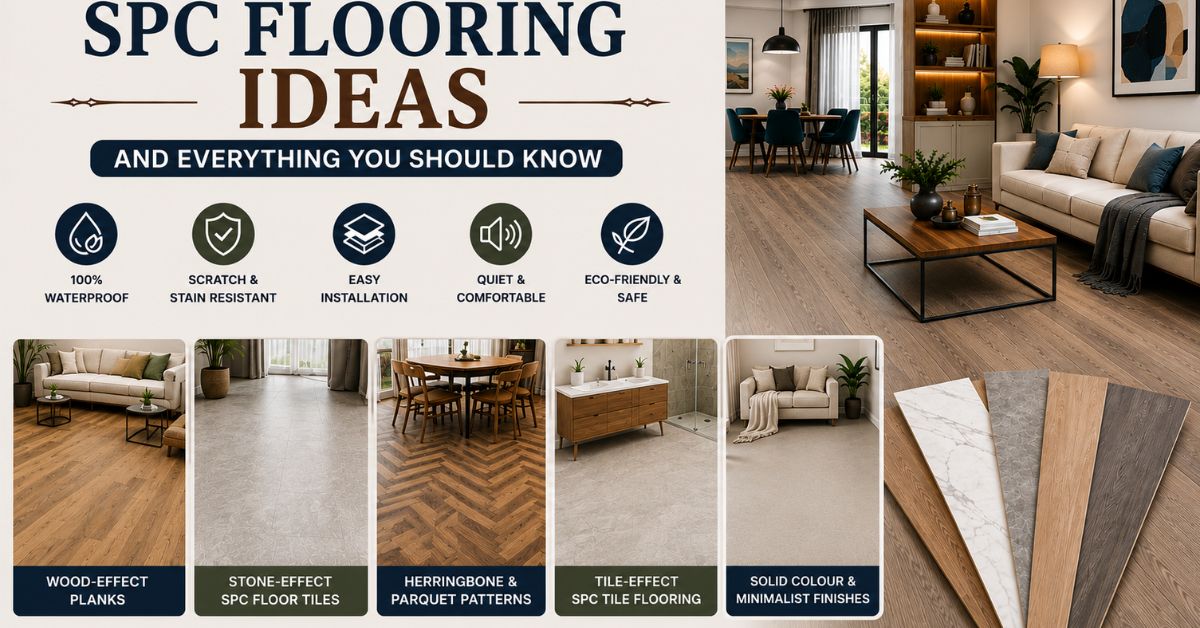
Before committing to any particular SPC flooring, a handful of practical checks can help you avoid costly mistakes later.
- Wear layer thickness – prioritise a thicker wear layer for high-traffic rooms to ensure longer-lasting scratch resistance
- Core quality and density – ask about core composition, since denser cores generally offer better stability and sound dampening
- Subfloor preparation – confirm your existing subfloor is level and clean, since unevenness can affect the final installation quality
- Water resistance rating – verify the specific product’s suitability for wet areas if planning installation in a kitchen or bathroom
- Warranty coverage – check manufacturer warranty terms, since coverage length often reflects genuine confidence in product quality
- Installation method – confirm whether the product uses click-lock or adhesive installation, since this affects labour cost and timeline
Installation Basics Worth Understanding
Most SPC flooring uses a click-lock installation system, allowing planks or tiles to interlock without adhesive, considerably speeding up installation compared to traditional glued-down flooring. This floating method also makes SPC flooring easier to remove or replace later, an advantage over permanently bonded materials if renovation needs arise. A thin underlayment typically gets installed first, providing cushioning and smoothing out minor subfloor imperfections before the planks go down. Professional installation remains advisable for larger or irregularly shaped rooms, though the click-lock design makes it more approachable for smaller DIY projects than many alternatives.
Maintenance Tips for Long-Lasting SPC Floors
SPC flooring genuinely requires minimal ongoing maintenance compared to natural wood or stone alternatives, which forms part of its broader appeal for busy households. Sweep or vacuum regularly to prevent grit from scratching the wear layer, particularly in high-traffic pathways through the home. Clean with a damp mop and a pH-neutral cleaner, avoiding excessive standing water even though the material resists moisture well overall. Use furniture pads under heavy items to prevent indentation, since sustained pressure can still affect the surface over extended periods. Address any spills promptly, even though SPC flooring handles moisture far better than laminate, simply to keep the surface looking its best over time.
Also Read- Wooden Finish Floor Tiles: Give Your Home the Warmth of Wood Without the Hassle
Common Mistakes to Avoid in SPC Flooring Selection
Many homeowners choose SPC flooring purely based on price, without checking wear layer thickness or core quality, often leading to disappointing durability within just a few years. Avoid skipping proper subfloor preparation, since an uneven base can telegraph through the rigid SPC core and affect how well planks lock together. Do not overlook checking a sample in your actual room lighting, since colours and finishes can look noticeably different than they did under showroom lighting. Finally, avoid assuming all SPC flooring performs identically, since quality varies considerably between manufacturers despite products often looking similar at first glance.
Bringing It All Together
SPC flooring brings together durability, water resistance, and genuine visual flexibility in a way that suits nearly every room in a modern home. From choosing the right wear layer thickness and style to understanding installation and maintenance requirements, every decision shapes how the finished floor performs and looks for years to come. Taking the time to compare a few samples, check practical factors like core quality and warranty coverage, and choose a spc flooring design suited to each room’s specific needs ensures the floor you select serves your home well for a long time ahead.
Explore Express Builders ongoing residential projects across Noida and Greater Noida West. See the quality and planning behind every home firsthand.
Book a free site visit today with Express Builders. Walk through our ongoing projects and see construction quality up close. Check out floor plans, amenities, and location advantages in person. Meet our team and get your property-related questions answered directly. Schedule a visit at your convenience.
Frequently Asked Questions
1. Is SPC flooring genuinely waterproof?
Yes, most SPC flooring is fully waterproof due to its limestone and PVC core, making it suitable for kitchens, bathrooms, and balconies.
2. How does SPC flooring compare to vinyl flooring?
SPC offers a more rigid, stable core than standard vinyl, generally resulting in better dimensional stability and a more solid underfoot feel.
3. What is the best spc flooring for high-traffic areas?
Look for products with a thicker wear layer and denser core, since these factors most directly affect long-term durability.
4. Can SPC flooring be installed over existing tiles?
Yes, in many cases, provided the existing surface is level and clean, though checking with your installer is always recommended.
5. How long does SPC flooring typically last?
With proper installation and basic maintenance, SPC flooring can last fifteen to twenty years or more in residential settings.
