
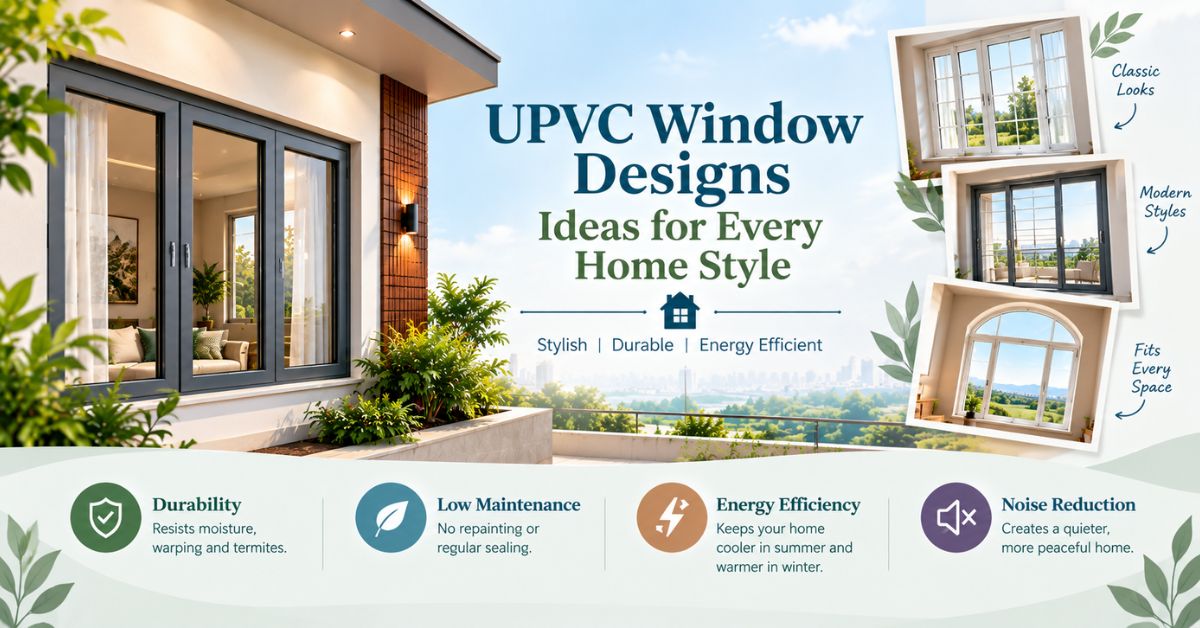
Windows do more than let light into a home. They shape how a facade looks from the outside, influence how comfortable interiors feel throughout the year, and play a direct role in energy efficiency and noise control. Over the past decade, UPVC window designs have become one of the most popular choices for homeowners looking to combine practicality with a clean, modern appearance. Unlike traditional wooden or metal frames, UPVC offers a unique mix of durability, low maintenance, and design flexibility that suits nearly every architectural style.
What makes UPVC particularly appealing is how well it performs across different climates and usage conditions. It resists moisture, does not rust or corrode, and holds its shape and colour far longer than many traditional window materials. This combination of practicality and visual appeal is a major reason UPVC window designs for homes have moved from a niche option to one of the most requested choices in both new construction and renovation projects.
Why UPVC Window Designs Have Become a Preferred Choice
Durability is one of the strongest arguments in favour of UPVC windows. Unlike wood, which can warp, rot, or attract termites over time, UPVC remains stable across a wide range of weather conditions, making it particularly well suited to regions with high humidity, heavy rainfall, or intense sun exposure. This resilience means UPVC windows typically require far less maintenance than traditional alternatives, since there is no need for regular repainting, sealing, or treatment against pests and moisture damage.
Energy efficiency is another significant advantage that has driven the popularity of UPVC window designs. The material’s inherent insulating properties help reduce heat transfer between the interior and exterior of a home, keeping indoor spaces cooler during hot months and warmer during cooler periods. This improved insulation can contribute to lower energy consumption for heating and cooling, making UPVC windows a practical long term investment beyond their initial visual appeal.
Sound insulation also plays an important role in why UPVC windows have gained such strong appeal, particularly for homes located near busy roads or in dense urban areas. The combination of UPVC framing with multi pane glass options significantly reduces outside noise transfer, creating a noticeably quieter indoor environment compared to standard single glazed windows. For homeowners prioritising a peaceful living space, this noise reduction quality often becomes one of the deciding factors in choosing UPVC over other window materials.
Also Read- Sliding Window Designs Worth Considering for Your Home
Types of UPVC Window Designs to Consider
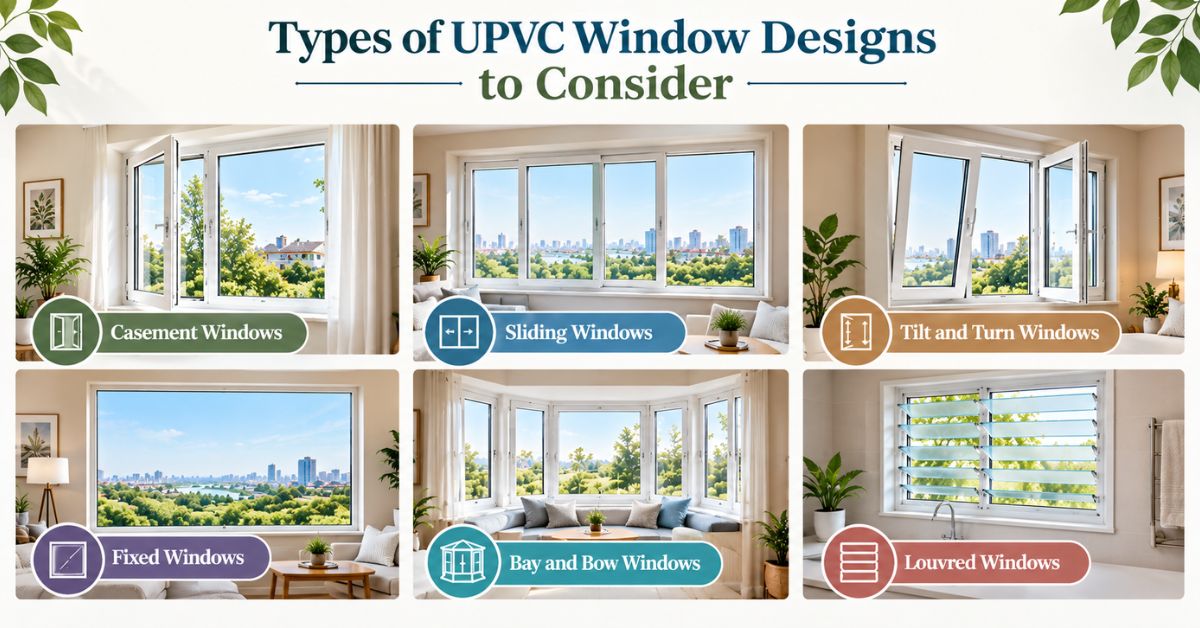
UPVC windows come in several distinct configurations, each suited to different rooms, ventilation needs, and architectural styles. Understanding these types helps in choosing the right option for a specific space.
- Casement windows: Hinged on one side and opening outward like a door, these windows offer excellent ventilation control and a clean, classic appearance suited to most home styles.
- Sliding windows: Featuring panels that slide horizontally along a track, this design is particularly space efficient since it does not require clearance space for opening, making it popular for balconies and smaller rooms.
- Tilt and turn windows: A versatile design that can either tilt inward from the top for gentle ventilation or turn fully open like a casement window, offering flexibility in how airflow is managed.
- Fixed windows: Non opening panels designed purely to let in natural light, often used in combination with operable windows to create larger glazed sections without compromising ventilation control.
- Bay and bow windows: Multiple UPVC panels arranged at angles to create a projecting window structure, adding architectural interest and additional interior space to a room.
- Louvred windows: Featuring horizontal slats that can be adjusted for airflow, this style is particularly useful in bathrooms, kitchens, or utility areas where ventilation control is a priority.
Popular UPVC Window Styles for Modern Homes
With so many configurations available, looking at some popular UPVC window styles can help homeowners narrow down what might suit their own home best.
- Slim frame casement windows, offering a sleek, contemporary look with maximised glass area for larger, unobstructed views.
- Two tone UPVC windows, combining different colours on the interior and exterior frame surfaces to match both the home’s exterior palette and interior decor.
- Sliding windows with integrated mesh screens, providing ventilation while keeping insects out, particularly popular for kitchens and balconies.
- Arched or custom shaped UPVC windows, used to add a distinctive architectural feature to entryways or feature walls.
- Tilt and turn windows with multi point locking systems, combining flexible ventilation with enhanced security for ground floor rooms.
- Bay window configurations using UPVC frames, creating a cosy interior seating nook while adding visual depth to the home’s exterior.
- Minimalist black or dark grey UPVC frames, a growing trend among homeowners wanting a bold, modern contrast against lighter exterior wall colours.
Also Read- Iron Window Grill Design Ideas Worth Exploring
Exploring UPVC Window Grill Design Options
Security remains an important consideration alongside aesthetics, and UPVC window grill design options have evolved considerably to address both needs simultaneously. Traditional metal grilles, once seen as purely functional and somewhat utilitarian, are now available in a wide range of decorative patterns that complement rather than detract from a window’s overall appearance. Simple vertical or horizontal bar patterns offer a clean, understated look, while more intricate geometric or curved designs add a decorative element without compromising the security benefits grilles provide.
Integrated grill designs, where the security bars are built directly into the UPVC frame structure rather than added as a separate external fitting, have also grown in popularity for their streamlined appearance. This approach avoids the slightly bulky look that traditional add on grilles can sometimes create, instead offering a more cohesive, built in aesthetic that blends security and design into a single unified feature. Choosing a grill pattern that complements the home’s overall architectural style helps ensure this practical addition enhances rather than detracts from the window’s visual appeal.
Choosing UPVC Windows for Different Rooms
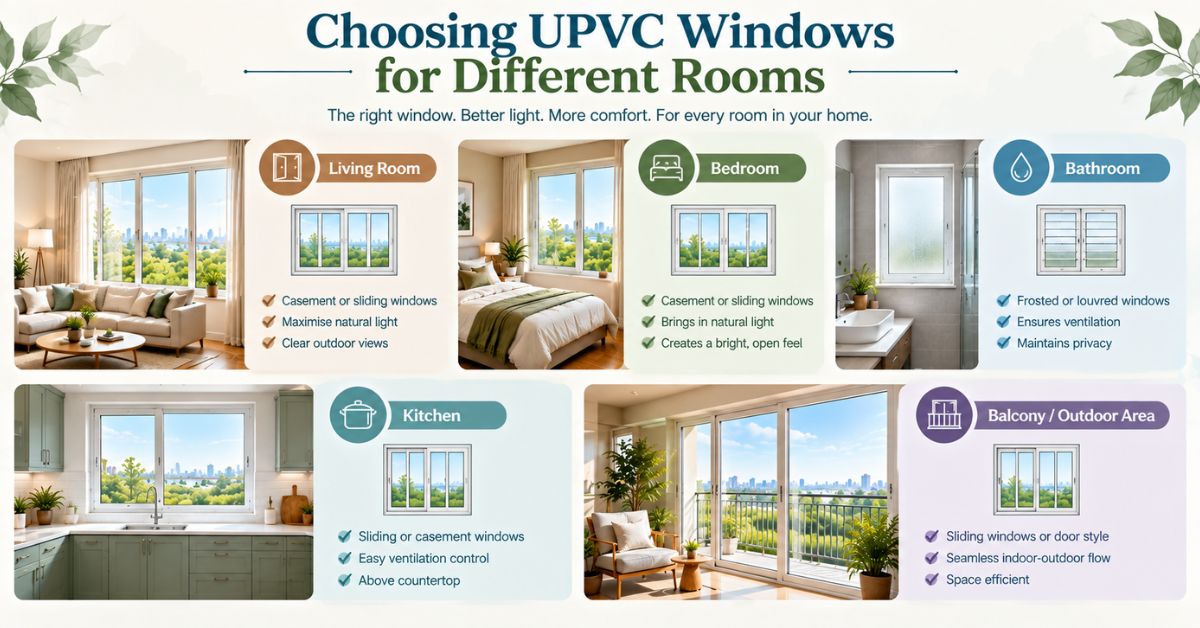
Different rooms within a home often benefit from different UPVC window configurations based on their specific ventilation, privacy, and lighting needs. Living rooms and bedrooms generally suit larger casement or sliding windows that maximise natural light and provide clear outdoor views, contributing to a bright, open feeling within these frequently used spaces. Bathrooms and utility areas, on the other hand, often benefit from smaller, frosted, or louvred UPVC windows that prioritise ventilation and privacy over an expansive view.
Kitchens tend to work particularly well with sliding or casement UPVC windows positioned above countertops, since these formats allow for easy ventilation control while cooking without requiring significant clearance space. For balconies and smaller enclosed outdoor areas, sliding UPVC windows or door style configurations are often preferred, since they allow for a seamless transition between indoor and outdoor spaces while remaining space efficient when opened.
Also Read- Wood Window Designs for Homes: A Complete Style Guide
Durability, Maintenance and Energy Efficiency
One of the most practical advantages of UPVC window designs lies in how little ongoing maintenance they require compared to traditional window materials. Unlike wood, which needs periodic repainting or sealing, UPVC frames generally only require occasional cleaning with mild soap and water to maintain their appearance. This low maintenance quality makes UPVC windows particularly appealing for homeowners seeking a long term solution that does not demand frequent upkeep.
The material’s resistance to warping, rusting, and fading also contributes significantly to its long term durability. UPVC frames maintain their structural integrity and colour consistency for many years, even under prolonged exposure to sunlight and varying weather conditions, unlike some traditional materials that can deteriorate visibly over time. When combined with quality double or triple glazed glass panels, UPVC windows also contribute meaningfully to a home’s overall energy efficiency, helping reduce the strain on heating and cooling systems throughout the year.
Things to Keep in Mind Before Choosing Your Windows
Before finalising UPVC window designs for a home, it helps to think through a few practical considerations. Consider the specific ventilation needs of each room, since different window types offer varying degrees of airflow control, from fully operable casement windows to more restricted tilt and turn or louvred designs. Think about the glazing option as well, since single, double, and triple glazed panels offer different levels of insulation and noise reduction depending on the home’s location and climate.
It also helps to consider how the chosen window style and frame colour will complement the home’s overall exterior and interior design, ensuring visual consistency across the property. Budget should be planned with some flexibility as well, since features like enhanced security locking systems, integrated grill designs, or higher performance glazing options can add meaningful value but also increase the overall cost of the windows.
Also Read- Iron Window Grill Design Ideas Worth Exploring
Bringing It All Together
UPVC window designs bring together durability, energy efficiency, and design flexibility in a way that few other window materials can match. From simple, slim frame casement windows suited to contemporary interiors, to more elaborate bay window configurations that add architectural character to a home’s facade, there is a UPVC option suited to nearly every room and style preference. Exploring different UPVC windows styles and designs, along with practical considerations like grill patterns, glazing options, and room specific ventilation needs, helps homeowners make a well informed choice for their property.
Taking the time to plan window style, security features, and energy performance together ensures the final choice serves both the practical and aesthetic needs of a home for years to come. A well chosen set of UPVC windows does more than let in light. It quietly supports a more comfortable, secure, and visually cohesive home from every angle.
Explore Express Builders ongoing residential projects across Noida and Greater Noida West. See the quality and planning behind every home firsthand.
Book a free site visit today with Express Builders. Walk through our ongoing projects and see construction quality up close. Check out floor plans, amenities, and location advantages in person. Meet our team and get your property-related questions answered directly. Schedule a visit at your convenience.
Frequently Asked Questions
Are UPVC windows more durable than wooden windows?
Yes, UPVC windows generally offer greater durability than wood, since they resist moisture, do not warp or rot, and require significantly less maintenance over their lifespan.
Do UPVC windows help reduce outside noise?
Yes, particularly when paired with multi pane glazing, UPVC window designs offer improved sound insulation compared to standard single glazed windows, making them popular for homes in noisier areas.
Can UPVC windows include security grills?
Yes, UPVC window grill design options range from simple bar patterns to more decorative and even integrated designs built directly into the frame, combining security with visual appeal.
What types of UPVC windows work best for small rooms?
Sliding UPVC windows are particularly space efficient for small rooms, since they do not require clearance space to open, unlike traditional casement styles that swing outward.
How much maintenance do UPVC windows require?
UPVC windows generally require minimal maintenance, typically just occasional cleaning with mild soap and water, since the material resists fading, warping, and corrosion far better than traditional window materials.
