
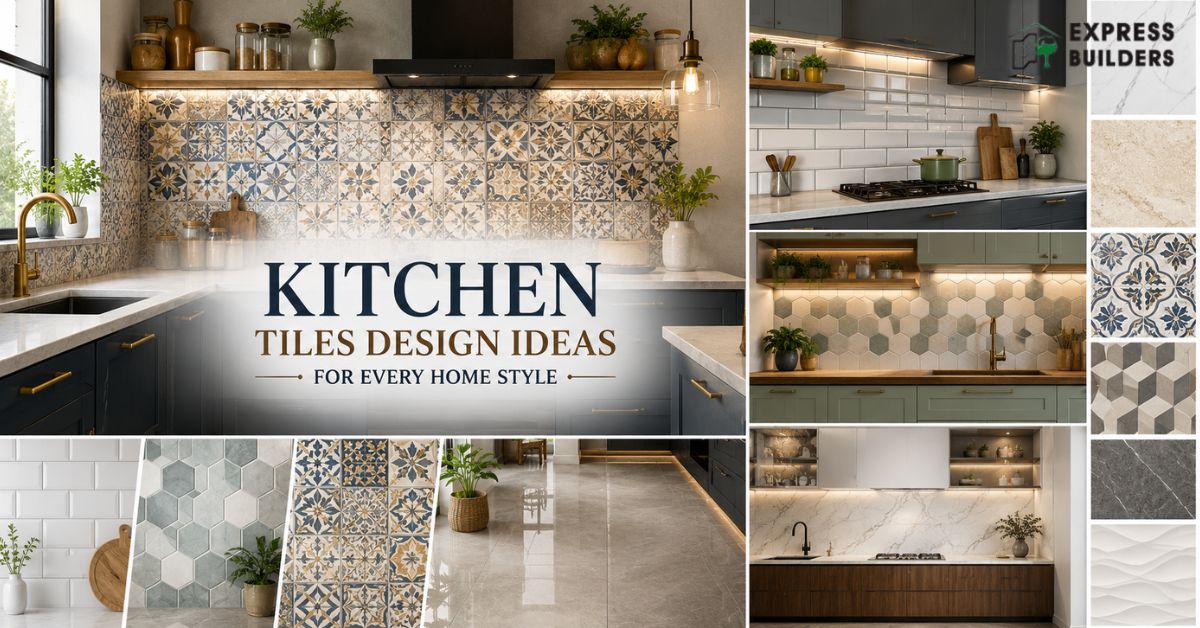
The kitchen is one of the most heavily used spaces in any home, and the tiles you choose carry more weight than most homeowners initially expect. A well-planned kitchen tiles design shapes how the room looks, how easy it is to keep clean, and how well it holds up to years of cooking, spills, and daily traffic. Unlike a bedroom or living room, a kitchen deals constantly with heat, moisture, and oil splashes, so tiles here need to balance visual appeal with genuine durability. This guide walks through the materials, styles, and placement decisions behind a strong kitchen tiles design.
Why Kitchen Tiles Design Deserves Careful Planning
Many homeowners treat tile selection as a purely visual decision, choosing whatever colour catches their eye in a showroom without considering how it performs over years of daily use. A strong kitchen tile design rests on three factors together: how the tiles look, how well they resist stains and moisture, and how easy they are to clean weekly. The best kitchen tiles design for a busy family kitchen often differs from the best kitchen tiles design for a lightly used space, since usage patterns change what matters most. Getting this right also affects resale value, since a dated or damaged tile scheme is one of the first things a buyer notices when touring a kitchen.
Materials That Shape Modern Kitchen Tile Selection
The material you choose affects everything from cost to long-term durability, and understanding the core options makes the rest of your decision-making easier. Ceramic tiles remain a popular, budget-friendly choice, offering a wide range of colours and finishes while performing reasonably well when properly sealed. Porcelain tiles cost somewhat more but offer superior density and water resistance, suiting kitchen floors where moisture and foot traffic are constant concerns. Vitrified tiles, increasingly popular in Indian homes, combine strength with a glossy or matte finish that resists staining without frequent sealing.
Natural stone options like granite or marble bring a premium look to a modular kitchen tiles design, though they need more maintenance and cost more than manufactured alternatives.
Popular Styles Shaping Kitchens Today
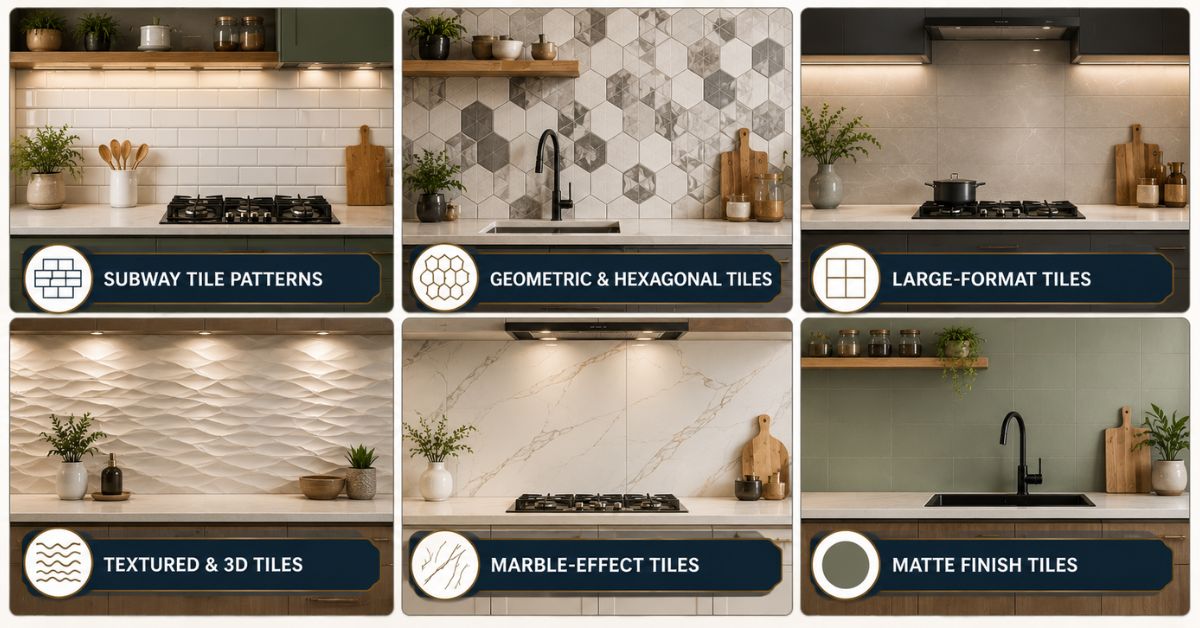
Kitchen tile styles have shifted considerably over the past several years, moving toward cleaner, more versatile looks that pair well with a wide range of cabinetry and countertop choices. Reviewing the styles currently trending helps you understand where a modern kitchen tiles design draws its visual language from.
- Subway tile patterns – rectangular tiles laid in a classic brick-like offset, offering a timeless, versatile look
- Geometric and hexagonal tiles – bold shapes that add visual interest to an otherwise simple colour palette
- Large-format tiles – bigger tile sizes that reduce visible grout lines for a cleaner, more seamless appearance
- Textured and 3D tiles – raised or embossed surfaces that add depth, particularly popular for a feature wall
- Marble-effect tiles – porcelain or vitrified tiles printed to replicate natural marble at a fraction of the cost
- Matte finish tiles – increasingly preferred over high-gloss surfaces for a softer, more understated appearance
The latest kitchen tiles design trends tend to favour these cleaner, more adaptable options over the heavily patterned or brightly coloured tiles that were popular a decade ago, though personal taste and regional preferences still play a meaningful role in what feels right for a given home. Homeowners searching for kitchen tiles design latest inspiration online will notice this same shift toward simplicity across most supplier catalogues today.
Choosing the Right Tiles for Your Kitchen Walls
A thoughtful kitchen wall design starts with understanding exactly where tiles will be placed, since walls behind cooking areas face different demands than the rest of the kitchen. Tiles design for kitchen wall areas directly behind the stove need strong heat and stain resistance, given the direct exposure to oil splatter and cooking residue daily. A simple kitchen wall tiles design, using a single neutral tone across the wall, suits smaller kitchens well, avoiding clutter while offering a clean, finished look.
For larger kitchens, a wall kitchen tiles design mixing a plain field tile with a contrasting accent strip can add character without overwhelming the room. Many homeowners now look for a modern kitchen wall tiles design that extends only partway up the wall, rather than a full-height backsplash, pairing well with open shelving. Checking the kitchen wall tiles design latest options across a few suppliers helps you compare pricing and finish quality realistically.
Flooring Choices That Complete the Kitchen
While wall tiles get the most attention during planning, kitchen floor tiles design deserves equal consideration, since flooring faces the heaviest daily wear in the room. Floor tiles need to handle dropped utensils, spilled liquids, and foot traffic without chipping, staining, or becoming slippery when wet. Matte or textured finishes are generally preferred over glossy options, offering better slip resistance when the surface gets wet.
Larger format tiles have grown popular for kitchen floors recently, creating a seamless feel while reducing grout lines that need cleaning. Colour choice matters too, since very light floor tiles show stains more readily, while very dark tiles show dust and water spots more visibly under bright lighting.
The Role of the Kitchen Slab in Your Overall Design
The kitchen slab, the countertop surface where most food preparation happens, plays a central role in tying the whole kitchen tiles design together visually. A well-chosen kitchen slab design should complement rather than compete with your wall and floor tile choices, since all three surfaces sit in close visual proximity. Granite remains widely used for kitchen slabs, prized for durability and natural pattern variation, while quartz has grown popular for its consistent finish and lower maintenance. When your kitchen slab design uses a busy, veined pattern, pairing it with simpler wall tiles creates better balance than combining two bold patterns. A plain, solid-colour slab gives more room to introduce pattern through your tile choices without the kitchen feeling overwhelming.
Colour and Pattern Considerations Worth Weighing
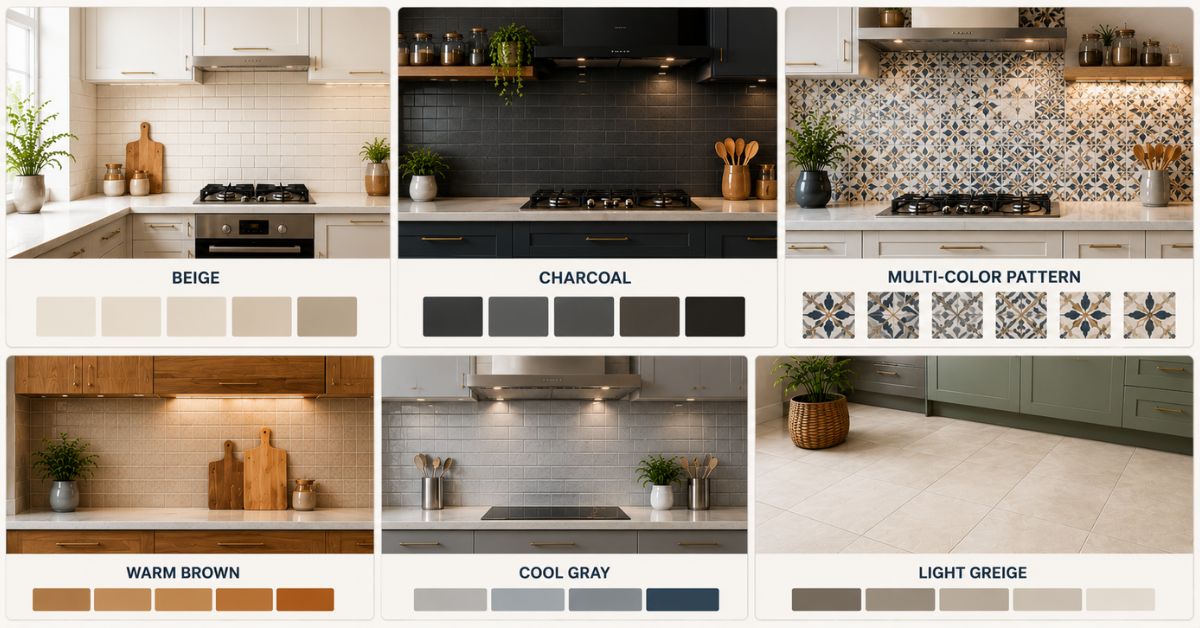
Colour and pattern choices affect not just how a kitchen looks on day one, but how well it continues to feel current and functional for years afterward. A few practical points are worth keeping in mind as you narrow down your options.
- Light, neutral tones make a small kitchen feel more open and spacious
- Darker tiles hide daily stains and marks more effectively in high-traffic zones
- Patterned tiles work best as an accent rather than covering an entire wall or floor
- Warm tones pair naturally with wood cabinetry, while cool tones suit steel and glass finishes
- Consistent grout colour across a space creates a cleaner, more unified appearance
Balancing personal taste against these practical considerations generally produces a kitchen tiles design that looks good immediately and continues to hold up well against daily use for years to come.
Also Read- Parallel Kitchen Design: A Smart Layout for Modern Homes
Key Factors to Check Before You Finalise Your Tiles
Before committing to any particular kitchen tile design, a handful of practical checks can save you from costly mistakes down the line. Reviewing this list carefully during your selection process helps ensure the tiles you choose actually perform as well as they look.
- Water and stain resistance – confirm the tile is rated appropriately for kitchen use, particularly for wall areas near the stove
- Slip resistance – check the floor tile’s surface texture and slip rating, especially important in a frequently wet kitchen
- Size and layout fit – measure your space carefully to avoid excessive cutting or awkward tile placement near corners
- Grout width and colour – decide on grout specifications early, since this affects both cleaning and overall visual continuity
- Long-term cost – weigh upfront material cost against expected maintenance and replacement needs over time
- Supplier reliability – confirm consistent tile batches are available, since colour can vary slightly between production runs
Matching Your Kitchen Tiles With the Overall Layout
A kitchen tiles design should feel like a natural extension of the kitchen’s broader layout, rather than a decorative choice made in isolation. Open-plan kitchens flowing into a dining or living area often benefit from tiles that echo the adjoining flooring, creating continuity as a person moves between rooms. Closed, self-contained kitchens have more flexibility to introduce a distinct tile identity, since the space reads as its own defined zone. Modular kitchen design choices also need to account for cabinet placement, since tiles hidden behind cabinetry don’t need to match visible areas, offering a practical way to manage costs.
Maintenance Tips for Long-Lasting Kitchen Tiles
Even the best kitchen tiles design will show wear prematurely without basic ongoing care in your regular cleaning routine. Wipe wall tiles near the stove regularly to prevent oil and grease from building into a stubborn residue. Use a pH-neutral cleaner for natural stone, since acidic or abrasive cleaners can dull the surface finish over repeated use. Reseal grout lines periodically, particularly in high-moisture areas, to prevent staining and mould in the gaps between tiles. Address cracked or chipped tiles promptly, since moisture can seep beneath a damaged tile and affect the subfloor or wall structure.
Common Mistakes to Avoid in Kitchen Tile Selection
Many homeowners choose kitchen tiles based purely on how they look in a showroom sample, without considering how the tile appears across an entire wall under actual kitchen lighting. Avoid highly glossy floor tiles without checking their slip resistance rating, since a slippery floor creates a genuine safety concern. Do not ignore grout maintenance when comparing options, since a stunning tile paired with grout that stains easily can quickly look unkempt. Skipping a physical sample check under your kitchen’s actual lighting is another common misstep, since colours can look different under artificial light versus a bright showroom. Avoid choosing tiles purely to match trends, since kitchen tiles are typically a decade-long commitment.
Also Read- Kitchen Platform Design Ideas: Latest Trends and Tips 2026
Bringing It All Together
Kitchen tiles design sits at the intersection of everyday function and long-term visual appeal, making it a decision worth genuine time and comparison rather than a rushed, last-minute choice. From selecting the right material and finish for your walls and floors to coordinating your kitchen slab design with the rest of the room, every choice contributes to how the space looks and performs for years to come. Taking the time to compare a few options, check practical factors like water resistance and slip rating, and view samples under your kitchen’s actual lighting ensures the tiles you choose serve your home well long after the initial installation.
Explore Express Builders ongoing residential projects across Noida and Greater Noida West. See the quality and planning behind every home firsthand.
Book a free site visit today with Express Builders. Walk through our ongoing projects and see construction quality up close. Check out floor plans, amenities, and location advantages in person. Meet our team and get your property-related questions answered directly. Schedule a visit at your convenience.
Frequently Asked Questions
1. What is the best kitchen tiles design for a small kitchen?
Light, neutral tones with minimal pattern tend to work best, since they make a compact kitchen feel more open and spacious.
2. Which tiles are most suitable for kitchen floors?
Porcelain or vitrified tiles with a matte or textured finish generally perform best, offering strong durability and good slip resistance.
3. How often should kitchen tile grout be resealed?
Resealing grout every one to two years is generally recommended, particularly in areas exposed to frequent moisture or grease.
4. Can I mix different tile patterns in one kitchen?
Yes, but it works best when one pattern serves as the main surface and the other is used sparingly as an accent or border.
5. Is a glossy or matte finish better for kitchen tiles?
Matte finishes are generally preferred for both walls and floors today, offering a softer look while resisting fingerprints and slip risk better than gloss.
