
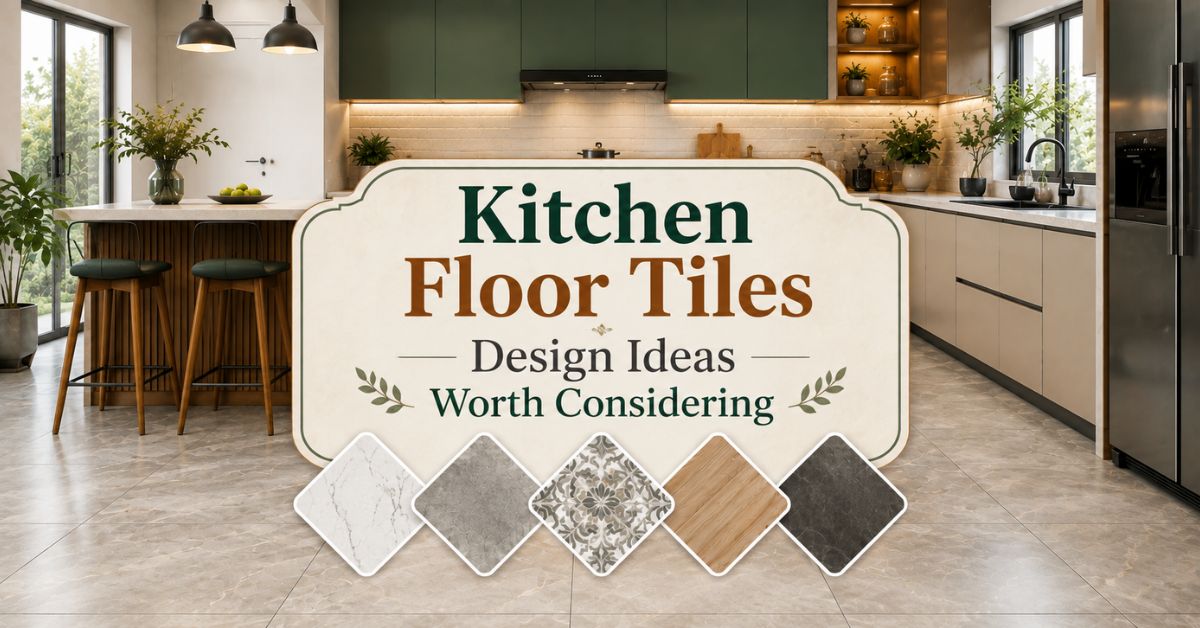
A kitchen floor faces more daily stress than almost any other surface in a home, handling dropped utensils, spilled liquids, and constant foot traffic while still needing to look genuinely presentable. Kitchen floor tiles design brings together durability, safety, and visual appeal into a single decision that homeowners typically live with for well over a decade. This guide walks through the materials, styles, and planning decisions that shape strong kitchen floor tiles design, along with the practical details worth checking before you commit to a direction for your own kitchen.
Why Kitchen Floor Tiles Design Deserves Careful Thought
Many homeowners underestimate how much daily wear a kitchen floor actually endures compared to flooring in other parts of the home, treating tile selection as a purely visual decision rather than a practical one. Kitchen tiles design for the floor specifically needs to prioritise slip resistance, stain resistance, and genuine durability, since this surface deals with water, oil, and dropped items far more regularly than a bedroom or living room floor ever would. A well-chosen kitchen floor tiles design also affects daily safety directly, since a beautiful but slippery floor becomes a genuine hazard the moment water or oil reaches its surface. Getting this decision right, rather than choosing purely on appearance, protects both your household’s safety and your long-term investment in the space.
Materials That Perform Well on Kitchen Floors
Material choice affects durability, slip resistance, and maintenance needs, and understanding the core options makes the rest of the decision considerably easier. Vitrified tiles remain a popular choice for kitchen floors, offering strong resistance to staining and daily wear without requiring frequent sealing or special care. Porcelain tiles perform particularly well in kitchen applications too, since their dense composition resists water absorption better than many ceramic alternatives available at a similar price point.
Natural stone options like granite bring genuine durability and a premium appearance, though they typically need periodic sealing to maintain their stain resistance over years of daily use. Textured or matte-finish tiles increasingly dominate kitchen floor tiles design choices specifically because their surface offers considerably better slip resistance than glossy alternatives, which matters enormously in a space that regularly deals with spills.
Also Read- Kitchen Wall Design Ideas: Tips, Trends and Inspiration 2026
Popular Styles and Patterns Worth Knowing
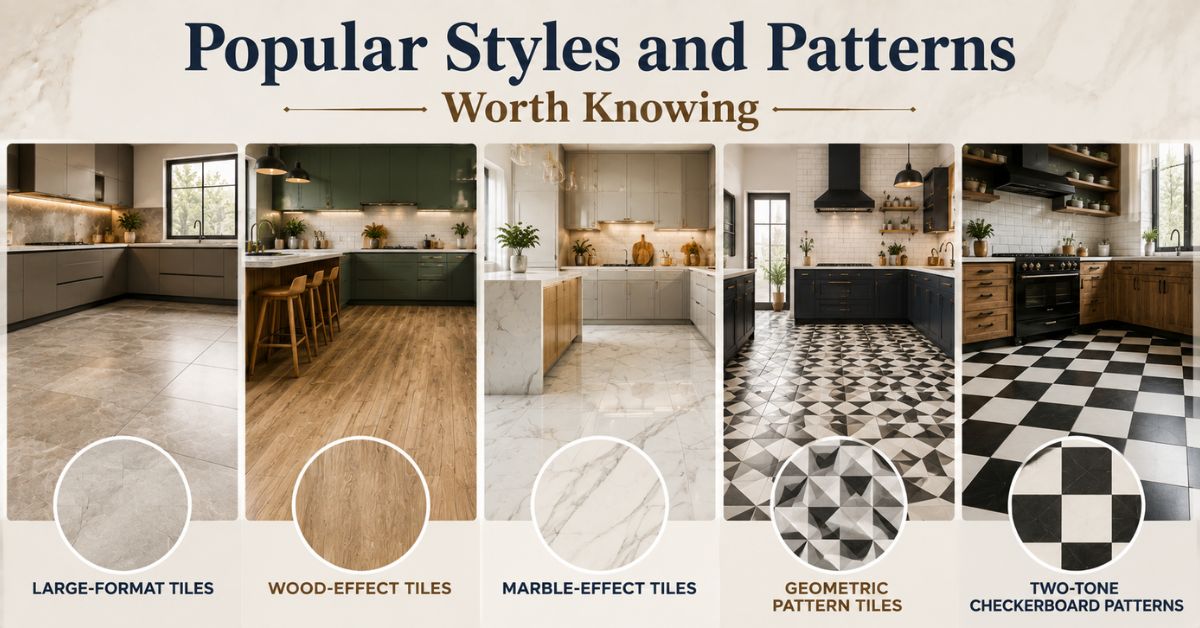
Kitchen floor tiles design today spans a genuinely wide range of visual styles, moving well beyond the plain, single-colour tiles common in earlier decades. Reviewing these options helps clarify which direction might suit your own kitchen and taste.
- Large-format tiles – bigger tile sizes that reduce visible grout lines for a cleaner, more seamless floor appearance
- Wood-effect tiles – a warm, timber-look finish combining visual character with far better moisture resistance than real wood
- Marble-effect tiles – porcelain or vitrified tiles printed to replicate natural marble at a fraction of the material cost
- Geometric pattern tiles – bold repeating shapes that add visual interest, often paired with plain cabinetry above
- Two-tone checkerboard patterns – a classic contrast pattern that suits both traditional and contemporary kitchen styles
Modern kitchen floor tiles design increasingly leans toward these large-format and wood-effect options over the small, heavily patterned tiles once common, reflecting a broader shift toward cleaner, more understated kitchen aesthetics.
Coordinating Floor and Wall Tiles
Kitchen floor and wall tiles design decisions work best when planned together rather than in isolation, since these two surfaces sit in close visual proximity throughout the entire kitchen. A cohesive material and colour palette across both floor and wall tiles creates a more considered, unified appearance than mismatched choices selected independently at different stages of the project.
Many homeowners choose a neutral floor paired with a slightly bolder wall tile behind the cooking area, allowing the wall to serve as more of a visual accent while the floor provides a calmer, more durable base. Kitchen floor and wall tiles design coordination also extends to grout colour, since consistent grout tones across both surfaces reinforce the sense of a single, well-planned scheme rather than two separately chosen elements.
What’s Trending in Kitchen Floor Tiles Right Now
The latest kitchen floor tiles design trends reflect a broader shift toward simplicity and practicality over heavily patterned, decorative floors. Matte and textured finishes continue gaining ground over glossy alternatives, driven largely by genuine safety concerns rather than aesthetic preference alone. Latest tiles design for kitchen floor applications also increasingly favour large-format tiles, since fewer grout lines mean less regular cleaning and a more seamless overall appearance. Neutral, earthy tones remain particularly popular too, since these shades age well and continue to suit changing cabinetry or appliance colours over the years a kitchen typically stays in use before renovation.
Also Read- Floor Colors Guide: Best Shades to Transform Any Room
Finding the Best Kitchen Floor Tiles Design for Your Space
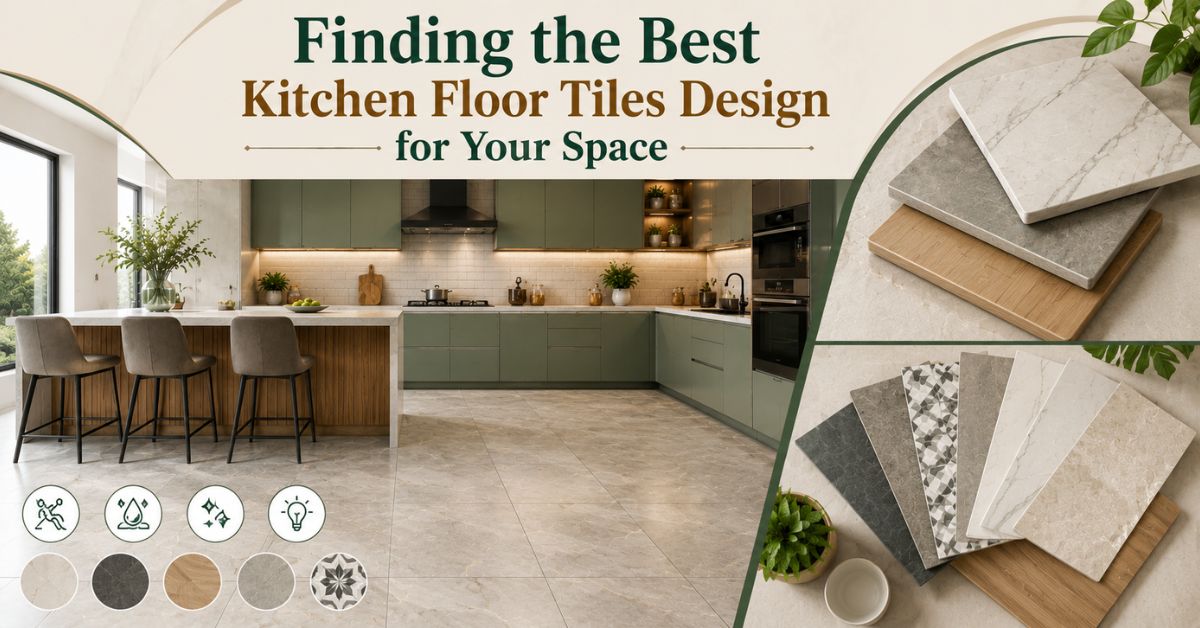
Identifying the best kitchen floor tiles design for a specific kitchen depends on balancing slip resistance, maintenance needs, and your household’s actual cooking habits rather than following any single universally superior choice. A household that cooks frequently and deals with regular oil splatter benefits from prioritising slip resistance and stain resistance above all else, even if this means compromising slightly on a glossier appearance.
Smaller kitchens generally benefit from lighter tones and larger tile formats, since fewer grout lines and brighter colours both contribute to a more spacious feeling within a compact footprint. Comparing a few samples directly in your own kitchen lighting, rather than relying purely on showroom appearance, remains the most reliable way to judge which option genuinely qualifies as the best kitchen floor tiles design for your specific space.
Key Factors to Check Before You Finalise Your Tiles
Before committing to any particular kitchen floor tiles design, a handful of practical checks can help you avoid costly mistakes later.
- Slip resistance rating – prioritise textured or matte finishes over glossy tiles, particularly important given regular spills
- Water absorption rate – check this specification closely, since kitchen floors face more moisture exposure than most other rooms
- Grout width and colour – decide on grout specifications early, since narrower grout lines simplify ongoing cleaning
- Batch consistency – source enough tiles from a single production batch to avoid visible colour variation across the floor
- Room lighting – view samples under your kitchen’s actual lighting conditions before finalising a tone or finish
- Long-term maintenance – weigh upfront appearance against how much ongoing cleaning and sealing the material will require
Maintenance Tips for Long-Lasting Kitchen Floors
Even the best kitchen floor tiles design will show wear prematurely without some basic ongoing care built into a regular cleaning routine. Sweep or mop floors regularly to prevent grit and food residue from acting as an abrasive under daily foot traffic. Use a pH-neutral cleaner suited to your specific tile material, avoiding harsh chemicals that can dull matte or textured finishes over repeated use. Reseal natural stone tiles periodically, since this porous material needs ongoing protection to resist staining from oil and food spills. Address any cracked or chipped tiles promptly, since moisture can seep beneath damaged sections and cause further issues over time.
Also Read- Kitchen Cabinet Colors That Will Transform Your Space in 2026
Common Mistakes to Avoid in Kitchen Floor Tiles Selection
Many homeowners select kitchen floor tiles purely based on showroom appearance, without checking slip resistance ratings that matter considerably more in a space prone to spills. Avoid choosing highly glossy tiles purely for their appearance, since a beautiful floor that becomes dangerously slippery when wet creates a genuine safety concern for the entire household. Do not overlook grout maintenance requirements when comparing options, since a stunning tile paired with grout that stains easily can quickly begin looking unkempt. Skipping a physical sample check under your kitchen’s actual lighting is another common misstep, since tile colours can appear noticeably different than they did in a bright showroom setting.
Bringing It All Together
Kitchen floor tiles design shapes both everyday safety and lasting visual appeal, making it a decision worth genuine comparison rather than a rushed choice. From selecting the right material and finish to coordinating with your wall tiles and checking practical factors like slip resistance, every choice contributes to how the space performs and looks for years to come. Taking the time to compare a few options, view samples under your actual kitchen lighting, and prioritise safety alongside style ensures the kitchen floor tiles design you choose serves your home well for a long time ahead.
Explore Express Builders ongoing residential projects across Noida and Greater Noida West. See the quality and planning behind every home firsthand.
Book a free site visit today with Express Builders. Walk through our ongoing projects and see construction quality up close. Check out floor plans, amenities, and location advantages in person. Meet our team and get your property-related questions answered directly. Schedule a visit at your convenience.
Frequently Asked Questions
1. What is the best kitchen floor tiles design for slip resistance?
Matte or textured finishes on porcelain or vitrified tiles generally offer the best slip resistance for busy kitchen floors.
2. Should kitchen floor and wall tiles design match exactly?
Not necessarily, though a coordinated palette between the two surfaces creates a more cohesive, considered overall appearance.
3. Are large-format tiles a good choice for kitchen floors?
Yes, larger tiles reduce visible grout lines, simplifying cleaning while creating a more seamless, spacious appearance.
4. What is trending in kitchen floor tiles design right now?
Matte finishes, large-format tiles, and neutral earthy tones remain the dominant trends in modern kitchen floor tiles design.
5. How often should kitchen floor tiles be resealed?
Natural stone tiles generally need resealing every one to two years, while vitrified and porcelain tiles need far less frequent care.
