
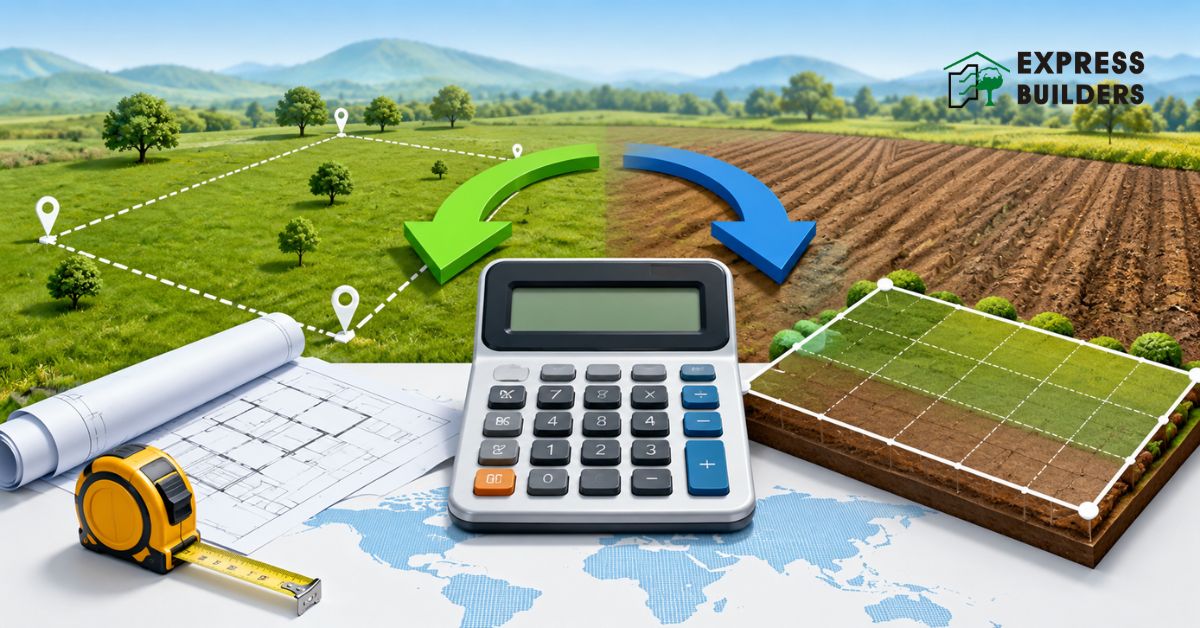
Measuring land sounds simple. Until you see three different numbers for the same plot. One document says square feet. Another says acres. A third mentions hectares. Suddenly, a straightforward property deal feels like solving a puzzle.
This is where an area converter becomes useful. It takes the guesswork out of unit conversion. You enter a value, pick your units, and get an instant, accurate result. This guide breaks down how area conversion works, why it matters, and how to use it correctly. No jargon. No confusion. Just practical clarity.
Why Area Conversion Confuses So Many People
Different countries use different measurement systems. The United States often relies on square feet and acres. Many other regions use square meters or hectares. Older land records sometimes use units like bigha, gaj or marla.
This mix creates real problems. Buyers misjudge property size. Builders miscalculate material needs. Farmers misreport land holdings. A small conversion error can lead to expensive mistakes.
A land area converter removes that risk. It standardizes numbers across systems. Whether you’re comparing plots or filing documents, the values stay consistent.
What an Area Converter Actually Does
An area converter changes one unit of measurement into another. You input a number, such as 2,000 square feet. Then you select the unit you want, such as square meters or acres. The tool instantly recalculates the value using standard conversion formulas.
This removes manual math from the process. Manual calculations often involve long decimal conversions. One misplaced decimal point can distort the entire result. A reliable unit converter area tool avoids that risk entirely.
Most tools follow the same basic structure:
- Choose the starting unit
- Enter the measurement value
- Select the target unit
- View the converted result immediately
The process takes seconds. There’s no need to memorize formulas or carry a calculator.
Common Situations Where You Need Area Conversion
Buying or Selling Property
Property listings vary by region. A plot advertised in square yards might need conversion to acres for legal paperwork. Buyers who skip this step risk misunderstanding the actual size of what they’re purchasing.
Construction and Architecture
Contractors calculate materials based on surface area. Tiles, paint, flooring, and roofing all depend on accurate area figures. A mistake here means wasted budget or material shortages mid-project.
Agriculture and Farming
Farmers often deal with multiple unit systems, especially in regions with historical land measurement practices. Government records might use one unit while local practice uses another. A land area converter bridges that gap smoothly.
Academic and Research Work
Students and researchers frequently convert measurements while working with international data sets. Consistency matters when comparing studies from different countries.
How to Use an Area Converter Correctly
Using a unit converter area tool correctly starts with knowing your source unit. Always double-check the unit mentioned in your original document or measurement source.
Next, confirm the target unit needed for your purpose. Legal documents, construction plans, and academic papers often specify exact units required. Then, enter the numeric value carefully. Small typing errors lead to major discrepancies, especially with large land measurements.
Finally, review the converted result. Cross-check it against a rough manual estimate if the number seems unusually large or small. This habit catches accidental input errors before they cause bigger problems.
Manual Conversion vs Automated Tools
Manual conversion works for simple, well-known units. Converting square feet to square yards is straightforward since the formula is easy to remember.
However, manual methods struggle with regional or uncommon units. Converting bigha to square meters, for example, involves formulas that vary by state or country. These variations make manual calculation risky.
Automated area converter tools solve this instantly. They store standardized conversion rates for dozens of unit types. This accuracy matters most in legal, financial, and construction contexts where errors carry real consequences.
Tips for Accurate Area Conversion
Always confirm the exact unit definition before converting. Some units, like acres, have slightly different regional definitions in rare cases. Round numbers only after conversion, not before. Rounding early increases the margin of error in the final result.
Keep source documents handy while converting. This helps verify that your input matches the original measurement exactly. Use trusted tools with clear, verified formulas. Reliable results depend on accurate underlying conversion rates.
Final Thoughts
Land and space measurement doesn’t need to be confusing. An area converter simplifies conversions that would otherwise require manual formulas and careful math. Whether you’re buying property, planning construction, or handling agricultural records, accurate conversion protects you from costly mistakes.
Take a few extra seconds to verify your numbers. That small habit saves time, money, and stress down the line.
Ready to simplify your measurements?
Skip the manual math and convert land or space units accurately in seconds. Whether you’re closing a property deal, planning a build, or reviewing farm records, get precise numbers you can trust right when you need them most.
Looking for verified 1, 2 and 3BHK apartments for sale in Greater Noida? Get in touch with our team to schedule a personalised site visit and if you’re also considering more space, take a look at our 3 BHK flats in Greater Noida buying guide.
Frequently Asked Questions
How to convert area to square feet?
Identify your starting unit, such as square meters or acres. Multiply the value by the standard conversion factor for square feet. For example, one square meter equals roughly 10.76 square feet. An area converter automates this instantly and avoids manual calculation errors.
How to convert volume to surface area?
Volume and surface area measure different properties, so direct conversion isn’t possible without shape details. You need the object’s dimensions, like length, width, and height, to calculate surface area separately using shape-specific geometric formulas for accurate results.
How to convert perimeter into area?
The perimeter alone cannot determine the area without knowing the shape’s dimensions. Two shapes can share the same perimeter but have different areas. You need at least the length and width, or radius, before calculating area accurately.
How to convert perimeter to area?
Like above, perimeter doesn’t directly convert into area. Different shapes with equal perimeters produce different area values. Determine the shape type first, then use its specific formula involving side lengths or radius to calculate area correctly.
How to convert area into length and width?
Area alone gives one equation with two unknowns, so a single fixed answer isn’t possible unless you know the shape or one dimension. If it’s a rectangle and one side length is known, divide the area by that side to find the other.
