
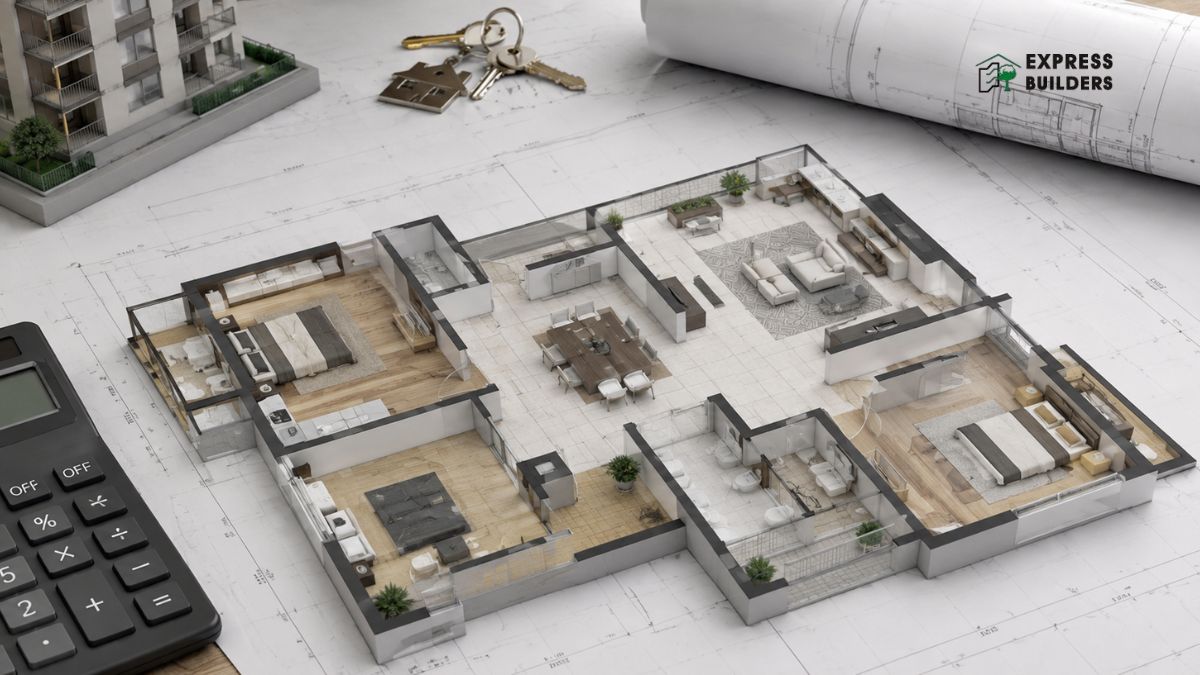
Buying a home is one of the biggest financial decisions of your life. Real estate terminology can feel overwhelming for most buyers. Two terms cause the most confusion in the Indian property market. These terms are super built up area vs carpet area. Understanding the difference between these two terms is essential. It helps you know exactly what you are paying for. It also helps you compare properties fairly and accurately. This guide breaks down both terms in clear and simple language.
What Is Carpet Area?
Carpet area is the most important measurement for any home buyer. It refers to the actual usable floor space inside your apartment. Imagine placing a carpet on the floor of your home. The total area you can cover is your carpet area.
Carpet area includes your bedrooms, living room, kitchen, and bathrooms. It also includes the space covered by internal partition walls. It does not include external walls, open terraces, balconies, or common areas. Carpet area is the space where you actually live and move around every day.
The Real Estate Regulatory Authority, known as RERA, defines carpet area very clearly. RERA describes it as the net usable floor area of an apartment. All registered builders must disclose this figure to buyers. RERA made carpet area the legal standard unit for residential property transactions. This rule ensures buyers receive accurate and consistent information at all times.
Carpet area gives you a clear and honest picture of your living space. It is the most transparent and buyer-friendly measurement available. When comparing two properties, always compare their carpet areas first. This approach ensures a fair and accurate comparison every time.
What Is Built Up Area?
Built up area is always larger than carpet area. It includes carpet area plus the space covered by external walls. In some cases, it also includes balconies, flower beds, and utility areas.
The external walls of an apartment occupy a certain amount of floor space. Built up area accounts for this additional space. Generally, built up area is about 10 to 15 percent more than carpet area. Some builders use this figure in their project brochures and marketing materials. It can make an apartment appear larger than the actual usable space. Always ask for the carpet area separately when a builder quotes built up area.
What Is Super Built Up Area?
Super built up area is the largest of the three measurements. It includes the built up area of your apartment plus a proportional share of common areas. Common areas include lobbies, corridors, staircases, lifts, gyms, and clubhouses. Builders distribute the total common area proportionally among all apartment owners in the project.
Developers in India frequently use super built up area when pricing their properties. This figure is also called saleable area. Pricing based on a per square foot rate applied to super built up area can seem misleading. The total area you pay for is always larger than the space you actually use.
The difference between built up area and super built up area is determined by the loading factor. A loading factor of 25 percent means 25 percent of your super built up area is shared space. Assume your super built up area is 1000 square feet. Your actual usable carpet area may be only 750 square feet.
Loading factors vary significantly from project to project. Projects with more amenities like swimming pools, gyms, and grand lobbies carry higher loading factors. A higher loading factor means a bigger gap between super built up area vs carpet area. Buyers must factor this in before comparing properties across different projects.
Super Built Up Area vs Carpet Area: The Core Difference
The core difference lies in what each measurement actually includes. Carpet area reflects only the space inside your apartment walls. Super built up area adds a proportional share of all shared common spaces on top.
Carpet area is the space you exclusively use every single day. Super built up area includes spaces that all residents in the building share together. The gap between super built up area vs carpet area is typically 25 to 40 percent. In luxury projects with extensive amenities, this gap can go even higher.
Here is a simple breakdown of the three terms:
Carpet area covers your rooms, kitchen, bathrooms, and internal walls.
Built up area adds your external walls and balconies to carpet area.
Super built up area adds a proportional share of all common areas to built up area.
This layered structure means super built up area will always appear as the largest figure. It will always make your home seem bigger than it actually is. Buyers must understand this clearly before negotiating or signing any agreement.
Why Does This Difference Matter to You?
The difference between super built up area vs carpet area directly affects your budget. Builders price properties on a per square foot basis. If the pricing uses super built up area, your actual cost per usable square foot rises significantly.
Consider a simple example. A flat is priced at Rs. 5,000 per square foot. The super built up area is 1,200 square feet. The total purchase price is Rs. 60 lakhs. However, the actual carpet area of that flat is only 840 square feet. Your effective cost per carpet area square foot becomes approximately Rs. 7,142. That is a significant and important difference.
This example shows why calculating the price per carpet area square foot matters so much. It gives you the true cost of your purchase. It also allows you to compare different properties on equal and honest terms.
Home buyers who focus only on super built up area often feel surprised after possession. The home feels much smaller than expected during the site visit. Understanding this difference helps you avoid that unpleasant and costly situation.
How RERA Changed the Real Estate Landscape
RERA changed the way builders communicate with buyers in India. Before RERA, builders freely used super built up area for all marketing and pricing. Buyers had no standardised way to compare the true size of different properties.
RERA now mandates that builders disclose carpet area for every residential unit. The sale agreement must include the carpet area as defined under the RERA act. Builders cannot charge buyers for a carpet area larger than what they actually deliver. This rule prevents overcharging and protects buyers from misleading marketing tactics.
RERA defines carpet area strictly as the net usable floor area of an apartment. It includes the space between internal partition walls. It excludes external walls, exclusive open terraces, balconies, and common areas. This precise definition gives buyers a reliable and consistent benchmark.
You can verify a project’s carpet area on the official RERA portal of your state. Every registered project must publicly display carpet area details. This gives you a reliable and official reference point before you commit to any purchase.
How to Calculate Carpet Area from Super Built Up Area
Knowing how to estimate carpet area from super built up area is very useful. The formula is simple and easy to apply. Divide the super built up area by the loading factor to get the approximate carpet area.
For example, assume the super built up area is 1,300 square feet. The loading factor for the project is 1.30. Dividing 1,300 by 1.30 gives a carpet area of approximately 1,000 square feet.
Always ask the builder for the exact loading factor. Also request the RERA-defined carpet area for the unit. Use both figures to clearly understand what you are paying for. Compare the price per carpet area square foot before you make any investment decision.
What Should You Focus on When Evaluating a Property?
When you evaluate any property, carpet area must be your starting point. It tells you exactly how much space your family will actually live in. Super built up area gives you a broader picture of the project’s scope. But it should never replace carpet area as your primary benchmark.
Request a detailed floor plan from the builder before your site visit. Floor plans show the layout of your apartment with clear and accurate dimensions. They help you visualize how the carpet area is spread across different rooms. A well-designed floor plan reveals whether the space is used efficiently.
Also, look closely at the common areas included in the super built up area. A project with a large swimming pool, gymnasium, and grand lobby will always carry a higher loading factor. These are excellent amenities for residents. But they also mean you pay for more shared space within your super built up area. Weigh these benefits carefully against the actual carpet area your family needs daily.
Common Mistakes Home Buyers Make
Many home buyers compare super built up areas across different projects. Two projects may show the same super built up area but offer very different carpet areas. This happens because their loading factors are different. Comparing super built up areas across projects without knowing loading factors leads to bad decisions.
Another common mistake is assuming super built up area equals your living space. This misunderstanding creates unpleasant surprises at the time of possession. The home feels much smaller than what was shown during the site visit.
Some buyers also skip verifying details on the RERA portal before visiting a project. Registered projects must display carpet area information publicly and clearly. Checking this before any site visit helps you prepare better questions for the builder.
Practical Tips for Smarter Home Buying
Always ask for the RERA carpet area before you compare any properties. Do not accept only super built up area figures from builders or sales teams. Calculate the price per carpet area square foot for every property you evaluate. Ask builders to clearly list all areas included in their super built up area calculation. Read your sale agreement carefully and confirm the carpet area is correctly stated. Check the project’s registration details on your state RERA portal before any commitment.
Conclusion
Understanding super built up area vs carpet area is a fundamental part of smart home buying. Carpet area tells you the real usable space inside your home. Super built up area includes your flat’s built up area plus a share of all common amenities. The difference between these two figures can range from 25 to 40 percent or more. RERA has made it mandatory for builders to disclose carpet area clearly to every buyer. Always use carpet area as your primary metric when comparing and evaluating properties. Ask the right questions, read agreements carefully, and verify all details on the RERA portal. This knowledge gives you the confidence to invest wisely and without regret.
Buy Your Dream Home With Express Builders
Ready to buy a home where every square foot is fully transparent? Express Builder offers RERA-compliant residential projects with complete carpet area disclosures. Our expert team guides you through every detail before you invest a single rupee. Book a site visit today and experience honesty and transparency firsthand. Contact Express Builder now and take your first confident step toward your dream home.
Frequently Asked Questions
Q1. What is the difference between super built up area vs carpet area?
Carpet area is the actual usable floor space inside your apartment. Super built up area includes your carpet area plus a proportional share of all common spaces in the building. Common spaces include lifts, lobbies, staircases, corridors, and recreational facilities. The difference between the two typically ranges from 25 to 40 percent. Buyers should always focus on carpet area to understand the real living space they are purchasing.
Q2. Why do builders quote super built up area instead of carpet area?
Builders traditionally quoted super built up area because it shows a larger number than carpet area. A larger area figure makes the price per square foot appear lower and more attractive to buyers. This practice was very common in India before RERA came into effect. RERA now legally requires builders to disclose carpet area clearly in all sale agreements and marketing materials. Buyers should always demand RERA-defined carpet area details from any builder or developer.
Q3. How does RERA define carpet area for residential properties?
RERA defines carpet area as the net usable floor area of an apartment. It includes the space between internal partition walls of the unit. It excludes external walls, exclusive open terraces, balconies, and all common areas of the building. This definition applies uniformly to all RERA-registered projects across India. All registered sale agreements must mention carpet area as per this RERA definition without any exceptions.
Q4. How can I calculate carpet area from super built up area?
You can estimate carpet area by dividing the super built up area by the project’s loading factor. For example, if the super built up area is 1,300 square feet and the loading factor is 1.30, the carpet area is approximately 1,000 square feet. Always ask the builder to share the exact loading factor for the project. Also request the official RERA-defined carpet area for your specific unit. Use both figures together to make a fully informed and confident property purchase decision.
