
Walls often remain the most underused canvas in interior design, treated simply as a backdrop rather than a feature in their own right. Wall moulding designs change that completely by introducing texture, depth, and architectural interest to otherwise flat surfaces. What was once reserved for grand, traditional homes has now become an accessible design element that works beautifully in apartments, villas, and everything in between.
This guide explores everything you need to know about wall moulding designs, from materials and styles to placement ideas and maintenance, helping you decide how to bring this timeless design element into your own home.
What Makes Wall Moulding Designs So Popular
Moulding refers to decorative strips or profiles installed on walls to create raised patterns, borders, or panel effects. A well executed moulding design on wall surfaces instantly elevates a room, making it feel more curated and intentional rather than plain or unfinished. Unlike wallpaper or paint alone, moulding adds a three dimensional quality that catches light and shadow differently throughout the day, giving the room a subtle sense of movement.
Homeowners increasingly choose moulding wall design elements because they offer a way to add sophistication without committing to bold colors or elaborate furniture changes. A single accent wall with moulding can transform an entire room, making it a cost effective way to upgrade the look of a space during renovations or new construction.
Also Read- Kitchen Wall Tiles Design: A Complete Guide to Choosing the Perfect Style
Common Materials Used for Wall Mouldings
Selecting the right material determines both the final appearance and the long term durability of your moulding. Each option brings its own advantages depending on your budget and the style you want to achieve.
- PU moulding, made from polyurethane, resists moisture well and works nicely in humid climates without warping over time.
- MDF moulding offers a smooth, paintable surface and remains a popular, budget friendly choice for interior walls.
- Wood moulding brings a classic, natural warmth and suits traditional or transitional interior styles particularly well.
- PVC moulding resists water and insects effectively, making it a practical choice for bathrooms or coastal homes.
- Plaster of Paris moulding allows intricate detailing and works well for homeowners who want ornate, classic patterns.
Choosing a material suited to your room’s humidity levels and overall style ensures the moulding stays looking sharp for years without cracking or discoloring.
Popular Wall Moulding Design Styles
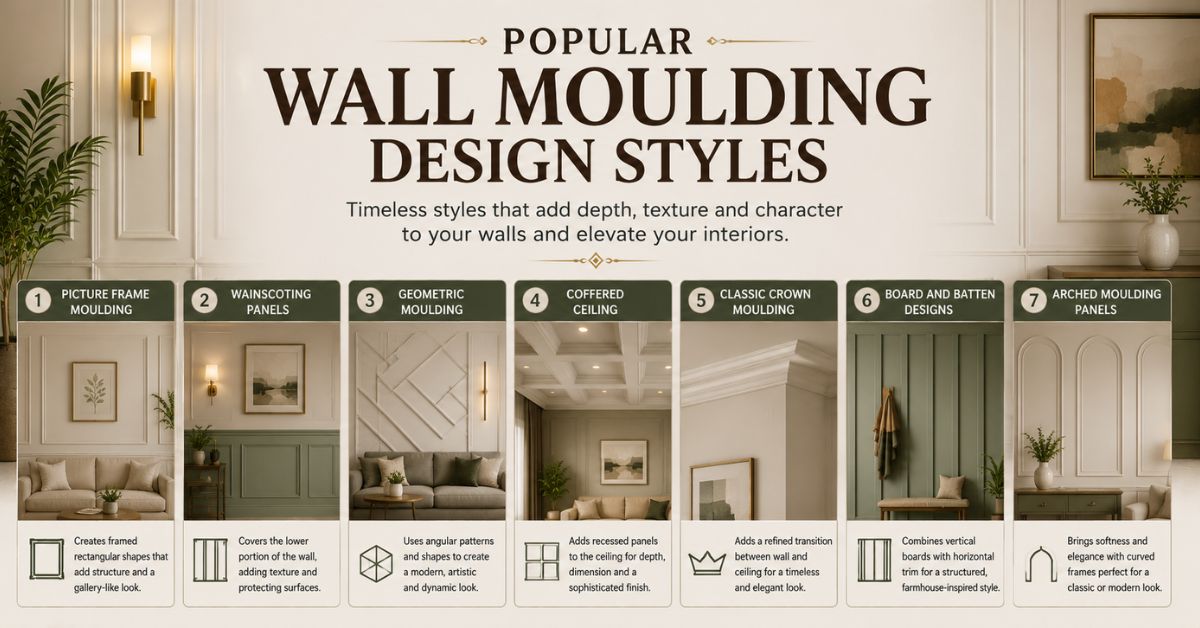
When exploring moulding design for wall projects, several styles consistently stand out for their versatility and visual appeal.
- Picture frame moulding – that creates rectangular outlines on the wall, adding a gallery like structure even without artwork
- Wainscoting panels – that cover the lower portion of the wall, adding texture and protecting against everyday scuffs
- Geometric moulding patterns – that introduce a modern, artistic feel through angular shapes and asymmetric layouts
- Coffered ceiling extensions – that continue moulding details from the ceiling down onto adjoining walls for a cohesive look
- Classic crown moulding – that adds a refined transition between the wall and ceiling in more traditional interiors
- Board and batten designs – that combine vertical strips with horizontal trim for a structured, farmhouse inspired look
- Arched moulding panels – that soften sharp corners and bring an elegant, curved element into the room
Each of these styles suits different interior themes, so choosing one often depends on whether your home leans toward classic elegance or clean, contemporary lines.
Exploring Wall Panel Moulding Designs
Wall panel moulding designs combine flat or textured panels with raised trim to create a layered, dimensional effect across an entire wall rather than just a single accent strip. This approach works particularly well in living rooms, dining areas, and bedroom headboards, where a larger surface benefits from a more structured design.
Panels can be arranged symmetrically for a formal, balanced look or asymmetrically for a more contemporary, artistic feel. Many homeowners also combine panel moulding with integrated lighting, placing LED strips within the recessed sections to highlight the depth and texture after dark. This combination of panel and light creates a striking focal point that works beautifully in feature walls behind sofas, beds, or television units.
Also Read- Kitchen Wall Design Ideas: Tips, Trends and Inspiration 2026
Understanding Granite Moulding Designs in Wall Panels
For homeowners seeking a more luxurious finish, granite moulding designs in wall panel applications offer a durable and visually rich alternative to painted or MDF trims. Granite strips, when combined with moulding profiles, add a polished, upscale texture that works particularly well in foyers, staircases, and formal living spaces.
The natural veining and shine of granite catch light beautifully within a moulded panel structure, creating contrast against surrounding wall finishes. While granite adds weight and cost compared to lighter materials, it also brings exceptional durability, resisting scratches and wear far better than softer moulding materials, making it a strong long term investment for high visibility areas of the home.
Also Read- Fabric Wall Panel Ideas Worth Considering
Planning the Moulding Section Design for Wall Layouts
Getting the proportions right matters just as much as choosing a style. A well planned moulding section design for wall layouts considers the height of the room, the size of the wall, and the furniture placement before finalizing the pattern.
- Keep moulding sections proportionate to ceiling height, since oversized panels can overwhelm rooms with lower ceilings
- Align moulding lines with existing architectural features like windows, doors, or fireplace surrounds for a cohesive look
- Use narrower moulding strips in smaller rooms to avoid making the space feel cramped or busy
- Leave adequate spacing between panels to let each section breathe rather than crowding the wall
- Consider the viewing distance, since intricate detailing works better up close while bold, simple lines read well from across a room
Careful planning at this stage prevents costly adjustments later and ensures the final result looks intentional rather than accidental.
Also Read- Wall Painting Design Ideas Worth Considering
Color and Finish Considerations
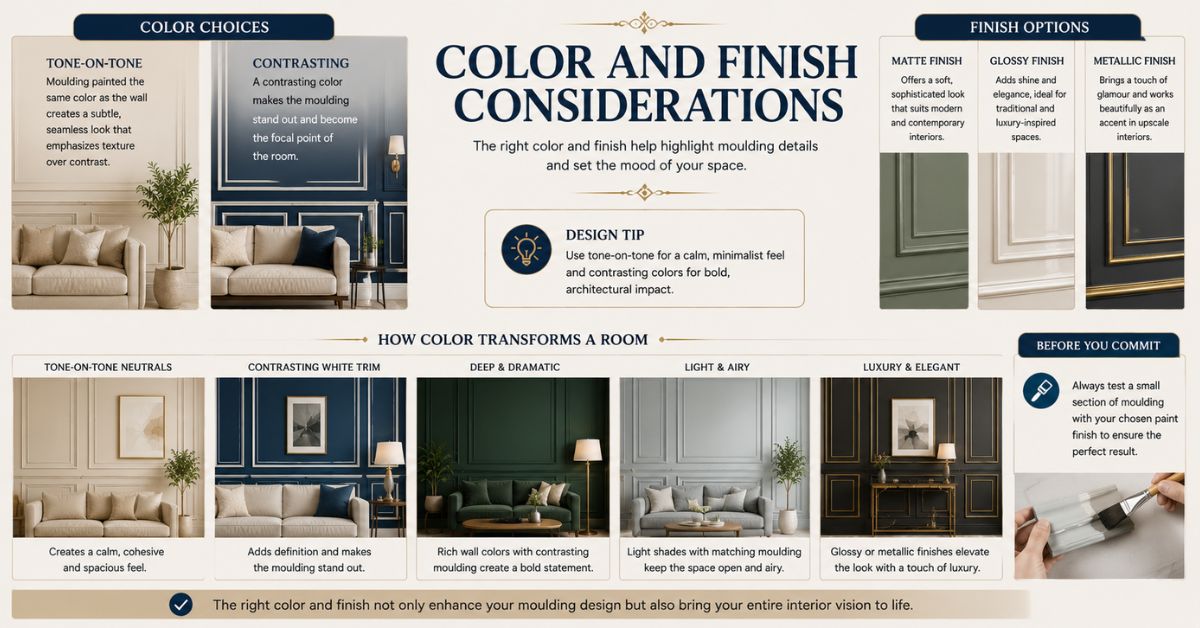
Color choice significantly influences how moulding reads within a room. Painting moulding the same color as the wall creates a subtle, tone on tone effect that emphasizes texture over contrast, which works well in minimalist interiors. Choosing a contrasting color for the moulding, such as white trim against a deep navy or forest green wall, makes the pattern the clear focal point of the room.
Matte finishes tend to suit contemporary interiors, while glossy or metallic finishes add a touch of glamour that pairs well with more traditional or luxury inspired spaces. Testing a small section of moulding with your chosen paint finish before committing to the full wall helps confirm the final look matches your vision.
Maintenance Tips for Wall Mouldings
Moulding generally requires minimal upkeep once installed correctly, though a few habits help preserve its appearance over time. Dusting mouldings regularly prevents buildup within the grooves and recessed sections, especially in more detailed or ornate designs. Wiping with a slightly damp cloth removes light stains without damaging painted surfaces, while avoiding excessive moisture protects materials like MDF and Plaster of Paris from warping.
Checking for small cracks or gaps periodically, particularly at wall joints, allows for early repairs before they become more noticeable or require larger fixes.
Also Read- PVC Wall Panel Designs for Modern Indian Homes
Choosing the Right Wall Moulding Design for Your Home
The best wall moulding designs depend heavily on your room’s function, ceiling height, and existing decor style. Formal living rooms and dining areas often suit classic panel moulding or wainscoting, while bedrooms benefit from softer, simpler accent designs behind the headboard. Modern apartments with lower ceilings generally look best with slim, geometric moulding patterns rather than heavy, ornate detailing that can visually shrink the space.
Taking time to consider these factors before installation ensures the moulding enhances your interior rather than competing with it, resulting in a space that feels thoughtfully designed and cohesive.
Explore Express Builders ongoing residential projects across Noida and Greater Noida West. See the quality and planning behind every home firsthand.
Book a free site visit today with Express Builders. Walk through our ongoing projects and see construction quality up close. Check out floor plans, amenities, and location advantages in person. Meet our team and get your property-related questions answered directly. Schedule a visit at your convenience.
Frequently Asked Questions
What is wall moulding used for?
Wall moulding adds decorative texture and architectural interest to plain walls, creating raised patterns, borders, or panel effects.
Which material works best for humid climates?
PU and PVC moulding resist moisture effectively, making them suitable choices for bathrooms or coastal homes.
Can moulding be added to existing walls without major renovation?
Yes, most moulding designs can be installed directly onto existing walls with minimal disruption to the surrounding structure.
Is granite moulding suitable for every room?
Granite moulding works best in formal or high visibility areas like foyers and staircases due to its weight and cost.
Does wall moulding require frequent maintenance?
No, moulding generally needs only occasional dusting and light cleaning to maintain its appearance over time.
