
A staircase does more than connect two floors of a home, and the grill running alongside it plays a far bigger role in the overall look and safety of that space than most homeowners initially realise. A well-planned stair grill design protects children and elderly family members from accidental falls while also shaping how the staircase reads visually within the wider interior. Over recent years, stair grill design has moved well beyond plain vertical bars into a wide range of materials, patterns, and finishes, giving homeowners far more choice than before. This guide walks through the materials, styles, and practical considerations behind a strong stair grill design.
Why Stair Grill Design Matters for Safety and Style
A staircase without a properly designed grill is a genuine safety hazard, particularly in homes with young children, elderly residents, or pets who might not judge the edge of a step accurately every time. Beyond the obvious safety function, a stair grill design also occupies a large, highly visible surface area within the home, often running the full height and length of the staircase and commanding real visual attention from anyone nearby. This makes the grill one of the more impactful design decisions in a multi-storey home, since it sits in near-constant view throughout daily life. A thoughtfully chosen design also tends to hold its value better over time, both in daily satisfaction and in how a future buyer perceives the home during a resale visit.
Materials That Shape a Strong Stair Grill
The material behind any stair grill design affects its strength, cost, and overall visual character, and understanding the core options makes the decision easier. A steel grill design for stairs remains one of the most popular choices today, prized for strength, low maintenance, and its ability to be shaped into both simple and detailed patterns without compromising structural integrity.
An iron grill design for stairs, particularly wrought iron, brings a heavier, more traditional character, often featuring curved scrollwork suited to homes with classic architecture. For a lighter, more understated look, a simple iron grill design for stairs using straight bars delivers strong safety performance without drawing excessive attention. Aluminium is another option, offering good corrosion resistance and lighter weight compared to traditional iron. Each material suits a different combination of budget, maintenance tolerance, and desired visual weight.
Popular Styles Defining Stair Grills Today
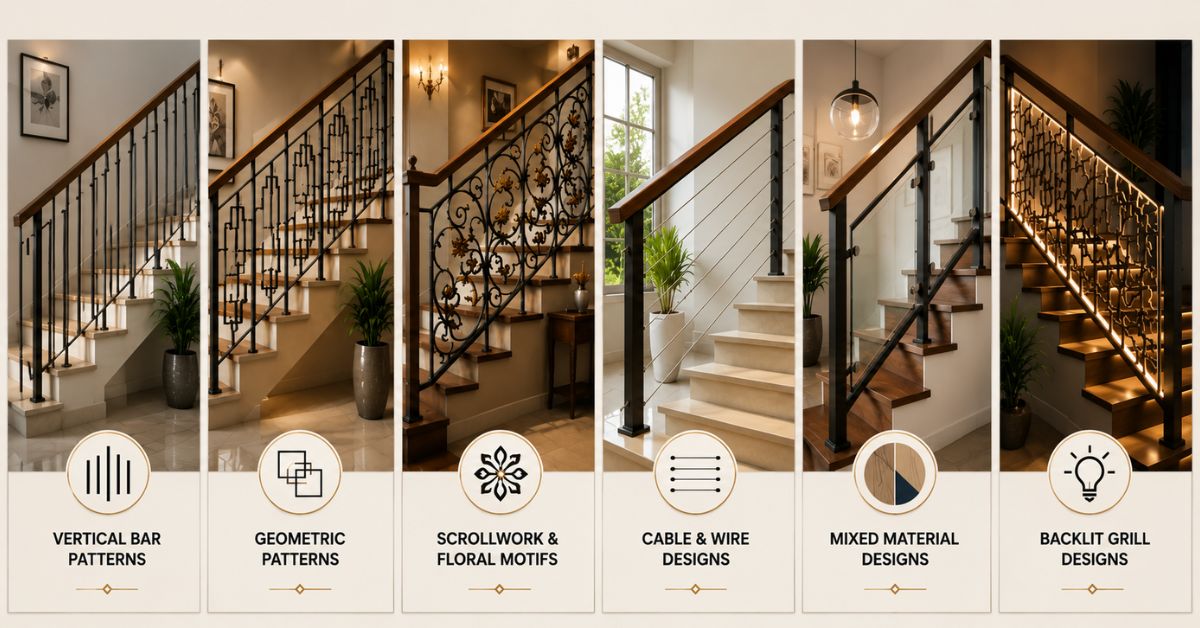
Stair grill styles have shifted considerably over recent years, moving toward cleaner, more adaptable patterns that pair well with a wide range of interior themes rather than the heavily ornamented designs that dominated an earlier era of home construction. Reviewing the styles currently trending helps clarify where a modern stairs grill design draws its visual language from.
- Vertical bar patterns – simple, evenly spaced bars offering a clean, timeless look that suits almost any interior
- Geometric patterns – repeating shapes like squares or diamonds that add structure without feeling overly decorative
- Scrollwork and floral motifs – curved, detailed patterns suited to homes with a traditional or heritage-inspired theme
- Cable and wire designs – thin, taut steel wires that create an almost invisible barrier while maintaining strength
- Mixed material designs – combining steel or iron frames with wood handrails or glass panels for added texture
- Backlit grill designs – incorporating subtle lighting behind or within the pattern for a striking effect after dark
The latest stairs grill design trends tend to favour these lighter, more open patterns over the dense, fully enclosed designs that were common in earlier decades, largely because they let more natural light travel through a staircase area that can otherwise feel closed off and dim.
Choosing the Right Pattern for Your Staircase
Selecting the right pattern for a stair grill design depends heavily on the overall character of your home and how much visual weight you want the staircase to carry. A simple iron grill design for stairs, using straight, evenly spaced bars, suits modern, minimal interiors well, since it avoids competing with other elements in an already active part of the home. Homes with a traditional interior often benefit from detailed scrollwork or curved patterns that echo the broader architectural language elsewhere.
A modern stairs grill design frequently favours geometric repetition over dense ornamentation, using shapes like squares or slim rectangles for structure without feeling heavy. It also helps to consider how the pattern reads from multiple angles, since a design that looks strong from one vantage point can feel unbalanced from others.
Bringing Glass Into Your Stair Grill Design
Glass grill designs for stairs have grown noticeably in popularity among homeowners working with contemporary interiors, largely because glass solves a practical problem while still meeting safety requirements. A staircase enclosed by a solid grill pattern can feel visually heavier than one finished with a tempered glass panel, which allows sightlines to pass through uninterrupted. Glass grill designs for stairs are typically paired with a slim steel or aluminium frame for structural support, balancing transparency with the strength a safe barrier requires.
This works particularly well in smaller homes where preserving natural light makes a real difference to how spacious the interior feels. Builders typically use toughened, safety-rated glass here, ensuring the material performs reliably under daily contact and occasional impact.
How Stair Grills Relate to Window Grill Design
Many homeowners plan their stair grill design alongside their window grill design, since matching these elements creates a stronger sense of continuity throughout the home. A window grill design using simple vertical bars pairs naturally with a similarly minimal stair grill, while more decorative window grill design elements often benefit from echoing that detail on the staircase. This coordination does not need an identical pattern in both locations, just a consistent material, finish, and level of visual complexity that ties the spaces together. Homeowners building a new property often find it useful to finalise their window grill design early, since it serves as a helpful reference point when selecting the stair grill pattern.
Key Factors to Check Before You Finalise a Design
Before committing to any particular stair grill design, a handful of practical checks can help you avoid costly mistakes or safety oversights later. Reviewing this list carefully during your selection process ensures the design you choose performs as well as it looks.
- Gap width between bars – confirm the spacing is narrow enough to prevent a young child from slipping through
- Height and coverage – check that the grill runs to an appropriate height along the full length of the staircase
- Structural fixing – ensure the grill is firmly anchored to the staircase structure, not just decoratively attached
- Material finish – choose a coating or finish appropriate for your home’s humidity and general climate conditions
- Weight and load rating – confirm the design can bear the expected handrail pressure from daily use over many years
- Visual continuity – consider how the pattern will look alongside your flooring, railings, and nearby window grill design
Matching Your Stair Grill With the Rest of the Home
A stair grill design should feel like a natural extension of the home’s broader interior language, rather than a decorative choice made in isolation. Homes with a consistent material palette throughout, such as matte black steel used across railings and window frames, tend to feel more cohesive than those where each element was chosen independently. If your staircase sits within an open-plan layout visible from the living area, it is worth treating the grill as a genuine design feature, since it stays in view throughout much of the day. A staircase tucked into an enclosed hallway has more flexibility to prioritise function over visual statement.
Also Read- House Front Veranda Grill Design: Styles and Tips
Maintenance Tips for Long-Lasting Stair Grills
Even the best stair grill design will show wear prematurely without basic ongoing care as part of your household routine. Wipe steel and aluminium grills periodically with a soft, damp cloth to prevent dust from building up in the joints. Check iron grills for early rust once or twice a year, particularly in humid climates, and address spotting with fresh protective paint before it spreads. Glass panels should be cleaned with a gentle, streak-free cleaner to avoid scratching the tempered finish. Tighten any loose fixings as soon as you notice them, since an unstable grill is a genuine safety concern, not just a cosmetic one.
Common Mistakes to Avoid in Stair Grill Design
Many homeowners choose a stair grill design based purely on how a sample panel looks in a showroom, without considering how the pattern reads across the full staircase. Avoid a wide gap between bars purely for aesthetic reasons, since this compromises the single most important safety function for a household with children. Do not overlook the finish appropriate for your climate, since a beautiful iron pattern can begin rusting within a humid season if improperly sealed. Skipping a physical inspection before ordering is another common misstep, since photographs rarely capture the true weight or texture of steel, iron, or glass. Avoid choosing a design purely to match trends, since a stair grill is typically a long-term fixture.
Also Read- Balcony Railing Design: Steel, Glass & Iron Ideas That Elevate Every Home
Bringing It All Together
Stair grill design sits at the intersection of everyday safety and long-term visual character, making it a decision worth genuine time and comparison rather than a rushed, last-minute choice. From selecting the right material and pattern for your staircase to coordinating the design with your home’s window grill design and broader interior palette, every choice contributes to how the space looks and performs for years to come. Taking the time to compare a few options, check practical factors like gap width and structural fixing, and view samples in person ensures the stair grill you choose serves your home safely and beautifully for many years ahead.
Explore Express Builders ongoing residential projects across Noida and Greater Noida West. See the quality and planning behind every home firsthand.
Book a free site visit today with Express Builders. Walk through our ongoing projects and see construction quality up close. Check out floor plans, amenities, and location advantages in person. Meet our team and get your property-related questions answered directly. Schedule a visit at your convenience.
Frequently Asked Questions
1. Which material offers the best stair grill design for humid climates?
Steel with a proper protective coating generally performs best in humid conditions, resisting rust more effectively than untreated iron.
2. Are glass grill designs for stairs considered safe for homes with children?
Yes, when tempered, safety-rated glass is paired with a sturdy steel or aluminium frame, glass panels meet standard safety requirements.
3. What is the ideal gap width between bars in a stair grill design?
A gap of around four inches or less is commonly recommended to prevent young children from slipping through the pattern.
4. Should my stair grill design match my window grill design?
It helps to coordinate material and finish between the two, though the exact pattern does not need to be identical.
5. How often should an iron stair grill be repainted?
Checking for rust once or twice a year and repainting every few years, or sooner if spotting appears, keeps an iron grill in good condition.
