
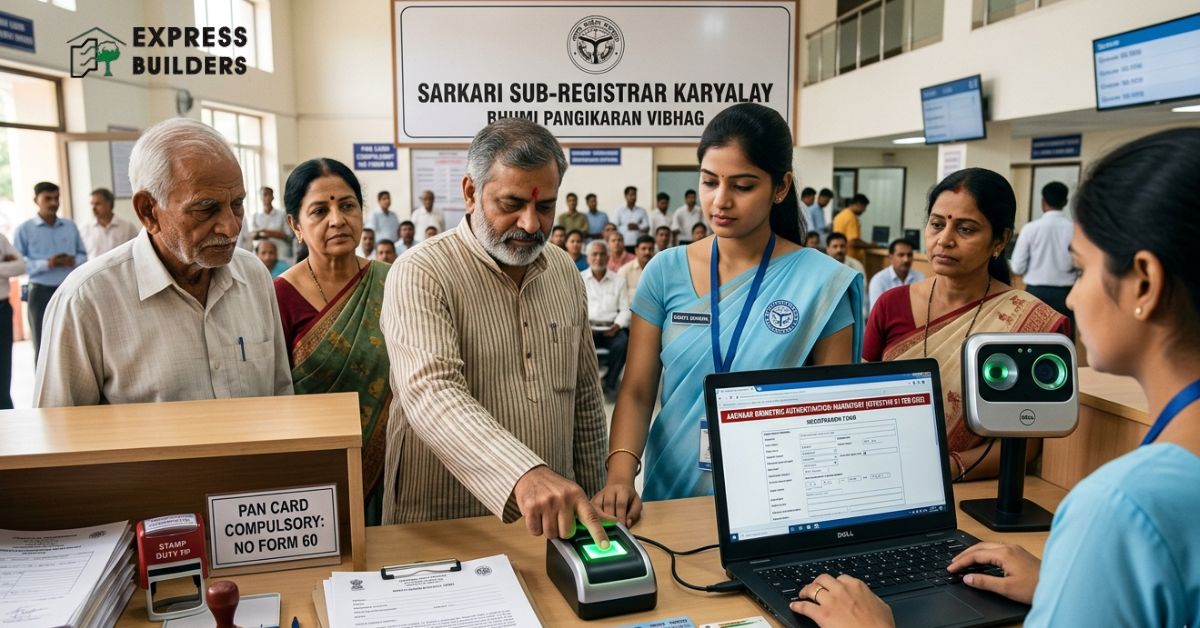
Buying or selling property in Uttar Pradesh now comes with a completely updated set of rules. The Yogi Adityanath government has introduced sweeping reforms to the land registry process. These changes came into effect from February 1, 2026. As a result, every buyer, seller, and witness must follow stricter verification standards. Therefore, understanding these updates is essential before visiting any Sub-Registrar Office.
Why Did UP Change Its Property Registration System?
For years, fake registrations and land fraud have been on the rise. As a result, property disputes clogged courts and drained the savings of genuine buyers. In addition, benami transactions caused significant revenue losses for the state. Because of these issues, the government stepped in with decisive reforms.
Now, the new rules place digital verification at the centre of every transaction. Moreover, they close loopholes that were exploited for decades. Consequently, the land registry system in UP is now smarter, faster, and far more secure.
Key Changes in Land Registry Rules 2026
Here is a simplified breakdown of the major updates:
Aadhaar Biometric Authentication is Now Mandatory:
From February 1, 2026, all parties must complete Aadhaar-based biometric verification. This includes fingerprint and iris scans. Without this step, the registry will not proceed.
PAN Card is Now Compulsory:
The Registry Department has made PAN cards mandatory. Earlier, Form 60 could be used as a substitute. However, that option has now been removed. Therefore, both buyer and seller must provide valid PAN details.
Khatauni Name Match is Strictly Enforced:
If the seller’s name does not match the Khatauni record, the process stops immediately. This rule, therefore, directly prevents impersonation fraud.
Cash Payment Limit Applies:
Any transaction above ₹20,000 must be done digitally. In other words, large cash payments are no longer accepted during registration.
Appointment Slot is Fixed at One Hour:
From April 1, 2026, each appointment lasts exactly one hour. If you miss your slot, then you must rebook and start again.
Circle Rates Have Been Revised Upward:
Properties in premium locations, such as corner plots or those near parks, now attract 10% to 25% higher circle rates. Consequently, cities like Noida and Lucknow are seeing a noticeable increase in stamp duty.
Stamp Duty on Rent Agreements Slashed:
On the other hand, stamp duty on rent agreements has been reduced by up to 90%. This move encourages formal rental registrations.
Ancestral Property Partition Gets a Flat Fee:
Instead of variable charges, a flat fee of ₹10,000 now applies to ancestral property partition deeds. Therefore, families benefit from predictable costs.
Also Read: Possession Certificate Explained: Importance, Benefits, and Application Process
Documents You Must Carry for Property Registration in UP
To avoid delays, make sure you carry all required documents. Otherwise, your registration may be halted.
- Aadhaar card (for all parties and witnesses)
- PAN card (mandatory)
- Old land records (Khasra number and Khatauni details)
- Plot number and total land area
- Sale deed or transfer document
- NOC from development authorities (if applicable)
In short, complete and accurate documentation ensures a smooth process.
How to Check the Land Registry Online in Uttar Pradesh
The IGRSUP portal handles all digital property services. As a result, you can check registry details without visiting an office.
Here is how:
- Visit igrsup.gov.in and log in
- Click on “Search Property Registration”
- Enter your document number and year
- Submit to view details
Additionally, the IGRSUP mobile app allows you to access these services anytime, anywhere.
How to Check Land Records in Uttar Pradesh Online
Similarly, the UP Bhulekh portal provides official land ownership data. You can verify records from home.
Steps include:
- Visit upbhulekh.gov.in
- Select district, tehsil, and village
- Enter the Khasra number or the owner’s name
- View or download the record
If you find any errors, then you should visit your local Tehsil office for corrections.
Property Registry Check Online: What You Can Verify
Before buying any property, it is wise to run a registry check online. This helps you avoid future disputes.
You can confirm:
- Whether the sale deed is registered
- If the seller’s name matches official records
- Any encumbrances on the property
- Applicable circle rates
Therefore, taking this step adds an extra layer of security to your transaction.
What These Changes Mean for Buyers and Sellers
Overall, the 2026 reforms place technology at the core of property transactions. As a result, buyers enjoy stronger protection against fraud. At the same time, sellers benefit from a faster and more streamlined process.
Most importantly, biometric verification ensures that every transaction is linked to a verified identity. Consequently, impersonation fraud becomes nearly impossible. In addition, PAN verification improves tracking of high-value transactions.
Although higher circle rates increase costs in premium areas, they also reflect true market values more accurately. Meanwhile, the flat fee for ancestral property partition offers much-needed financial clarity.
Stay Compliant and Stay Ahead
To make the most of these changes, preparation is key. First, gather all required documents. Next, book your appointment in advance. Then, verify property details online through IGRSUP and Bhulekh portals.
Ultimately, these reforms mark a major step toward a transparent and fraud-resistant property ecosystem in Uttar Pradesh.
Frequently Asked Questions (FAQs)
1. What is the best proof of ownership of property?
The recorded deed serves as the most reliable proof of ownership. It functions as an official public record, clearly identifying the individual or entity granted the property, the grantee, along with the relevant registration and recording details.
2. How to check if the property is valid?
You can confirm property ownership using documents like the sale deed, encumbrance certificate, mutation records, and property tax receipts. The sale deed establishes the ownership transfer and must be officially registered at the sub-registrar’s office.
3. What is the 12-year land rule in India?
As per Section 65 of the Limitation Act, 1963, a person who maintains continuous and uninterrupted possession of an immovable property for 12 years may acquire ownership rights, provided the legal owner fails to assert their claim during this period.
Ready to buy or register a property in Uttar Pradesh?
Navigating Uttar Pradesh’s new land registry rules is easier with the right developer. Express Builders offers legally compliant homes across Noida, Greater Noida, and Vasundhara, Ghaziabad, ensuring transparent documentation, smooth registration, and complete peace of mind for every homebuyer today. Book a site visit now!
