
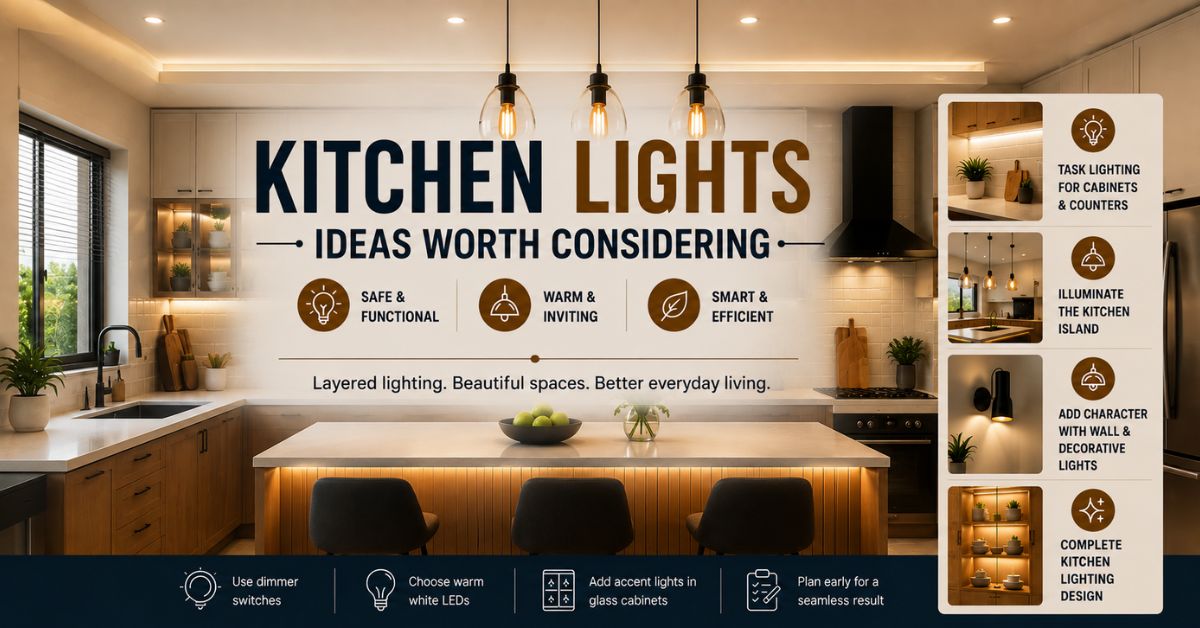
Good kitchen lights change how a space actually functions day to day, affecting everything from how safely you can chop vegetables to how inviting the room feels during an evening meal. Kitchen lights work best as a layered system rather than a single overhead fixture, combining general illumination with focused task lighting and softer accent sources to cover every activity the room needs to support. This guide walks through the fixture types, placements, and planning decisions that shape strong kitchen lights, along with the practical details worth checking before you commit to a lighting plan for your own kitchen.
Why Kitchen Lights Deserve Layered Planning
Many homeowners rely on a single central ceiling fixture for their entire kitchen, overlooking how much a layered approach improves both safety and daily comfort in the room. Kitchen lights need to serve genuinely different purposes throughout the space, since the area above the stove requires bright, focused illumination while a breakfast nook or dining corner benefits from softer, more relaxed lighting. A well-planned lighting scheme also reduces shadows across countertops, since a single overhead source often leaves the exact areas where cutting and prepping happen poorly lit by your own body blocking the light. Treating kitchen lights as a considered system, rather than a single fixture chosen quickly, genuinely improves how safely and comfortably the room functions every single day.
Also Read- Wall Light Design Ideas Worth Considering
Ceiling Options Worth Knowing
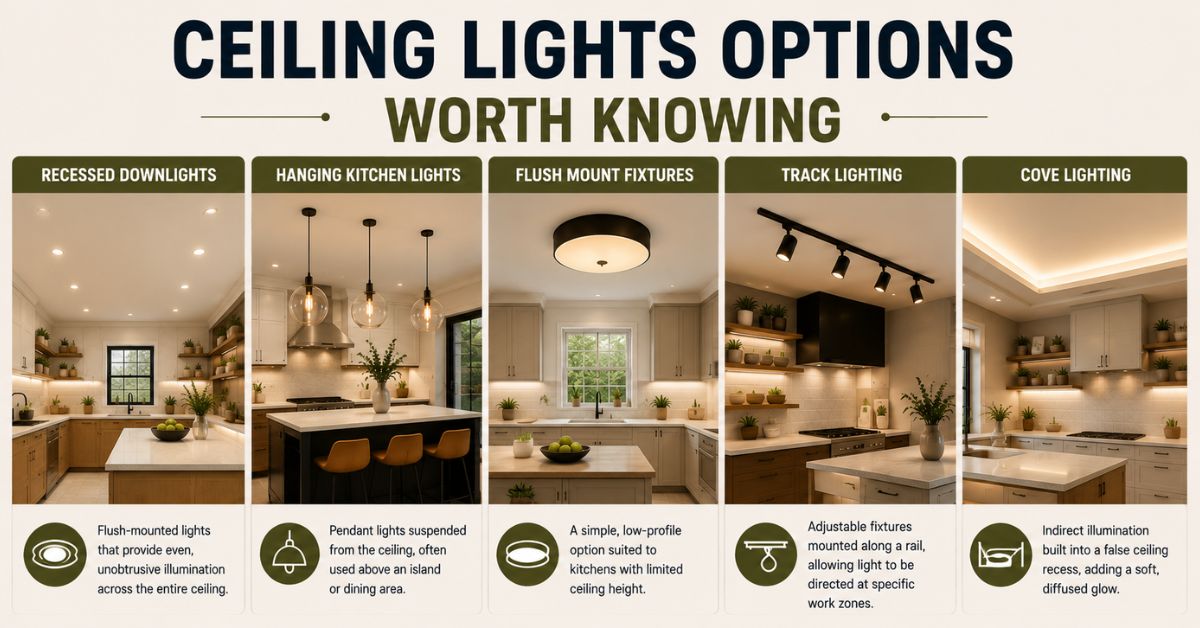
Kitchen ceiling lights form the foundation of most lighting plans, providing the general ambient illumination that fills the room before any additional task or accent lighting gets layered on top. Reviewing the most common ceiling options helps clarify which combination might suit your own kitchen.
- Recessed downlights – flush-mounted fixtures that provide even, unobtrusive illumination across the entire ceiling
- Hanging kitchen lights – pendant fixtures suspended from the ceiling, often used above an island or dining area
- Flush mount fixtures – a simple, low-profile option suited to kitchens with limited ceiling height
- Track lighting – adjustable fixtures mounted along a rail, allowing light to be directed at specific work zones
- Cove lighting – indirect illumination built into a false ceiling recess, adding a soft, diffused glow
Many kitchens combine recessed downlights for general coverage with hanging kitchen lights positioned specifically above an island or breakfast counter, layering ambient and focused illumination within the same ceiling plan.
Task Lighting for Cabinets and Counters
Kitchen cabinet lighting addresses one of the most persistent lighting gaps in a typical kitchen, since overhead fixtures alone often fail to illuminate the counter space directly beneath upper cabinets. Kitchen led strip lights, mounted along the underside of cabinets, deliver focused, even illumination exactly where food preparation happens, eliminating the shadows a purely overhead lighting scheme tends to create.
A kitchen profile light, a slim, recessed LED fixture built into cabinet trim or a false ceiling edge, offers a more integrated alternative to surface-mounted strips, providing similar functional benefit with a cleaner overall appearance. This kind of task-focused kitchen cabinet lighting matters considerably for both safety and convenience, since cutting vegetables or reading a recipe becomes noticeably easier under properly illuminated counter space compared to working in your own shadow.
Also Read- False Ceiling Lights: Designs, Colours & Ideas That Transform Any Room
Illuminating the Kitchen Island
Kitchen island lighting deserves particular attention, since the island typically functions as both a food preparation zone and a casual gathering spot, requiring illumination that supports both roles effectively. Pendant fixtures remain the most popular choice for kitchen island lighting, hung at a height that provides focused downward light without obstructing sightlines across the counter. Multiple smaller pendants, spaced evenly along the island’s length, generally work better than a single large fixture, since this arrangement distributes light more evenly across the entire work surface. Dimmable kitchen island lighting adds further value here, allowing the space to shift between bright task lighting during meal prep and a softer glow during casual evening gatherings around the counter.
Adding Character With Wall and Decorative Lights
Kitchen wall lights bring a layer of ambient illumination that ceiling fixtures alone often cannot achieve, particularly useful in kitchens with limited overhead options or unusually shaped ceilings. Sconces mounted at eye level add a warm, inviting glow that complements brighter task lighting elsewhere in the room, softening the overall atmosphere during less functional moments of the day. Decorative kitchen lights, including statement pendants or fixtures with an artistic design element, allow homeowners to introduce genuine personality into a room that might otherwise feel purely utilitarian. Many kitchens now use decorative kitchen lights specifically above an island or dining nook, treating the fixture as a design feature in its own right rather than a purely functional necessity.
Building a Complete Kitchen Lighting Design
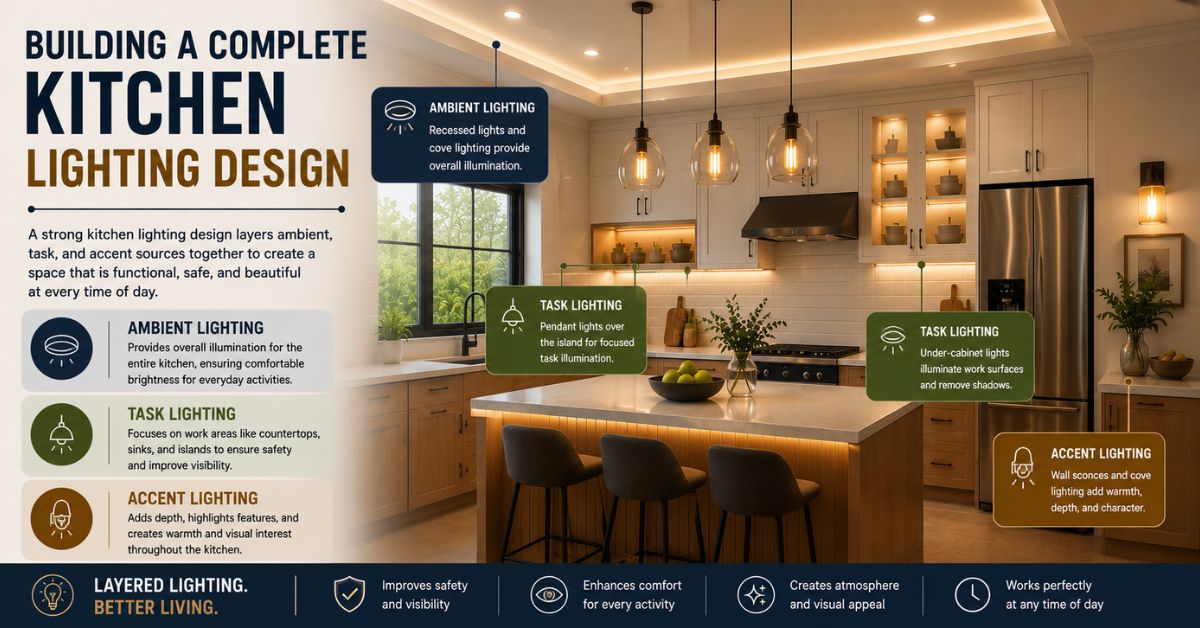
A strong kitchen lighting design layers ambient, task, and accent sources together, rather than relying on any single fixture type to handle every lighting need within the room. Ambient lighting, typically from ceiling fixtures, establishes the room’s general brightness level and should feel comfortable without straining anyone’s eyes during normal movement through the space. Task lighting, including cabinet strips and island pendants, targets the specific zones where focused visibility genuinely matters for safety and function. Accent lighting, often from wall fixtures or cove lighting, adds atmosphere and visual interest beyond pure function, rounding out a genuinely complete kitchen lighting design that performs well at every time of day.
Practical Kitchen Lighting Ideas Worth Trying
A handful of practical kitchen lighting ideas can meaningfully improve how well your space functions regardless of its overall size or existing fixture setup. Installing dimmer switches on as many circuits as possible allows a single lighting plan to adapt across different activities and times of day. Choosing warm white LED bulbs, rather than cooler tones, generally creates a more inviting atmosphere suited to a space where families gather regularly. Adding a small accent light inside glass-fronted cabinets highlights displayed items while contributing gently to the room’s overall ambient glow. Considering these kitchen lighting ideas early in the planning process, rather than retrofitting them later, tends to produce a more cohesive and genuinely functional final result.
Key Factors to Check Before You Finalise Your Lighting
Before committing to any particular kitchen lights plan, a handful of practical checks can help you avoid costly mistakes later.
- Layering coverage – confirm your plan includes ambient, task, and accent sources rather than relying on one fixture type
- Bulb temperature – choose warm or neutral white tones for most kitchen applications, reserving cooler light for specific task zones
- Electrical planning – finalise wiring locations before ceiling or cabinet work begins, since retrofitting proves more disruptive
- Dimmer compatibility – check that chosen fixtures work with dimmer switches if flexible mood lighting matters to you
- Fixture height – confirm pendant lights hang at a height that illuminates the counter without blocking sightlines
- Energy efficiency – prioritise LED fixtures throughout for lower running costs and considerably longer bulb lifespan
Maintenance Tips for Long-Lasting Kitchen Lights
Even a well-planned kitchen lights setup benefits from some basic ongoing care to preserve both function and appearance over many years. Wipe fixtures and shades periodically to remove dust and cooking grease buildup, particularly for lights positioned near the stove. Check LED strips and profile lights occasionally for secure mounting, since heat and vibration can gradually loosen adhesive-backed fixtures over time. Replace bulbs promptly when they burn out, keeping a consistent colour temperature across all fixtures for a cohesive overall appearance. Test dimmer switches and any smart lighting controls periodically to confirm they continue functioning smoothly as intended.
Also Read- Kitchen Island Designs: Ideas, Types and Layout Tips
Common Mistakes to Avoid in Kitchen Lighting
Many homeowners rely on a single central ceiling fixture, without considering how much a layered approach improves both safety and daily comfort within the space. Avoid positioning task lighting so that your own body casts a shadow over the counter, a common mistake that undermines the very purpose of focused illumination. Do not overlook electrical planning early in the design process, since retrofitting wiring into finished cabinets or ceilings proves considerably more disruptive than planning around it from the outset. Skipping dimmer switches is another common misstep, often resulting in a kitchen that feels too bright for casual evening use or too dim for detailed food preparation.
Bringing It All Together
Kitchen lights shape both the safety and atmosphere of one of the most heavily used rooms in any home, making thoughtful planning genuinely worthwhile. From layering ambient, task, and accent sources to choosing the right fixtures for your island and cabinets, every decision contributes to how well the finished kitchen performs at every time of day. Taking the time to compare a few kitchen lighting ideas, check practical factors like bulb temperature and electrical planning, and prioritise dimmable, energy-efficient fixtures ensures the kitchen lights you choose serve your home well for a long time ahead.
Explore Express Builders ongoing residential projects across Noida and Greater Noida West. See the quality and planning behind every home firsthand.
Book a free site visit today with Express Builders. Walk through our ongoing projects and see construction quality up close. Check out floor plans, amenities, and location advantages in person. Meet our team and get your property-related questions answered directly. Schedule a visit at your convenience.
Frequently Asked Questions
1. What is the best type of lighting for kitchen countertops?
Kitchen led strip lights or a kitchen profile light mounted under cabinets provide the most effective, shadow-free counter illumination.
2. How many pendant lights should hang above a kitchen island?
This depends on island length, but two to three evenly spaced pendants generally distribute light more effectively than one large fixture.
3. Should kitchen lights be warm or cool white?
Warm or neutral white tones generally suit most kitchen applications, creating a more inviting atmosphere than cooler, clinical light.
4. Are dimmer switches worth adding to kitchen lighting design?
Yes, dimmers allow the same lighting plan to shift between bright task lighting and a softer, more relaxed evening atmosphere.
5. What is the difference between kitchen cabinet lighting and kitchen ceiling lights?
Cabinet lighting targets specific counter areas for task visibility, while ceiling lights provide general ambient illumination across the whole room.
