

A bedroom is meant to feel calm, personal, and genuinely restful, and the ceiling plays a far bigger role in creating that atmosphere than most homeowners initially expect. Bedroom ceiling design shapes how spacious a room feels, how well it handles lighting, and how finished the space appears once every other element, from bedding to wall colour, is in place. Unlike a living room ceiling, which often needs to support brighter, more functional lighting for entertaining guests, a bedroom ceiling generally works best when it supports a softer, more intimate mood suited to rest. This guide walks through the materials, styles, and planning decisions that shape a strong bedroom ceiling design, along with the practical details worth checking before you commit to one for your own home.
Why Bedroom Ceiling Design Deserves More Attention
Many homeowners spend considerable time selecting bedroom furniture, bedding, and wall colours while treating the ceiling as an afterthought finished with a single flat coat of white paint. This overlooks a genuine opportunity, since the ceiling occupies as much visual real estate as any wall in the room and is the surface a person looks at most while lying in bed. A thoughtfully planned bedroom ceiling design can make a room feel taller, cosier, or more luxurious depending on the approach chosen, while a poorly considered one can make an otherwise well-decorated bedroom feel incomplete.
The ceiling also offers a practical opportunity to integrate better lighting, since a flat surface with no depth limits how creatively fixtures can be placed compared to a false ceiling with recessed sections built specifically for that purpose. Treating this decision with the same care given to the rest of the room’s design genuinely elevates how the space feels every single day.
Materials Behind a Well-Built Bedroom Ceiling
Several materials dominate bedroom false ceiling work today, each offering a different balance of cost, finish quality, and installation complexity. A bedroom pop ceiling design, built using Plaster of Paris, remains one of the most popular choices, since it allows contractors to shape curves, steps, and recessed lighting sections with a smooth, seamless finish. Gypsum ceiling design for bedroom spaces offers a compelling alternative, arriving as pre-fabricated panels that install faster than wet plaster work while still delivering a clean, professional appearance suited to most bedroom styles.
A bedroom pvc ceiling design has grown in popularity more recently, particularly for budget-conscious projects, since PVC panels install quickly, resist moisture reasonably well, and require very little ongoing maintenance compared to POP or gypsum alternatives. Each material suits a different combination of budget, desired finish, and installation timeline, so weighing these factors together generally produces a better outcome than choosing based on cost alone.
Popular Styles Shaping Bedrooms Today
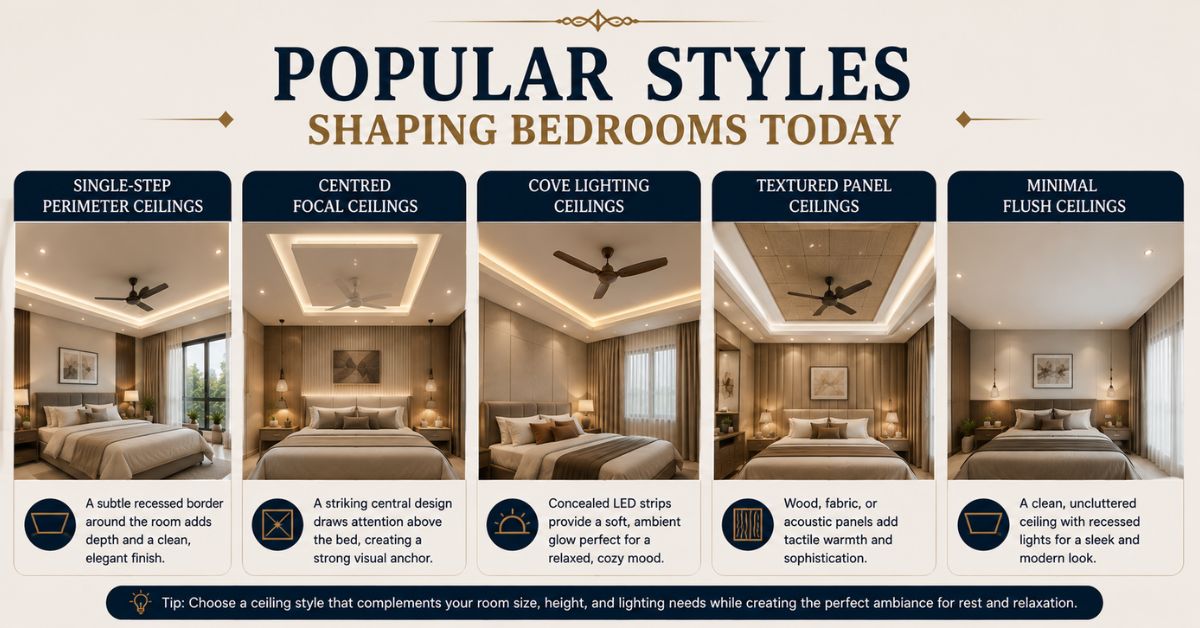
Bedroom ceiling styles have evolved considerably over recent years, moving toward options that balance visual interest with the calm, uncluttered atmosphere most people want in a sleeping space. Reviewing the styles currently trending helps clarify where a modern bedroom ceiling design draws its inspiration from today.
- Single-step perimeter ceilings – a shallow recessed border framing the room’s edge, offering subtle depth without heavy detailing
- Centred focal ceilings – a concentrated design positioned directly above the bed, drawing the eye to the room’s main feature
- Cove lighting ceilings – a curved recess that conceals soft LED strip lighting for a gentle, ambient evening glow
- Textured panel ceilings – fabric, wood, or acoustic panels that add tactile warmth beyond a flat painted surface
- Minimal flush ceilings – a clean, uninterrupted surface with recessed spotlights, avoiding tiers or steps altogether
Many homeowners today lean toward simple bedroom ceiling designs over heavily tiered or elaborately detailed work, largely because a restrained approach tends to support the calm, restful mood a bedroom is meant to provide better than a visually busy ceiling ever could. Anyone browsing a bedroom new ceiling design online will notice this same shift toward simplicity across most contractor portfolios today.
Planning for Compact and Small Bedrooms
A small bedroom ceiling design calls for a noticeably different approach than the design suited to a larger, more spacious room. Compact bedrooms generally benefit from a shallow, single-step treatment or a fully flush ceiling with recessed lighting, since deep, multi-level designs can make an already tight room feel visually lower and more enclosed than it actually is. Light, neutral ceiling colours also help here, since a pale surface reflects more light back into the room and avoids the heavier, closed-in feeling that darker tones can introduce in a small footprint.
Flush spotlights generally work better than hanging pendant fixtures in compact bedrooms, since they preserve headroom while still offering good, even illumination across the room. For particularly low-ceiling spaces, some homeowners skip a full false ceiling altogether and rely instead on a painted border or subtle trim detail to suggest a similar layered effect without sacrificing valuable vertical clearance.
Elevating the Master Bedroom Ceiling
A master bedroom ceiling design often carries more design ambition than a secondary bedroom, since this room typically functions as the most personal, considered space within the entire home. Many homeowners choose a more elaborate approach here, incorporating a centred focal design above the bed paired with integrated cove lighting for a softer, more atmospheric evening mood. A luxury ceiling design for bedroom spaces might also introduce textured panels, subtle metallic trim accents, or a two-tone colour treatment that adds depth without feeling excessive for a private sleeping space.
Because a master bedroom often includes an attached sitting area or dressing zone, the ceiling design frequently needs to accommodate more than one functional zone within a single cohesive layout. This additional complexity generally justifies working with an experienced designer who can balance visual ambition with the practical lighting and structural needs specific to a larger, multi-purpose bedroom.
Choosing False Ceiling Design for Bedroom Layouts
Selecting the right false ceiling design for bedroom spaces starts with understanding how the room will actually be used day to day, beyond simply sleeping in it. A pop ceiling design for bedroom areas used primarily for rest benefits from a calmer, more restrained treatment, while a bedroom that also serves as a home office or reading nook might benefit from more targeted, functional lighting integrated into the ceiling plan.
It also helps to consider the room’s orientation and natural light levels, since a bedroom that receives limited daylight might benefit from a lighter ceiling treatment that helps the space feel brighter throughout the day. Coordinating the false ceiling design with existing elements like wardrobe placement and window treatments ensures the finished room feels planned as a whole rather than assembled from disconnected decisions made at different stages of the process.
Also Read- French Door Design Ideas for Bright, Open Living
Key Factors to Check Before You Finalise Your Design
Before committing to any particular bedroom ceiling design, a handful of practical checks can help you avoid costly mistakes or performance issues later. Reviewing this list carefully during your planning process ensures the finished ceiling performs as well as it looks.
- Ceiling height available – confirm how much vertical clearance you can spare before committing to a deep, multi-level design
- Electrical planning – finalise lighting and wiring placement before construction begins, not after the framework is built
- Material suitability – match your chosen material, whether POP, gypsum, or PVC, to your budget and desired finish quality
- Room function – account for whether the bedroom also serves as a study or reading space needing more functional lighting
- Colour and tone – choose ceiling tones that support a calm mood while still coordinating with your walls and furnishings
- Contractor experience – confirm your installer has specific experience with bedroom ceiling work, not general plastering only
Lighting That Completes a Bedroom Ceiling
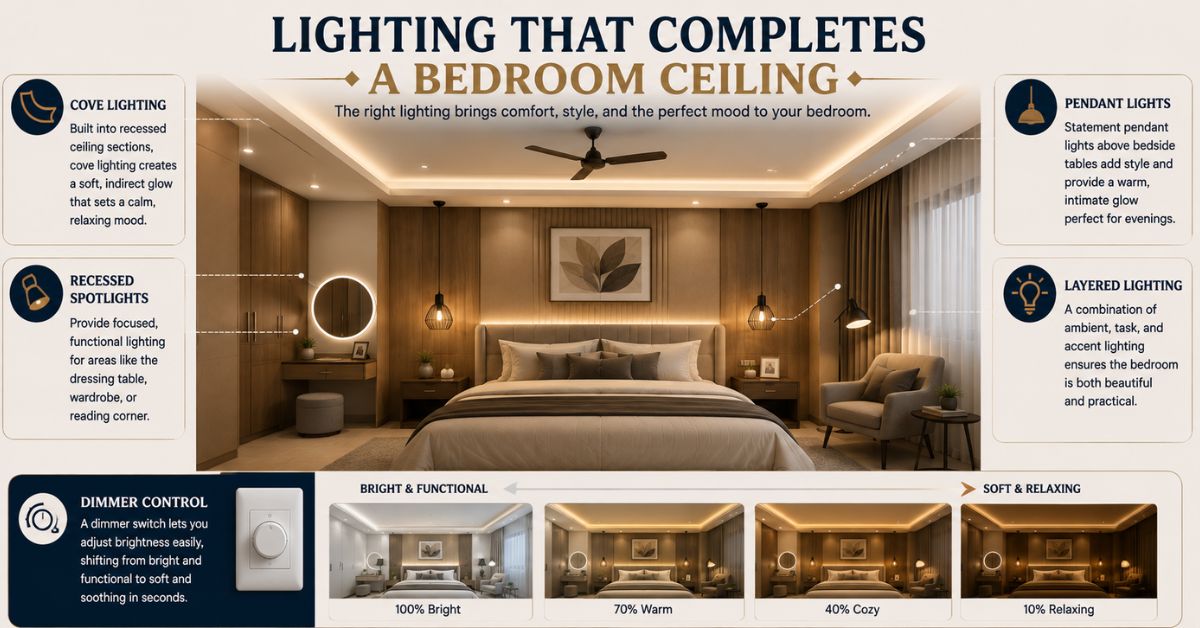
Lighting and bedroom ceiling design work closely together, since much of the room’s evening atmosphere depends on how well the ceiling integrates soft, adjustable illumination rather than a single harsh overhead source. Cove lighting built into a recessed ceiling section creates a gentle, indirect glow well suited to the relaxed mood a bedroom is meant to support. Recessed spotlights offer more direct, functional lighting for areas like a dressing table or reading corner, while a dimmer switch allows the room to shift easily between bright, functional light and a softer evening setting. Many homeowners also add a statement pendant light above a bedside table, using a false ceiling’s recessed section as a clean, finished mounting point that avoids a cluttered look overhead.
Also Read-POP Plus Minus Design Ideas for Every Room
Maintenance Tips for Long-Lasting Ceilings
Even a well-planned bedroom ceiling design benefits from some basic ongoing care to preserve its appearance over many years. Dust the surface periodically with a soft cloth or brush attachment, since accumulated dust can dull the finish and make recessed sections appear less crisp over time. Check gypsum or POP sections for early signs of moisture staining, particularly in homes without adequate ventilation, and address any discolouration before it spreads further. Clean PVC panels with a mild, non-abrasive cleaner, since harsh chemicals can dull the surface finish with repeated use. Inspect recessed lighting fixtures occasionally to ensure heat from bulbs isn’t causing any yellowing or warping in the surrounding ceiling material.
Common Mistakes to Avoid in Bedroom Ceiling Design
Many homeowners choose a bedroom ceiling design purely from photographs of a living room or formal dining space, without considering how a bedroom’s more intimate, restful function should shape the final choice. Avoid an overly complex, heavily tiered design in a small bedroom, since this can make an already compact room feel noticeably lower and more closed in than it needs to. Do not finalise the ceiling plan before confirming lighting and electrical placement, since retrofitting fixtures into completed work is far more disruptive than planning around it in advance.
Skipping proper material selection for your climate is another common misstep, particularly in humid regions where an unsuitable choice can develop staining within a single monsoon season. Finally, avoid choosing a design purely to match a passing trend, since a bedroom ceiling typically remains in place for many years rather than something easily updated on a whim.
Bringing It All Together
Bedroom ceiling design sits at the intersection of everyday comfort and long-term visual appeal, making it a decision worth genuine planning rather than a rushed, last-minute addition. From choosing the right material and style to planning lighting and accounting for your room’s size and function, every choice contributes to how restful and finished the space feels for years to come. Taking the time to compare a few options, check practical factors like height clearance and material suitability, and plan electrical work early ensures the bedroom ceiling design you choose serves your room beautifully for a long time ahead.
Explore Express Builders ongoing residential projects across Noida and Greater Noida West. See the quality and planning behind every home firsthand.
Book a free site visit today with Express Builders. Walk through our ongoing projects and see construction quality up close. Check out floor plans, amenities, and location advantages in person. Meet our team and get your property-related questions answered directly. Schedule a visit at your convenience.
Frequently Asked Questions
1. What is the best material for a bedroom false ceiling?
Gypsum and POP both perform well for most bedrooms, while a bedroom pvc ceiling design suits budget-conscious projects needing lower maintenance.
2. Is a false ceiling suitable for a small bedroom?
Yes, a small bedroom ceiling design works well when kept shallow and simple, using flush lighting and light colours to preserve headroom.
3. How much does a master bedroom ceiling design typically cost more than a standard one?
Costs vary based on complexity, but a luxury ceiling design for bedroom spaces with textured panels or cove lighting generally costs more than a simple flush design.
4. How often should a bedroom ceiling be cleaned or inspected?
Dust the surface every few weeks and inspect for moisture staining or discolouration at least once or twice a year.
5. Can lighting be added to an existing bedroom ceiling later?
It is possible, but planning electrical work before construction is far easier and less disruptive than retrofitting fixtures afterward.
