
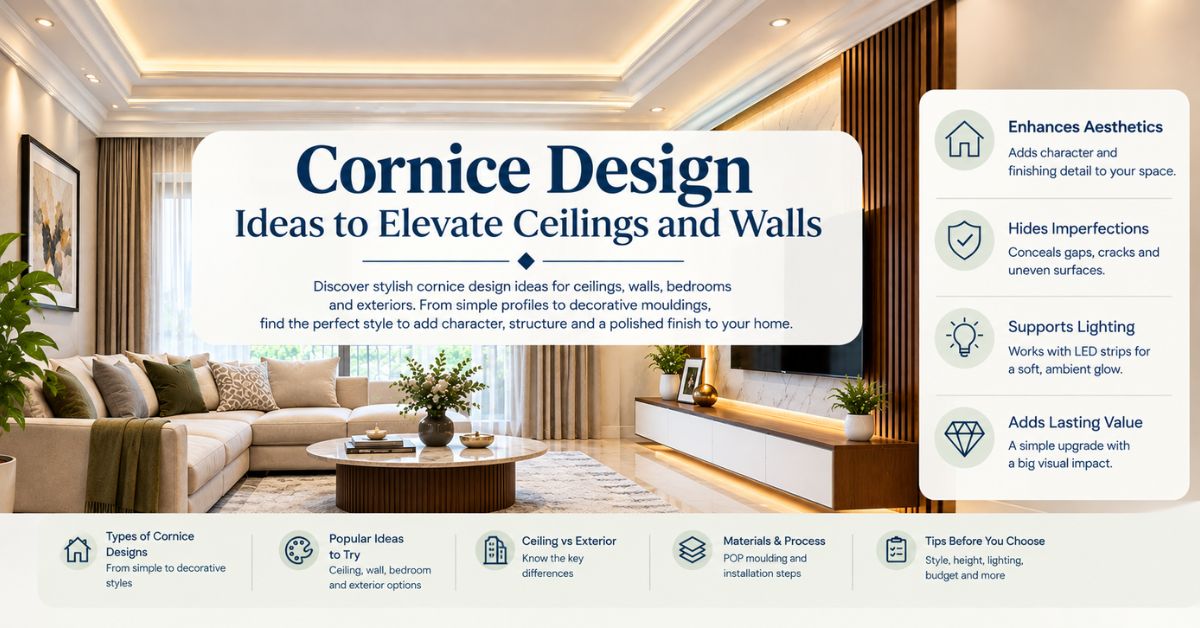
The line where a wall meets a ceiling often gets overlooked, yet it holds real potential to transform how finished a room feels. Cornice design addresses exactly this junction, using decorative moulding to soften the transition between wall and ceiling while adding a layer of architectural detail that flat surfaces alone cannot achieve. What was once reserved for grand, formal interiors has become a genuinely popular choice across modern homes, since cornices now range from delicate, understated profiles to elaborate, sculptural designs suited to nearly any style.
Cornice design offers homeowners a way to add character to a room without touching the walls, flooring, or furniture. A well chosen cornice frames the ceiling, draws the eye upward, and creates a sense of intentional finishing that makes an entire space feel considered rather than left incomplete. This subtle but meaningful impact is a major reason cornice work continues to feature in both new builds and renovation projects, regardless of whether the surrounding interior leans traditional or contemporary.
Why Cornice Design Elevates a Home’s Interior
A room without any cornice detailing can feel slightly stark, particularly in spaces with high ceilings or large, uninterrupted wall surfaces. Cornice design fills this visual gap, creating a defined edge that gives the ceiling its own presence rather than letting it blend into the walls without distinction. This effect is especially valuable in living rooms and formal spaces, where the ceiling often plays a bigger role in the overall impression than homeowners initially expect.
Cornices also serve a practical purpose beyond pure decoration. They conceal minor imperfections at the wall and ceiling junction, hiding small gaps, uneven plaster work, or hairline cracks that can otherwise become more noticeable over time. This dual function, combining aesthetic refinement with a degree of practical coverage, makes cornice design a genuinely useful addition rather than a purely ornamental one.
Lighting integration is another reason cornice design has grown in popularity. Many modern cornice profiles are shaped specifically to house concealed LED strips, creating a soft, indirect glow that washes upward along the ceiling. This lighting effect adds warmth and depth to a room after dark, turning a simple architectural detail into a functional part of the home’s overall lighting plan.
Also Read- Living Room Pop Design Ideas for Walls and Ceilings
Types of Cornice Designs to Consider
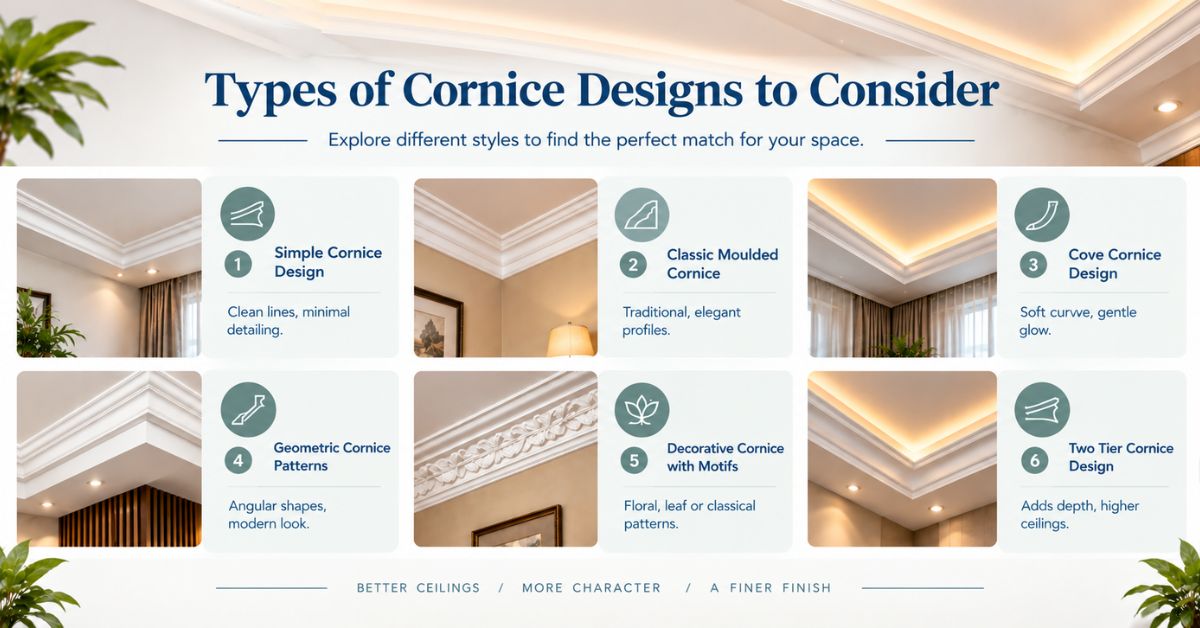
Cornice work comes in several distinct styles, each suited to different room types, ceiling heights, and design preferences. Understanding these categories helps in narrowing down the right choice for a specific space.
- Simple cornice design: A slim, understated profile with minimal detailing, ideal for contemporary interiors that favour clean lines over heavy ornamentation.
- Classic moulded cornice: Featuring traditional curved or stepped profiles, this style suits homes with a more formal or heritage inspired interior theme.
- Cove cornice design: A smooth, concave curve that creates a soft transition between wall and ceiling, often paired with concealed lighting for a gentle glow.
- Geometric cornice patterns: Using angular, layered shapes rather than curves, this style suits modern homes seeking a more architectural, structured look.
- Decorative cornice with motifs: Incorporating floral, leaf, or classical patterns along the moulding, this ornate style works particularly well in formal living rooms or entryways.
- Two tier cornice design: Combining two distinct moulding profiles stacked together, this approach adds noticeable depth and works well in rooms with higher ceilings.
Popular Cornice Design Ideas to Try
With so many directions to explore, looking at specific popular cornice design ideas can help homeowners decide what might suit their own space best.
- A ceiling cornice design using a slim, continuous border around the entire room, offering a subtle upgrade without dominating the space.
- Cove style cornices with hidden LED lighting, creating a warm, ambient glow that highlights the ceiling after dark.
- A pop cornice design with layered stepped profiles, adding depth and a sense of craftsmanship to formal living areas.
- Decorative floral cornice moulding in entryways or dining rooms, introducing a touch of classic elegance to the space.
- Minimalist geometric cornices paired with recessed spotlights, suited to contemporary homes with a clean, architectural aesthetic.
- Two tone cornices, where the moulding is painted in a shade slightly different from the ceiling, adding subtle contrast and definition.
- An exterior cornice design running along the roofline or above windows, adding architectural detail to the facade and enhancing the home’s overall curb appeal.
Also Read- PVC False Ceiling Designs for Practical, Modern Homes
Cornice Design for Ceilings vs Exteriors
While cornice work is most commonly associated with interior ceilings, exterior applications serve an equally valuable role in a home’s overall architecture. An exterior cornice design typically runs along the roofline, above windows, or around the top edge of a facade, adding a defined architectural border that enhances the building’s silhouette from the street. These exterior mouldings also offer a practical benefit, helping direct rainwater away from the wall surface and reducing water staining over time.
Interior ceiling cornice design, by contrast, focuses primarily on visual refinement rather than weather protection. Since interior cornices are not exposed to the elements, they can be crafted with more delicate detailing and finer profiles than their exterior counterparts, which need sturdier construction to withstand sun, rain, and temperature changes. Considering these different functional requirements helps in choosing appropriately durable materials and finishes for each application.
Choosing Cornice Design for the Bedroom
A bedroom cornice design generally benefits from a more restrained approach compared to formal living spaces, since bedrooms are meant to feel calm and restful rather than visually dominant. Simple, slim profiles or gentle cove designs tend to suit bedrooms particularly well, adding a refined touch without competing with the room’s primary function as a space for rest.
Lighting integration within bedroom cornices deserves particular consideration, since soft, indirect lighting along the ceiling perimeter can contribute significantly to a calming atmosphere in the evening. A cove cornice with concealed warm toned LED strips often works especially well in bedrooms, offering a gentle glow that suits winding down at night without the harsher effect of direct overhead lighting.
Also Read- Bedroom Ceiling Design Ideas for Restful, Stylish Rooms
POP Cornice Work: Materials and Process
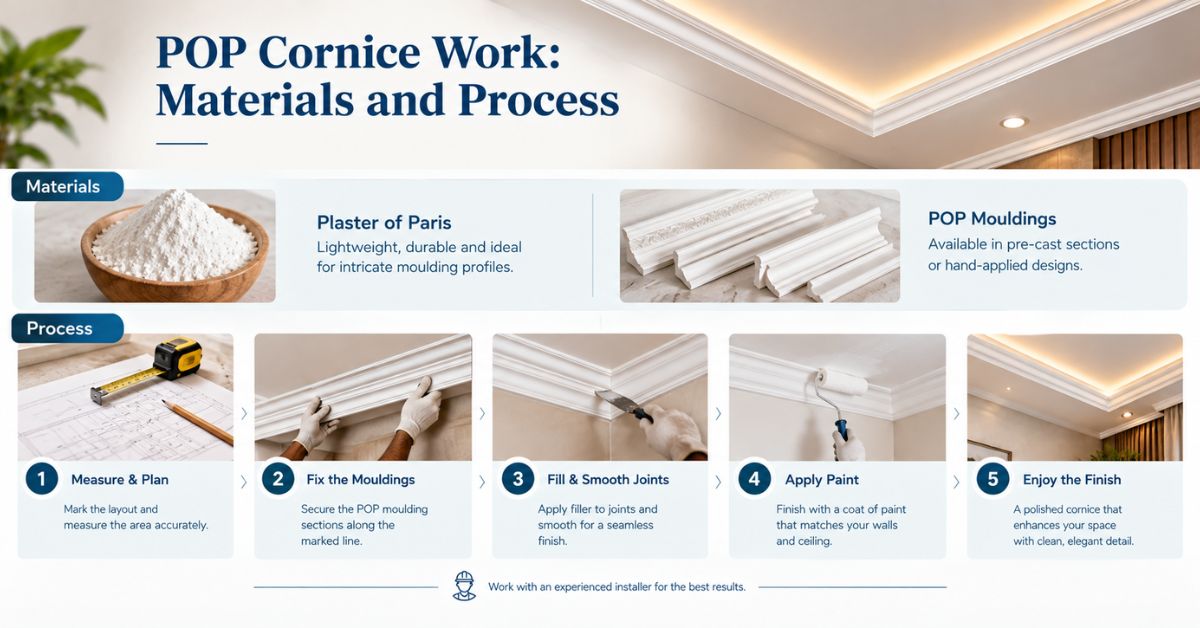
Plaster of Paris remains one of the most popular materials for cornice work, particularly for pop cornice design applications, due to its ability to be moulded into intricate profiles while remaining relatively lightweight once cured. Cornice moulding pop design work typically involves either pre-cast POP mouldings fixed into place, or hand applied plaster shaped directly onto the wall and ceiling junction, depending on the complexity of the chosen pattern and the contractor’s preferred method.
The installation process generally begins with careful measurement and planning, followed by fixing the moulding sections securely along the intended line. Joints between sections are then filled and smoothed to create a seamless appearance, and the entire cornice is typically finished with a coat of paint matching or complementing the surrounding wall and ceiling colours. Working with an experienced installer matters considerably here, since uneven application or poorly finished joints can noticeably detract from an otherwise well chosen design.
Things to Consider Before Finalising a Design
Before settling on a final cornice design, it helps to walk through a few practical points. Consider the ceiling height of the room, since taller ceilings generally accommodate bolder, more elaborate cornice profiles, while lower ceilings suit slimmer, simpler designs that avoid making the room feel visually compressed. Think about the room’s overall style as well, ensuring the chosen cornice complements rather than clashes with existing furniture, wall colours, and decor.
It also helps to think about long term maintenance, since more intricate designs with deep grooves and detailed patterns can accumulate dust more easily than simpler, flatter profiles. Considering how the cornice will interact with any planned lighting, along with realistic budget expectations for material and installation costs, ensures the final choice remains both practical and visually rewarding.
Also Read- House Ceiling Design Ideas to Elevate Your Home
Bringing It All Together
Cornice design offers a refined way to elevate a home’s interior and exterior, adding architectural character to a space that might otherwise feel unfinished at the edges. From a simple cornice design suited to minimalist interiors, to an elaborate pop cornice design with integrated lighting and detailed moulding, there is a suitable option for nearly every room and architectural style. Understanding the different types available, along with how ceiling and exterior applications differ, helps homeowners choose a design that genuinely enhances their space.
Taking the time to plan ceiling height considerations, lighting integration, and material quality ensures a cornice becomes a lasting architectural feature rather than an afterthought. A well executed cornice design does more than fill the gap between wall and ceiling. It quietly elevates how an entire room is experienced, one carefully considered detail at a time.
Explore Express Builders ongoing residential projects across Noida and Greater Noida West. See the quality and planning behind every home firsthand.
Book a free site visit today with Express Builders. Walk through our ongoing projects and see construction quality up close. Check out floor plans, amenities, and location advantages in person. Meet our team and get your property-related questions answered directly. Schedule a visit at your convenience.
Frequently Asked Questions
What is the difference between a simple and decorative cornice design?
A simple cornice design uses a slim, minimal profile suited to contemporary spaces, while a decorative cornice incorporates more elaborate patterns, motifs, or layered detailing, generally suited to formal or traditional interiors.
Is POP the best material for cornice work?
POP remains a popular choice for cornice moulding due to its flexibility in shaping intricate profiles, though other materials such as gypsum or polyurethane are also used depending on the desired finish and budget.
Can cornice design include lighting?
Yes, many cornice profiles, particularly cove style designs, are specifically shaped to conceal LED lighting strips, creating a soft, ambient glow along the ceiling.
Does exterior cornice design serve a functional purpose?
Yes, beyond adding architectural detail, exterior cornices help direct rainwater away from the wall surface, reducing water staining and potential damage over time.
How do I choose the right cornice design for a low ceiling room?
Slim, simple profiles generally work best for rooms with lower ceilings, since bulkier or heavily layered cornice designs can make the space feel visually compressed.
