
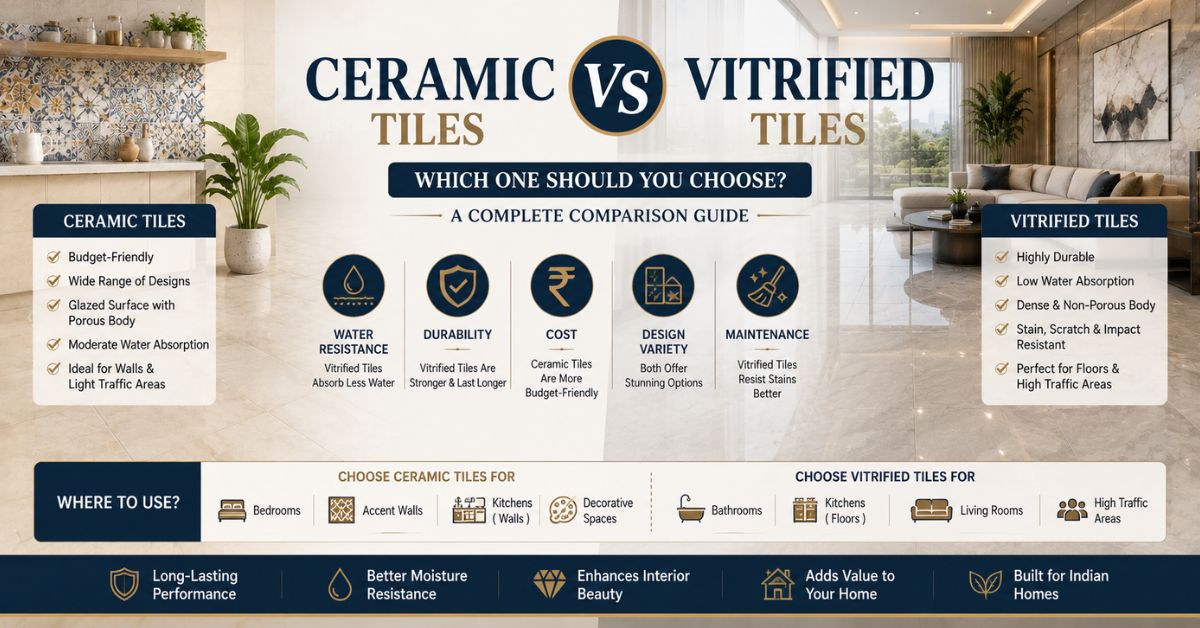
Flooring and wall tiles form one of the most important decisions in any home construction or renovation project. They affect how a space looks, how it feels underfoot, and how much maintenance it demands over the years. Among the many options available, the debate around ceramic vs vitrified tiles comes up constantly, since both materials dominate the market and offer distinct advantages depending on where and how you plan to use them.
This guide breaks down every aspect of ceramic tiles vs vitrified tiles, covering composition, durability, water resistance, cost, and design variety, so you can make a well informed decision for your home.
Understanding What Sets These Tiles Apart
Ceramic tiles are made from natural clay that gets shaped and fired at high temperatures, then coated with a glaze that gives them their color and pattern. This glaze sits on the surface, which means the tile beneath often appears a different color once scratched or chipped. Vitrified tiles, on the other hand, undergo a process called vitrification, where silica and clay get fused together at extremely high temperatures, resulting in a denser, glass like structure throughout the entire tile rather than just the surface.
This fundamental difference in composition explains most of the practical distinctions you notice when comparing ceramic tile vs vitrified tile options for your home. The denser structure of vitrified tiles gives them certain advantages, while the traditional manufacturing process of ceramic tiles keeps them a reliable and widely used choice as well.
Also Read- Kitchen Wall Tiles Design: A Complete Guide to Choosing the Perfect Style
Water Absorption and Moisture Resistance
Water absorption stands out as one of the biggest points of comparison between these two materials. Ceramic tiles typically absorb a moderate amount of moisture due to their porous body beneath the glazed surface, which means they need proper sealing and careful installation in areas exposed to frequent water contact. Vitrified tiles absorb significantly less water because of their dense, non porous structure, making them a stronger performer in wet or humid environments.
This difference becomes especially important when homeowners consider ceramic vs vitrified tiles for bathroom spaces, where water exposure happens constantly. Vitrified tiles generally handle standing water, splashes, and humidity better, reducing the risk of moisture seeping into the tile body over time. Ceramic tiles can still work well in bathrooms when installed correctly with quality grout and sealant, but they demand slightly more attention to prevent long term moisture related issues.
Durability and Strength
Strength and long term durability often influence which tile homeowners eventually choose for high traffic areas. Vitrified tiles offer superior resistance to scratches, stains, and cracks because of their dense composition, which makes them a popular choice for busy living rooms, hallways, and commercial spaces. Ceramic tiles, while durable in their own right, tend to show wear more visibly since chips reveal the lighter tile body beneath the glaze.
That said, ceramic tiles remain a dependable option for moderate traffic areas such as bedrooms or accent walls, where heavy impact and constant foot traffic are less of a concern. Understanding your specific usage helps determine which material serves your space better over the years.
Also Read- Hall Tiles Design Ideas for Floors and Walls
Comparing Cost and Value
Budget plays a significant role in most flooring decisions, and this is another area where ceramic vs vitrified tiles differ noticeably. Ceramic tiles generally cost less due to their simpler manufacturing process, making them an accessible option for large scale projects or budget conscious renovations. Vitrified tiles usually come at a higher price point because of the more advanced production process involved, but many homeowners find the added durability and lower maintenance needs worth the investment over time.
When you calculate long term value rather than just the upfront cost, vitrified tiles often prove more economical for high use areas since they require fewer repairs and replacements. Ceramic tiles, meanwhile, offer excellent value for spaces with lighter use, letting homeowners save on initial costs without significant compromise.
Design Variety and Finish Options
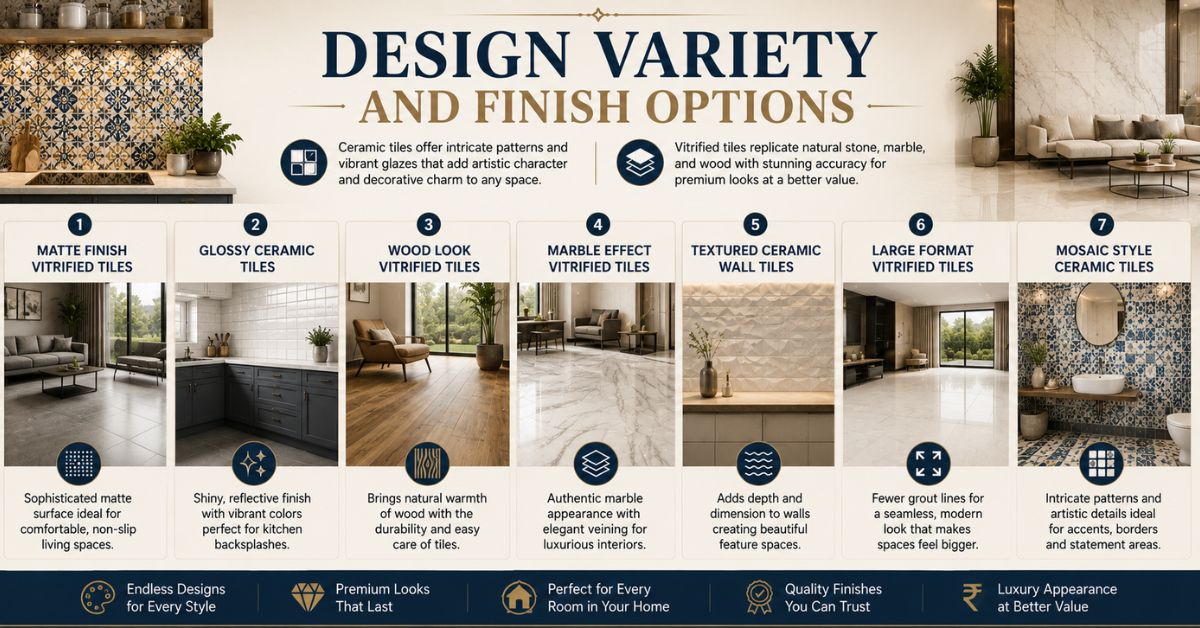
Both materials offer extensive design flexibility, though each brings a slightly different visual character to a space. Ceramic tiles allow intricate hand painted patterns and vibrant glazes, making them popular for decorative accents, kitchen backsplashes, and spaces where artistic detail matters most. Vitrified tiles replicate the look of natural stone, marble, and wood with impressive accuracy, giving homeowners a wide range of upscale finishes at a more manageable cost than the natural materials themselves.
Popular design directions worth considering include the following.
- Matte finish vitrified tiles that offer a sophisticated, non slip surface ideal for living areas
- Glossy ceramic tiles with decorative patterns that work beautifully as kitchen backsplashes
- Wood look vitrified tiles that bring warmth to interiors without the maintenance of real wood flooring
- Marble effect vitrified tiles that replicate luxury stone finishes at a fraction of the cost
- Textured ceramic wall tiles that add depth and visual interest to feature walls
- Large format vitrified tiles that minimize grout lines for a seamless, modern floor
- Mosaic style ceramic tiles that create intricate patterns for accent areas or borders
Choosing between these styles often comes down to the specific room, lighting conditions, and overall design theme you want to achieve throughout your home.
Maintenance and Cleaning Requirements
Daily upkeep varies between the two materials due to their differing surface structures. Vitrified tiles resist stains effectively and clean easily with just water and a mild cleaning solution, since dirt and spills sit on the surface rather than penetrating the tile. Ceramic tiles also clean easily thanks to their glazed surface, though the grout lines around them may need more frequent attention to prevent discoloration in high moisture areas.
Both materials benefit from periodic grout sealing, which helps prevent moisture and dirt from settling into the joints between tiles. Choosing tiles with a slightly textured finish in wet areas also improves slip resistance, adding a practical safety benefit alongside the aesthetic appeal.
Also Read- Kitchen Floor Tiles Design Ideas Worth Considering
Where Porcelain Fits Into the Comparison
Many homeowners researching ceramic vs porcelain vs vitrified tiles wonder how porcelain compares to these two options. Porcelain tiles actually fall under the broader vitrified tile category, since they undergo a similar high temperature firing process that results in a dense, low porosity structure. The main distinction lies in the clay composition, as porcelain typically uses a finer, more refined clay that results in an even denser and stronger tile.
This makes porcelain tiles an excellent choice for extremely high traffic areas or outdoor applications, while standard vitrified tiles work well for most residential floors and walls. Ceramic tiles remain the most economical of the three, suited for moderate use spaces where budget and design variety matter more than maximum durability.
Key Differences at a Glance
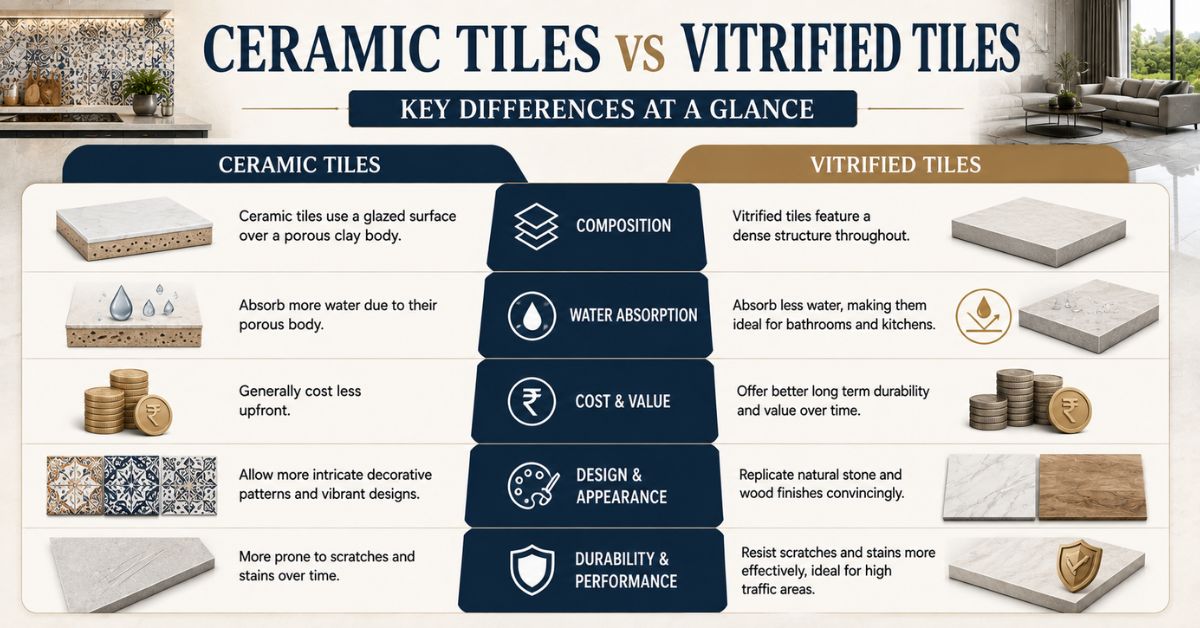
Understanding the ceramic vs vitrified tiles difference becomes easier when you look at the core distinctions side by side.
- Ceramic tiles use a glazed surface over a porous clay body, while vitrified tiles feature a dense structure throughout
- Vitrified tiles absorb less water, making them better suited for bathrooms and kitchens
- Ceramic tiles generally cost less upfront, while vitrified tiles offer better long term durability
- Ceramic tiles allow more intricate decorative patterns, while vitrified tiles replicate natural stone and wood finishes convincingly
- Vitrified tiles resist scratches and stains more effectively, making them ideal for high traffic areas
Keeping these differences in mind helps you match the right tile to the right space in your home.
Also Read- Room Tiles Design Ideas for Every Space at Home
Making the Right Choice for Your Home
The decision ultimately depends on where you plan to install the tiles and how much daily wear that space experiences. Choose vitrified tiles for bathrooms, kitchens, and high traffic living areas where durability and water resistance matter most. Choose ceramic tiles for bedrooms, accent walls, or decorative spaces where design variety and budget take priority over heavy duty performance. Many homeowners combine both materials across different rooms, using vitrified tiles in functional spaces and ceramic tiles in areas that call for more artistic detail.
Explore Express Builders ongoing residential projects across Noida and Greater Noida West. See the quality and planning behind every home firsthand.
Book a free site visit today with Express Builders. Walk through our ongoing projects and see construction quality up close. Check out floor plans, amenities, and location advantages in person. Meet our team and get your property-related questions answered directly. Schedule a visit at your convenience.
Frequently Asked Questions
Which is better, ceramic or vitrified tiles?
Vitrified tiles generally offer better durability and water resistance, while ceramic tiles provide more design variety at a lower cost.
Are vitrified tiles more expensive than ceramic tiles?
Yes, vitrified tiles typically cost more due to their advanced manufacturing process, though they often save money over time through lower maintenance needs.
Which tiles work best for bathrooms?
Vitrified tiles generally perform better in bathrooms due to their low water absorption, though properly sealed ceramic tiles can also work well.
Is porcelain the same as vitrified tile?
Porcelain falls under the vitrified tile category but uses a finer clay, resulting in an even denser and more durable tile.
Do ceramic tiles crack easily?
Ceramic tiles can chip or crack under heavy impact more easily than vitrified tiles due to their more porous structure.
