
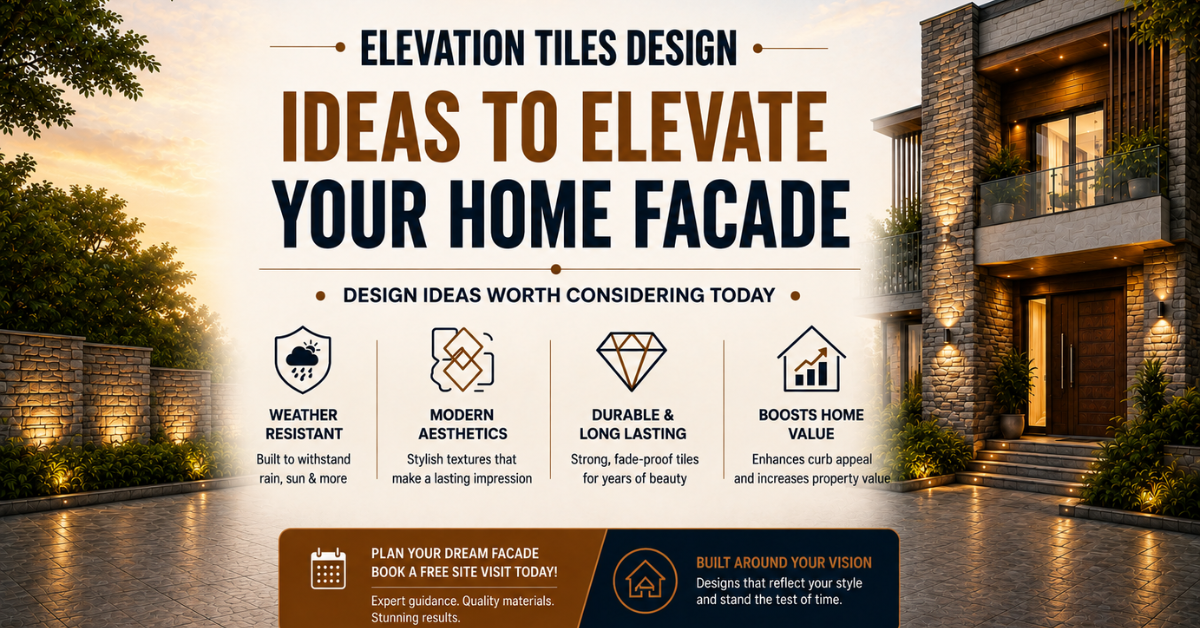
The exterior of your home speaks before you even open the door. It sets the first impression for guests, neighbors, and anyone passing by, and that is exactly why elevation tiles design has become such an important part of modern home planning. Homeowners no longer treat the facade as an afterthought. Instead, they invest real thought into materials, textures, and patterns that make the exterior look as refined as the interior.
This guide walks you through everything you need to know about elevation tiles design, from choosing the right materials to understanding popular patterns, so you can plan a facade that feels both stylish and durable.
Why Elevation Tiles Design Matters So Much
Your home facade faces sun, rain, dust, and temperature shifts every single day, so it needs materials that hold up visually and structurally over time. A well planned elevation tiles design does far more than add beauty. It protects the outer walls from weathering, reduces maintenance costs, and increases the overall value of your property.
Buyers and visitors form an opinion about a home within seconds of seeing it, and a thoughtfully designed facade instantly signals quality and attention to detail. This is why front elevation tiles design has become one of the most searched topics among people planning new homes or renovating existing ones.
Also Read- House Front Elevation Designs Worth Considering
Materials Commonly Used in Elevation Tiles
Choosing the right material forms the foundation of any successful elevation tiles design for home projects. Each material brings its own texture, durability, and maintenance requirements.
- Ceramic tiles offer a smooth finish and come in a wide range of colors, making them a versatile choice for most home styles.
- Vitrified tiles resist water absorption exceptionally well, which makes them ideal for facades exposed to heavy rainfall.
- Stone finish tiles replicate the look of natural stone while weighing significantly less and costing less to install.
- Wooden finish tiles bring warmth and texture, often used to create striking contrast against plain wall sections.
- Textured tiles add depth and dimension, catching light differently throughout the day and giving the facade a dynamic appearance.
Selecting a material that matches your local climate ensures your elevation stays looking fresh for years without frequent repairs or touch ups.
Also Read- CNC Cutting Design Ideas Worth Considering
Understanding 3D Front Elevation Tiles Design
One of the biggest shifts in exterior design has come from the rise of 3d front elevation tiles design. Unlike flat tiles, these designs use raised patterns, geometric cuts, and layered textures to create a facade that looks sculptural rather than flat.
3D tiles catch natural light beautifully, casting subtle shadows that shift throughout the day and give the home a sense of movement. Many homeowners choose 3D tiles for accent walls near the entrance, balconies, or feature sections of the facade, while keeping surrounding areas simpler to let the textured tiles stand out. This contrast between flat and dimensional surfaces creates a balanced, high impact look without overwhelming the entire exterior.
Popular Elevation Tile Patterns and Styles
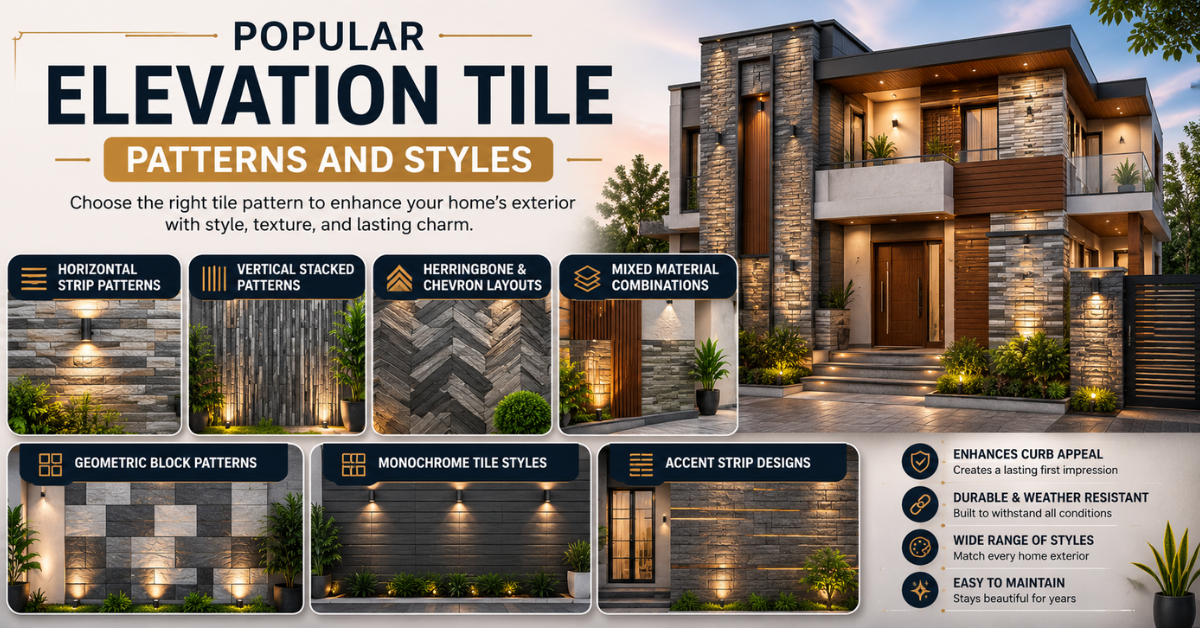
When homeowners explore front elevation design tiles, certain patterns consistently stand out for their visual appeal and practicality.
- Horizontal strip patterns that create a wide, grounded look, especially effective on bungalows and single story homes
- Vertical stacked patterns that add height and make compact homes appear taller and more prominent
- Herringbone and chevron layouts that introduce movement and a contemporary edge to traditional facades
- Mixed material combinations that pair stone finish tiles with wood look panels for a layered, textured facade
- Geometric block patterns that break up large wall sections into visually interesting segments
- Monochrome tile schemes that use varying shades of a single color family for a sleek, minimalist finish
- Accent strip designs that highlight entryways, window frames, or balcony edges with a contrasting tile
Each of these styles works differently depending on the architectural style of the home, so it helps to view samples on a similar sized wall before finalizing your choice.
Also Read- House Front Tiles Design Ideas for a Stunning Exterior
Color Selection for Elevation Tiles
Color plays a defining role in how a facade feels from a distance and up close. Lighter shades such as beige, cream, and soft grey reflect heat effectively, making them a smart choice for hot climates while giving the home a clean, timeless look. Darker tones like charcoal, deep brown, and slate add drama and sophistication, often used on feature walls or lower sections of the facade to ground the design visually.
Many homeowners now combine two or three complementary shades within a single elevation tiles design for home exteriors, using contrast to highlight architectural features like columns, window frames, and entry porticos. This layered color approach adds depth without requiring elaborate structural changes to the building itself.
Maintenance and Durability Considerations
Exterior tiles face far more wear than interior surfaces, so durability should always guide your final selection. Vitrified and ceramic tiles generally require minimal maintenance since they resist stains, fading, and moisture absorption effectively. Textured and 3D tiles need occasional cleaning to prevent dust from settling into their grooves, though a simple wash with water and a soft brush keeps them looking sharp.
It also helps to choose tiles rated specifically for outdoor and exterior use, since these are engineered to withstand UV exposure, temperature fluctuations, and moisture without cracking or discoloring over time. Proper grouting and sealing during installation further extends the lifespan of your elevation, reducing the need for repairs in the years ahead.
Also Read- House Painting Design: Colours and Ideas to Transform Your Home in 2026
Combining Elevation Tiles With Other Facade Elements
A strong front elevation tiles design for home exteriors rarely relies on tiles alone. Pairing tiles thoughtfully with other facade elements creates a more complete and polished result.
- Combine textured tiles with clean painted sections to avoid overwhelming the eye with too much pattern
- Use tile accents around windows and doors to frame these features and draw attention to architectural details
- Introduce outdoor lighting near textured or 3D tile sections to highlight their depth after sunset
- Balance tile heavy sections with greenery or planters to soften the overall facade
- Extend tile patterns onto boundary walls or gates for a cohesive, unified exterior theme
This layered approach ensures the tiles enhance the architecture rather than competing with it.
Choosing the Right Elevation Design for Your Home
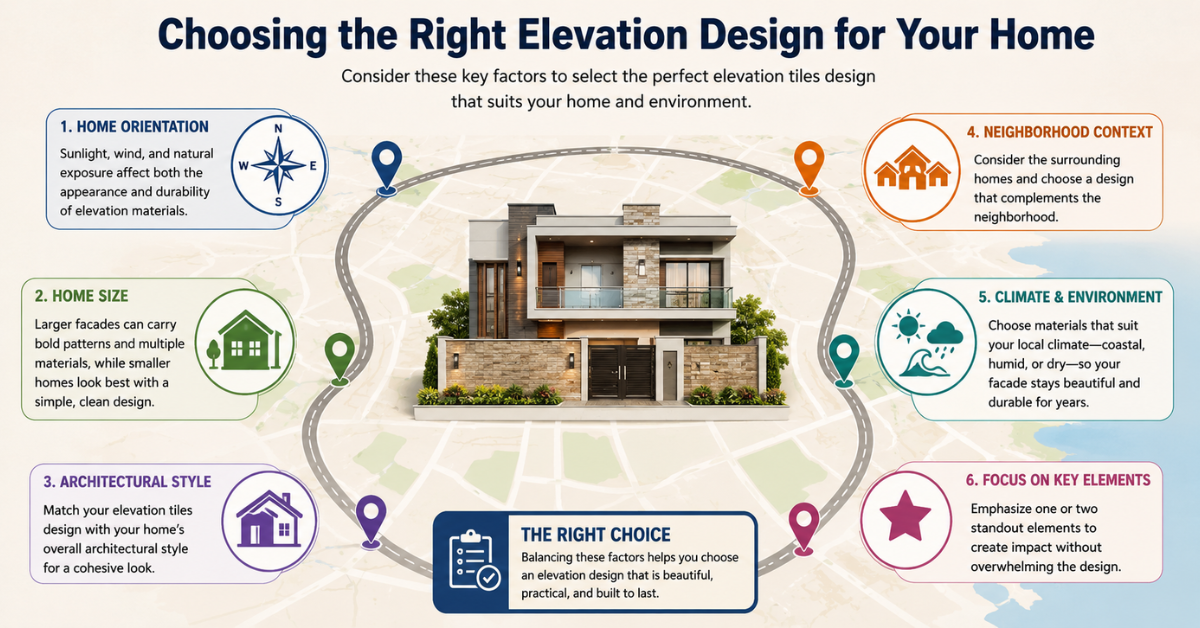
Every home has a different orientation, size, and architectural style, which means the ideal elevation tiles design will look different from one property to another. Homes with larger facades can handle bolder patterns and multiple materials without feeling cluttered, while smaller homes often look best with a simpler, more restrained design that emphasizes one or two standout elements.
It also helps to consider the surrounding neighborhood and climate before finalizing your design. A facade that suits a coastal home may not work as well in a dry, dusty region, so matching your material choice to your environment ensures long term satisfaction with the final look.
Explore Express Builders ongoing residential projects across Noida and Greater Noida West. See the quality and planning behind every home firsthand.
Book a free site visit today with Express Builders. Walk through our ongoing projects and see construction quality up close. Check out floor plans, amenities, and location advantages in person. Meet our team and get your property-related questions answered directly. Schedule a visit at your convenience.
Frequently Asked Questions
What is elevation tiles design?
Elevation tiles design refers to the use of decorative and functional tiles on the exterior facade of a home to enhance its appearance and protect the walls.
Are 3D elevation tiles more expensive than flat tiles?
3D tiles typically cost more due to their manufacturing process, but they are often used only on accent sections, which keeps overall costs manageable.
Which tiles work best for front elevation design?
Vitrified and textured tiles work particularly well since they combine durability with a strong visual impact for front elevation tiles design for home exteriors.
How often do elevation tiles need maintenance?
Most exterior tiles need only occasional cleaning, though textured and 3D designs may need slightly more attention to keep their grooves free of dust.
Can elevation tiles be combined with paint?
Yes, combining tiles with painted wall sections is a popular approach that balances texture with simplicity for a well proportioned facade.
