
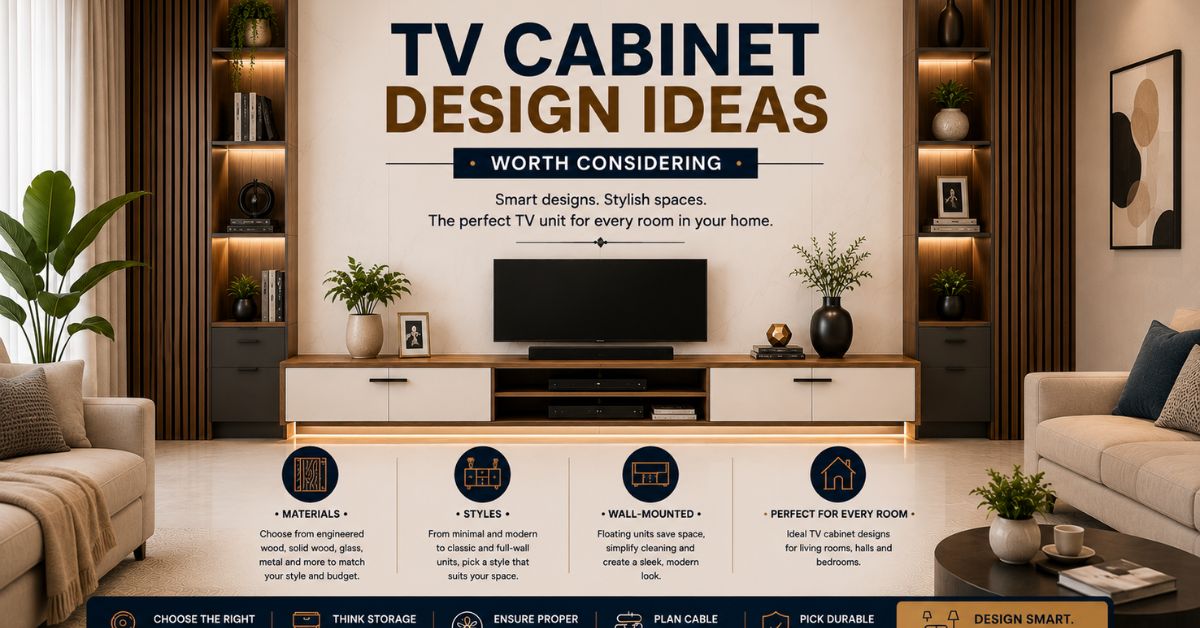
A television unit anchors an entire living room in a way few other furniture pieces manage, since it typically sits at the room’s visual centre and shapes how everything else gets arranged around it. TV cabinet design has evolved considerably beyond the bulky, purely functional units of earlier decades, moving into a genuinely wide range of styles suited to nearly every interior theme. This guide walks through the materials, styles, and planning decisions behind strong TV cabinet design.
Why TV Cabinet Design Deserves Real Thought
Many homeowners choose a TV cabinet purely based on whether it fits the available wall space, without considering how much the design contributes to the room’s overall character. A well-planned TV cabinet design does more than hold the television, since it typically manages cable clutter, houses media equipment, and provides storage for books and decorative objects. Beyond function, the cabinet’s material and finish set a visual tone that influences how the rest of the room’s furniture choices come together. Treating this decision with the same care given to a sofa genuinely elevates how finished a living room feels.
Also Read- Kitchen Cabinets: A Complete Guide to Choosing the Right Style for Your Home
Materials That Shape a Strong TV Cabinet
Material choice affects a TV cabinet’s durability, appearance, and overall cost, and understanding the core options makes the decision considerably easier. Engineered wood, including plywood and MDF with a laminate finish, remains the most popular choice, offering solid structural performance at a more accessible price point than solid timber. Solid wood brings genuine warmth and durability, suiting homes wanting a classic, long-term piece, though it typically costs more. Glass and metal accents have grown increasingly common too, often paired with a wood base for a lighter, contemporary element. Each material suits a different combination of budget and desired visual character.
Popular Styles Worth Knowing
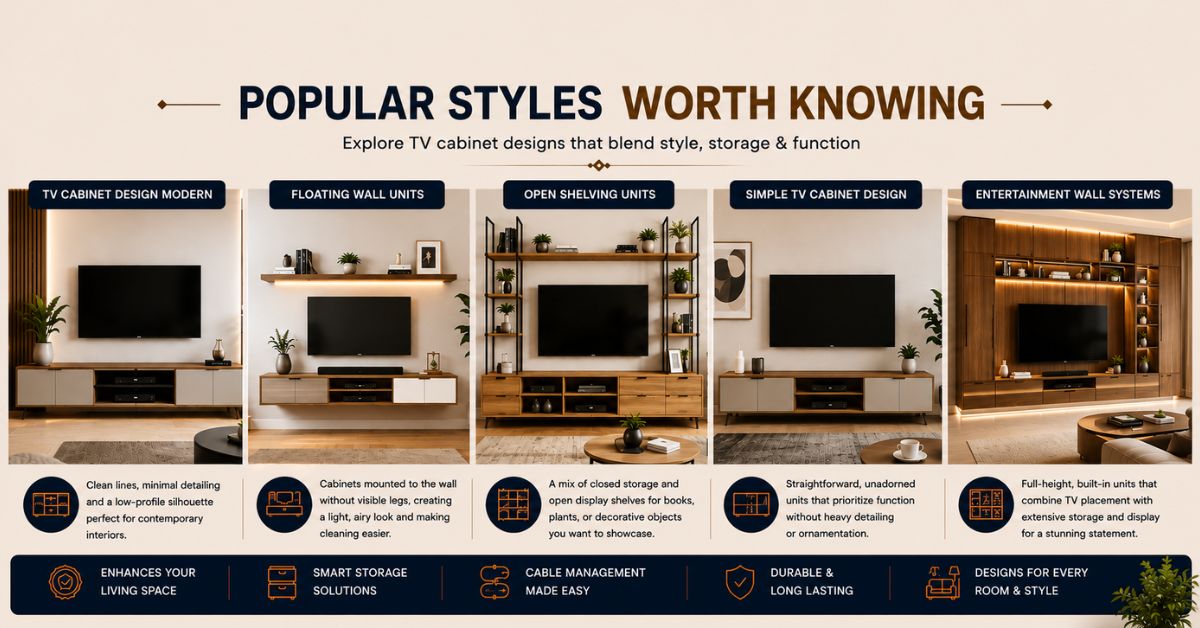
TV cabinet design spans a genuinely wide range of visual approaches today, moving well beyond a single boxy unit into styles suited to almost any interior theme. Reviewing these options helps clarify which direction might suit your own space.
- Tv cabinet design modern – clean lines, minimal detailing, and a low-profile silhouette suited to contemporary interiors
- Floating wall units – cabinets mounted directly to the wall without visible legs, creating a light, airy appearance
- Open shelving units – a mix of closed storage and open display shelves for books, plants, or decorative objects
- Simple tv cabinet design – straightforward, unadorned units that prioritise function without heavy detailing
- Entertainment wall systems – a full-height, built-in unit combining television placement with extensive storage
Choosing between these styles often depends on how much visual complexity your room can comfortably support, since a floating or simple cabinet design suits smaller, minimal rooms well, while a full entertainment wall system suits larger living rooms wanting a genuine statement feature.
Wall-Mounted Storage Worth Considering
A wall tv cabinet design offers a genuinely space-efficient alternative to a traditional floor-standing unit, particularly valuable in smaller living rooms where floor space comes at a premium. Floating cabinets, mounted with hidden brackets, create a clean, minimal appearance that makes the entire unit appear to hover against the wall rather than resting heavily on the floor. This approach also simplifies cleaning, since there’s no gap beneath the cabinet where dust and clutter can accumulate over time. A wall tv cabinet design works particularly well when paired with a slim floating shelf beneath the television itself, offering a spot for a soundbar or remote controls without needing a full cabinet body.
Also Read- Floating TV Unit Ideas: Styles, Types and Tips
Bringing Modern Style Into the Living Room
Tv cabinet designs for living room applications today increasingly favour clean, minimal silhouettes over the heavier, more ornate units common in earlier decades. Modern tv cabinet designs for living room spaces typically use a low-profile base with slim legs or a wall-mounted format, keeping the unit visually light even when it offers substantial storage capacity. Neutral tones, including whites, greys, and warm wood finishes, remain particularly popular within modern cabinet designs for living room settings, since these shades coordinate easily with changing sofa and wall colours over time. Many homeowners also introduce mixed materials, pairing a wood-toned cabinet body with matte black or brass hardware accents, adding visual interest without introducing heavy ornamentation.
TV Cabinet Design for Hall Spaces
A tv cabinet design for hall areas, particularly in open-plan homes where the living and entry space blend together, needs to balance function with a design that reads well from multiple angles and sightlines. Since a hall often serves as the first space visitors experience upon entering, the cabinet’s finish and proportions deserve particular attention, since this piece frequently sits within clear view of the entrance itself. A tv cabinet design for hall spaces also benefits from generous storage capacity, since this central living zone often accumulates remote controls, gaming accessories, and other everyday items that need a considered home rather than open, visible clutter.
Also Read- 1BHK Interior Design Ideas for Compact Living
Bringing a TV Cabinet Into the Bedroom
A tv cabinet design for bedroom applications typically favours a smaller, more understated footprint compared to a living room’s often larger, more elaborate unit. Wall-mounted or low-profile designs suit bedroom placement particularly well, since a bulky cabinet can visually dominate a room meant primarily for rest rather than entertainment. Many homeowners choose a tv cabinet design for bedroom spaces with closed storage specifically to keep cables and equipment concealed, supporting the calmer, less cluttered atmosphere a bedroom typically calls for. Matching the cabinet’s finish with the room’s existing wardrobe or headboard helps the piece feel like a natural part of the space rather than a separately selected addition.
What’s Trending in TV Cabinet Design Right Now
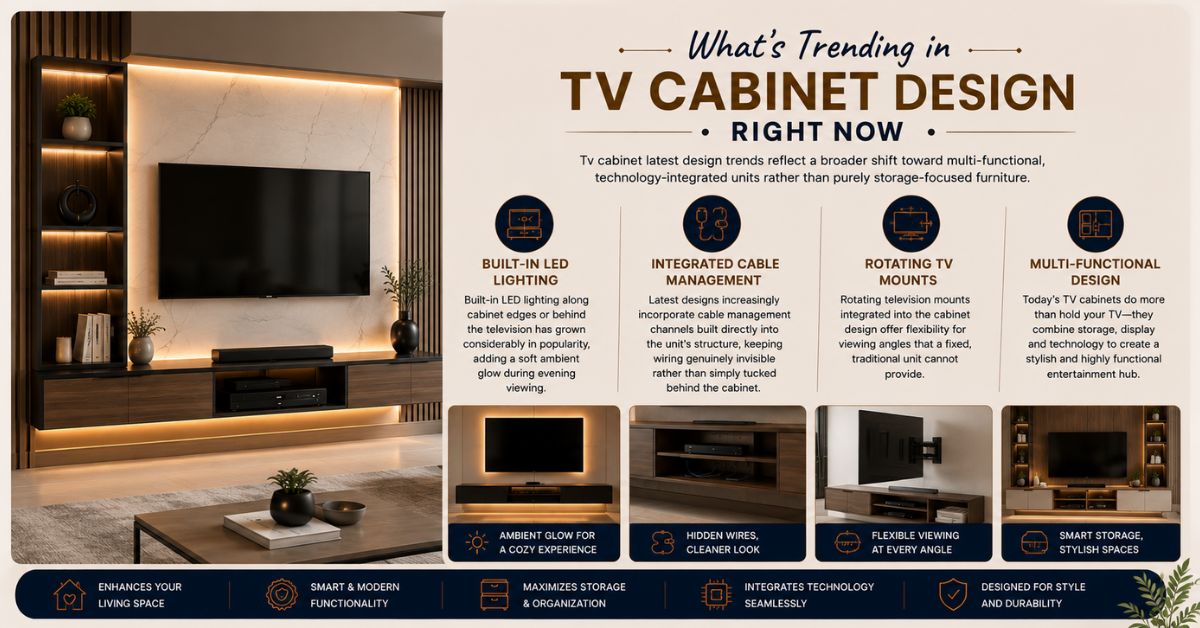
Tv cabinet latest design trends reflect a broader shift toward multi-functional, technology-integrated units rather than purely storage-focused furniture. Built-in LED lighting along cabinet edges or behind the television has grown considerably in popularity, adding a soft ambient glow during evening viewing. Cabinet design latest options also increasingly incorporate cable management channels built directly into the unit’s structure, keeping wiring genuinely invisible rather than simply tucked behind the cabinet. Rotating or height-adjustable television mounts integrated into the cabinet design represent another emerging direction, offering flexibility for viewing angles that a fixed, traditional unit cannot provide.
Also Read- Wooden Furniture Designs for Every Room at Home
Key Factors to Check Before You Finalise Your Cabinet
Before committing to any particular TV cabinet design, a handful of practical checks can help you avoid costly mistakes later.
- Room proportions – measure your wall and seating distance carefully to choose an appropriately sized unit
- Weight capacity – confirm the cabinet or wall mount can safely support your television’s actual weight
- Storage needs – balance open shelving with closed cabinet sections based on how much you want concealed versus displayed
- Ventilation – ensure adequate airflow around media equipment to prevent overheating during extended use
- Cable management – check for built-in channels or openings to keep wiring organised and out of sight
- Material durability – choose finishes suited to your household’s daily habits, particularly for homes with young children
Maintenance Tips for Long-Lasting Cabinets
Even a well-chosen TV cabinet design benefits from some basic ongoing care to preserve its appearance and function over many years. Wipe surfaces regularly with a soft, dry cloth, avoiding harsh chemical cleaners that can dull laminate or painted finishes. Check wall-mounting hardware periodically for secure attachment, particularly important for wall cabinet design for tv installations bearing the television’s full weight. Dust behind and around media equipment occasionally to prevent overheating and maintain proper ventilation. Avoid overloading shelves beyond their rated capacity, since excess weight can gradually affect the unit’s structural alignment over time.
Common Mistakes to Avoid in TV Cabinet Design Selection
Many homeowners choose a cabinet size purely from a catalogue image, without measuring their actual wall space or viewing distance first. Avoid selecting a unit that visually overwhelms a smaller room, since an oversized cabinet can make even a reasonably proportioned living room feel cramped. Do not overlook weight capacity when choosing wall-mounted options, since inadequate hardware poses genuine safety risks. Skipping proper cable management planning is another common misstep, often resulting in a cluttered appearance that undermines an otherwise well-chosen design.
Also Read- Fabric Wall Panel Ideas Worth Considering
Bringing It All Together
TV cabinet design brings together genuine storage function and real visual character, making it one of the more valuable furniture decisions in any living room or bedroom. From choosing the right material and style to planning storage, ventilation, and cable management carefully, every decision shapes how well the finished piece serves your household for years to come. Taking the time to compare a few TV cabinet design options, check practical factors like weight capacity and room proportions, and match the design to your room’s specific needs ensures the cabinet you choose serves your home well for a long time ahead.
Explore Express Builders ongoing residential projects across Noida and Greater Noida West. See the quality and planning behind every home firsthand.
Book a free site visit today with Express Builders. Walk through our ongoing projects and see construction quality up close. Check out floor plans, amenities, and location advantages in person. Meet our team and get your property-related questions answered directly. Schedule a visit at your convenience.
Frequently Asked Questions
1. What is the best TV cabinet design for a small living room?
A wall cabinet design for tv or a simple tv cabinet design with a low profile generally suits small rooms best, preserving floor space.
2. Should a bedroom TV cabinet differ from a living room one?
Yes, a cabinet design for bedroom spaces typically favours a smaller, more understated footprint with closed storage for a calmer feel.
3. What is trending in TV cabinet design right now?
Built-in LED lighting, integrated cable management, and multi-functional storage represent the current tv cabinet latest design trends.
4. Is a wall-mounted TV cabinet safe for heavier televisions?
Yes, provided the mounting hardware is rated for your television’s actual weight and properly anchored into structural wall elements.
5. How do I choose a TV cabinet design for hall spaces?
Prioritise a finish and proportion that reads well from multiple angles, along with generous storage for everyday items.
