
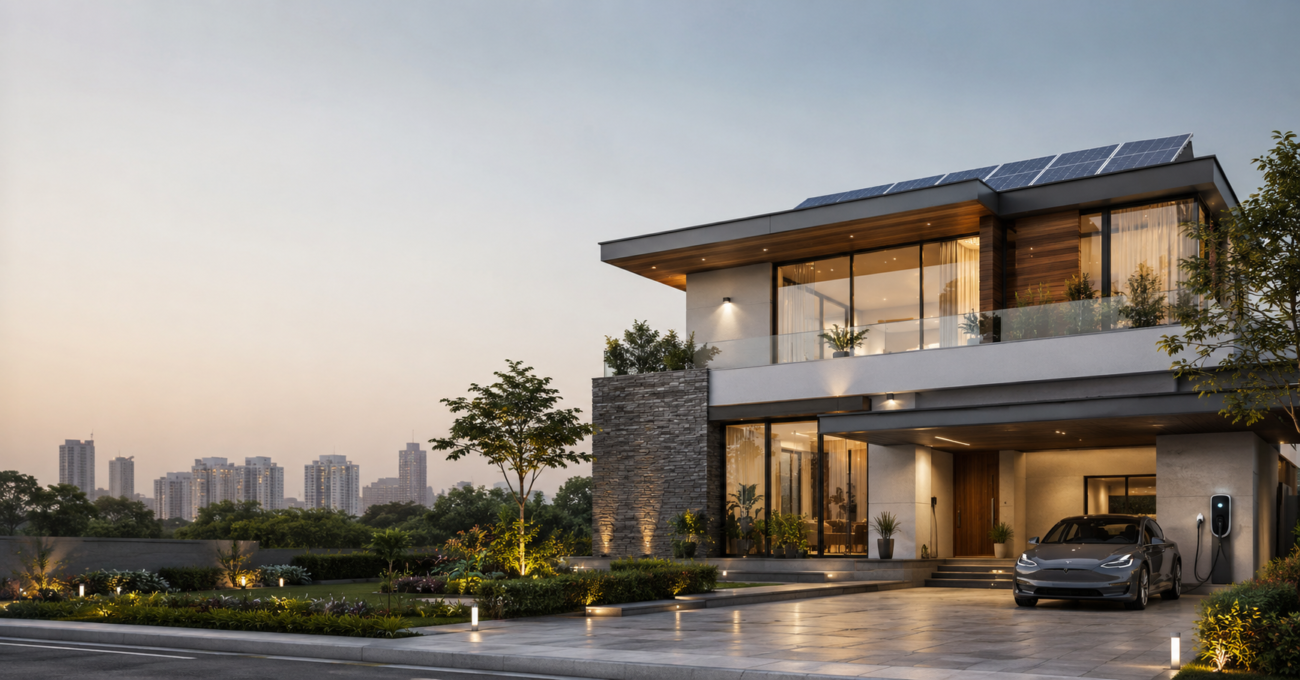
Home design is evolving faster than ever, shaped by changing lifestyles, climate awareness, and a growing appetite for spaces that feel calm and functional rather than ornate. Modern house design trends for 2026 reflect this shift: clean layouts, natural materials, and smarter use of space are replacing the heavier, more decorative styles of a decade ago. At Express Builders, we track these shifts closely across our residential developments in Noida and Greater Noida, where buyer preferences are steadily moving in this direction.
Why Home Design Trends Matter for NCR Buyers
Design trends are not just about aesthetics they influence how comfortable a home feels day to day and how well it holds its value over time. As Noida and Greater Noida continue to grow as residential hubs, buyers are becoming more discerning about layout efficiency, material quality, and long-term livability, not just square footage.
A few shifts driving this change:
- Smaller, smarter households favoring flexible layouts over rigidly defined rooms
- Hybrid work patterns creating demand for dedicated study or work corners
- Rising awareness of energy costs, pushing interest toward better-insulated, well-ventilated homes
- Greater exposure to global design trends through digital platforms, raising expectations around finish quality
Key Modern House Design Trends Shaping 2026
Minimalist, Functional Layouts
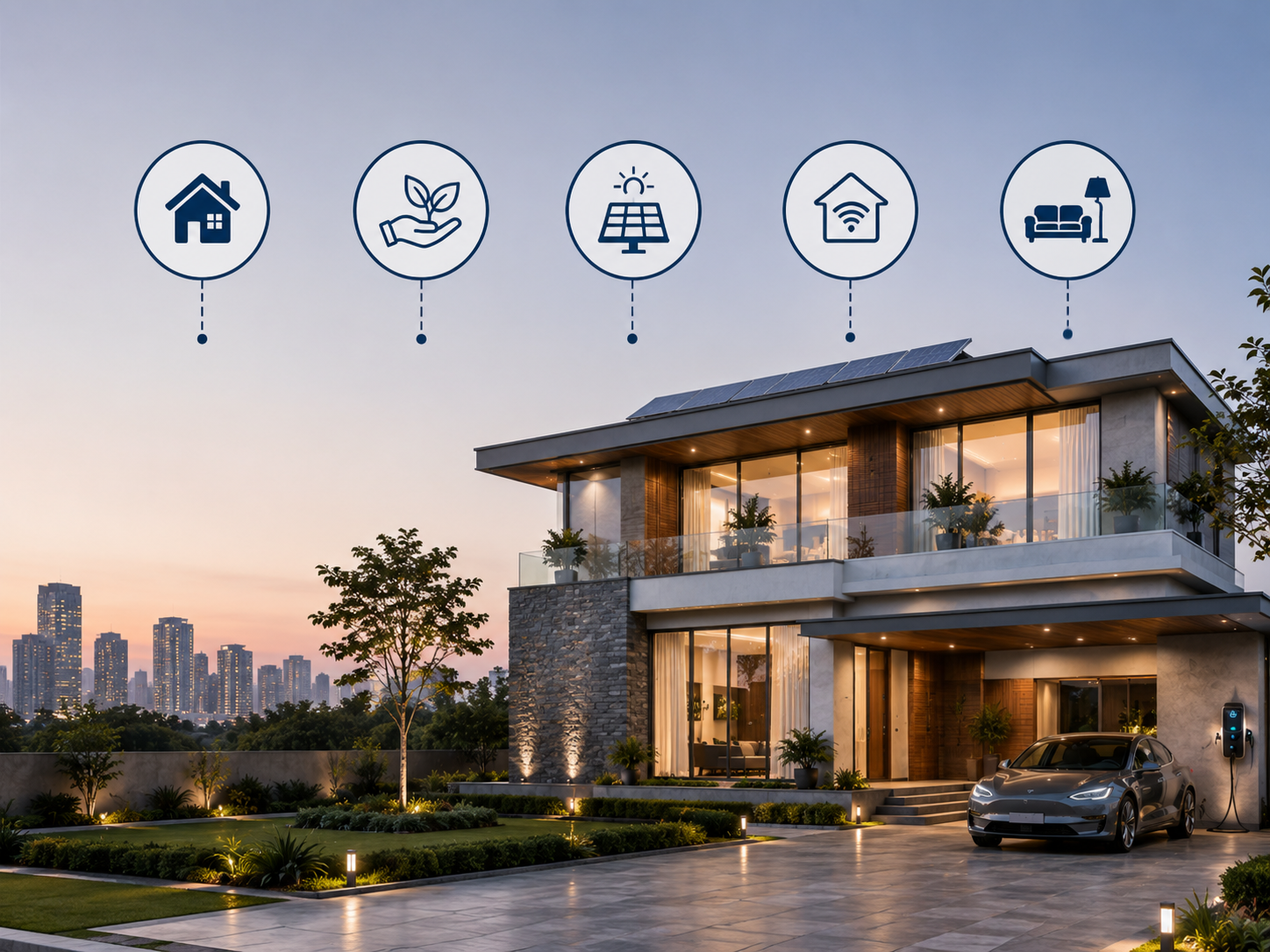
Open floor plans with fewer partition walls continue to gain ground, allowing natural light and airflow to move more freely through the home. Storage is increasingly built into walls and furniture rather than added as an afterthought, keeping visible clutter to a minimum.
Biophilic and Nature-Integrated Design
Bringing elements of the outdoors in through indoor plants, natural materials, and views framed by larger windows has moved from a niche preference to a mainstream expectation. Even compact homes incorporate small planters, balcony gardens, or courtyard greenery where space allows.
Sustainable and Energy-Conscious Building Choices
Buyers are paying closer attention to insulation quality, window glazing, and water-efficient fittings, not just as an environmental consideration but as a way to manage long-term utility costs. Materials that reduce heat absorption are particularly relevant given Delhi-NCR’s summer temperatures.
Smart Home Integration
Pre-wiring for video door phones, app-controlled lighting, and basic home automation is increasingly expected rather than treated as a premium add-on. Buyers are looking for homes that can be upgraded easily as smart-home technology continues to evolve.
Multi-Functional Spaces
With hybrid work here to stay, a dedicated study nook, flexible guest room, or convertible balcony space has become a common ask. Homes designed with this flexibility in mind tend to appeal to a wider range of buyers, from young professionals to growing families.
Exterior & Facade Trends for 2026
The exterior of a home sets the first impression and increasingly reflects the same restraint seen in interiors. A few directions standing out this year:
- Clean geometric massing with minimal ornamentation, relying on proportion rather than decorative detailing
- Mixed-material facades, pairing stone or textured cladding with painted plaster or wood-look panels
- Larger windows and glazed sections near entrances and living areas, balanced with shading elements to manage heat
- Vertical greenery or landscaped entry points, softening the facade without requiring large garden areas
- Well-lit, clearly defined entrances, often set apart with a portico or recessed doorway
These choices are not purely cosmetic; they also affect how a home performs through NCR’s hot summers and monsoon season.
Interior Design Directions Complementing Modern Homes
Exterior restraint is typically mirrored inside the home as well. Interiors trending in 2026 tend to favor:
- Neutral, earthy color palettes with occasional bold accents rather than saturated color throughout
- Natural materials such as wood, stone, and woven textures, often paired with matte rather than glossy finishes
- Layered lighting, combining ambient, task, and accent lighting instead of relying on a single central fixture
- Wellness-oriented spaces, including compact home gyms, yoga corners, or quiet reading nooks
- Durable, easy-to-clean surfaces in high-traffic areas like kitchens and entryways
At Express Builders, several of our recent residential offerings have moved toward these lighter, more functional interior specifications based on this shift in buyer preference.
Designing for Noida & Greater Noida’s Climate
Any design trend needs to hold up against local weather realities: intense summer heat, a distinct monsoon, and cooler winters. A few climate-specific considerations worth prioritizing:
- Shaded overhangs or chajjas above windows to limit direct heat gain
- Cross-ventilation planning, positioning windows to encourage airflow through the home
- Robust waterproofing on terraces, balconies, and roof areas ahead of monsoon season
- Heat-resistant, low-maintenance exterior finishes that don’t discolor easily with dust and rain
Buyers should ask developers directly how these factors are addressed in a project’s specifications, rather than assuming they’re standard across the board.
What Homebuyers Should Check Before Choosing a Modern Home
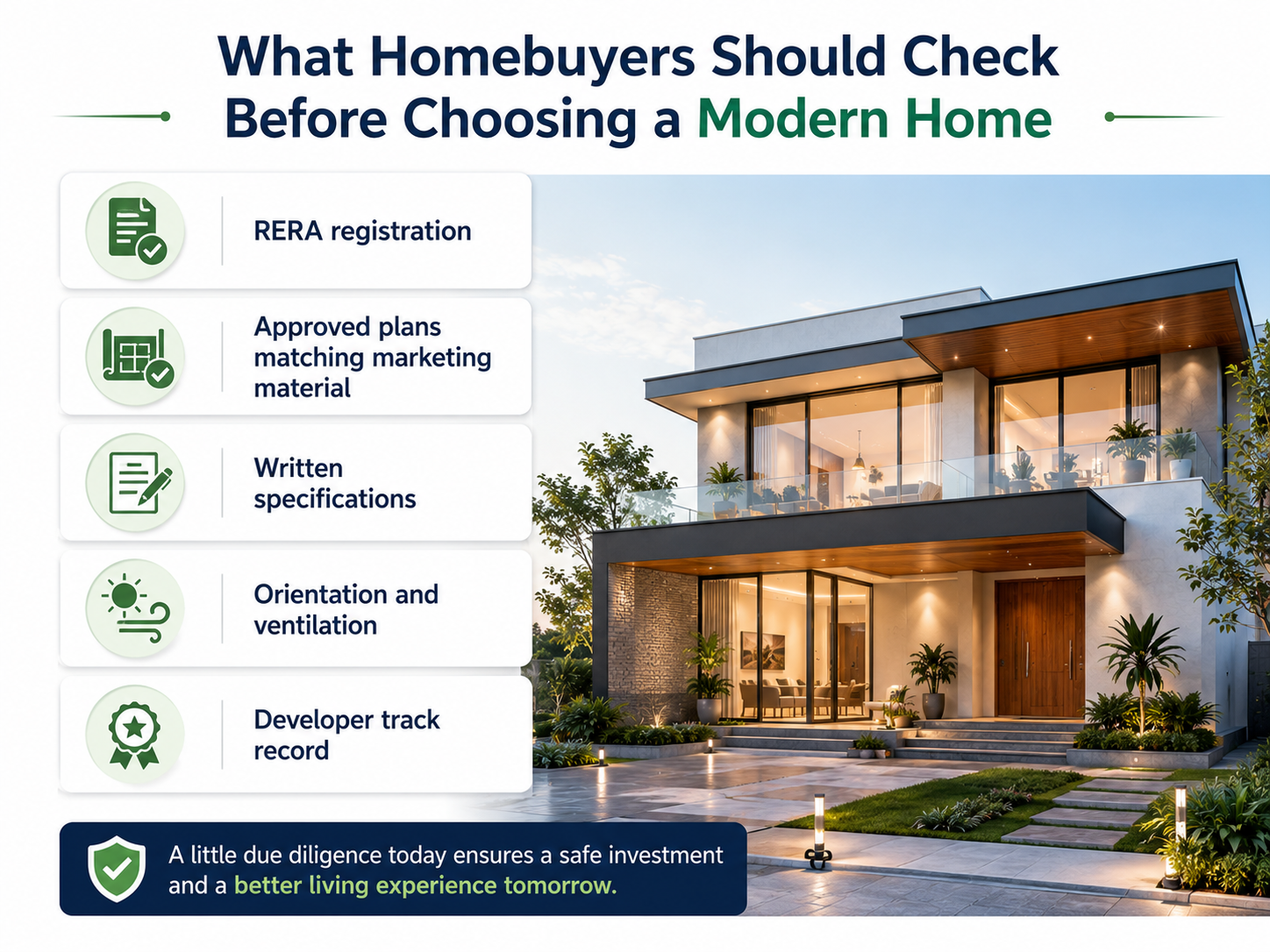
A well-designed home should be backed by transparent documentation and sound construction practices. Before finalizing a purchase, it’s worth verifying:
- RERA registration: Under the Real Estate (Regulation and Development) Act, 2016, developers must register eligible projects with the state RERA authority and disclose layout plans, specifications, and timelines. Ask for the project’s RERA number and verify it independently on the relevant state RERA website.
- Approved plans matching marketing material: Confirm that renderings and brochures align with the sanctioned building plan.
- Written specifications: Get material, fitting, and finish details documented in the agreement rather than relying on verbal assurances.
- Orientation and ventilation: Visit the site at different times of day where possible to understand light and airflow firsthand.
- Developer track record: Review the developer’s history of timely delivery and construction quality on earlier NCR projects. At Express Builders, we make it a practice to share RERA details and specifications upfront, a standard worth expecting from any developer you’re evaluating.
Modern Homes as a Long-Term Investment
For buyers thinking beyond immediate move-in needs, design choices can influence how a home is perceived years later. A few general factors that tend to support long-term value in the NCR residential market:
- Proximity to established or upcoming transit and commercial infrastructure
- Consistent upkeep of common areas in gated developments
- Design and material choices that age well rather than following short-lived trends
- Clear, verifiable documentation, including RERA compliance, which matters to future buyers and lenders
As always, independent due diligence and where needed, advice from a financial or legal professional is worth the effort rather than relying solely on projected returns quoted during a sales pitch.
Frequently Asked Questions
What is the design style of a modern house?
Modern house design is a style built around simplicity and function. It usually includes open floor plans, large windows for natural light, flat or low-slope roofs, and materials like glass, steel, wood, and concrete. Unlike traditional styles with heavy carvings or ornamentation, modern design keeps things clean and minimal, letting the structure and materials speak for themselves.
What is the new modern house in 2026?
Modern houses in 2026 build on the same clean, minimalist look but add a few newer priorities: energy-efficient materials, indoor-outdoor living spaces, smart-home technology, and flexible rooms that work for both family life and remote work. The overall style stays simple, but homes are now designed to be more sustainable and tech-ready than modern homes from a decade ago.
What is the ideal home layout?
There’s no single “ideal” layout, it depends on family size, lifestyle, and plot size. That said, most buyers today prefer layouts that keep bedrooms private and separate from living areas, connect the kitchen and living space in one open zone, include at least one flexible room for work or guests, and are positioned to get good natural light and airflow through the day.
What is luxury home design?
Luxury home design is less about size and more about the quality of the experience. It typically includes premium materials like natural stone or solid wood, careful architectural detailing, spacious and well-planned layouts, higher-end fittings and finishes, and extra amenities such as a home theatre, private garden, or dedicated wellness area. The focus is on comfort, privacy, and craftsmanship.
What are the 4 types of houses?
In Indian real estate, homes are commonly grouped into four broad types: independent houses or villas that stand on their own plot; apartments or flats, which are units within a larger multi-storey building; builder floors, which are independent floors within a low-rise building, each with its own entrance; and duplex or row houses, two-level homes often built in connected clusters. Exact classifications can vary a little by region and developer.
What are 5 characteristics of a modern home?
Five features that define a modern home: clean lines with minimal decoration, open floor plans that connect living spaces, large windows that bring in natural light, neutral colors paired with natural materials like wood and stone, and smart-home technology built in from the start rather than added on later.
What is the most popular house design?
Popularity depends on location and budget. In India’s NCR region, apartments in gated communities remain the most common choice because of affordability, security, and shared amenities, while independent houses, builder floors, and duplexes are gaining ground among buyers who want more space and privacy. In terms of style, minimalist modern design is currently the most widely preferred look across new residential projects.
Can AI design a house?
es, to an extent. AI tools can now generate floor plans, visualize exteriors, and simulate energy efficiency based on a few inputs, which is useful for early ideas and inspiration. That said, licensed architects and structural engineers are still essential for finalizing safe, code-compliant, and site-specific designs AI works best as a design aid, not a replacement for professional expertise.
The Bottom Line is
Modern house design trends for 2026 point toward homes that are simpler, more climate-responsive, and better suited to how people actually live, from flexible layouts and biophilic touches to smarter exteriors and energy-conscious specifications. These aren’t fleeting styles; they reflect a broader shift toward homes that are easier to live in and maintain over the long run.
If you’re evaluating a new home in Noida or Greater Noida, look past the renderings. Verify RERA compliance, review specifications in writing, and consider how well the design responds to local climate conditions. To see how these trends are being applied in practice, contact us with our sales team for a detailed walkthrough of current floor plans and specifications.
