
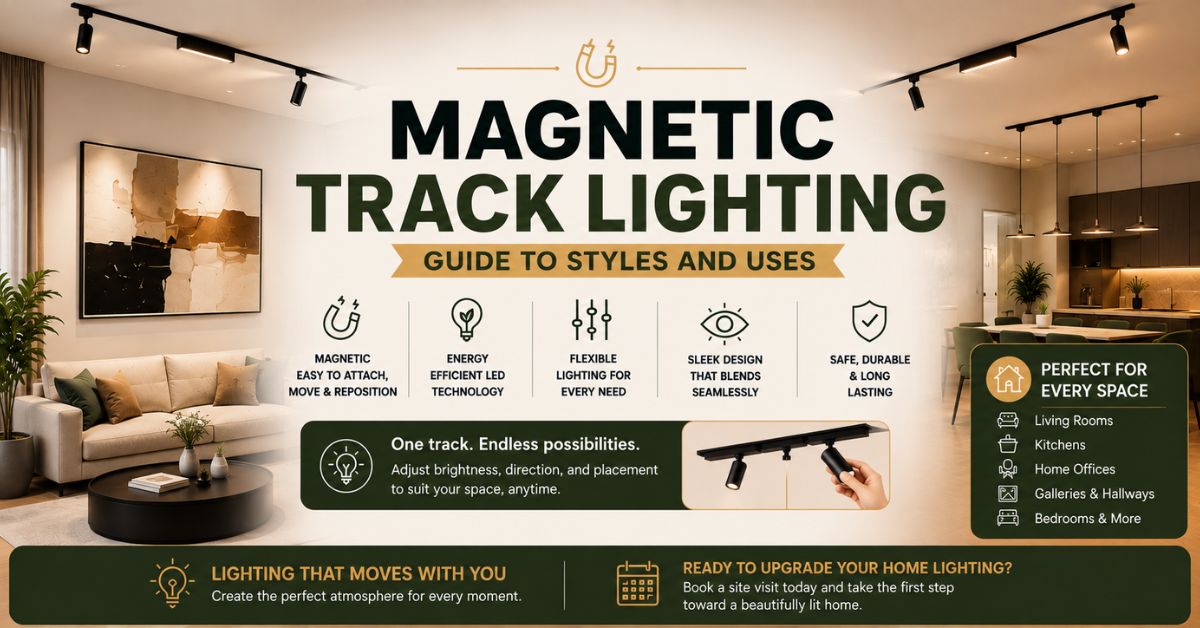
Lighting design has moved far beyond fixed ceiling fixtures and static spotlights, and magnetic track lighting sits at the centre of this shift. This system allows homeowners to attach, move, and rearrange individual light fixtures along a slim track using built in magnets, giving every room a level of flexibility that traditional wiring simply cannot offer. Instead of committing to one fixed lighting layout, a magnetic track lighting system lets you adjust brightness, direction, and fixture placement as your needs change over time.
This guide explains how magnetic track lighting works and why it has become such a popular choice in modern homes. It covers the components involved, the benefits of choosing this system, and practical tips for planning an installation that suits different rooms and design styles. Whether you want to highlight artwork, brighten a kitchen counter, or create layered ambient lighting, this system offers a genuinely adaptable solution.
What Is Magnetic Track Lighting
A magnetic track light system consists of two main parts working together, a slim track mounted to the ceiling or wall, and individual light fixtures that snap onto the track using strong internal magnets. Unlike traditional track lighting, which typically requires fixtures to twist or lock into place mechanically, a magnetic track light allows fixtures to be placed, removed, or repositioned within seconds, simply by lifting them off the track and reattaching them wherever needed.
The track itself carries low voltage electrical current, which powers each fixture the moment it connects to the magnetic strip. This design eliminates the need for visible wiring between fixtures, since the track handles all the electrical connections internally. Most magnetic track lighting systems run on a continuous low voltage current, which also makes them compatible with LED technology, allowing for energy efficient lighting throughout the home without sacrificing brightness or flexibility.
Also Read- Kitchen Lights Ideas Worth Considering
Why Homeowners Choose Magnetic Track Lighting
Homeowners increasingly choose magnetic track lighting because it solves a problem that traditional fixed lighting often creates, namely the inability to adapt lighting to changing needs without significant electrical work. Once a magnetic track is installed, adjusting the lighting layout becomes as simple as sliding a fixture along the track or adding a new one entirely, without needing to call an electrician for every change.
This flexibility becomes particularly valuable in spaces that serve multiple purposes throughout the day, such as a living room that transitions from a bright workspace in the morning to a softly lit relaxation area in the evening. A magnetic led track lighting setup allows homeowners to redirect individual fixtures toward different focal points, whether that means highlighting a piece of artwork, illuminating a reading corner, or washing light evenly across a wall. This level of control simply is not possible with fixed ceiling lights or traditional recessed fixtures.
Beyond flexibility, magnetic track systems also tend to offer a cleaner, more minimalist appearance compared to older track lighting designs. The slim profile of most tracks blends discreetly into ceiling lines, while the fixtures themselves come in compact, modern shapes that suit contemporary interior styles. This combination of function and aesthetics explains why the system has grown so popular among homeowners renovating open plan spaces or gallery style rooms.
Popular Light Modules & Fixtures
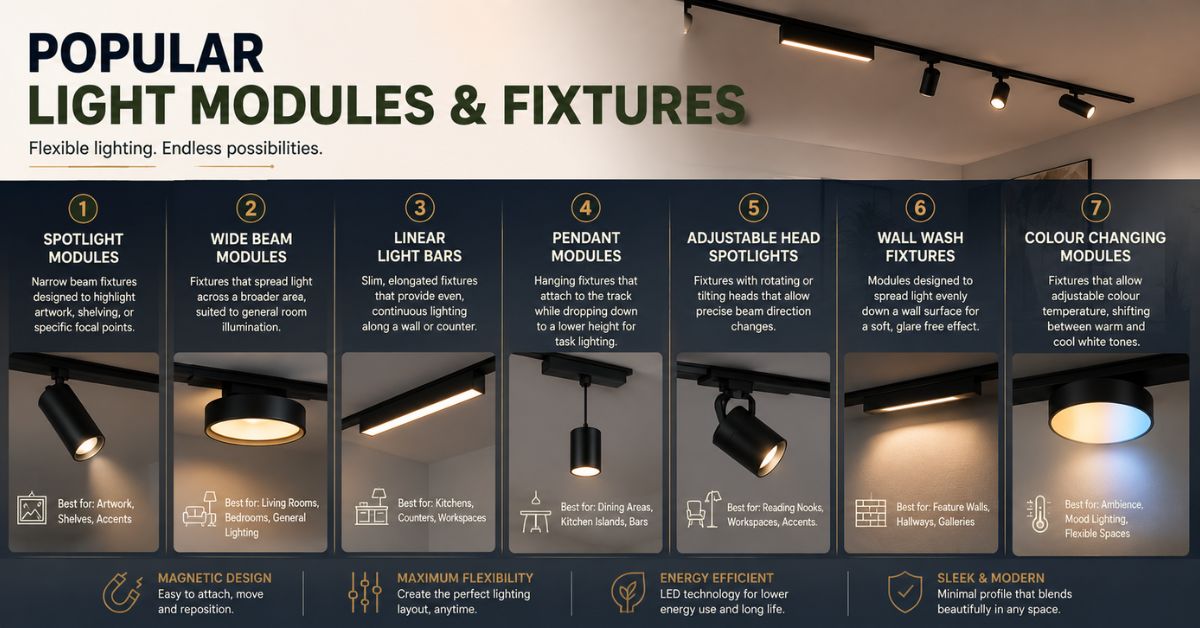
A magnetic track lighting system supports a wide variety of fixture types, allowing homeowners to mix and match modules based on the specific lighting task each area requires. Understanding the common fixture categories helps in planning a layout that covers both functional and decorative lighting needs.
- Spotlight modules: Narrow beam fixtures designed to highlight artwork, shelving, or specific focal points.
- Wide beam modules: Fixtures that spread light across a broader area, suited to general room illumination.
- Linear light bars: Slim, elongated fixtures that provide even, continuous lighting along a wall or counter.
- Pendant modules: Hanging fixtures that attach to the track while dropping down to a lower height for task lighting.
- Adjustable head spotlights: Fixtures with rotating or tilting heads that allow precise beam direction changes.
- Wall wash fixtures: Modules designed to spread light evenly down a wall surface for a soft, glare free effect.
- Colour changing modules: Fixtures that allow adjustable colour temperature, shifting between warm and cool white tones.
This range of modules means a single track can serve several different lighting purposes at once. A homeowner might combine spotlight modules for artwork with a wide beam fixture for general room lighting, all powered through the same continuous track without needing separate wiring for each function.
Benefits of LED Magnetic Track Light Systems
An led magnetic track light setup combines the flexibility of magnetic mounting with the efficiency of LED technology, creating a lighting solution that performs well both practically and financially over time. LED fixtures consume significantly less electricity compared to traditional halogen or incandescent bulbs, which translates into lower energy bills, particularly in homes where track lighting runs for extended periods each day.
LED fixtures also produce considerably less heat than older lighting technologies, which improves safety and reduces strain on nearby materials, especially important when fixtures sit close to artwork, fabric, or wooden surfaces. The long lifespan of LED bulbs further reduces the need for frequent replacements, since most LED modules last significantly longer than traditional bulbs before requiring a swap. This durability makes an led magnetic track light system a practical long term investment, particularly in ceilings or areas that are difficult to access for maintenance.
Many LED modules within a magnetic led track lighting system also support dimming functionality, allowing homeowners to adjust brightness levels throughout the day without needing separate dimmer switches for each fixture. This level of control adds another layer of flexibility on top of the physical repositioning that magnetic tracks already offer.
Also Read- False Ceiling Lights: Designs, Colours & Ideas That Transform Any Room
Where to Use Magnetic Track Lighting in a Home
Magnetic track lighting suits a wide range of rooms, though certain spaces tend to benefit from this system more than others due to their layout and lighting needs. Living rooms often work particularly well with this system, since the flexibility allows homeowners to redirect light toward different seating arrangements or feature walls as furniture layouts change over time.
Kitchens also benefit significantly from a magnetic track lighting system, especially when installed above countertops or islands, since individual fixtures can be angled precisely toward food preparation areas without shadows interfering with visibility. Home offices and study areas gain similar advantages, since task lighting can be directed exactly where needed for reading or screen based work, reducing eye strain during long working hours.
Galleries, hallways, and display areas represent another strong use case, since spotlight modules can highlight artwork or photographs with precision, while remaining easy to adjust whenever the display changes. Even bedrooms can incorporate this system effectively, using softer wide beam or wall wash fixtures for ambient lighting, paired with a focused spotlight module for a reading nook near the bed.
Design Considerations for Installing Magnetic Track Lighting
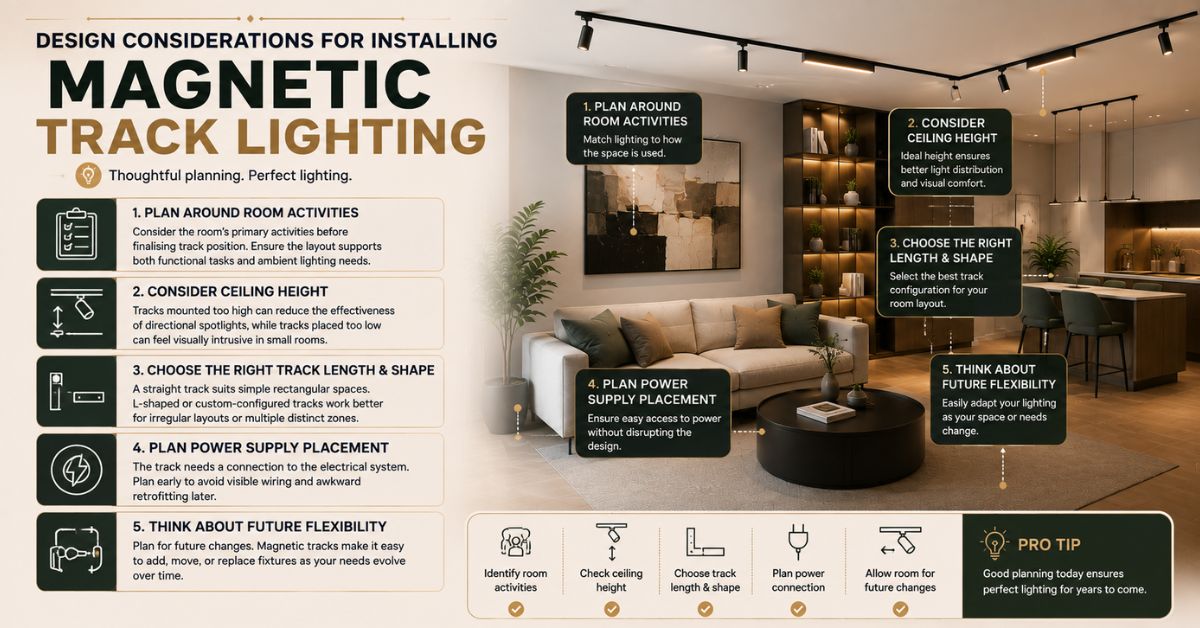
Planning a magnetic track lighting installation requires more than simply choosing attractive fixtures, since the track placement itself significantly influences how well the final lighting layout performs. Homeowners should consider the room’s primary activities before finalising track position, ensuring the layout supports both functional and ambient lighting needs.
Ceiling height plays an important role in this planning process, since tracks mounted too high can reduce the effectiveness of directional spotlight modules, while tracks placed too low in a small room can feel visually intrusive. Track length and shape also deserve careful thought, since a straight track suits simple rectangular rooms, while an L shaped or custom configured track might better serve irregularly shaped spaces or rooms with multiple distinct zones.
Power supply placement matters as well, since the track requires a connection point to the home’s electrical system, and planning this connection early avoids the need for visible wiring or awkward retrofitting later. Homeowners should also think about future flexibility during the planning stage, since one of the biggest advantages of a magnetic track lighting system lies in its ability to accommodate new fixtures or layout changes long after the initial installation.
Also Read- Kitchen POP Design Ideas Worth Considering
Conclusion
Magnetic track lighting offers a genuinely flexible approach to home lighting, combining easy fixture repositioning with the energy efficiency of LED technology. From highlighting artwork to brightening a kitchen counter, this system adapts to changing needs without requiring constant electrical work. Careful planning around track placement, fixture selection, and room function ensures the lighting performs well for years to come.
Explore Express Builders ongoing residential projects across Noida and Greater Noida West. See the quality and planning behind every home firsthand.
Book a free site visit today with Express Builders. Walk through our ongoing projects and see construction quality up close. Check out floor plans, amenities, and location advantages in person. Meet our team and get your property-related questions answered directly. Schedule a visit at your convenience.
Frequently Asked Questions
What makes magnetic track lighting different from traditional track lighting?
Magnetic track lighting uses magnets to attach and reposition fixtures instantly, while traditional systems often require mechanical twisting or locking.
Is magnetic track lighting compatible with LED bulbs?
Yes, most magnetic track lighting systems are specifically designed to work with LED modules for energy efficient performance.
Can I move fixtures on a magnetic track lighting system myself?
Yes, fixtures can be repositioned by simply lifting them off the track and reattaching them at a new location.
Which rooms benefit most from magnetic track lighting?
Living rooms, kitchens, home offices, and gallery style spaces benefit significantly due to the flexible directional lighting.
Does magnetic track lighting require professional installation?
While fixtures can be adjusted easily, the initial track installation and electrical connection should be handled by a qualified electrician.
