
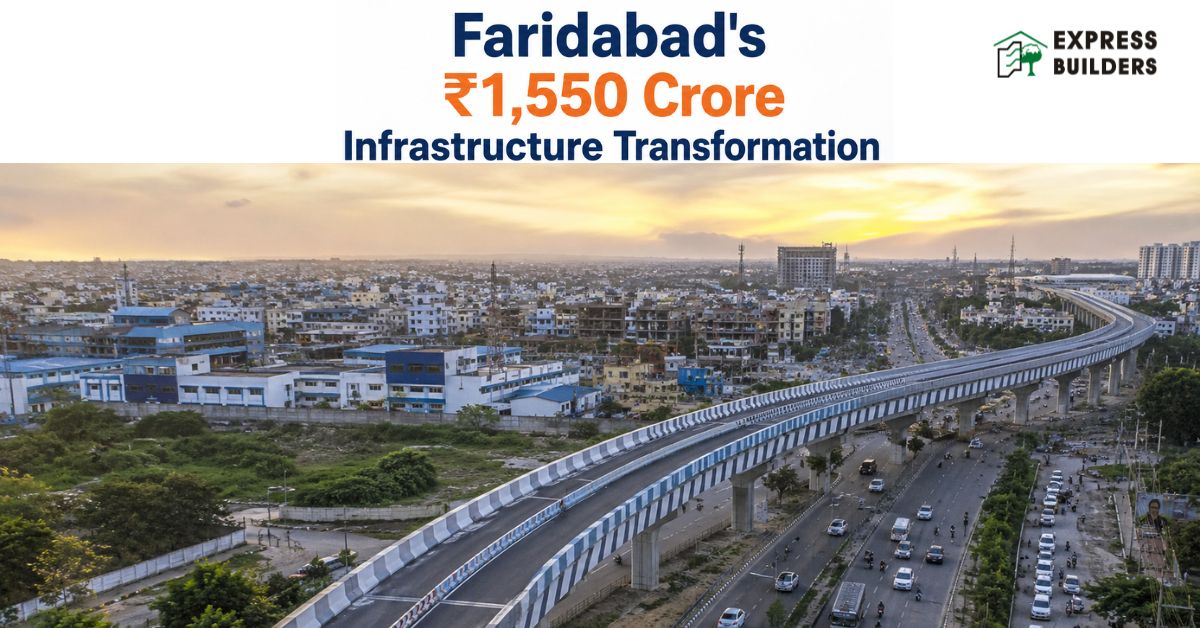
For years, Faridabad carried a quiet reputation. It was the industrial neighbour standing in the shadow of its flashier cousin across the highway. Traffic jams at Badarpur border, potholed stretches near Neelam-Badkhal Road, and slow-moving factories defined the city’s image for a long time.
That image is changing fast.
Haryana’s latest state budget has pushed Faridabad into the spotlight. Planners have approved a Rs 1,550 crore package for two new elevated corridors. Along with that comes 260 kilometres of fresh road construction in Greater Faridabad, new metro connections, and a fresh push under the Smart Cities Mission. Put together, these projects are reshaping how people think about this city.
Let’s break down what’s actually happening, why it matters, and what it means for anyone watching the region’s real estate and infrastructure story.
The Rs 1,550 Crore Elevated Road Push
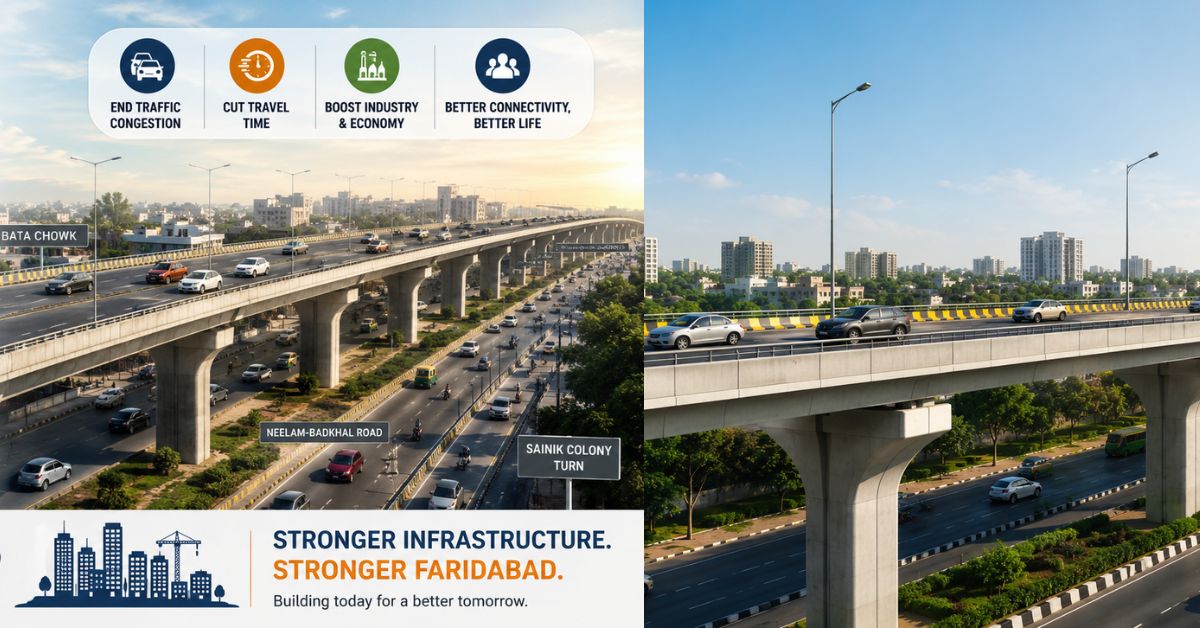
Traffic congestion has long been Faridabad’s biggest daily challenge. Every day, commuters face heavy traffic at the Delhi border, Bata Chowk, Neelam-Badkhal Road, and Sainik Colony Turn. To address these bottlenecks, the state budget has approved two elevated corridors worth Rs 1,550 crore.
These corridors are designed to provide smoother, signal-free travel through the city’s busiest routes. In addition, the project includes nine new flyovers. Once completed, they are expected to reduce travel time and make daily commutes easier for industrial workers, students, and office employees.
The government is also investing in Greater Faridabad’s road network. It plans to build 260 kilometres of new roads across the area. This large-scale expansion shows a clear long-term vision. Instead of simply repairing old roads, officials are creating the infrastructure needed to support a larger, better-connected city.
Read More: https://expressbuildersltd.com/blog/ndc-haryana/
Metro and Rapid Transit Links Are Expanding
Road upgrades alone cannot solve urban congestion. Public transport must expand as well. That’s where the second major change comes in.
Authorities have finalised the alignment for a 64-kilometre rapid transit corridor linking Gurugram, Faridabad, Noida, and Greater Noida. Around 52 kilometres of the route will pass through Haryana. Once complete, it is expected to cut travel time between these cities to under an hour. The trains are designed to reach speeds of up to 180 kilometres per hour and will run every five to seven minutes.
This is much more than a local transport upgrade. Instead, it represents a major shift in regional mobility. For example, people living in Faridabad could travel to Noida or Gurugram for work in a fraction of today’s travel time. As a result, better connectivity could create new jobs, attract businesses, and boost economic growth. Many opportunities that once felt too far away may finally become practical.
At the same time, authorities are planning a new bridge and elevated road as part of another expressway linking Faridabad, Noida, and Ghaziabad. The corridor will stretch for more than 50 kilometres. More importantly, it will allow commuters to travel between these cities without passing through Delhi. That could significantly reduce travel time and ease congestion for thousands of daily commuters.
A new six-lane bridge over the Yamuna is another key part of the project. It will connect neighbourhoods on both sides of the river without forcing drivers through busy city centres. In addition, smaller connector roads and underpasses will improve access between bridges and residential areas that have long remained disconnected.
Each project may seem modest on its own. However, together they create a stronger transport network. Over time, these improvements could help the NCR function as one connected region instead of a collection of separate cities.
Five Smart Cities and the Bigger Urban Vision
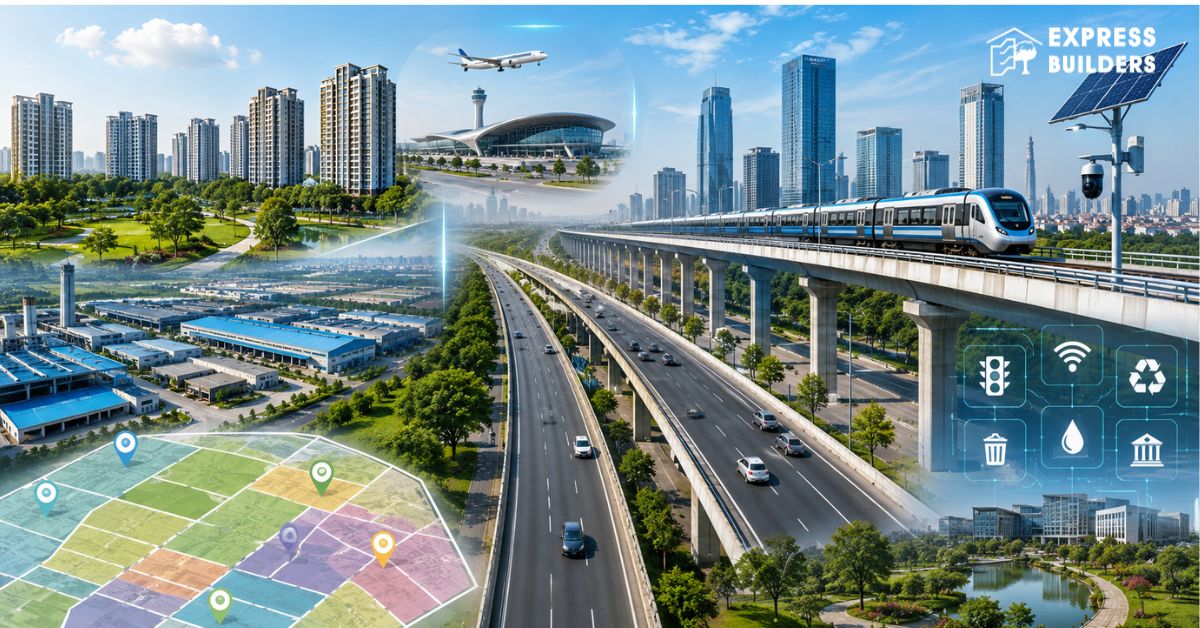
Faridabad is already part of India’s Smart Cities Mission. However, the city’s latest plans go much further. Greater Faridabad, also known as Neharpar, is being developed as a smaller version of Haryana’s flagship “Global City” concept, which was first planned for Gurugram.
Under the city’s master plan, sectors 66 to 89 will form a self-contained urban zone. Sectors 75 to 89 are reserved for residential development. Meanwhile, sectors 66 to 74 are set aside for industrial growth. This clear zoning gives builders, investors, and homebuyers a better understanding of the city’s long-term direction.
At the same time, smart city projects aim to improve everyday life. These include intelligent traffic management, better waste management, and digital governance services. Although these projects may not grab headlines, they can make daily civic services faster, simpler, and more reliable.
The wider vision goes even further. The city plans to develop five modern satellite zones with upgraded infrastructure. Each zone is expected to include wider roads, planned green spaces, and dependable utilities from the start. As a result, the city can avoid the costly process of upgrading older neighbourhoods later.
Read More: https://expressbuildersltd.com/blog/haryana-land-records/
Why This Matters Beyond Just Traffic Relief
It’s tempting to see all this as just another round of government announcements. But a few things make this particular wave of development different.
First, the scale is unusual. Multiple projects are moving in parallel: elevated roads, rapid transit, expressways, and zoning reforms. That kind of simultaneous progress usually signals sustained political and financial commitment, not a one-off election promise.
Second, the connectivity angle solves a problem that has held Faridabad back for decades. The city has always had industrial strength and relatively affordable living costs compared to its neighbours. What it lacked was fast, reliable access to job hubs in Delhi, Noida, and Gurugram. These new corridors directly address that gap.
Third, an upcoming international airport nearby adds another growth driver. A dedicated expressway connecting Greater Faridabad to this airport is expected to bring travel time down to around 30-45 minutes. Cities with strong airport connectivity tend to attract logistics firms, corporate offices, and service industries much faster than those without it.
What Residents and Investors Should Watch Next
None of these projects are complete yet. In fact, several are still in the detailed project report (DPR) stage. Meanwhile, tenders for some corridors have not been issued. Large infrastructure projects often face delays, so expect timelines to shift. However, utility lines are already being relocated in a few areas. This is usually one of the first visible signs that construction is about to begin.
Even so, the overall direction is clear. Government investment continues to grow. At the same time, the master plan, zoning decisions, and transit routes all support the city’s future expansion. Therefore, anyone tracking Faridabad should watch three key developments: progress on the elevated roads, the finalisation of the rapid transit route, and the pace of development in Greater Faridabad.
Faridabad is not trying to match its neighbour overnight. Instead, it is building for long-term growth. With major investments in roads, public transport, and planned urban development, the city is creating a strong foundation. As a result, Faridabad could significantly transform its image and growth over the next few years.
Read More: https://expressbuildersltd.com/blog/delhi-regional-plan-2041/
Ready to Explore What’s Next for Faridabad?
Infrastructure like this rarely announces itself twice. If you’re tracking real estate trends or simply curious about the city’s growth story, now is the time to stay informed. Follow project updates, compare timelines, and let real data guide your next decision.
Ready to Experience This Lifestyle?
Schedule a site visit today. Walk through the homes, explore the amenities, and feel the peaceful atmosphere in Greater Noida and Noida Extension. Smart families move ahead of the curve, and right now, a gated community in Noida is one of the smartest choices you can make.
Frequently Asked Questions:
What is the new road project in Haryana 2026?
In 2026, Haryana is advancing several major road projects. Key developments include the 86-km link connecting the Trans-Haryana Expressway with the Delhi–Mumbai Expressway, new elevated corridors in Gurugram, and multiple highway widening projects to improve travel, reduce congestion, and boost regional connectivity.
What is the new road project in Faridabad?
The biggest new road project in Faridabad is the 8.2-km Ballabgarh Pali Dhauj Sohna elevated flyover. It will include a two-lane elevated road with service roads, reducing congestion and improving connectivity between Faridabad, Gurugram, and the Delhi–Mumbai Expressway.
What is the future of Faridabad?
Faridabad’s future is bright, driven by new expressways, metro expansion, improved road connectivity, and industrial growth. Rising infrastructure investment and better access to Delhi, Noida, and Gurugram are expected to boost property demand, attract businesses, and make the city a leading real estate and manufacturing hub in the NCR.
