
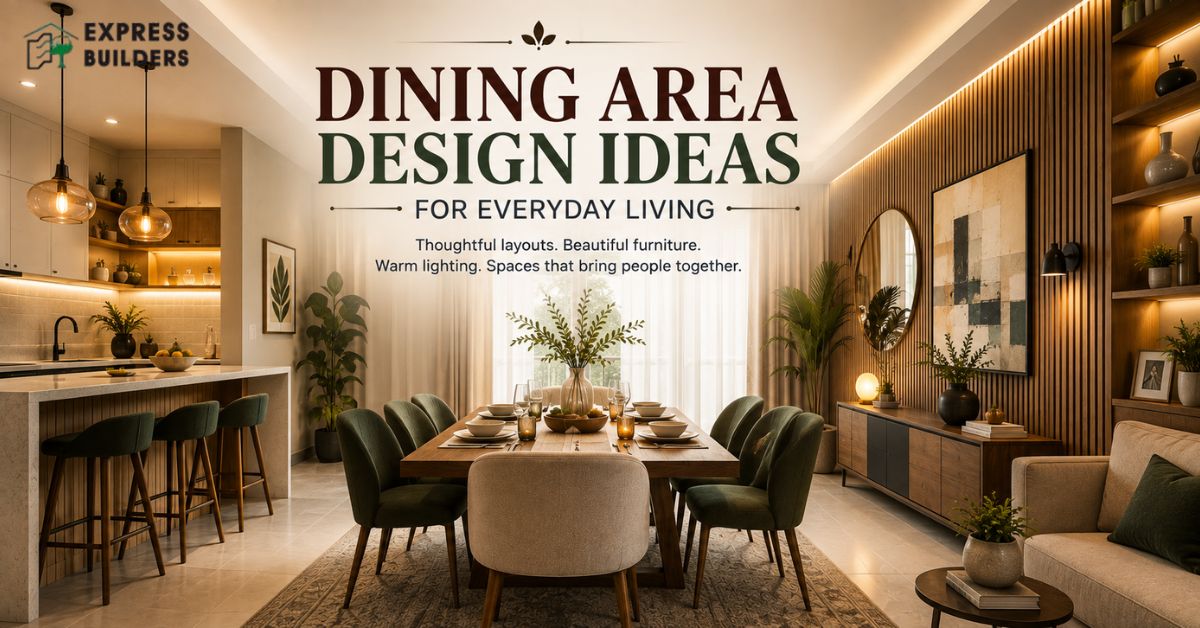
The dining area serves a role in a home that goes well beyond simply holding a table and chairs, since it often becomes the default gathering point for everyday meals and impromptu conversations that happen alongside food. Dining area design brings together layout, furniture, lighting, and wall treatment into a single considered space, and getting these elements to work together genuinely shapes how often a family chooses to eat together rather than scattering to separate corners of the home. This guide walks through the layout options, furniture choices, and finishing details that shape strong dining area design, along with the practical decisions worth weighing before you commit.
What Makes Dining Area Design Worth Getting Right
A dining area sits at an interesting intersection within most homes, connecting the kitchen where food gets prepared to the living space where people relax afterward, so its design needs to work sensibly alongside both neighbouring zones. Good dining area design considers traffic flow carefully, since people need to move comfortably around chairs and past the table even during a busy meal or when guests are present. The space also needs to accommodate different uses across a single day, hosting a quick solo breakfast in the morning and a full family dinner in the evening, which means flexibility matters as much as pure aesthetics. Many homeowners underestimate how much a well-planned dining area contributes to daily family routine, since a comfortable, inviting space genuinely encourages people to sit down together.
Also Read- Wooden Furniture Designs for Every Room at Home
Popular Dining Area Layouts to Consider
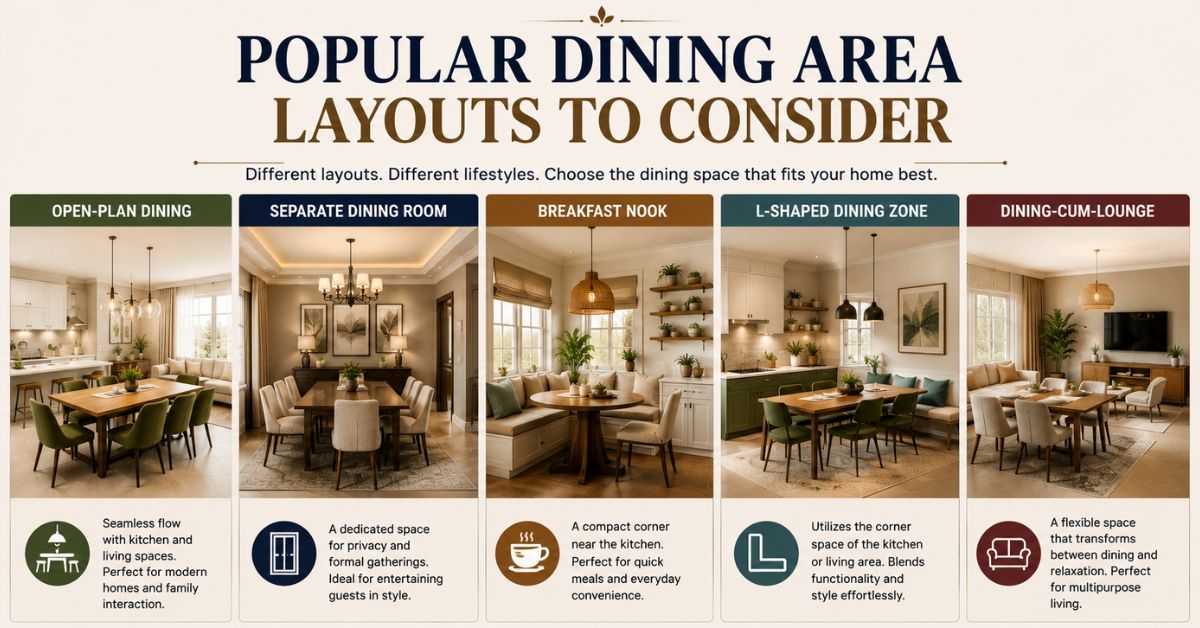
Dining areas can be arranged in several distinct ways depending on the home’s overall floor plan and available square footage. Reviewing these common layouts helps clarify which approach might suit your own space best.
- Open-plan dining – the dining area flows directly into the kitchen or living space without a dividing wall
- Separate dining room – a fully enclosed room dedicated solely to meals, offering more privacy and a formal atmosphere
- Breakfast nook -= a compact, often built-in seating arrangement near the kitchen, suited to quick daily meals
- L-shaped dining zone – the table sits within an L-shaped extension of the kitchen or living area, blending both functions
- Dining-cum-lounge – a flexible space that shifts between dining and relaxed seating depending on the occasion
Choosing between these layouts largely depends on how your household actually uses meal times, since a family that entertains frequently might prioritise a separate room, while a smaller household might get more genuine daily use from an open-plan or breakfast nook arrangement.
Choosing Furniture That Fits Your Space
Furniture selection anchors the rest of the dining area design, and getting the scale right matters just as much as choosing an appealing style. A table sized appropriately for the room, with enough clearance for chairs to pull out comfortably, makes a far bigger difference to daily comfort than most homeowners expect. Material choice also deserves genuine thought, since a dining table faces daily wear from spills and constant use in a way furniture in less-used rooms simply doesn’t encounter. Chairs benefit from similar consideration, balancing comfort for extended meals against a design that doesn’t visually overwhelm a smaller room. Many homeowners now mix furniture styles deliberately, pairing a solid wood table with a bench or contrasting chairs, adding visual interest without sacrificing coherence.
Bringing Character Through Dining Area Wall Decor
Dining area wall decor plays a defining role in how finished the space feels, since the walls surrounding the table receive sustained, close attention throughout every meal. Wall decor for dining room area choices range from curated gallery arrangements to a single striking piece of art, and the right approach depends on how much visual complexity the rest of the room can comfortably support. A dining area with minimal furniture and a simple palette can often carry a bolder wall decor statement, while a room already rich with pattern elsewhere benefits from a calmer treatment. Wall decor for dining room spaces connected to an open kitchen also needs to consider sightlines from adjoining areas, since the decor gets viewed from multiple angles throughout the day.
Also Read- Best 6 Bedroom Wall Colour Combination Ideas for Your Home
Making a Statement with the Back Wall
Dining area back wall decoration deserves particular attention within the broader design plan, since this is typically the surface most directly in view of anyone seated at the table. A well-considered back wall treatment can anchor the entire dining zone, giving it a clear visual identity even within an open-plan layout that lacks fully enclosing walls of its own. Many homeowners reserve their boldest design choice for this specific wall, whether that means a rich accent colour, a striking piece of art, or a textured material treatment, precisely because it draws consistent attention during every single meal shared in the space.
Adding Texture with Wall Panels
Dining area decor with wall panel treatments offers a way to introduce genuine depth and material interest beyond flat paint or hung artwork. Wood panels bring warmth to a dining space and pair particularly well with a wooden table for a cohesive natural material story throughout the room. Stone, plaster, or PVC panel options suit a more contemporary approach, often applied as a feature treatment on a single wall rather than across the entire room. Combining panel work with subtle integrated lighting adds further depth, casting soft shadow and highlighting texture during evening meals in a way flat paint simply cannot replicate.
Flooring and Colour Choices for Dining Spaces
Flooring in a dining area needs to handle spills, dropped utensils, and chair movement without showing wear prematurely, making durability just as important as appearance. Tile and engineered wood both perform well here, offering a good balance of resilience and warmth compared to more delicate options better suited to low-traffic rooms. Colour choice should generally support a relaxed, appetite-friendly atmosphere, with warm neutrals and soft earth tones remaining popular choices that age well alongside changing decor trends. Bolder colour, when used, tends to work best in smaller doses, such as on a single accent wall, rather than across every surface.
Key Factors to Check Before You Finalise Your Design
Before committing to a specific dining area design, a handful of practical checks can help you avoid costly mistakes later.
- Clearance around the table c-onfirm enough space remains for chairs to pull out and people to walk past comfortably
- Natural light access – consider how daylight enters the space, since this affects both mood and material colour perception
- Traffic flow – account for how people move between the kitchen, dining area, and living space during daily use
- Furniture durability – choose materials that can handle daily spills and wear without showing damage quickly
- Wall decor scale – measure your walls before selecting art or panels to avoid pieces that feel too small or overwhelming
- Flexibility needs – think about whether the space needs to adapt between casual daily use and more formal entertaining
Lighting That Ties the Dining Area Together
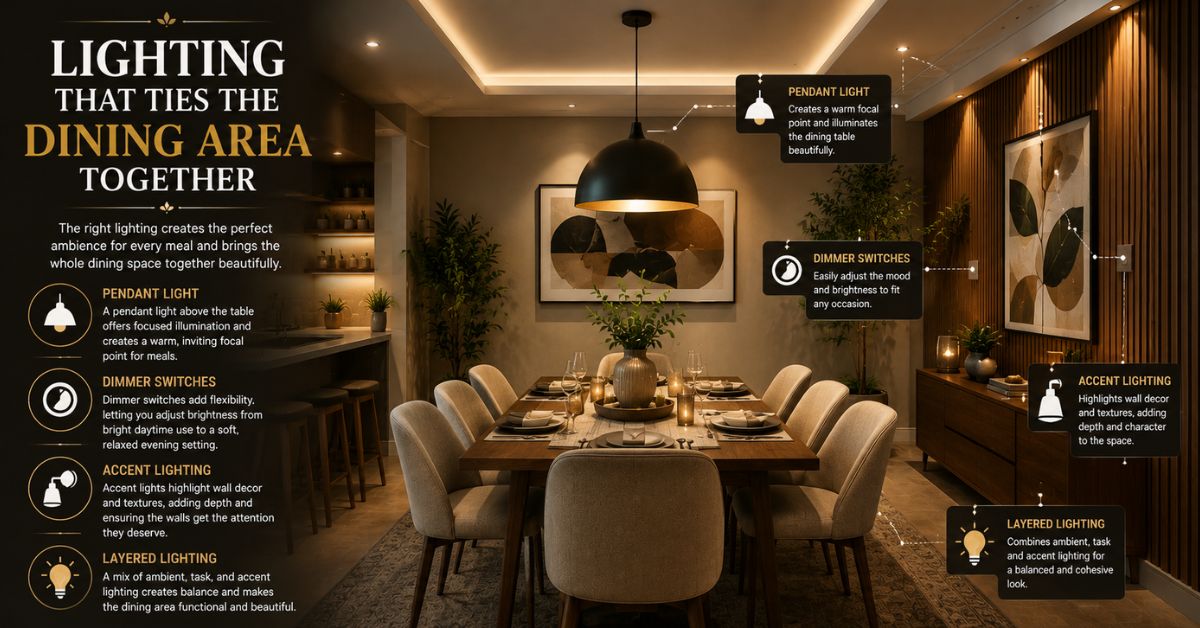
Lighting shapes the mood of a dining area more than almost any other design element, since the right fixture can make even a simple table feel considerably more inviting during evening meals. A pendant light positioned centrally above the table remains the most common choice, offering focused illumination without relying purely on overhead ambient lighting. Dimmer switches add genuine flexibility, letting the space shift between bright daytime use and a softer evening setting. Accent lighting aimed at wall decor further ties the room together, ensuring the walls receive the same design attention as the table beneath them.
Common Mistakes to Avoid in Dining Area Design
Many homeowners choose a table that is too large or too small for their actual room dimensions, leading to either a cramped space or an awkwardly empty one. Avoid neglecting wall decor entirely, since even simply painted walls without any thoughtful treatment can leave the room feeling unfinished despite good furniture choices.
Do not overlook lighting flexibility, since a single harsh overhead fixture rarely suits both casual breakfasts and relaxed evening dinners equally well. Skipping durable material choices for high-traffic surfaces like flooring and tabletops is another common misstep that leads to premature wear. Finally, avoid designing the dining area in complete isolation from adjoining kitchen or living spaces, since a disconnected design rarely feels as cohesive as one planned alongside its surroundings.
Bringing It All Together
Dining area design brings together layout, furniture, lighting, and wall treatment to create a space that genuinely encourages everyday togetherness around the table. From choosing the right layout and furniture scale to bringing character through dining area wall decor and thoughtful lighting, every decision shapes how the finished space feels for years to come. Taking the time to compare a few layouts, check practical factors like clearance and traffic flow, and coordinate wall decor for dining room spaces with the rest of your home ensures the dining area you design serves your household beautifully for a long time ahead.
Explore Express Builders ongoing residential projects across Noida and Greater Noida West. See the quality and planning behind every home firsthand.
Book a free site visit today with Express Builders. Walk through our ongoing projects and see construction quality up close. Check out floor plans, amenities, and location advantages in person. Meet our team and get your property-related questions answered directly. Schedule a visit at your convenience.
Frequently Asked Questions
1. What is the ideal size for a dining table relative to the room?
Leave at least three feet of clearance around the table on all sides so chairs can pull out and people can walk past comfortably.
2. How important is wall decor in overall dining area design?
Very important, since dining area wall decor receives sustained attention during meals and significantly shapes how finished the room feels.
3. What flooring works best for a dining area?
Tile and engineered wood both handle spills and daily wear well, making them practical choices for high-traffic dining spaces.
4. Should the dining area match the kitchen or living room style?
It helps to maintain a consistent material and colour palette, particularly in open-plan homes where the spaces flow into each other.
5. What lighting works best above a dining table?
A centrally positioned pendant light paired with a dimmer switch offers both functional illumination and flexible mood lighting.
