

A home mandir holds a special place in every household, serving as a quiet corner for reflection, prayer, and daily rituals. The way this space looks and feels matters deeply, and mandir tiles design plays a significant role in setting that calm, sacred atmosphere. The right tiles do more than decorate the space. They bring a sense of purity, warmth, and visual harmony that makes the entire area feel dedicated to peace and devotion.
This guide walks through everything you need to know about mandir tiles design, covering materials, colors, layout ideas, and popular patterns, so you can create a home temple that feels both beautiful and spiritually grounded.
Why Mandir Tiles Design Deserves Special Attention
Unlike other areas of the home, the mandir carries emotional and cultural significance that goes beyond pure aesthetics. Families gather here daily, light lamps, offer prayers, and pass down traditions from one generation to the next, which means the surrounding design should feel welcoming, clean, and free from visual clutter. A thoughtfully chosen tiles design for mandir spaces helps achieve exactly that, creating a backdrop that feels serene rather than distracting.
Tiles also serve a practical purpose in this space. Daily use of diyas, incense, and flowers naturally leads to soot marks, wax drips, and water splashes near the mandir area, so selecting durable, easy to clean tiles keeps the space looking fresh without constant scrubbing or repainting.
Also Read- Best Direction for Mandir at Home: A Complete Vastu Guide
Popular Materials for Mandir Tiles
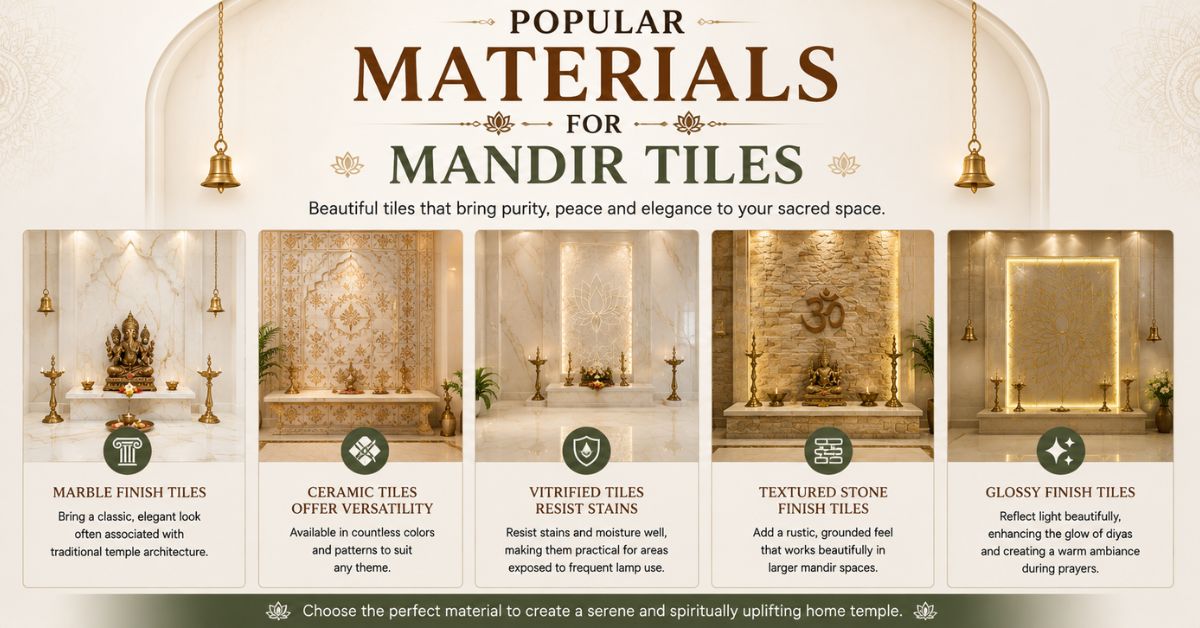
Choosing the right material shapes both the appearance and long term upkeep of your mandir wall tiles design. Each material brings a distinct texture and finish suited to different styles of home temples.
- Marble finish tiles – bring a classic, elegant look often associated with traditional temple architecture.
- Ceramic tiles – offer versatility and affordability, available in countless colors and patterns to suit any theme.
- Vitrified tiles – resist stains and moisture well, making them practical for areas exposed to frequent lamp use.
- Textured stone – finish tiles add a rustic, grounded feel that works beautifully in larger mandir spaces.
- Glossy finish tiles – reflect light beautifully, enhancing the glow of diyas and creating a warm ambiance during prayers.
Selecting a material that balances beauty with easy maintenance ensures your mandir continues to look pristine despite daily rituals.
Exploring Mandir Wall Tiles Design Options
The wall behind the mandir often becomes the focal point of the entire space, making mandir wall tiles design one of the most important elements to plan carefully. A well designed wall creates a sense of depth and draws the eye naturally toward the deities placed within the temple structure.
- Carved stone effect tiles that mimic traditional temple engravings without the weight or cost of real stone
- Marble look tiles with subtle veining that add a luxurious, timeless quality to the backdrop
- Warm toned tiles in shades of ivory, gold, or soft beige that enhance the glow of lamps and candles
- Textured tiles with floral or paisley motifs that echo traditional temple architecture in a modern format
- Arched tile panels that frame the deity area and create a defined, elegant focal point
Choosing a wall design that complements the overall color scheme of the room helps the mandir blend naturally into the home while still standing out as a special space.
Also Read- Pooja Room Door Designs: Ideas for Every Indian Home
Ideas for Mandir Floor Tiles Design
The flooring around a home temple deserves equal attention, since it anchors the entire space and needs to withstand daily foot traffic, cleaning, and occasional water spills from ritual offerings. A well planned mandir floor tiles design balances durability with a look that feels calm and grounded.
- Light colored tiles that reflect ambient light and make the space feel open and airy
- Matte finish tiles that reduce glare from overhead or lamp lighting during prayer time
- Subtle patterned tiles that add interest without overwhelming the simplicity of the space
- Raised platform tiles that create a gentle elevation, distinguishing the mandir area from the rest of the room
- Slip resistant tiles that add safety, especially in homes with elderly family members or young children
Matching the floor tiles closely with the wall design creates a seamless, cohesive look that ties the entire mandir space together visually.
Also Read- Which Direction Should God Face in Pooja Room?
Color Choices That Enhance the Sacred Space
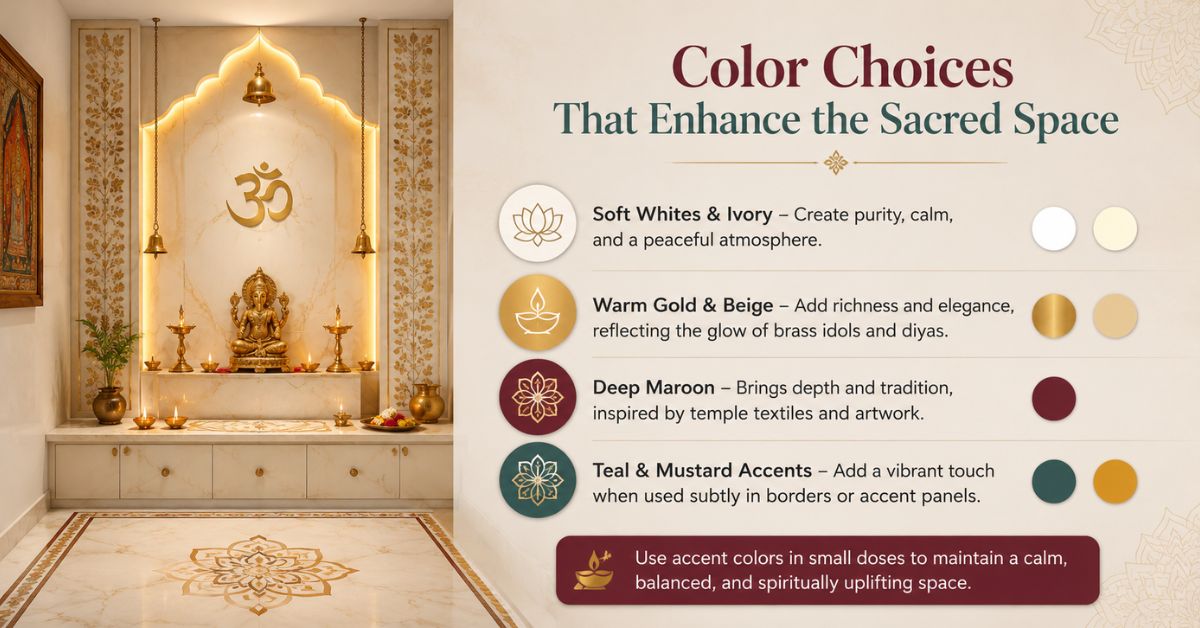
Color plays a powerful role in shaping the mood of a home temple. Soft whites and ivory tones create a sense of purity and calm, making them a popular choice for tiles mandir design projects across different home styles. Warm gold and beige shades add richness and elegance, often used to reflect the glow of brass idols and diyas beautifully.
Some homeowners also introduce subtle color accents using deep maroon, teal, or mustard tones, drawing inspiration from traditional temple textiles and artwork. These accent colors work best in small doses, such as a border strip or accent panel, rather than covering the entire space, keeping the overall feel calm rather than visually overwhelming.
Layout and Placement Considerations
Beyond material and color, the layout of tiles significantly influences how the mandir space feels day to day. Placing tiles in a way that frames the deity area draws natural focus toward the center of worship, while a busy, cluttered pattern can distract from the sense of calm the space is meant to provide.
Many homeowners choose a slightly raised tile platform for the mandir, separating it visually from the rest of the room even without a separate structure. Adding a subtle border pattern around the mandir area, whether on the floor or wall, further defines the space and gives it a sense of intentional design rather than feeling like an afterthought within a larger room.
Designing a Home Mandir Tiles Layout for Small Spaces
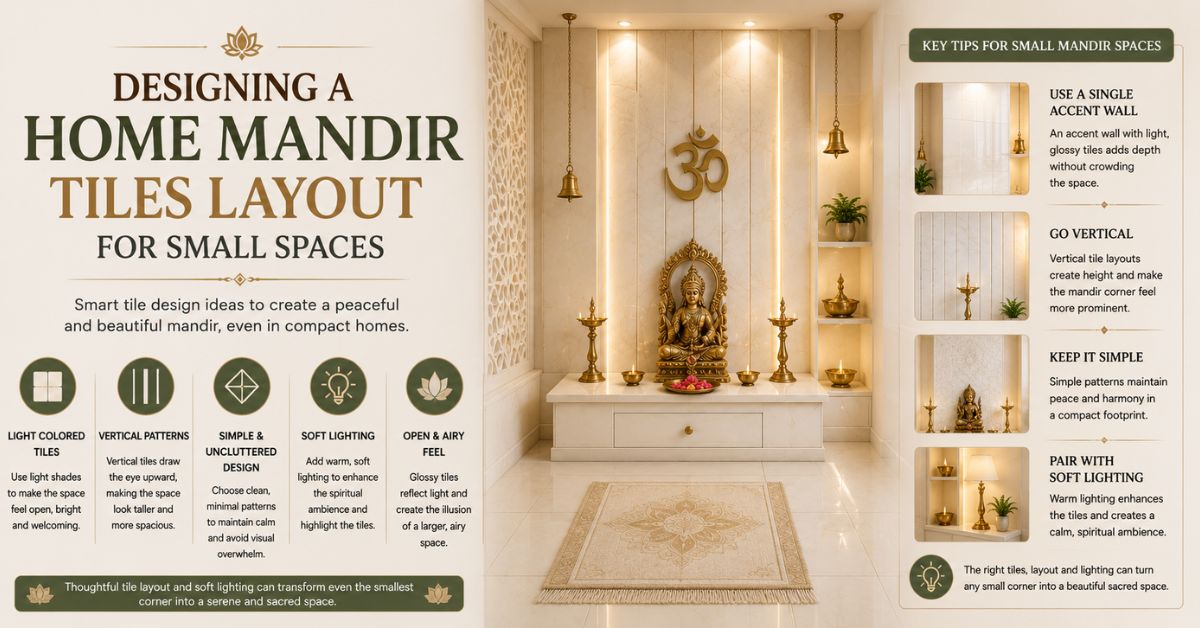
Not every home has room for a dedicated temple area, and home mandir tiles design ideas for compact spaces require a slightly different approach. In smaller apartments, a single accent wall with light colored, glossy tiles can create the illusion of a larger, more open space. Vertical tile patterns also help draw the eye upward, making a small mandir corner feel taller and more prominent within the room.
Choosing a simple, uncluttered tile pattern works particularly well in tighter spaces, since intricate detailing can feel overwhelming when viewed up close in a compact corner. Pairing tiles with soft lighting further enhances the sense of calm, even within a modest footprint.
Also Read- Pooja Room Designs: Blending Tradition with Modern Indian Style
Maintenance Tips for Mandir Tiles
Daily rituals involving oil lamps, incense, and flowers require tiles that hold up well to frequent cleaning. Wiping tiles regularly with a soft, damp cloth removes soot and wax residue before it settles into the surface. Choosing glossy or matte finishes with low porosity makes stain removal significantly easier compared to heavily textured surfaces, which can trap residue within their grooves.
Sealing grout lines periodically also helps prevent discoloration from frequent water and oil exposure near the mandir area, keeping the space looking clean and well maintained for years.
Explore Express Builders ongoing residential projects across Noida and Greater Noida West. See the quality and planning behind every home firsthand.
Book a free site visit today with Express Builders. Walk through our ongoing projects and see construction quality up close. Check out floor plans, amenities, and location advantages in person. Meet our team and get your property-related questions answered directly. Schedule a visit at your convenience.
Frequently Asked Questions
What is the best tile material for a home mandir?
Marble finish and vitrified tiles work particularly well since they offer durability along with an elegant, easy to clean surface.
Which colors work best for mandir tiles design?
Soft whites, ivory, and warm gold tones create a calm, sacred atmosphere and remain the most popular choices.
Can mandir tiles design work in small apartments?
Yes, using light colored, glossy tiles with a simple pattern helps create an open, serene feel even in compact spaces.
How often should mandir tiles be cleaned?
Wiping tiles daily or every few days helps prevent soot and wax buildup from lamps and incense used during prayers.
Should mandir floor tiles differ from the rest of the room?
Many homeowners choose a distinct floor pattern or a slightly raised platform to visually separate the mandir from the surrounding space.
