
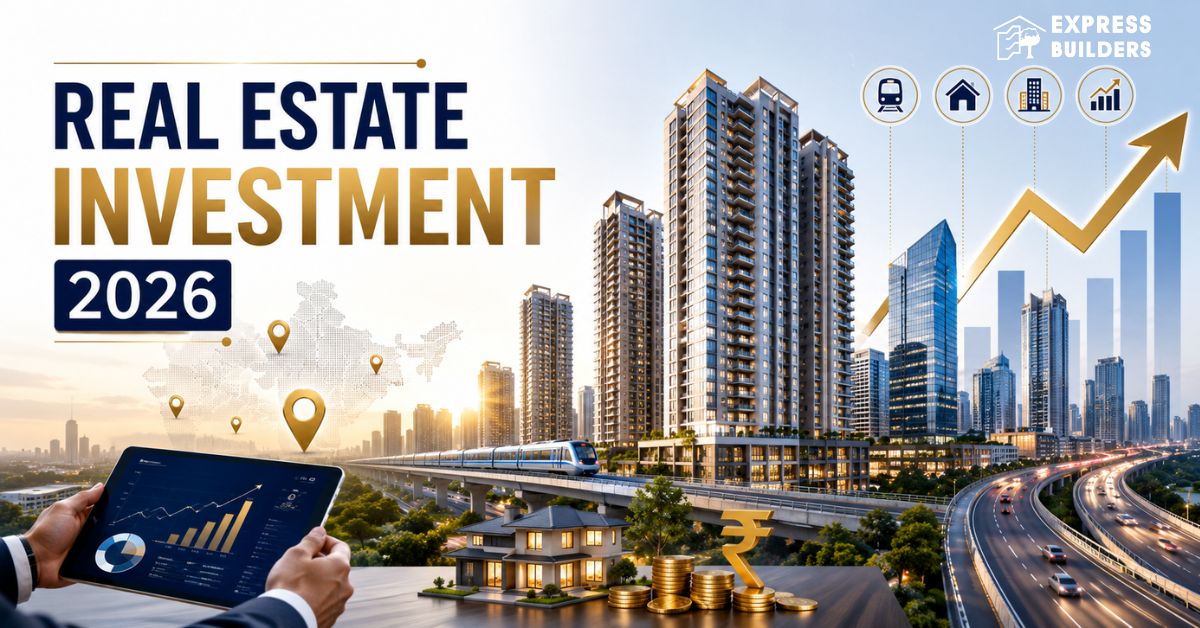
India’s real estate market has evolved far beyond its traditional role as a source of shelter. Today, it stands as one of the most reliable wealth-building opportunities for investors across the country.
In 2026, the sector enters a strong growth phase backed by transparency, infrastructure development, and rising demand. Moreover, rapid urbanisation, expanding employment hubs, and government-led projects continue to reshape the investment landscape. As a result, more investors now view real estate as a long-term asset rather than a simple purchase.
The market outlook further strengthens this optimism. Industry experts expect property prices in several major cities to rise by 15-20% during 2026. Strong economic activity, increasing housing demand and large-scale infrastructure investments continue to fuel this growth. Therefore, waiting too long could mean missing valuable opportunities.
In this guide, you’ll discover the smartest investment strategies, the most promising cities and the key market trends shaping Indian real estate in 2026.
The Real Estate Market Trends Shaping India in 2026
Before investing your money, it is important to understand the forces driving the market. Fortunately, several powerful trends continue to create opportunities for investors across India.
1. Infrastructure-Led Price Appreciation
Infrastructure remains one of the strongest drivers of real estate growth. New metro corridors, expressways, airports, and industrial hubs consistently increase property values in surrounding areas.
Consequently, investors who enter these markets early often enjoy substantial capital appreciation. By the time a major project becomes operational, property prices typically reflect much of the anticipated growth.
For example, Delhi-NCR, Bengaluru’s Outer Ring Road, Pune’s Ring Road and the Yamuna Expressway corridor continue to attract investors because of ongoing infrastructure expansion.
2. The Luxury Housing Boom
Consumer preferences have changed significantly in recent years. Instead of purchasing a basic home, buyers increasingly seek lifestyle-oriented properties that offer comfort, convenience and premium amenities.
As a result, demand for luxury apartments, gated communities, smart homes, wellness facilities and green spaces continues to rise. Furthermore, higher disposable incomes and changing lifestyle aspirations support this trend.
This shift highlights a maturing market where quality often outweighs price considerations. Therefore, premium housing segments are likely to remain strong beyond 2026.
3. Tier-2 Cities Continue to Gain Momentum
Perhaps the most significant shift in 2026 is the growing popularity of tier-2 cities.
Cities such as Jaipur, Lucknow, Indore, Kochi, Coimbatore, and Bhubaneswar now attract substantial investor interest. In addition, government initiatives like the Smart Cities Mission and AMRUT have accelerated urban development in these regions.
For instance, Indore has recorded annual property appreciation of approximately 8-12% over the past several years. At the same time, property prices remain more affordable than in major metros. Consequently, investors often find stronger growth potential in these emerging markets.
Best Cities for Real Estate Investment in India 2026
While opportunities exist throughout the country, certain cities stand out because of their strong economic fundamentals and growth prospects.
Bengaluru: The Growth Capital
Bengaluru continues to dominate India’s residential property market. The city’s thriving technology sector, strong rental demand and expanding infrastructure create a highly attractive investment environment.
Moreover, new housing launches continue to meet growing demand from professionals and businesses. Areas such as Whitefield, Sarjapur Road and North Bengaluru offer excellent opportunities for both rental income and long-term appreciation.
Delhi-NCR: Powered by Infrastructure
Delhi-NCR remains one of India’s most dynamic property markets. Large-scale infrastructure projects continue to transform the region and unlock new investment opportunities.
For example, Golf Course Extension Road in Gurgaon, Noida Expressway, and the Yamuna Expressway corridor continue to deliver impressive returns. Additionally, the upcoming Jewar Airport and expanding metro network are expected to drive further growth.
Hyderabad: Strong Returns at Competitive Prices
Hyderabad consistently ranks among the most attractive investment destinations in India.
The city’s expanding IT sector continues to attract multinational companies and highly skilled professionals. Consequently, demand remains strong across major business districts such as HITEC City, Gachibowli and the Financial District.
At the same time, entry prices remain relatively affordable when compared with Mumbai and Delhi. Therefore, investors often find Hyderabad’s risk-to-reward ratio particularly appealing.
Pune: Stability and Growth Combined
Pune offers a rare combination of affordability, employment growth, and strong rental demand.
The city’s thriving IT industry attracts a large young workforce, which in turn supports a healthy rental market. Furthermore, ongoing infrastructure projects continue to improve connectivity.
As a result, areas like Hinjewadi, Wakad, and Kharadi remain popular among investors seeking balanced returns.
Mumbai: Long-Term Value Through Scarcity
Mumbai’s limited land supply continues to support long-term property values.
Although entry costs remain higher than in most cities, emerging markets such as Navi Mumbai, Thane and Panvel provide relatively affordable alternatives. Consequently, investors can still access strong growth opportunities without entering the city’s most expensive zones.
Residential vs Commercial Property: Which Should You Choose?
Many investors struggle with this decision. However, the right choice depends largely on your investment objectives.
Residential properties generally suit investors seeking:
- Consistent rental income
- Lower initial investment requirements
- Better liquidity and resale opportunities
- Lower overall risk
On the other hand, commercial properties often appeal to investors who want:
- Higher rental yields
- Longer lease agreements
- More stable tenant relationships
- Strong appreciation potential in prime locations
If you are entering the market for the first time, residential property often provides a safer starting point. Later, you can diversify into commercial assets as your experience grows.
Smart Real Estate Investment Strategies for 2026
Choosing the right city matters. However, your investment strategy ultimately determines your success.
Buy Before Infrastructure Projects Finish
Investors achieve the highest returns when they identify growth corridors early.
Once a metro line opens or a highway becomes operational, prices usually increase quickly. Therefore, focus on locations where major infrastructure projects are still under development.
Prioritise Rental Yield Alongside Appreciation
Many investors focus exclusively on future price growth. However, rental income provides steady cash flow while your property appreciates.
For this reason, always evaluate both rental yield and appreciation potential before making a purchase decision.
Choose Reputable Developers
Developer quality directly affects investment outcomes.
Established developers generally deliver projects on time, maintain higher construction standards, and reduce legal risks. Therefore, always research a builder’s track record before investing.
Think Long Term
Real estate rewards patience.
While short-term gains are possible, investors who hold properties for five to ten years typically achieve stronger returns. Moreover, India’s long-term economic and urbanisation trends continue to support sustained real estate growth.
Diversify Your Portfolio
Finally, avoid concentrating all your capital in a single market.
Instead, spread your investments across different cities, property types and growth stages. By doing so, you can reduce risk while creating multiple avenues for returns.
Understanding Real Estate ROI in India
Realistic expectations help investors make smarter decisions.
| Investment Type | Annual Appreciation | Rental Yield |
| Metro Residential | 6–10% | 3–5% |
| Tier-2 Residential | 8–12% | 4–6% |
| Commercial Grade-A | 5–8% | 7–9% |
| Plots in Emerging Areas | 10–15% | Minimal |
Although plots often offer the highest appreciation potential, they typically provide limited rental income. In contrast, residential apartments in strong rental markets offer a more balanced return profile.
Key Risks to Watch in 2026
While opportunities remain strong, investors should also recognise potential risks.
These include:
- Regulatory changes affecting compliance or taxation
- Project delays from financially weak developers
- Oversupply in certain micro-markets
- Interest rate fluctuations that influence affordability
Fortunately, thorough due diligence can significantly reduce these risks. Always verify RERA registration, review legal documentation, and assess the developer’s reputation before committing your funds.
India’s real estate market offers compelling opportunities in 2026. However, successful investors rely on research, patience, and disciplined decision-making rather than speculation.
Whether you choose a fast-growing metro or an emerging tier-2 city, the fundamentals remain strong. Therefore, the key is not waiting for perfect conditions but identifying the right opportunity and acting decisively.
Ready to Make Your Move?
If you want to maximise returns before property prices move higher, start by defining your investment goals. Next, compare cities that align with your budget, evaluate rental yields and shortlist projects from trusted developers.
Contact us today. The opportunities available now may look very different a few years from now.
Frequently Asked Question:
Is 2026 a good year to invest in real estate in India?
Yes, 2026 presents strong opportunities for real estate investment in India. Rising infrastructure development, growing urbanisation, increasing housing demand, and expanding employment hubs continue to support property price appreciation. Additionally, emerging tier-2 cities and high-growth corridors offer investors attractive entry points with significant long-term potential.
Which city offers the best real estate investment opportunities in India in 2026?
The best city depends on your investment goals. Bengaluru remains a top choice for rental income and long-term appreciation due to its strong IT sector and housing demand. Meanwhile, Hyderabad offers competitive property prices and high ROI potential, while Delhi-NCR benefits from major infrastructure projects such as the Jewar Airport and metro expansion. Investors seeking affordability and growth may also consider tier-2 cities like Indore, Jaipur and Lucknow.
