
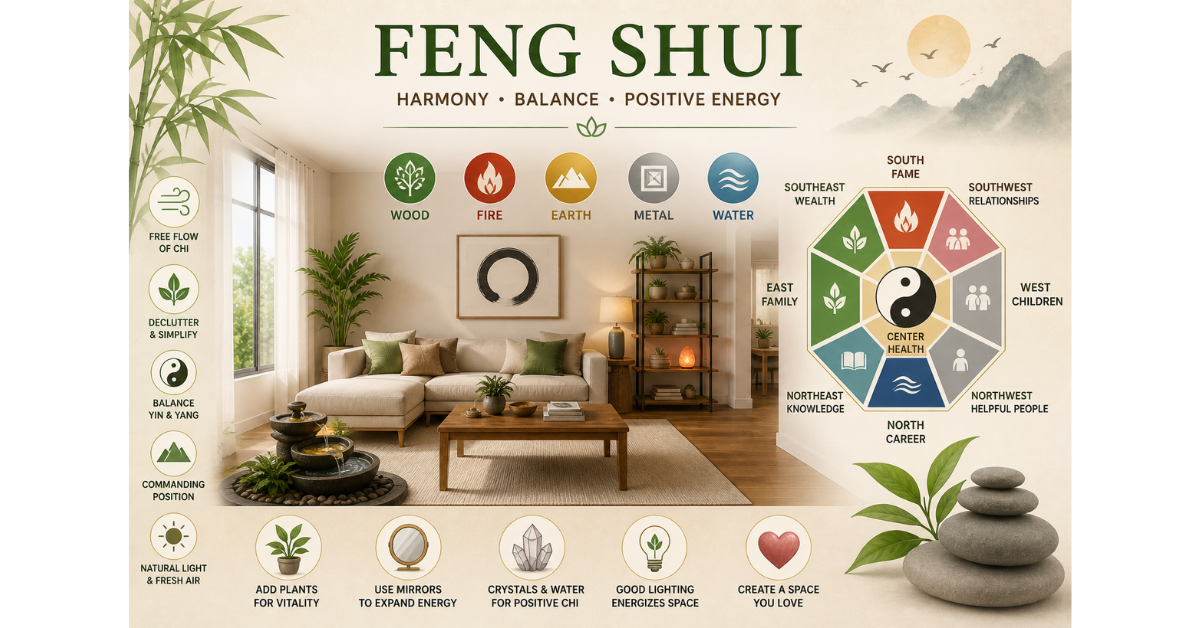
Feng Shui (pronounced “fung shway”) is an ancient Chinese practice focused on arranging your living and working spaces to create balance, harmony, and positive energy flow with the natural world. Also known as Chinese geomancy, it has been used for thousands of years to promote health, prosperity, better relationships, and overall well-being.
If you’re searching for feng shui tips for home, how to feng shui your bedroom/living room/kitchen, bagua map, five elements, or chi energy, this comprehensive guide covers everything you need. Whether you’re a beginner or looking to deepen your practice, you’ll learn practical ways to apply feng shui principles for a more balanced, supportive environment.
What Is the Concept of Feng Shui?
Feng Shui literally translates to “wind” (feng) and “water” (shui). It references an ancient Chinese poem about human life flowing in harmony with the environment, much like wind and water shape landscapes.
The core idea is that everything is connected through qi (or chi), the vital life force or energy that flows through all things. Good feng shui maximizes positive qi while minimizing or redirecting negative or stagnant energy (sha chi). By arranging buildings, rooms, furniture, colors, and objects thoughtfully, you align your space with natural forces to support your goals in career, relationships, health, wealth, and more.
Feng Shui blends art, science, philosophy, astronomy, and environmental awareness. It is rooted in Taoism and views your home as a living system that mirrors and influences your inner state. A cluttered, blocked space can lead to stagnation in life, while a harmonious one promotes flow, clarity, and abundance.
History and Origins of Feng Shui
Feng Shui dates back over 3,000–6,000 years to ancient China, with evidence in Neolithic sites like the Yangshao and Hongshan cultures. Early practitioners used astronomy to align homes and tombs for optimal solar gain and protection.
It evolved through dynasties: used for imperial palaces, capital cities, and tombs during the Zhou, Han, Ming, and Qing periods. The magnetic compass (luopan) became a key tool. While suppressed at times (e.g., under Communist rule), it resurged and spread globally, now popular in Western interior design for wellness and prosperity.
Core Principles of Feng Shui
1. Qi (Chi) – The Vital Life Force
Qi is the invisible energy that flows like wind or water. Positive qi brings vitality; stagnant or sharp qi (e.g., from clutter or poison arrows like sharp corners) can cause stress or misfortune. The goal is smooth, meandering flow.
2. Yin and Yang
These complementary opposites represent balance: yin (dark, passive, soft, feminine) and yang (bright, active, hard, masculine). A good space balances both-e.g., soft lighting with energizing accents. Imbalance leads to discomfort.
3. The Five Elements (Wu Xing)
These interconnected forces-Wood, Fire, Earth, Metal, Water-form the building blocks of the universe. They interact in productive (sheng) and controlling cycles. Balance them in your home for harmony.
- Wood (Growth, vitality): Green, brown; plants, rectangular shapes; east/southeast. Enhances family and wealth.
- Fire (Passion, transformation): Red, orange, triangular shapes; south. Boosts fame and energy.
- Earth (Stability, nourishment): Yellow, brown, square shapes; center/southwest/northeast. Supports health and relationships.
- Metal (Clarity, strength): White, gray, round shapes; west/northwest. Aids children and helpful people.
- Water (Flow, wisdom): Black, blue, wavy shapes; north. Supports career and abundance.
4. The Bagua Map (Energy Map)
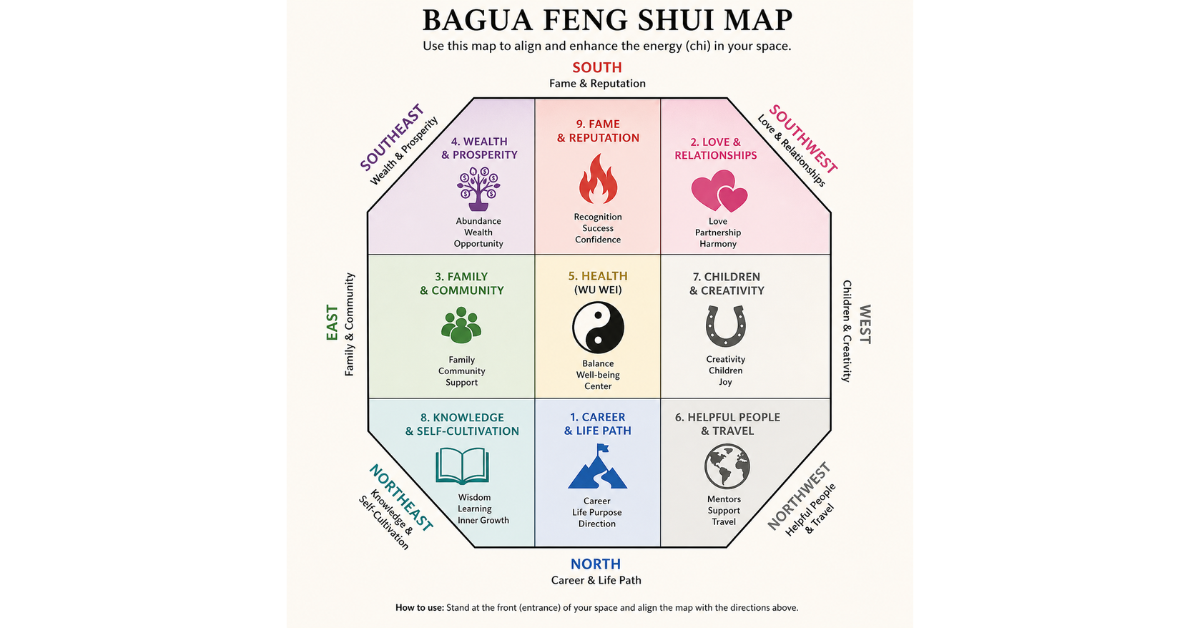
The Bagua is an octagonal or grid-like energy map with eight areas (guas) plus a center (Tai Qi), each linked to life aspects, colors, elements, shapes, and directions. Overlay it on your home’s floor plan (usually aligning the front door with the bottom).
Common Western/BTB Bagua correspondences (adjust based on school):
- North (Career): Water, black/blue, wavy.
- Northeast (Knowledge): Earth, blue/dark, square.
- East (Family/Health): Wood, green, rectangular.
- Southeast (Wealth/Abundance): Wood, purple, rectangular.
- South (Fame/Reputation): Fire, red, triangular.
- Southwest (Relationships/Love): Earth, pink, square.
- West (Children/Creativity): Metal, white, round.
- Northwest (Helpful People/Travel): Metal, gray, round.
- Center (Health/Overall Wellness): Earth, yellow/brown.
Focus on 1–3 areas needing improvement rather than overhauling everything at once.
What Are the Basic Rules of Feng Shui?
- Declutter ruthlessly – Clutter blocks qi. Clear entryways, under beds, and surfaces regularly.
- Commanding Position – Place key furniture (bed, desk, stove) diagonally from the door with a clear view (not directly in line). This empowers you in life.
- Smooth Qi Flow – Keep pathways clear; avoid blocking doors/windows. Use mirrors, crystals, or plants to redirect sha chi.
- Balance Elements and Yin/Yang – Incorporate all five elements without dominance.
- Let in Light and Air – Natural light and fresh air invigorate qi. Open windows, use full-spectrum bulbs.
- Repair and Maintain – Fix broken items immediately- they symbolize broken energy.
- Power Positions and Protection – Solid headboards, supportive backs for seating; avoid beds under beams or windows if possible.
How Do I Feng Shui My Home?
Entryway (Mouth of Qi): Keep it clean, well-lit, and welcoming. Add plants or a mirror (not directly facing the door). A clear path invites prosperity.
Living Room: Spacious, balanced seating in commanding positions. Mix elements, good lighting, and fresh air. Place the sofa against a solid wall.
Bedroom: Sanctuary for rest. Bed in commanding position (see door, solid headboard, not under window or beams). Soft colors, minimal electronics, pairs for relationships. Avoid mirrors facing the bed.
Kitchen: Heart of nourishment and wealth. Clean stove (represents prosperity), good organization. Balance fire (stove) and water (sink) elements-don’t place them opposite.
Bathroom: Contain and drain negative energy. Keep toilet lid down, doors closed. Add earth elements or plants.
Home Office: Commanding desk position, clear vision, inspiring views. Support career gua (north).
General Tips:
- Add plants (wood element) for vitality.
- Use mirrors to expand space or reflect light.
- Incorporate crystals, fountains (gentle water), or wind chimes.
- Choose colors per Bagua needs.
- Personalize-your intention matters most.
Start small: declutter one area, adjust one room, and observe how you feel.
Benefits of Practicing Feng Shui
Practitioners report improved sleep, reduced stress, better focus, enhanced relationships, and increased opportunities. It promotes mindfulness and a deeper connection to your environment.
FAQs
What is the concept of feng shui?
Feng Shui is the ancient Chinese art and science of arranging spaces to harmonize with natural energy forces (qi) for balance, health, and prosperity. It treats your environment as interconnected with your well-being, using principles like chi flow, yin-yang, five elements, and the bagua map.
What are the basic rules of feng shui?
Key rules include decluttering for free-flowing qi, using the commanding position for key furniture, balancing the five elements, ensuring good light and air circulation, repairing broken items, and maintaining clear pathways. Always prioritize smooth energy movement and personal comfort.
How do I feng shui my home?
Begin with the front door and entryway. Use the bagua map on your floor plan. Declutter, position furniture powerfully, balance elements and colors per life areas, let in natural light/air, and add supportive symbols (plants, mirrors, art). Focus on one room or gua at a time and trust your intuition.
What is the meaning of feng shui?
“Feng” means wind and “shui” means water. It symbolizes the flow of energy in nature and how humans can align with it for optimal living. The practice creates environments that support positive life outcomes.
Final Thoughts: Create Your Harmonious Home
Feng Shui isn’t about superstition or rigid rules-it’s a practical, intuitive way to design supportive spaces that nurture your best life. Combine it with decluttering, good design, and positive intentions for powerful results.
Experiment, observe changes in your mood and circumstances, and refine as needed. A feng shui home feels lighter, more peaceful, and full of potential.
Ready to start? Assess your space today-your future self (and qi) will thank you.
If you’re looking for a brand-new flat with excellent natural light, optimal layouts, and modern architecture that makes applying feng shui principles easier from day one, explore the premium residential projects by Express Builders. Their thoughtfully designed homes in Gurugram provide the perfect foundation for creating balanced, prosperous living spaces.
Contact us today to discover available flats and find your ideal new home.
