
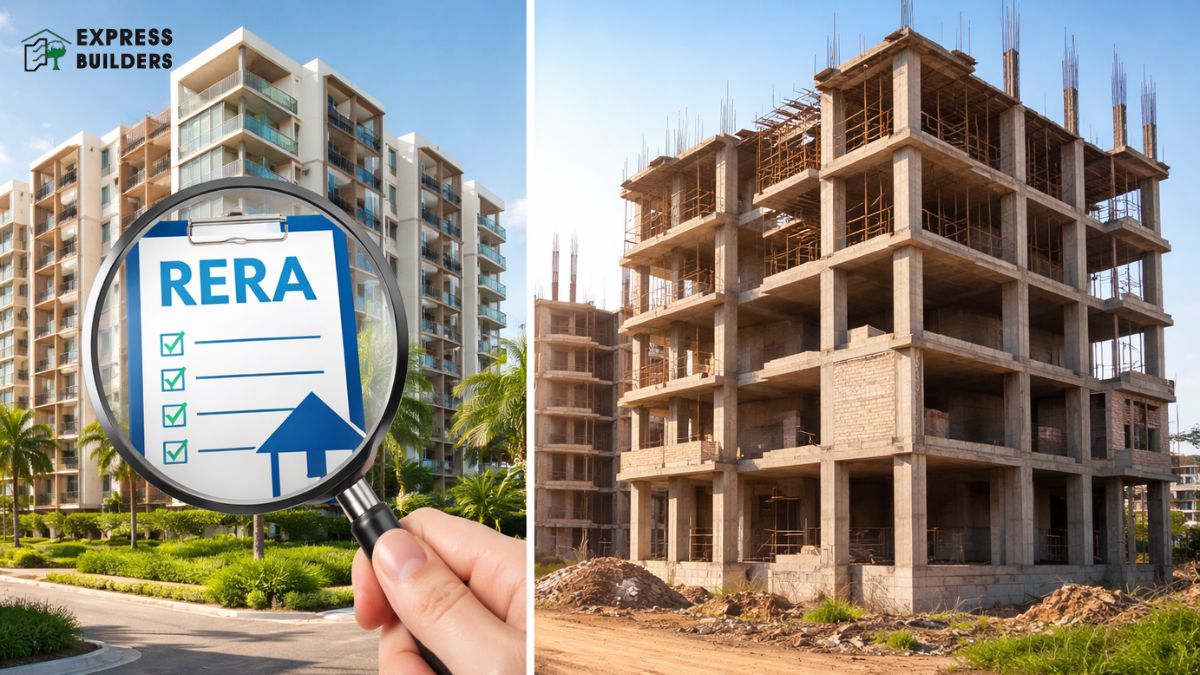
Buying a home is one of the biggest financial decisions of your life. But do you know the difference between RERA vs Non-RERA projects? This knowledge can protect your investment and your peace of mind.
India introduced RERA, the Real Estate (Regulation and Development) Act in 2016. It transformed how the real estate sector operates. Yet many buyers still overlook this critical factor when choosing a property.
What Is RERA?
RERA stands for Real Estate (Regulation and Development) Act, 2016. The Indian Parliament passed this law to protect homebuyers from fraud and delays. It came into full effect on May 1, 2017.
Each state has its own RERA authority. Builders must register their projects with this authority. Only then can they advertise or sell units to buyers.
RERA covers both residential and commercial real estate projects. Any project with more than 500 square metres or 8 apartments must be RERA-registered.
What Is a Non-RERA Project?
A non-RERA project is one that is not registered under the RERA Act. These projects do not follow RERA guidelines. They operate outside the regulatory framework.
Some non-RERA projects exist because they fall below the minimum size threshold. Others simply avoid registration to escape accountability. Buyers face much higher risks with non-RERA projects.
Always verify a project’s registration status before making any payment.
Key Differences: RERA vs Non-RERA Projects
Understanding the differences helps you make a smarter choice. Here is what separates these two categories.
| Feature | RERA-Registered Project | Non-RERA Project |
| Legal Transparency | Full disclosure of project details | No mandatory disclosure |
| Possession Timeline | Builder must commit to a fixed date | No binding deadline exists |
| Fund Security | 70% funds held in escrow | Funds can be used freely |
| Buyer Complaint Forum | Dedicated RERA authority | Only civil courts available |
| Builder Accountability | Penalties for delays and fraud | Minimal legal accountability |
| Carpet Area Clarity | Defined and verified by law | Often vague or misrepresented |
Why RERA Projects Offer Better Protection
1. Mandatory Disclosure of Project Details
RERA requires builders to disclose all project information publicly. This includes land records, layout plans, approvals, and financial details. Buyers can access this information on the official RERA portal.
Non-RERA projects have no such obligation. Builders can withhold critical information from buyers. This leaves buyers vulnerable to hidden risks.
2. Defined Carpet Area Calculation
RERA defines carpet area strictly. Builders must sell homes based on carpet area only. This prevents misleading super built-up area calculations.
In non-RERA projects, builders often use vague area definitions. You may end up paying more for space you never actually get.
3. Escrow Account for Funds
RERA mandates that builders deposit 70% of collected funds into a dedicated escrow account. These funds can only be used for construction of that specific project.
This rule prevents builders from diverting your money to other projects. Non-RERA builders face no such restriction. Fund diversion is a common reason for project stalls.
4. Timely Possession with Penalties
RERA-registered builders must commit to a fixed possession date. If they delay, they must pay interest to buyers for every month of delay.
Non-RERA projects have no binding possession date. Delays can stretch for years without any compensation for buyers. You lose both time and money.
5. Quick Dispute Resolution
RERA creates a dedicated authority to handle complaints. Buyers can file grievances directly with the state RERA authority. Most complaints are resolved within 60 days.
In non-RERA cases, buyers must approach civil courts. Court cases take years and cost significant money. The process exhausts buyers financially and emotionally.
Risks of Buying a Non-RERA Property
The risks of choosing a non-RERA project are significant. Here is what you may face:
- Project delays with no compensation or legal recourse
- No legal obligation on the builder to complete the project
- Inflated area measurements leading to higher costs
- Builder may divert funds without accountability
- You may discover undisclosed legal issues after purchase
- Resale value may be lower due to lack of certifications
- Difficulty in obtaining home loans from reputed banks
These risks make non-RERA projects a gamble. The short-term savings are rarely worth the long-term headaches.
How to Verify a RERA-Registered Project
Verifying a project’s RERA status is simple and free. Follow these steps:
- Visit your state’s official RERA website
- Navigate to the project search section
- Enter the project name or registration number
- Review the builder’s disclosures and approvals
- Check the promised possession date and current status
Always verify before you pay even a token amount. Registration status can change, so check the portal regularly.
Can Banks Refuse Loans for Non-RERA Projects?
Many leading banks and housing finance companies prefer RERA-registered projects. Some lenders refuse to approve loans for non-RERA properties entirely.
A RERA-registered project gives lenders confidence in its legal standing. Loan approval for RERA projects is typically faster and smoother.
If you plan to take a home loan, choose a RERA-registered property. This saves you from loan rejection and financial complications.
RERA and Resale Value
RERA-registered projects tend to hold their value better in the market. Buyers and investors prefer properties with legal clarity. This increases demand and resale potential.
Non-RERA properties may face scrutiny during resale. Buyers may offer lower prices due to legal risks. This can significantly reduce your return on investment.
A RERA-registered home is a safer long-term asset for your family and financial future.
Common Myths About RERA
Myth 1: RERA registration means the project is government-approved.
RERA registration ensures compliance with regulations. It does not mean the government guarantees the project. Always do your own due diligence.
Myth 2: Only large projects need RERA registration.
Projects above 500 sq. metres or 8 units need registration. However, many smaller projects voluntarily register to build buyer trust.
Myth 3: Non-RERA projects are always illegal.
Some projects are genuinely exempt from RERA based on size. But buyers should still verify all approvals independently.
Quick Checklist Before You Buy
- Check RERA registration on the state portal
- Verify the builder’s track record and past project delivery
- Review all land and legal documents carefully
- Confirm the carpet area as defined under RERA
- Ask for the escrow account details
- Understand the possession timeline and penalty clauses
- Consult a legal expert before signing the agreement
Final Thoughts
Choosing between RERA vs Non-RERA projects is not just a legal formality. It is a decision that protects your savings, your family, and your future.
RERA gives you transparency, accountability, and a clear legal path. Non-RERA projects offer none of these guarantees. The choice should be obvious.
Always prioritise RERA-registered projects when you invest in real estate. You deserve a home that is built on trust and delivered on time.
Ready to Find Your Dream RERA-Registered Home?
At Express Builder, we believe every homebuyer deserves complete transparency and legal assurance. All our projects are RERA-registered, giving you peace of mind at every step. Explore our ready-to-move and under-construction homes today, and invest with confidence.
Book Your Free Site Visit Today!
Walk through our RERA-registered properties and experience quality firsthand. Our expert team will guide you through every detail, from legal approvals to floor plans. Spaces are limited, so schedule your site visit now!
