
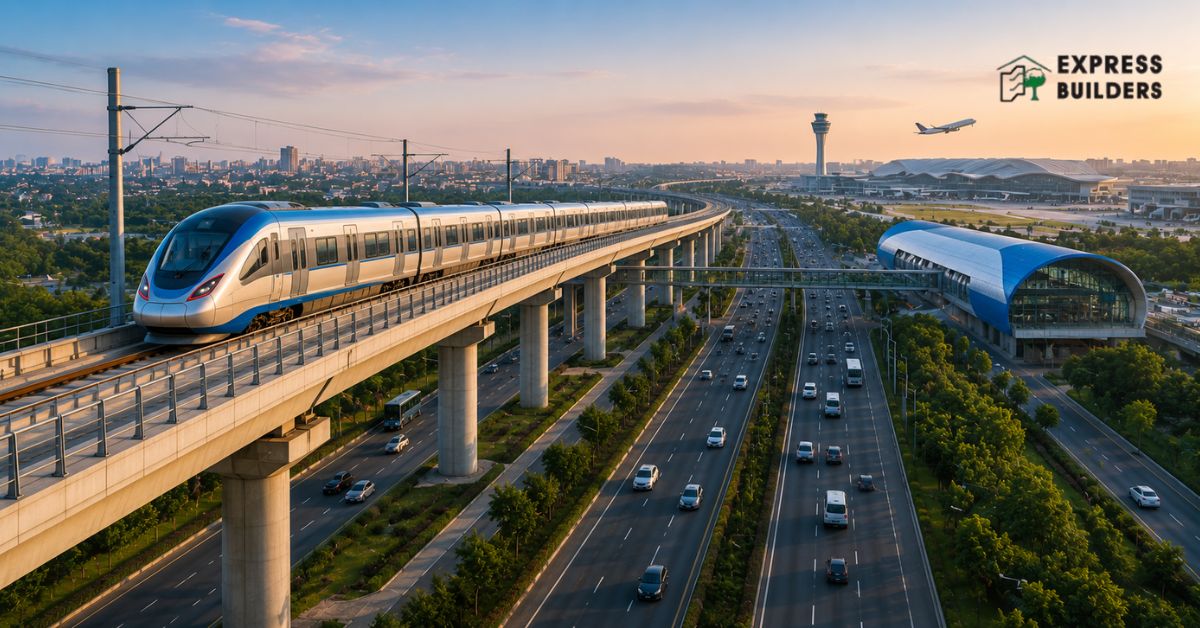
The National Capital Region is set for a major transport upgrade. A new Namo Bharat corridor will connect Ghaziabad directly to Noida International Airport. This proposed rapid rail line promises to cut travel time to just 50 minutes. For homebuyers and businesses across NCR, this development changes the connectivity map. Here is everything you need to know about this game changing infrastructure project.
What Is the New Namo Bharat Corridor
The New Namo Bharat Corridor is a proposed Regional Rapid Transit System line. It will link Ghaziabad with the Noida International Airport at Jewar. This corridor stretches across 72.44 kilometers of NCR territory. It marks the fourth Namo Bharat corridor planned under the RapidX project. The National Capital Region Transport Corporation is developing this ambitious rail line. The project connects several key growth zones in one continuous route.
Route and Stations Along the Corridor
The corridor begins at Ghaziabad and moves through several important areas. It passes through Noida, Greater Noida, and the YEIDA region. The route ends at Noida International Airport in Jewar. Planners have proposed 12 stations along this entire stretch. Key stations include Ghaziabad, Ghaziabad South, and Greater Noida West Sector IV. Other stops cover Greater Noida West Sector II and Knowledge Park V. The route also includes Surajpur, Pari Chowk, and Ecotech VI. Further stations are planned at Dankaur and YEIDA North Sector 18. The corridor also proposes a station near YEIDA Central Sector 21. Two depots will support train operations at both ends of the route.
Speed and Travel Time Benefits
- Trains on this corridor will run at speeds up to 180 kilometers per hour. This high speed will bring major time savings for daily commuters.
- Travel between Ghaziabad and the airport will take just 40 to 50 minutes. Road travel between these points currently takes much longer during peak hours.
- This rapid rail option removes traffic congestion from the daily commute. Airport bound travelers gain a reliable and fast transport alternative. Commuters heading to work in Noida or Greater Noida also benefit directly.
Project Cost and Funding Structure
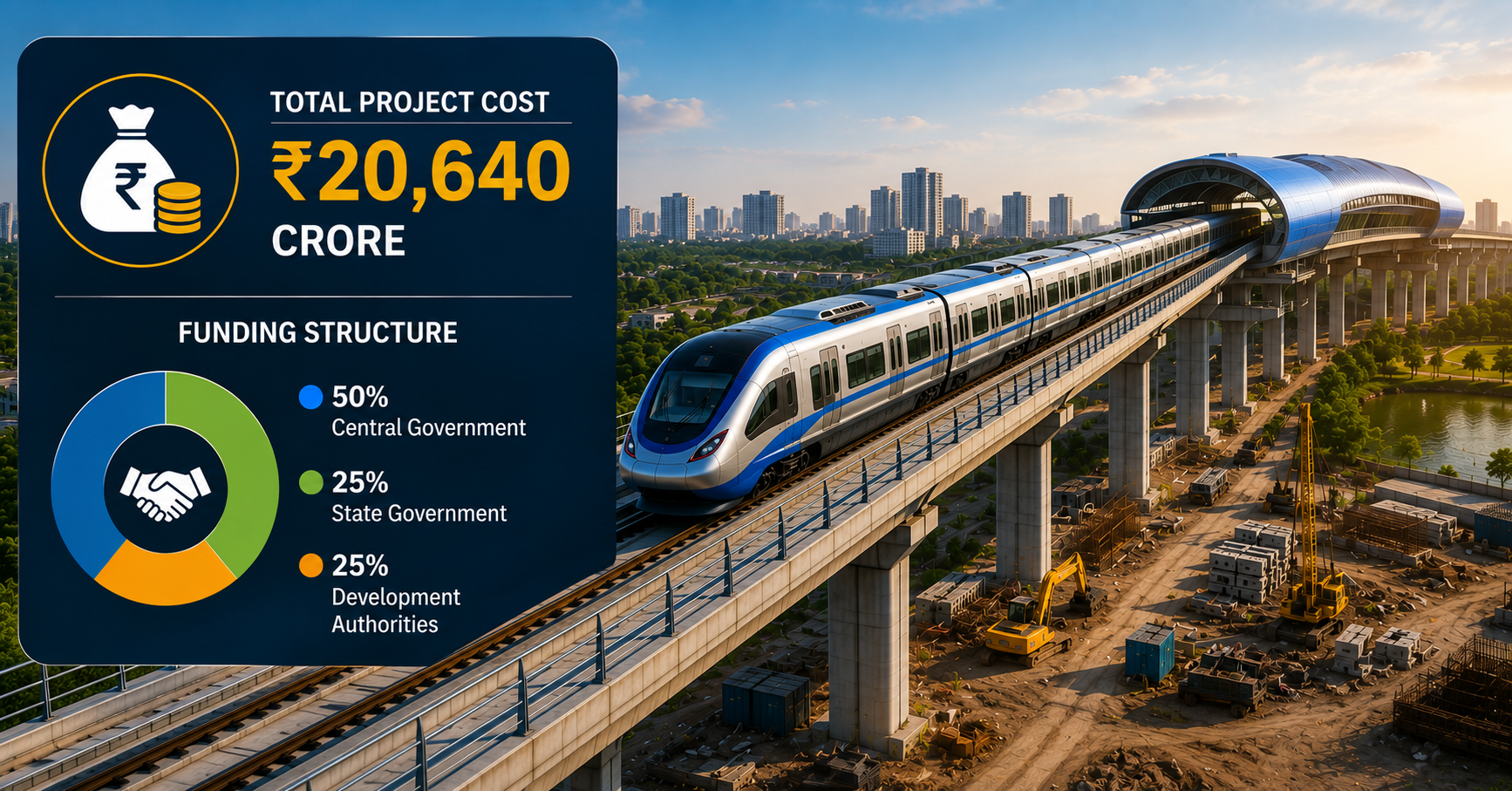
This ambitious corridor carries an estimated cost of around 20640 crore rupees. The Yamuna Expressway Industrial Development Authority approved the project funding earlier. Half of the total funding comes from the central government. The state government and development authorities share the remaining funding portion. This structured funding approach reflects the project’s regional importance. Multiple government bodies have aligned to support this transport initiative.
Current Project Status
The corridor is currently moving through its Detailed Project Report stage. The National Capital Region Transport Corporation is preparing this detailed technical report. Preparatory groundwork has already started at several locations along the route. This includes geotechnical investigations across the proposed corridor alignment. Utility mapping work is also underway at multiple points. Teams are relocating power lines and pipelines that intersect the route. These early steps typically precede formal construction approval and groundbreaking.
Integration With Other Transit Systems
This corridor will not operate in isolation from other transport networks. It connects seamlessly with the Delhi Metro and Noida Metro systems. The Ghaziabad station links directly with the Delhi Metro Red Line. Pari Chowk station will connect with the Noida Metro Aqua Line. This integration allows commuters from Delhi to reach the airport smoothly. Travellers can switch between systems without long walks or delays. The YEIDA Central Sector 21 station will also serve the Film City. This multi-modal approach strengthens the entire NCR public transport network.
Why This Corridor Matters for NCR Connectivity
Noida International Airport has become operational and needs strong transit links. This corridor gives the airport a dedicated high-speed rail connection. Travellers from Ghaziabad, Delhi, and Meerut can reach the airport quickly. Business travellers gain predictable commute times regardless of road traffic conditions. This reliability makes air travel planning simpler for daily and frequent flyers. The corridor also connects growing residential and commercial zones along its path. YEIDA City stands to benefit significantly from this direct rail access.
Also Read: NCR’s New Namo Cities: A Rs 5,000 Crore Urban Reset
Impact on Ghaziabad Real Estate
- Infrastructure projects consistently influence property demand across Delhi NCR.
- Previous projects like the Delhi Meerut Expressway boosted housing demand in Ghaziabad.
- Industry experts believe this new corridor could repeat that positive pattern.
- Improved connectivity typically increases interest in both residential and commercial properties.
- Better transport links help peripheral locations become more attractive to homebuyers.
- Businesses that depend on airport access may consider expanding into Ghaziabad.
- This corridor could support the development of new mixed-use projects nearby.
- Commercial real estate demand often rises when transit connectivity improves significantly.
Impact on Noida, Greater Noida, and YEIDA
The corridor passes directly through several high-growth NCR micro-markets. Noida and Greater Noida already attract strong residential and commercial investment. Direct rail access to the airport adds further value to these areas. YEIDA City is emerging as a major planned urban development zone. This corridor strengthens YEIDA’s position as a connected and accessible destination. Properties near proposed stations may see increased buyer and investor interest. Homebuyers often prioritise locations with strong current and future transit access.
A Broader Push for NCR Rapid Transit
This corridor is not the only rapid transit project under development. A separate Noida, Faridabad Gurugram corridor is also in its DPR stage. Together, these projects reflect a broader push for NCR-wide connectivity. Officials aim to link major residential, commercial, and industrial hubs efficiently. This expanding rail network supports long-term regional economic growth. It also reduces dependence on congested road networks across the region. NCR residents can expect faster, more reliable public transport in the coming years.
Also Read: Things You Need to Know Before You Invest Near Jewar Airport
What This Means for Homebuyers and Investors
Connectivity remains one of the strongest drivers of real estate value. A direct, fast rail link to the airport adds long-term appeal. Homebuyers should consider proximity to proposed stations when evaluating properties. Investors often benefit from entering growth corridors before projects fully complete. This corridor connects established areas with newly developing YEIDA zones. This mix creates opportunities across different property types and price points. Staying informed about infrastructure timelines helps buyers make confident decisions.
Comparing Road Travel and Rapid Rail
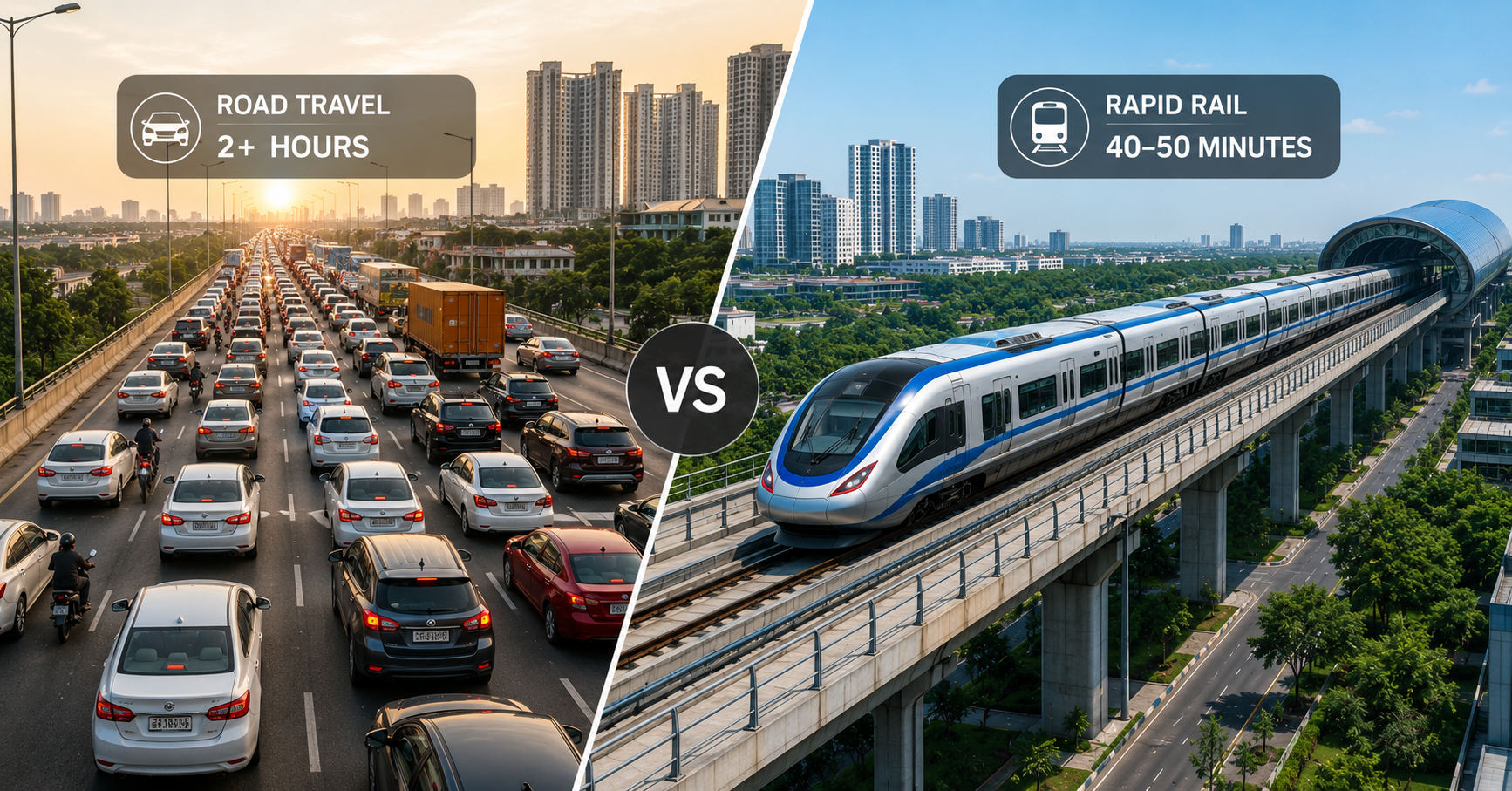
Road journeys between Ghaziabad and Jewar often stretch beyond two hours. Traffic congestion on highways makes travel time unpredictable during peak hours. Rapid rail removes this uncertainty with a fixed and reliable schedule. Commuters can plan airport trips without worrying about sudden traffic delays. This predictability matters greatly for business travellers with tight flight schedules. Families travelling for vacations also benefit from a stress-free journey. Rapid rail offers a comfortable alternative to long, tiring road trips.
Environmental and Urban Benefits
Rapid transit systems help reduce the number of private vehicles on roads. Fewer cars on highways lower overall fuel consumption across the region. This shift also helps reduce vehicle emissions along busy travel corridors. Public transport adoption supports cleaner air across Ghaziabad and Noida. Reduced congestion also improves road safety for daily commuters. Cities with strong rail networks often see better urban planning outcomes. This corridor supports NCR’s long-term vision for sustainable growth.
Boost for Employment and Business Hubs
Noida and Greater Noida host numerous corporate offices and industrial units. Faster connectivity makes daily commuting easier for working professionals in these areas. Employees living in Ghaziabad gain quicker access to job opportunities nearby. Businesses located near proposed stations may see increased foot traffic. Companies often prefer locations with strong public transport connectivity. This corridor could attract new commercial investment along its route. YEIDA City may also see growth in office and retail spaces.
Frequently Asked Questions
What is the New Namo Bharat Corridor?
It is a proposed rapid rail line connecting Ghaziabad and Jewar Airport.
How long is the proposed corridor?
The corridor spans approximately 72.44 kilometers across the NCR region.
How much time will the journey take?
Travel between Ghaziabad and the airport will take around 40 to 50 minutes.
How many stations will the corridor have?
The proposed route includes 12 stations across multiple NCR locations.
What is the current project status?
The corridor is currently in its Detailed Project Report stage.
Will this corridor connect with other metro systems?
Yes, it will integrate with both Delhi Metro and Noida Metro.
Looking Ahead
The New Namo Bharat Corridor represents a significant step for NCR transport. Once operational, it will reshape how people travel across this region. Faster airport access benefits residents, businesses, and daily commuters alike. This project also reinforces the growing importance of YEIDA and Greater Noida West. As construction progresses, more details on timelines will likely emerge. For now, this corridor stands as a promising addition to NCR infrastructure.
Ready to Invest in NCR’s Next Growth Corridor?
The New Namo Bharat Corridor is set to transform connectivity across Ghaziabad, Noida, and Greater Noida West. Express Builder brings you homes in these high-growth micro-markets, built for tomorrow’s connected lifestyle. Explore residential projects designed for convenience, comfort, and long-term value. Book a site visit today and see these opportunities firsthand.
