
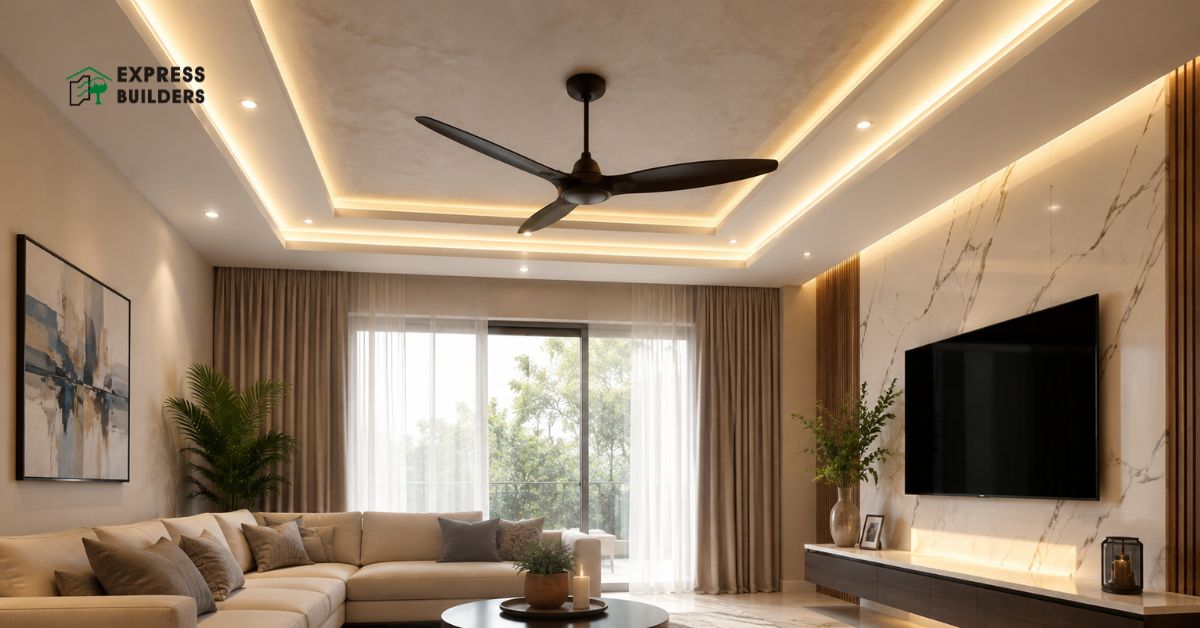
Walk into any beautifully designed living room today, and the first thing you notice is the ceiling. Not the sofa. Not the TV unit. The ceiling.
False ceilings have quietly become the most powerful design tool in modern interiors. They add depth, hide wires, improve acoustics and most importantly they make your living room feel like it belongs in an architecture magazine.
But here is the real challenge. Most homeowners want a fan in the living room. And fitting a fan into a false ceiling design without ruining the aesthetics? That requires thought.
In this guide, you will find the best false ceiling designs for living rooms with fans practical, beautiful, and built for real homes.
Why False Ceilings Work So Well in Living Rooms
Before jumping into designs, it helps to understand why false ceilings work.
A false ceiling, also called a drop ceiling or suspended ceiling, sits below the original roof slab. The gap between the two hides electrical wiring, AC ducts, and plumbing lines. As a result, the room looks cleaner and more finished.
Additionally, false ceilings let you play with lighting. You can add cove lights, recessed LEDs, spotlights, and even pendant lights all in one go.
However, the real magic happens when the ceiling design frames a ceiling fan beautifully. Done right, it looks intentional and elegant. Done wrong, it looks like an afterthought.
1. The Classic Tray Ceiling Design with a Centre Fan
The tray ceiling is one of the most popular false ceiling styles and for good reason. It features a recessed central panel that sits slightly higher than the rest of the ceiling. This creates a layered, box-like effect.
You mount the ceiling fan right in the centre of the tray. The fan becomes the focal point of the design. It does not fight with the aesthetics, it completes them.
Best suited for: Rectangular or square living rooms above 200 sq ft.
Pro tip: Add LED strip lighting along the edges of the tray. The soft glow around the fan creates a warm, premium look in the evenings.
2. Cove Ceiling Design with a Concealed Fan Mount
Cove ceilings use indirect lighting hidden along a recessed ledge. The light bounces off the ceiling and fills the room with a diffused glow. It is elegant, modern and incredibly popular in luxury apartments.
For a fan, you set it slightly below the cove in the open central area. The contrast between the lit cove edges and the clean centre makes the fan look intentional not random.
Best suited for: Modern and contemporary interiors.
Pro tip: Use a sleek, low-profile fan with a matte finish. Bulky or decorative fans can look out of place in a minimalist cove ceiling.
3. Coffered False Ceiling with a Fan Drop
Coffered ceilings feature a grid of recessed square or rectangular panels. Each panel sits slightly lower, creating a rich, structured pattern across the entire ceiling. This design has roots in classical architecture but works beautifully in modern homes too.
You drop the fan from the centre panel of the coffered grid. The symmetry of the coffered design naturally draws the eye to the centre, making the fan a deliberate design choice.
Best suited for: Large living rooms with high ceilings (above 10 feet).
Pro tip: Paint the panels in a slightly deeper shade than the surrounding ceiling. The contrast highlights the structure and makes the space feel more curated.
4. POP False Ceiling with Circular Fan Medallion
POP (Plaster of Paris) ceilings offer the most flexibility in terms of shapes and forms. You can mould them into curves, arches, borders or any custom pattern you like.
For fans, designers often create a circular medallion or ring detail directly around the fan drop point. The ring frames the fan perfectly and ties the entire ceiling design together.
Best suited for: Traditional, transitional and Rajasthani-inspired interiors.
Pro tip: Add a decorative POP border along the ceiling perimeter. This creates a complete frame for the room and makes the circular fan medallion feel cohesive rather than isolated.
5. Wooden False Ceiling with an Integrated Fan
Wood brings warmth into any space. A wooden false ceiling whether in teak, oak, wenge, or engineered wood instantly changes the mood of a living room. It adds texture, depth, and a natural, organic feel.
You install the fan flush within the wooden panel structure. Many designers use a square or rectangular cut-out in the wood to hold the fan, creating a built-in look.
Best suited for: Rustic, Scandinavian, boho and earthy interior styles.
Pro tip: Choose a fan with wooden blades to match the ceiling. The coordinated materials create a seamless, intentional look.
6. Stretch Fabric or PVC Panel Ceiling with a Fan Point
Stretch ceilings use a thin, taut membrane of PVC or polyester fixed to a metal frame. They come in matte, glossy, satin, or even printed finishes. The result is a completely flat, seamless surface.
The fan mounts through a reinforced point in the membrane. These ceilings look especially striking with backlit panels, where the entire ceiling glows softly.
Best suited for: High-end, contemporary and futuristic interiors.
Pro tip: Go for a matte white or light grey finish for a clean, modern look. Glossy finishes can sometimes reflect fan movement, which gets distracting over time.
Key Things to Consider Before Installing a False Ceiling with Fan
Choosing the design is only half the work. Before installation, keep these points in mind.
Ceiling height matters. False ceilings reduce headroom by 6 to 12 inches. If your original ceiling is below 9 feet, plan carefully. A low false ceiling combined with a fan can make the room feel cramped.
Fan clearance is critical. Most building codes and safety guidelines recommend at least 7 feet of clearance between the floor and the fan blades. Check this before finalising the ceiling depth.
Use a fan-rated electrical box. Standard electrical boxes are not strong enough to hold a ceiling fan. Always install a fan-rated junction box that can handle the weight and movement.
Think about blade span. For living rooms between 150 and 250 sq ft, a fan with a 48-inch blade span works well. For larger rooms, go for 52 inches or above.
Coordinate finishes. The fan finish chrome, bronze, matte black, or white should match or complement the ceiling material and lights. Mismatched finishes break the design flow.
Lighting + Fan: Getting the Combination Right
One of the biggest advantages of a false ceiling is the ability to layer lighting. Here is a quick approach that works consistently.
Use cove lights or LED strips for ambient lighting along the ceiling edges. Add recessed spotlights or downlights for task lighting. Let the fan handle air circulation without doubling as the primary light source.
In other words, avoid fan-light combos in a false ceiling setup. They rarely look as clean as a dedicated fan paired with separate, thoughtfully placed lights.
Final Thoughts
A false ceiling transforms your living room. Add a fan to the design and you get both beauty and function in one cohesive package.
The best results come from planning. Pick a design that matches your room size, ceiling height, and interior style. Then coordinate the fan, lights and ceiling material carefully.
Start simple if you are unsure. A tray ceiling with a central fan and cove lighting is timeless. It works in almost every home and impresses every guest.
Your living room ceiling has enormous potential. Contact us if you are planning to buy a new house.
Frequently Asked Questions
Which false ceiling design is best for a living room with a fan?
A tray ceiling with a centrally mounted fan is one of the best options. It creates a balanced look, accommodates lighting easily and works well in both modern and traditional living rooms.
Can I install a ceiling fan in any false ceiling?
Yes, but the ceiling must include proper fan support and a fan-rated electrical box. Additionally, ensure there is enough clearance between the fan blades and the floor for safe and efficient operation.
