
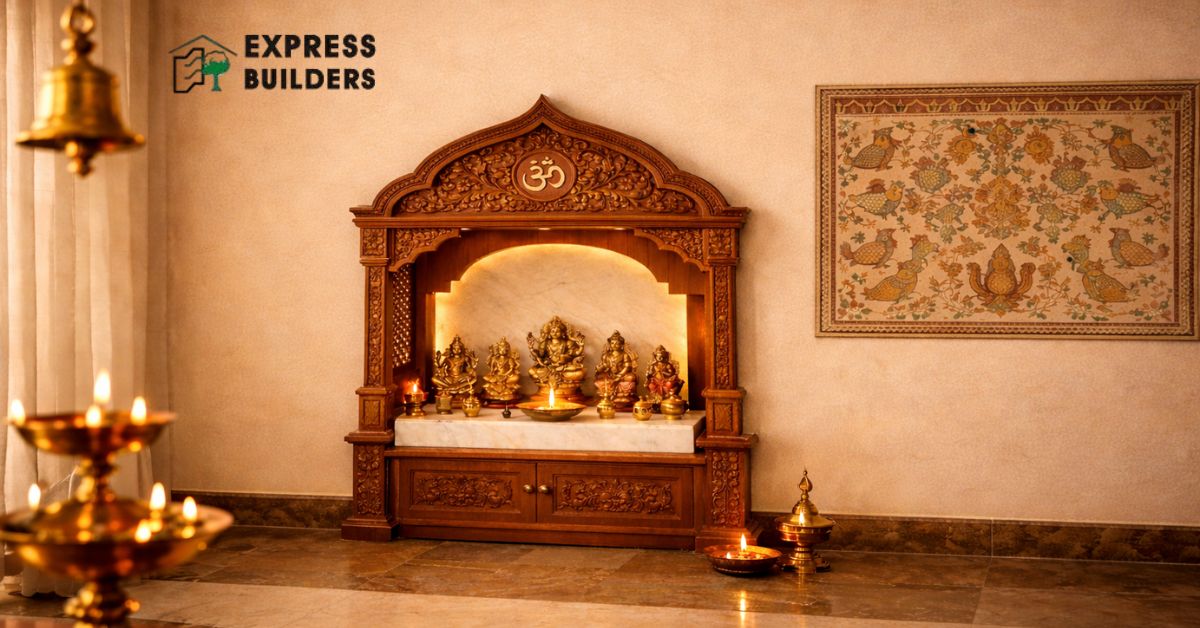
Every Indian home carries a spiritual heartbeat. That heartbeat lives inside the pooja room. It is the one corner that connects daily life to something deeper. Yet, many homeowners struggle to design this space well. They want it to feel sacred but also look beautiful. The good news is you can have both. Today, pooja room designs have evolved beautifully. They now merge age-old traditions with clean, modern aesthetics. Whether you live in a large villa or a compact apartment, a thoughtful design always works. This blog will walk you through everything you need to know.
Why the Pooja Room Deserves Thoughtful Design
A pooja room is not just a decorative corner. It is a living, breathing part of your home. Families begin and end their day in this space. So, the design must support both devotion and daily comfort.
Many people treat it as an afterthought during home construction. That is a common mistake. A well-planned pooja room lifts the energy of the entire home. It also creates a peaceful spot that every family member feels drawn to.
Good design does not mean spending a fortune. It means making smart, intentional choices. Materials, lighting, placement, and storage all play a role.
Choosing the Right Location
Vastu Shastra guides most Indian families when placing the pooja room. The northeast corner of the home is the most preferred direction. This direction, called “Ishan Kon,” is believed to invite positive energy. East-facing rooms also work well, especially for morning prayers.
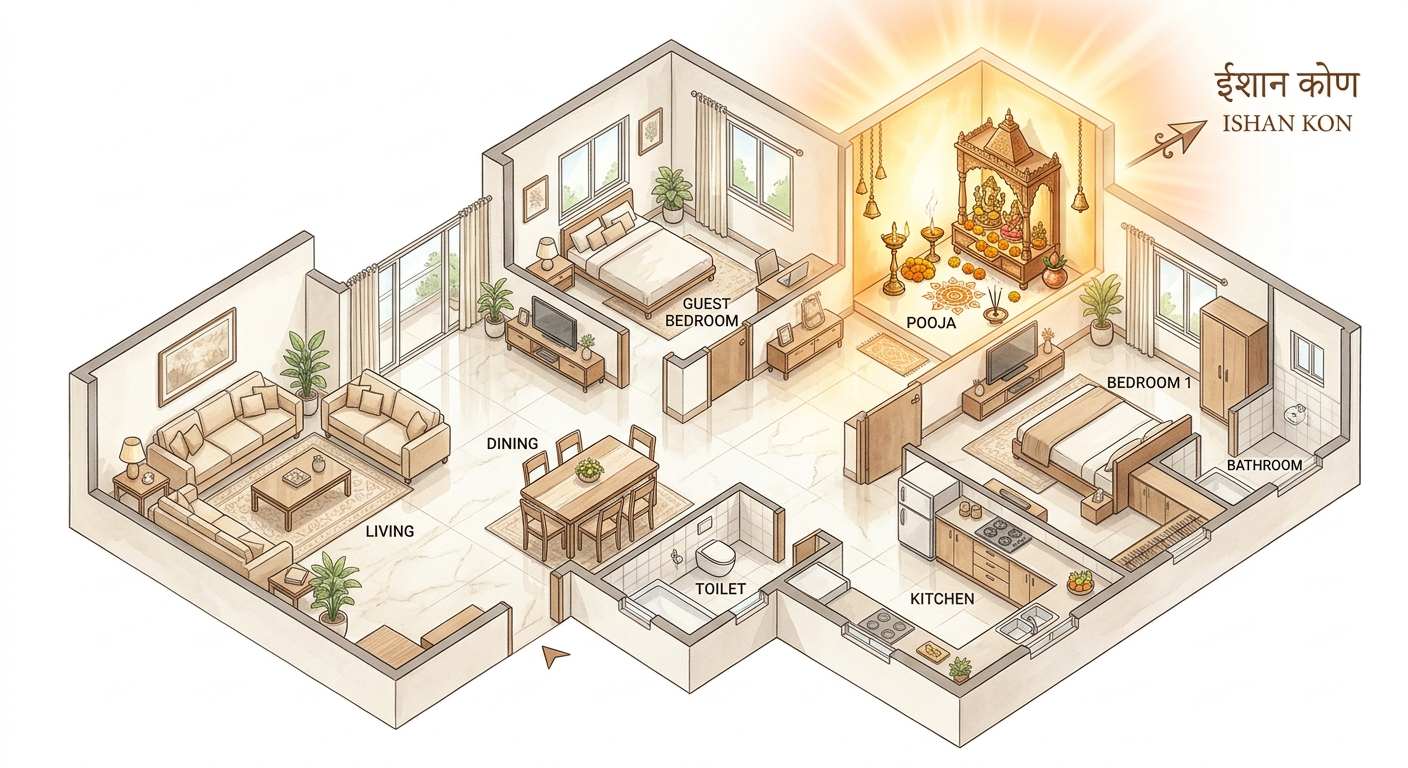
Avoid placing the pooja room near the bathroom or bedroom. These locations can disrupt the sanctity of the space. A separate room is ideal, but even a dedicated corner works beautifully with the right design.
Also read: Pooja Room Vastu Tips: Right Direction for God Placement
Popular Indian Style Pooja Room Designs
Indian style pooja room designs draw from a rich visual heritage. They use carved wood, brass accents, temple-style arches, and hand-painted motifs. These elements bring a timeless, divine feel to the space.
Here are some widely loved design styles across Indian homes:
- Traditional South Indian Style: Features heavy teak wood carvings, brass lamps, and a sloped roof-like canopy over the deity shelf. It looks deeply rooted in temple architecture.
- Rajasthani Style: Uses jharokha-inspired frames, mirror work, and vibrant colours like gold, red, and saffron. This style is visually striking and culturally rich.
- Kerala Style: Relies on dark rosewood and brass detailing. It has a clean, minimal look with a strong cultural identity.
- Contemporary Indian Style: Blends traditional motifs with modern finishes like backlit panels, marble shelves, and sleek cabinetry. It suits urban homes perfectly.
Indian style pooja room designs never lose their spiritual character. They simply adapt to the home around them. This flexibility makes them popular across generations and geographies.
Pooja Room Door Designs: The Gateway to the Sacred
The door is the first thing you see. It sets the tone for everything inside. Pooja room door designs carry immense significance, both spiritually and aesthetically.
Carved wooden doors remain the most popular choice. Craftsmen hand-carve motifs of Lord Ganesha, lotus flowers, Om symbols, and peacocks on these doors. Teak, sheesham, and mango wood are the most durable materials for this purpose.
Pooja room door designs also come in glass and wood combinations. A frosted glass panel with a wooden frame looks elegant. It allows soft light to filter through while maintaining privacy. Many modern homes prefer this style.
Here are a few door design ideas worth considering:
- Lattice or Jaali Doors: These allow visibility into the room while looking ornate. They work beautifully in open-plan homes.
- Double Shutter Doors: A classic choice for larger rooms. They open fully during prayers and close neatly afterwards.
- Sliding Doors: A smart option when space is tight. They save floor area without compromising on style.
- Arched Wooden Doors: These mimic temple gopurams and add a divine character instantly.
Good pooja room door designs balance beauty with practicality. Always choose a door that suits both the room size and your home’s overall style.
Small Pooja Room Designs in Apartments
City living comes with beautiful homes and limited square footage. Apartment dwellers often worry that they cannot have a proper pooja space. That worry is completely unnecessary.
Small pooja room designs in apartments are creative, functional, and stunning. The key is to think vertically, not horizontally. Wall-mounted units with multiple shelves use height efficiently. They keep the floor clear and the space organised.
Here are practical ideas for small pooja room designs in apartments:
- Mandir Unit in a Cabinet: A tall wooden cabinet opens to reveal a fully equipped pooja space. When closed, it blends with your living room furniture seamlessly.
- Wall Niche Design: A recessed niche in the wall creates a dedicated altar. Add a backlit panel behind the deity for a warm, divine glow.
- Corner Mandir Unit: Corner units fit perfectly into unused angles of a room. They are compact yet hold everything you need.
- Under-Staircase Pooja Room: If your apartment has a staircase, use the space beneath it. This underused area transforms into a charming, sheltered prayer nook.
Small pooja room designs in apartments work best when you choose multipurpose furniture. A storage bench near the mandir holds pooja essentials neatly. Built-in shelves above the unit display sacred books and decorative diyas.
Minimalism is your best friend in compact spaces. Stick to one or two colours. Choose simple carvings over heavy ornamentation. Let good lighting do the heavy lifting.
Materials, Lighting, and Storage: Getting the Details Right
The right materials elevate any pooja room design. Wood remains the most sacred and widely used material. Marble is another elegant choice for the deity platform. Engineered wood works well for budget-conscious homeowners.
Lighting plays a powerful role in creating ambience. Warm white LED strips behind the deity shelf create a halo effect. Small spotlights above the idols highlight them beautifully. Avoid harsh white lights- they disrupt the calm of the space.
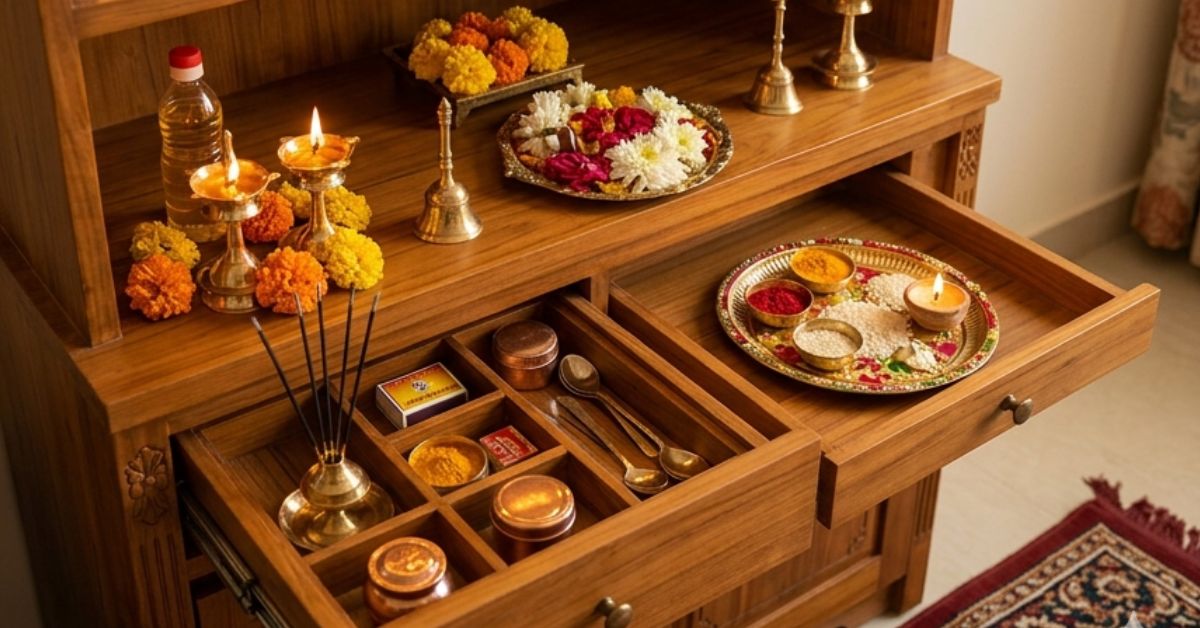
Storage is often overlooked in pooja room designs. But organised storage makes daily prayers smoother. Include:
- Drawers for matchboxes, incense sticks, and small accessories.
- Closed cabinets for storing puja books, extra diyas, and seasonal decor.
- Open shelves for displaying idols, flowers, and lamps with ease.
- A pull-out tray for organising daily essentials like kumkum, haldi, and agarbatti holders.
Good storage keeps clutter away and maintains the sanctity of the space effortlessly.
Colours and Décor That Enhance the Space
Colour sets the emotional tone of any room. Pooja rooms respond best to warm, earthy, and spiritual tones. Shades of cream, ivory, pale yellow, and soft gold work wonderfully. They reflect light well and create a serene atmosphere.
Avoid cool, dark shades like grey or navy inside the pooja room. These colours can make the space feel heavy and closed. Opt instead for warm wood tones paired with gold hardware.
Decor elements that enhance the space include:
- Brass diyas and urlis filled with water and flowers.
- Hand-painted Madhubani or Warli motifs on the walls.
- A small bell hung at the entrance for spiritual significance.
- Framed deity images with elegant borders for a polished look.
Every element should have a purpose. Thoughtful decor never feels cluttered, it feels curated.
Final Thoughts
A pooja room is one of the most personal spaces in your home. It deserves careful thought, skilled craftsmanship, and a touch of your family’s identity. Modern pooja room designs prove that spirituality and style can coexist beautifully. You do not need a large space or a big budget. You need clarity, creativity, and the right design partner by your side.
Frequently Asked Questions (FAQs)
1. What are the latest trends in pooja room design?
2. What are the latest trends in mandir design?
In 2026, mandir designs are embracing a more minimal, refined, and luxurious look, featuring marble textures, warm lighting, and rich wooden accents. These modern pooja units strike a beautiful balance between spiritual essence and contemporary interior aesthetics.
3. What are traditional puja room designs?
Traditional South Indian pooja room designs showcase exquisite woodwork with intricate carvings, complemented by stunning brass idols. A dedicated room with solid wooden doors and an ornate entrance frame creates a grand and inviting atmosphere, setting the tone for the sacred space within.
Ready to create your dream pooja room?
Design a serene and elegant pooja space with homes crafted by Express Builders. Our residences in Noida, Greater Noida, and Ghaziabad blend modern living with thoughtful layouts, giving you the perfect setting to create beautiful pooja room designs filled with peace and positivity. Book your site visit now.
