
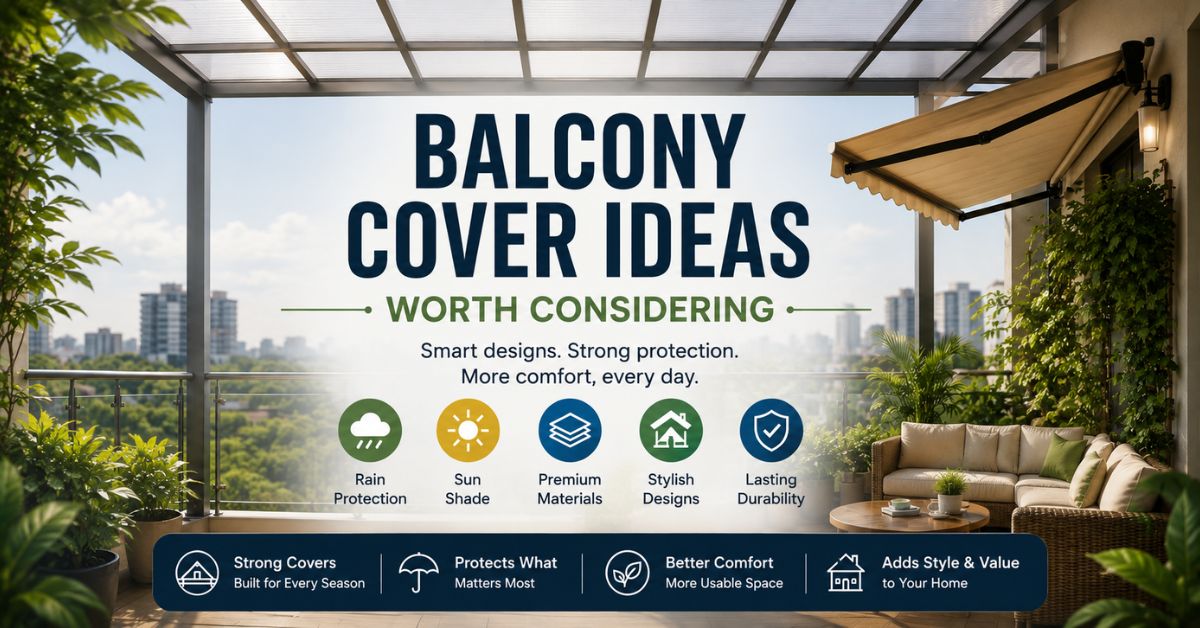
A balcony often goes underused simply because it offers no real protection from sun or rain, leaving what could be a genuinely enjoyable outdoor space sitting empty for much of the year. A well-chosen balcony cover changes this equation considerably, extending how often the space actually gets used while also protecting furniture, flooring, and anything else stored there from direct weather exposure. This guide walks through the materials, styles, and planning decisions that shape a strong balcony cover, along with the practical details worth checking before you commit to a direction for your own home.
Why a Balcony Cover Makes a Real Difference
Many homeowners treat their balcony as an afterthought, leaving it exposed and underused rather than considering how a simple cover could genuinely transform the space. A balcony cover does more than block sun and rain, since it also protects outdoor furniture, plants, and flooring from the gradual wear that constant weather exposure causes over time. Beyond protection, a well-designed cover extends the number of days and hours the balcony feels genuinely comfortable to use, whether that means shade during a hot afternoon or shelter during an unexpected monsoon shower. Many households also find that a covered balcony becomes a more natural extension of their indoor living space, blurring the line between inside and outside in a way an exposed balcony rarely achieves.
Read Also- Balcony Railing Design: Steel, Glass & Iron Ideas That Elevate Every Home
Materials Used for Balcony Covering Sheets
Material choice affects a balcony cover’s durability, appearance, and how much natural light it allows through, and understanding the core options makes the rest of the decision easier. Polycarbonate balcony covering sheets remain a particularly popular choice, offering strong impact resistance alongside the ability to let diffused natural light pass through without the full intensity of direct sun. Fabric or canvas awnings provide a lighter, more flexible option, often retractable, suiting homeowners who want the ability to fully open the balcony on milder days.
Metal roofing sheets, typically finished with an insulated or coated layer, offer strong durability and complete rain protection, though they block light entirely compared to translucent alternatives. Glass canopies bring a more premium, architectural appearance to a balcony cover design, allowing full light transmission while still providing genuine weather protection overhead.
Popular Balcony Cover Ideas Worth Knowing
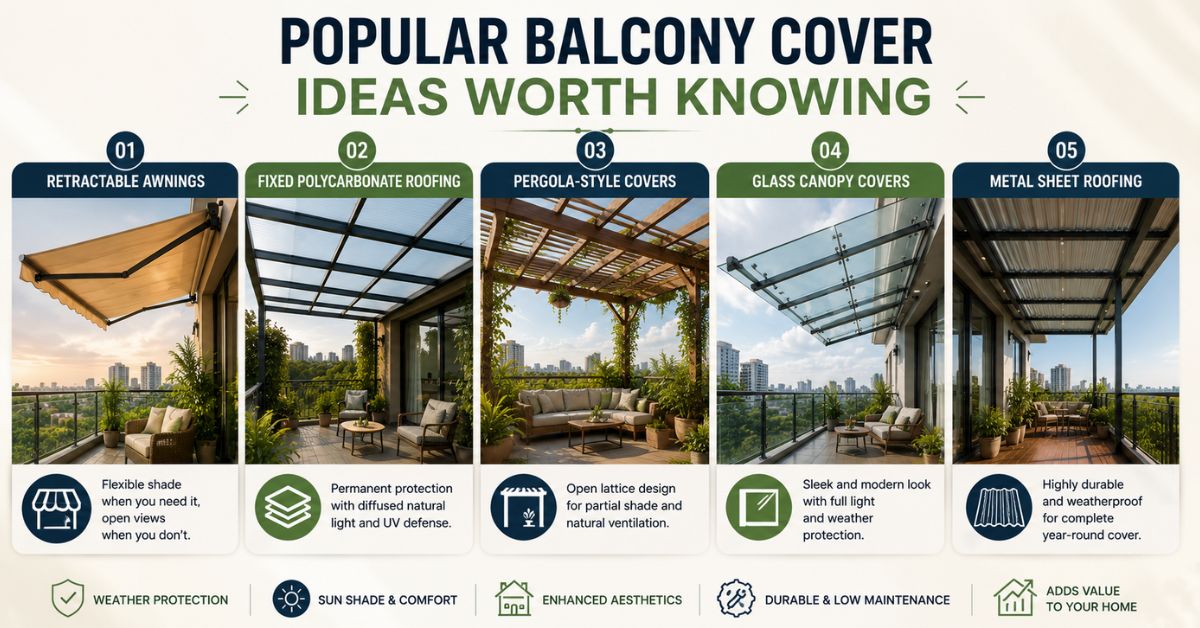
Balcony cover ideas span a genuinely wide range of styles and structural approaches, each suited to a different budget and aesthetic preference. Reviewing these options helps clarify which direction might work best for your own space.
- Retractable awnings – fabric covers that extend or retract as needed, offering flexible shade without a permanent structure
- Fixed polycarbonate roofing – a permanent, translucent cover offering consistent protection with diffused natural light
- Pergola-style covers – an open lattice structure, sometimes paired with climbing plants, offering partial shade
- Glass canopy covers – a premium, architectural option allowing full light while still shielding against rain
- Metal sheet roofing – a fully opaque, highly durable cover suited to complete weather protection year-round
Many balcony covering ideas circulating today combine more than one element, such as a fixed polycarbonate roof paired with retractable side screens, offering both permanent structure and flexible additional protection depending on the weather.
Protecting Your Balcony From Rain
A balcony rain cover needs to prioritise genuine waterproofing above other considerations, since even a visually appealing cover fails at its core purpose if water still finds its way through during heavy monsoon downpours. Sloped roofing designs work considerably better for balcony rain protection than flat covers, since a slight gradient allows water to run off efficiently rather than pooling and potentially causing leaks over time.
Overlapping panel joints and proper sealing around the cover’s edges matter just as much as the material itself, since poor installation can undermine even a genuinely high-quality covering sheet. Many homeowners also add a small gutter or drainage channel along the cover’s lower edge, directing rainwater away from the balcony floor and preventing it from splashing back onto furniture or flooring during heavy rain.
Also Read- Iron Window Grill Design Ideas Worth Exploring
Shade Solutions for Sunny Balconies
A balcony shade cover addresses a genuinely different problem than a rain-focused design, prioritising heat and glare reduction over complete waterproofing. Retractable fabric awnings suit this purpose particularly well, since they can extend during the hottest part of the day and retract when direct sun isn’t a concern. Shade cloth, a woven mesh material that blocks a percentage of direct sunlight while still allowing airflow, offers a lightweight, budget-friendly option for balconies facing intense afternoon sun. Many homeowners in hotter climates specifically prioritise a balcony shade cover over a fully solid roof, since the mesh or fabric approach keeps the space genuinely usable without trapping heat the way an enclosed structure sometimes can.
Roof-Style Covers Worth Considering
A balcony roof cover offers the most complete, permanent protection against both sun and rain, functioning essentially as a full extension of the home’s existing roofline. This approach suits homeowners wanting year-round balcony use without needing to adjust or retract anything based on changing weather conditions.
A balcony roof cover typically requires more substantial structural planning than a simpler awning or shade cloth, since the permanent structure needs proper support and secure attachment to the existing building. Many homeowners choose this option specifically for larger balconies intended for regular entertaining or dining, since the complete coverage supports furniture and activities that a partial or retractable cover might not comfortably accommodate.
How to Cover a Balcony: Planning the Process
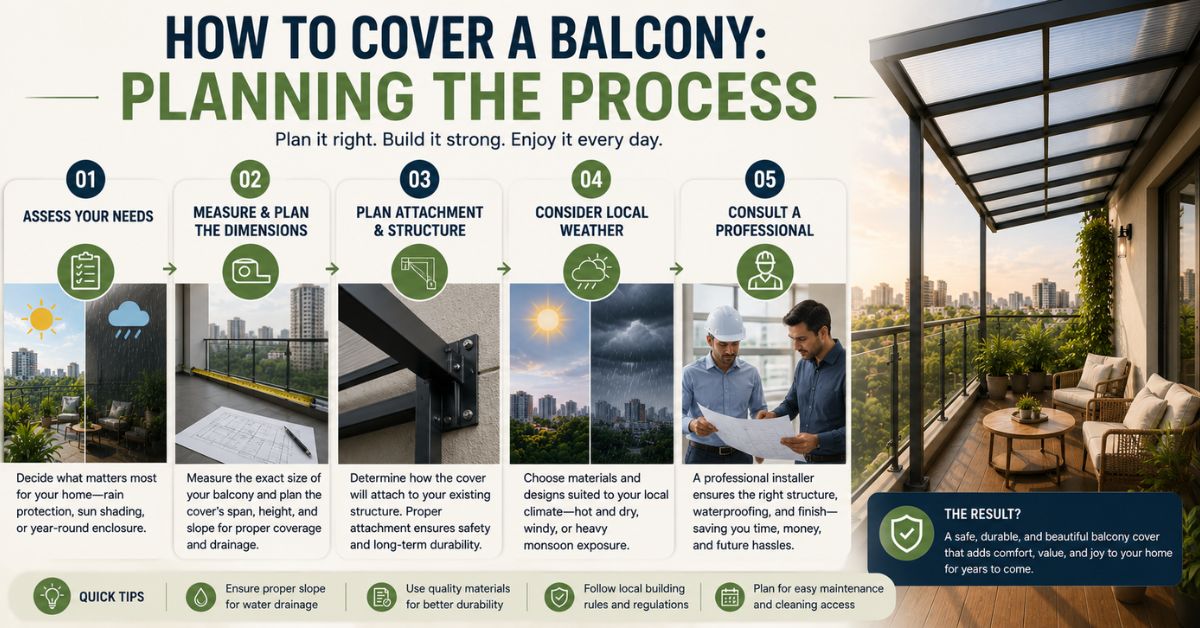
Understanding how to cover balcony spaces properly starts with assessing your specific needs, since the ideal balcony cover design differs considerably depending on whether rain protection, sun shading, or year-round enclosure matters most to your household. Begin by measuring the balcony’s exact dimensions and considering how the cover will attach to the existing structure, since improper attachment remains one of the most common sources of later problems. Consider local weather patterns too, since a balcony cover design suited to a consistently hot, dry climate differs meaningfully from one built for heavy monsoon exposure. Consulting with a professional installer, rather than attempting a purely DIY approach for anything beyond a simple retractable awning, generally produces a safer, longer-lasting result given the structural and waterproofing considerations involved.
Key Factors to Check Before You Finalise Your Cover
Before committing to any particular balcony cover, a handful of practical checks can help you avoid costly mistakes later.
- Local weather priorities – decide whether rain protection, sun shading, or both matter most for your specific climate
- Structural attachment – confirm the cover can be securely fixed to your building’s existing structure without compromising its integrity
- Drainage planning – ensure the design includes adequate slope or channels to direct rainwater away from the balcony floor
- Material durability – choose materials rated for your local climate, particularly UV resistance in consistently sunny regions
- Local regulations – check whether your building or municipal authority has restrictions on permanent balcony structures
- Maintenance access – confirm the cover design allows for periodic cleaning and inspection without excessive difficulty
Also Read- Stair Grill Design Ideas: Materials, Patterns and Safety Tips
Maintenance Tips for Long-Lasting Covers
Even a well-installed balcony cover benefits from some basic ongoing care to preserve its function and appearance over many years. Clean polycarbonate or glass covers periodically to prevent dust and grime from reducing light transmission and overall appearance. Check fabric awnings for mould or fading after monsoon season, addressing any issues promptly to extend the material’s usable lifespan. Inspect metal roofing sheets for rust spots at least once a year, particularly around joints and fixing points where moisture tends to collect. Clear any debris from gutters or drainage channels regularly, since blocked drainage can lead to water pooling and eventual leaks during heavy rain.
Common Mistakes to Avoid in Balcony Cover Selection
Many homeowners choose a balcony cover purely based on appearance, without considering how well the specific material and design will handle their local climate’s actual weather patterns. Avoid selecting a flat, non-sloped roofing design, since this common mistake leads to water pooling and potential leaks during heavy rain. Do not overlook structural attachment quality, since a poorly fixed cover poses genuine safety risks beyond simply failing to provide adequate protection. Skipping proper drainage planning is another common misstep, often resulting in water splashing back onto the balcony floor rather than draining away as intended.
Bringing It All Together
A balcony cover genuinely transforms how often and how comfortably a household uses its outdoor space, protecting both the balcony itself and everything within it from sun and rain. From choosing the right material and style to planning drainage and structural attachment carefully, every decision shapes how well the finished cover performs for years to come. Taking the time to compare a few balcony cover ideas, check practical factors like local weather priorities and drainage, and consult a professional installer where needed ensures the cover you choose serves your home well for a long time ahead.
Explore Express Builders ongoing residential projects across Noida and Greater Noida West. See the quality and planning behind every home firsthand.
Book a free site visit today with Express Builders. Walk through our ongoing projects and see construction quality up close. Check out floor plans, amenities, and location advantages in person. Meet our team and get your property-related questions answered directly. Schedule a visit at your convenience.
Frequently Asked Questions
1. What is the best material for a balcony rain cover?
Polycarbonate sheets or metal roofing generally offer the best rain protection, provided the design includes proper sloping and sealed joints.
2. How do I choose between a shade cover and a full roof cover?
Choose based on priorities, a shade cover suits sun protection while allowing airflow, while a roof cover offers complete, year-round protection.
3. Can I install a balcony cover myself?
Simple retractable awnings can often be self-installed, though permanent structures generally benefit from professional installation for safety and durability.
4. How often should balcony covering sheets be cleaned?
Clean polycarbonate or glass covers every few months, and inspect fabric or metal covers after monsoon season for damage or wear.
5. Do balcony covers need approval from a building authority?
It depends on your local regulations, so checking with your building management or municipal authority before installation is always advisable.
