
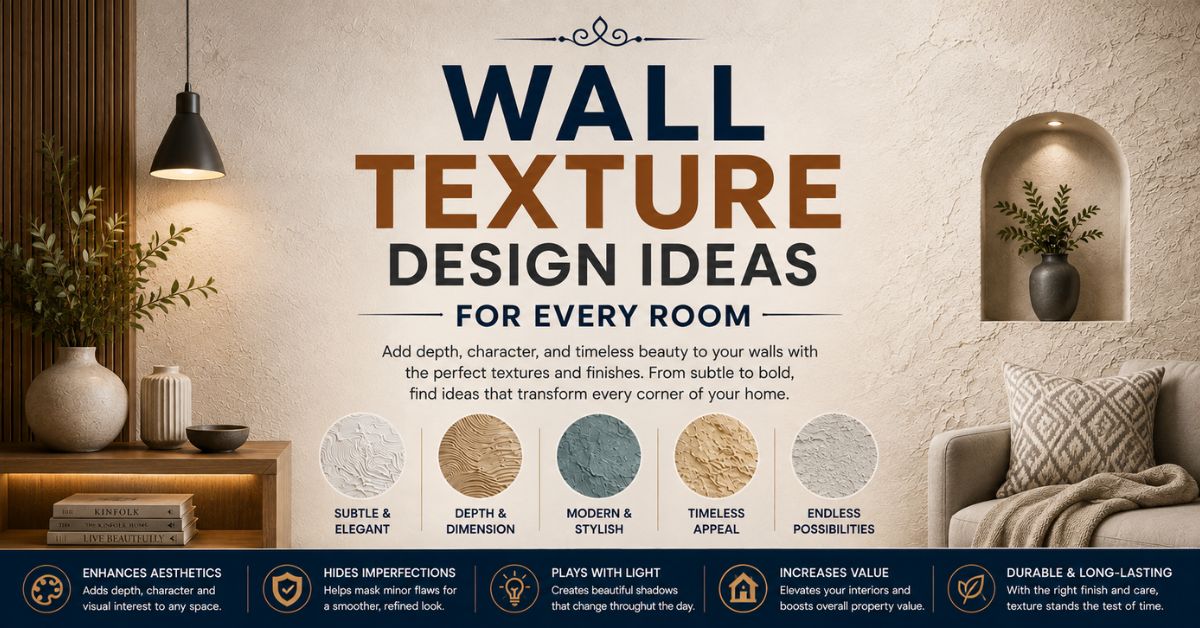
Flat, single-colour walls have their place, but wall texture design offers a genuinely different way to add depth and character without relying purely on furniture or artwork to carry a room’s visual interest. Texture changes how light plays across a surface throughout the day, creating subtle shadow and dimension that flat paint simply cannot replicate on its own. This guide walks through the techniques, styles, and planning decisions that shape strong wall texture design, both indoors and on a home’s exterior, along with the practical details worth checking before you commit to a direction for your own walls.
Why Wall Texture Design Adds Real Value
Many homeowners default to flat paint purely out of habit, without considering how much a textured surface can elevate an otherwise plain room without requiring a complete furniture overhaul. Wall texture design introduces tactile and visual interest that changes throughout the day as natural light shifts, creating a living, dynamic quality that flat colour alone cannot achieve. Beyond aesthetics, texture also helps disguise minor surface imperfections that would otherwise show clearly under flat, glossy paint, making it a genuinely practical choice for older walls with slight unevenness.
A well-chosen texture can also help define a specific zone within an open-plan home, drawing attention to a particular wall without requiring structural changes or additional construction work.
Also Read- Kitchen Wall Design Ideas: Tips, Trends and Inspiration 2026
Techniques Used to Create Texture
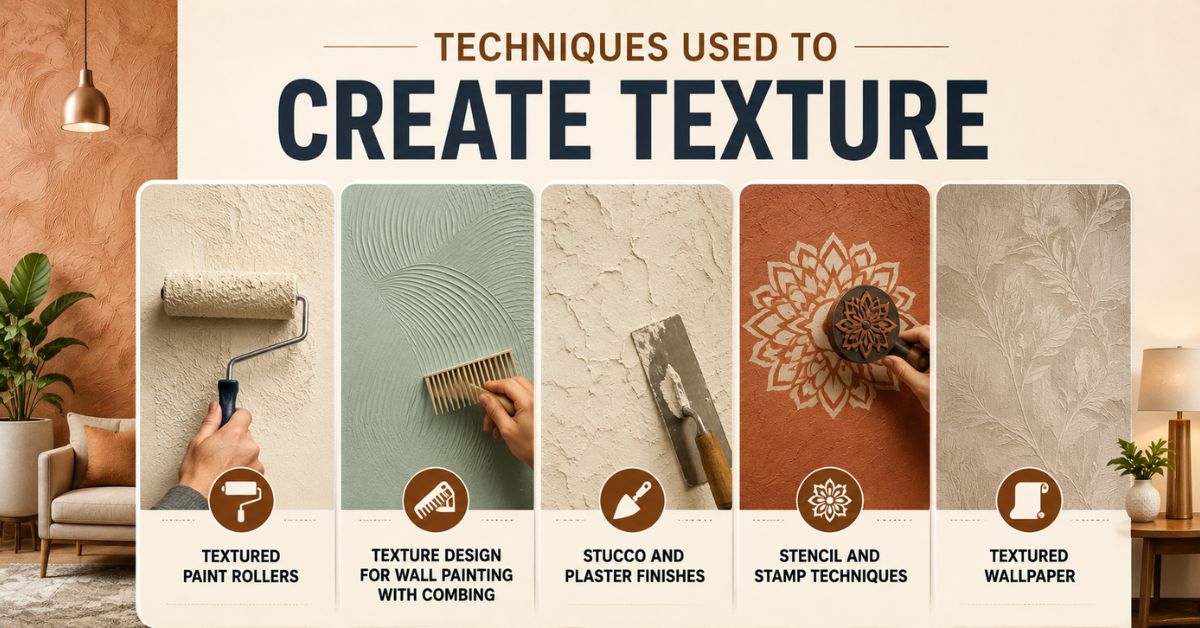
Several distinct techniques exist for creating wall texture design, each offering a different visual effect and level of installation complexity. Reviewing these options helps clarify which approach might suit your own space and skill level.
- Textured paint rollers – specialised roller patterns that create raised designs directly through the paint application itself
- Texture design for wall painting with combing – dragging a notched tool through wet plaster or paint to create linear grooves
- Stucco and plaster finishes – hand-applied techniques creating a rougher, more organic surface with genuine dimensional variation
- Stencil and stamp techniques – repeating patterns pressed into wet material for a consistent, decorative motif
- Textured wallpaper – pre-manufactured panels offering texture without the mess or skill required for hand-applied finishes
Choosing between these techniques often depends on your budget, the level of permanence you want, and how much visual boldness your specific room can comfortably support.
What’s Trending in Wall Texture Right Now
The latest texture design for wall applications reflects a broader shift toward subtler, more sophisticated finishes over the heavily patterned textures once popular in earlier decades. Many homeowners now favour a fine, sand-like texture that adds gentle depth without overwhelming a room, rather than the bold stucco patterns common in older interior work. Limewash and microcement finishes have also grown considerably in popularity recently, offering an organic, artisanal look that reads as considered rather than dated.
Metallic and pearlescent textured finishes represent another emerging direction, adding a subtle shimmer that shifts appearance depending on the angle and intensity of surrounding light.
Bringing Texture Into the Bedroom
Wall texture designs for bedroom applications generally favour softer, more subtle finishes that support a calm, restful atmosphere rather than a bold visual statement. A fine sand or suede-effect texture on a single feature wall behind the headboard often works particularly well, adding depth without introducing the busyness a heavily patterned surface might bring to a space meant primarily for rest. Neutral, muted tones remain the most popular colour pairing for bedroom texture work, since these shades age well and continue to suit changing bedding or furniture choices over time. Many homeowners limit texture to just one wall in the bedroom, keeping the remaining surfaces flat to avoid visually overwhelming a relatively intimate, personal space.
Texture That Elevates the Living Room
A wall texture design for living room spaces can support considerably more visual boldness than a bedroom, given the room’s typically more public, entertaining-focused function. Feature walls behind a television unit or sofa often carry the boldest texture choice in the home, using techniques like stucco or textured plaster to create a genuine focal point within the room.
Many homeowners also introduce texture through a combination of paint and material, pairing a textured painted section with wood panelling or stone cladding for added dimension. Because living rooms typically see more natural light throughout the day than bedrooms, texture here reads with particularly strong shadow and depth, making the investment in a quality finish genuinely worthwhile.
Also Read- Best 6 Bedroom Wall Colour Combination Ideas for Your Home
Texture Ideas for the Hall
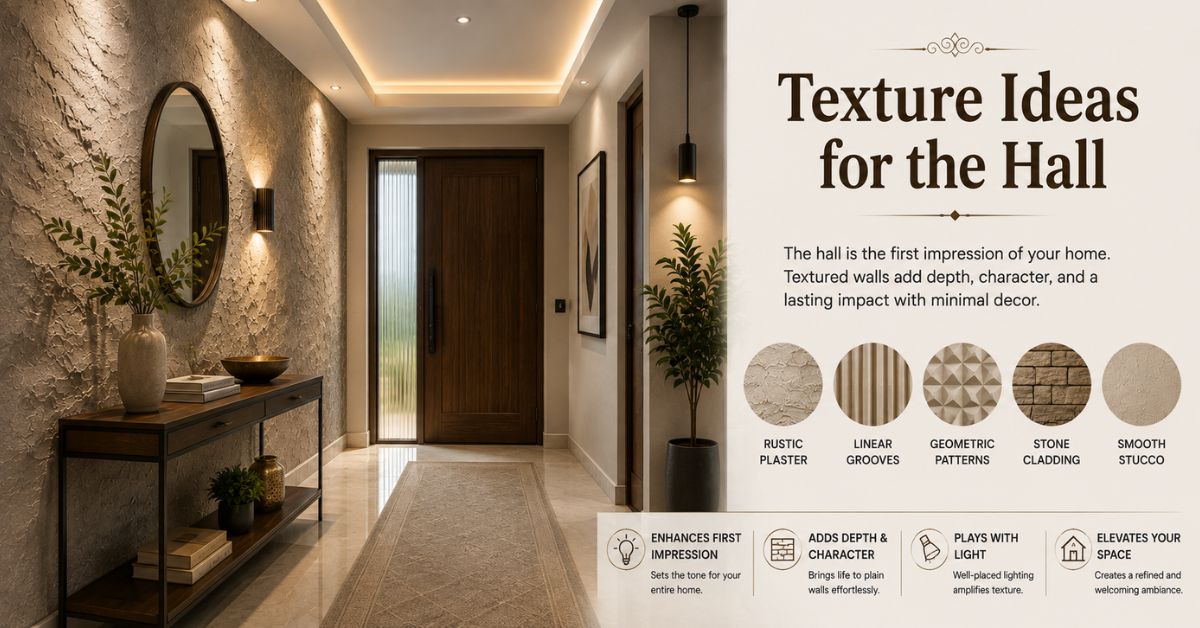
Wall texture designs for hall spaces and entryways offer a particularly effective opportunity to make a strong first impression, since this is often the very first interior surface a visitor encounters upon entering a home. A bold, richly textured wall in an entryway sets an immediate tone for the rest of the home’s interior style, whether that means a rustic plaster finish or a more contemporary geometric pattern.
Because hallways typically see less furniture than other rooms, the wall itself carries more visual weight than it might elsewhere, making texture a particularly efficient way to add character without needing additional decor. Lighting deserves particular attention in hall applications too, since a well-placed fixture can dramatically enhance how a textured surface reads throughout the day.
Taking Texture to the Exterior
Exterior wall texture design serves a genuinely different purpose than interior texture, needing to withstand sun, rain, and temperature fluctuations while still delivering strong visual character. Front wall texture design in particular deserves careful thought, since this surface shapes a home’s entire curb appeal and first impression from the street.
Stone-effect and stucco finishes remain particularly popular choices for texture design for outside wall applications, offering genuine weather resistance alongside a rich, dimensional appearance that flat exterior paint simply cannot match. Because exterior surfaces face far more environmental stress than interior walls, choosing a genuinely weather-rated product matters considerably more here than it does for indoor applications, where durability concerns remain comparatively minor.
Also Read- Dining Table Designs Worth Considering for Your Home
Key Factors to Check Before You Finalise Your Texture
Before committing to any particular wall texture design, a handful of practical checks can help you avoid costly mistakes later.
- Surface preparation – confirm the wall is properly primed and cleaned, since texture accentuates rather than hides poor preparation
- Material weather rating – prioritise genuinely exterior-rated products for any front wall texture design facing direct weather
- Lighting interaction – consider how natural and artificial light will highlight or flatten your chosen texture pattern
- Room function – match texture boldness to the room, favouring subtler finishes for bedrooms and bolder ones for entertaining spaces
- Application skill – confirm your chosen contractor has genuine experience with the specific technique you’re planning to use
- Long-term maintenance – consider how easily the finish can be cleaned or touched up if damage occurs later
Maintenance Tips for Long-Lasting Textured Walls
Even a beautifully applied wall texture design benefits from some basic ongoing care to preserve its appearance over many years. Dust textured surfaces periodically with a soft brush attachment, since accumulated dust can settle more visibly into raised or recessed sections than it would on a flat surface. Avoid harsh scrubbing on delicate finishes like limewash, since aggressive cleaning can damage the texture’s surface and dull its appearance. Reapply protective sealant on exterior wall texture design periodically, particularly in regions with heavy monsoon rainfall, to maintain water resistance over time. Address any cracking or chipping promptly, since textured surfaces can sometimes hide early structural issues that flat paint would reveal more obviously.
Common Mistakes to Avoid in Wall Texture Design
Many homeowners choose a bold texture purely from a photograph, without considering how the pattern will actually read across an entire wall under their room’s specific lighting conditions. Avoid applying heavy texture throughout an entire room, since this can quickly feel overwhelming rather than genuinely stylish, particularly in smaller spaces. Do not skip proper surface preparation before applying texture, since existing cracks or unevenness often become more visible rather than less once texture is added. Skipping a weather-rated product for exterior applications is another common misstep, often leading to premature cracking or fading within just a few monsoon seasons.
Also Read- Floor Colors Guide: Best Shades to Transform Any Room
Bringing It All Together
Wall texture design offers a genuinely effective way to add depth and character to both interior rooms and a home’s exterior facade. From choosing the right technique and finish for each specific room to planning weather resistance carefully for exterior applications, every decision shapes how the finished walls look and perform for years to come. Taking the time to compare a few techniques, check practical factors like surface preparation and material rating, and match texture boldness to each room’s function ensures the wall texture design you choose serves your home well for a long time ahead.
Explore Express Builders ongoing residential projects across Noida and Greater Noida West. See the quality and planning behind every home firsthand.
Book a free site visit today with Express Builders. Walk through our ongoing projects and see construction quality up close. Check out floor plans, amenities, and location advantages in person. Meet our team and get your property-related questions answered directly. Schedule a visit at your convenience.
Frequently Asked Questions
1. Which rooms suit bold wall texture design best?
Living rooms and entryways generally support bolder texture, while bedrooms typically benefit from softer, more subtle finishes.
2. Is exterior wall texture design more expensive than interior texture?
Generally yes, since exterior-rated materials need genuine weather resistance, which typically costs more than standard interior products.
3. Can wall texture hide cracks or surface imperfections?
To some extent, though proper surface preparation still matters, since texture can sometimes highlight rather than fully conceal existing issues.
4. What is trending in wall texture design right now?
Subtle finishes like fine sand textures, limewash, and microcement have grown popular over the heavily patterned stucco of earlier decades.
5. How often does textured wall paint need maintenance?
Dust regularly and inspect every year or two, resealing exterior surfaces as needed to maintain weather resistance over time
