
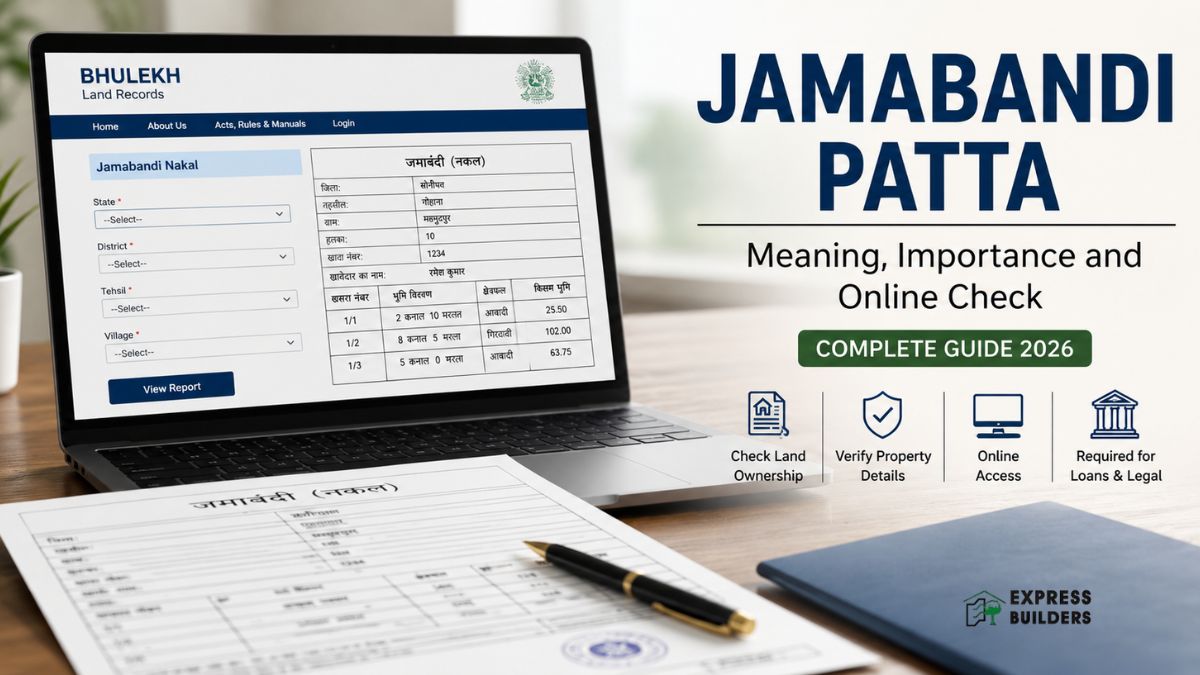
Buying property in India involves many critical documents. Most buyers focus on sale deeds and registration papers. But one document often gets overlooked despite its immense importance. That document is the jamabandi patta. Whether you plan to purchase land, apply for a home loan, or resolve a property dispute, understanding jamabandi patta protects your investment.
What Is Jamabandi Patta?
Jamabandi patta combines two key land record concepts used across India. Jamabandi is a land revenue record maintained by the State Revenue Department. It is commonly referred to as the Record of Rights. It records ownership, tenancy, cultivation, and revenue details for a specific land parcel. Patta is an official legal document issued by the government, proving ownership of land. It includes details like survey number, size, and type of land for rightful possession.
Together, the term jamabandi patta refers to official documentation that establishes who owns a piece of land. The Revenue Department maintains these records at the tehsil or taluk level. Courts, banks, and government offices legally recognise these documents across India.
Jamabandi is commonly used in northern states such as Delhi, Punjab, and Haryana. Patta is used in southern states like Tamil Nadu and is regarded as a land ownership record issued by the government. It is called Patta in Tamil Nadu, Record of Rights in states like Odisha and Telangana, Chitta in some parts of Tamil Nadu, Khata in Karnataka, and Jamabandi in states like Haryana and Punjab. Despite the different names, the core purpose remains the same across all states.
What Does a Jamabandi Record Contain?
A jamabandi patta holds detailed information about a land parcel. Jamabandi is one of those important land documents that carries information regarding the property, its ownership, types of land, and other revenue histories.
A typical jamabandi patta document contains the owner’s name and father’s name. Each record carries a Khewat number, which is the account number assigned to the landowner. A unique Khasra or plot number identifies the land parcel in the revenue record. The document lists land area, dimensions, and type of land use. Land use types include agricultural, residential, or commercial classifications. Tenancy details appear if a third party occupies or cultivates the land. Tax payment history and revenue dues form part of the record. Mutation entries reflect the legal transfer of property ownership due to sale, inheritance, or gifting.
This comprehensive data gives buyers a clear picture of a property’s legal standing. Any disputes, pending transfers, or encumbrances reflect in the jamabandi record.
Patta vs Jamabandi: Key Differences
Many buyers confuse these two terms. Both relate to land ownership but serve different purposes.
Jamabandi is a government land record maintained by the Revenue Department. It is part of the Record of Rights and gives detailed information about ownership, cultivators’ names, and tenancy. Patta is a legal ownership certificate issued by the Village Administrative Officer or Tahsildar. It confirms the title of land in your name in government records.
A sale deed proves that you bought land. Patta proves that the government recognises you as the legal owner. Without an updated patta, ownership claims can face legal complications. Jamabandi shows the full history of ownership, cultivation, and revenue. Patta stands as the definitive proof of legal title.
Mutation is the official process to update land ownership in government records. It is mandatory after any sale or inheritance. After mutation approval, the new owner’s name appears in the updated jamabandi.
Why Jamabandi Patta Matters for Property Buyers
Before finalising any property transaction, verifying the jamabandi patta is essential. Here is why this document matters to every buyer.
- It confirms legal ownership. The jamabandi confirms who legally owns the property. Buyers verify whether the seller’s name matches the record. This step prevents purchasing land from someone without legitimate ownership rights.
- It reveals disputes and encumbrances. Any legal disputes, mortgages, or liens on the property appear in the jamabandi. A clean record gives buyers the confidence to proceed safely.
- Banks require it for home loans. For home loan applications, lenders use these records to verify ownership and title clarity before sanctioning any amount. A clean, dispute-free record speeds up loan approval significantly.
- It prevents fraud. Haryana has cases of sellers presenting forged documents or selling disputed land. A Jamabandi check takes minutes and can prevent years of legal trouble.
- Farmers need Jamabandi to apply for subsidies, crop insurance, PM-KISAN benefits, and other welfare programs. The record verifies land holdings for government benefit disbursement.
- Jamabandi is used as evidence in revenue courts and civil courts to resolve land disputes. It carries strong evidentiary value that courts accept as credible proof.
How to Check Jamabandi Patta Online
With modernisation, the state has digitised these records, making it far easier for property owners, buyers, and financial institutions to verify ownership, detect fraud, and confirm land history. Most states now offer free digital access through official portals. Citizens no longer need to visit tehsil offices for basic verification.
Here is a state-wise guide to checking jamabandi patta online:
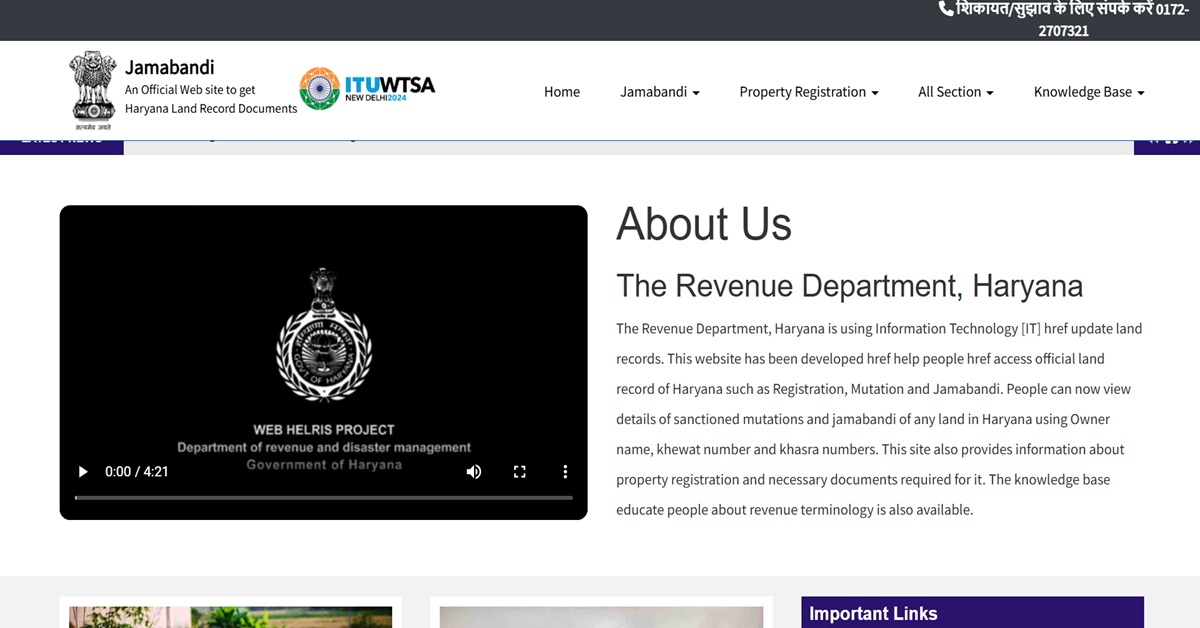
- Haryana: The Jamabandi.nic.in website serves as the single-window interface for Haryana’s land revenue services. It covers rural and urban properties across all districts. As of May 2026, the portal integrates with the Integrated Grievance Redressal System for faster mutation updates, reducing processing time from weeks to days. Search by owner name, Khewat number, or Khasra number.
- Punjab: Visit jamabandi.punjab.gov.in, managed by the Punjab Land Records Society. This online platform enables citizens to perform Jamabandi viewing and mutation verification without visiting any government office. Search by owner name, Khewat, Khasra, or Khatauni number.
- Rajasthan: Visit apnakhata.raj.nic.in. Enter district, tehsil, and village details. Search by owner name or Khata number to access rural land records.
- Bihar: Visit biharbhumi.bihar.gov.in. Select your district, circle, and mauza to access Jamabandi records and mutation details.
- Assam: With the launch of the Dharitree portal, citizens can access Jamabandi, mutation status, Patta details, and land records online. Enter your Patta number or Dag number to locate land records.
- Delhi: Visit dlrc.delhi.gov.in. Enter village and survey details to access Delhi land records.
Basic viewing of records is free on most state portals. For legally certified copies, apply officially and pay a nominal fee.
Steps to Check Jamabandi Patta Online
After selecting the search method and entering the required details such as district, tehsil or village, plot number or owner name, and any security captcha, the portal displays the Jamabandi record.
Here is the step-by-step process:
- Visit your state’s official land records portal.
- Go to the Jamabandi or Land Records section.
- Choose your district, tehsil, village, and the relevant Jamabandi year.
- Select your preferred search method.
- Options include owner name, Khasra number, or Khewat number.
- Enter the required details and complete the captcha verification.
- Click Search or View Record to see the Jamabandi.
- Review ownership details, land area, and mutation history.
- Download or print the record for your reference.
For use in courts or home loan processing, collect a certified copy from the local Tehsildar.
Read More: HALRIS Haryana
Documents Required to Apply for Jamabandi Patta
To apply for or update a jamabandi patta at the tehsil office, keep these documents ready:
- Identity proof such as Aadhaar Card, Ration Card, Passport, Voter ID, or any government-issued proof is required.
- Land ownership proof includes a certified copy of the original sale deed, Mutation Certificate, or land registration copy.
- Latest property tax receipts and Khata or plot number details of the land are also needed.
- Revenue receipts from previous Jamabandi renewals complete the documentation set.
What Is Mutation and How Does It Connect to Jamabandi?
Mutation is the process of updating government revenue records after ownership changes. It becomes necessary after any sale, inheritance, or gifting of property. After buying a property, apply for mutation at your local tehsil office. Revenue officials verify your documents and update the jamabandi records accordingly. Once approved, the jamabandi reflects your name as the new legal owner.
Land mutation usually takes 15 to 45 days, depending on document verification, local revenue office processing, objections, and the specific type of property transfer involved. In Haryana, IGRS integration has reduced this timeline considerably. Always ensure mutation is complete before assuming full legal ownership.
Common Terms Related to Jamabandi Patta
Understanding related terminology helps buyers read and interpret jamabandi records correctly.
- Khewat is the account number assigned to the landowner in the Jamabandi. Khewat identifies the owner of the land.
- Khasra is the unique plot number assigned to each land parcel in the revenue record.
- Khatoni identifies the cultivator or tenant. If the owner cultivates the land themselves, both numbers may link to the same person.
- Fard is a document derived from the Jamabandi, used as proof of ownership in Punjab and Haryana.
- Nakal is a copy of the Jamabandi used for official purposes.
- Pattadar is the registered landholder whose name appears in the Jamabandi.
- In Assam, the Dag Number is the parcel identifier, equivalent to Khasra in northern states.
Aslo Read: Bhulekh Haryana
Jamabandi Patta and Residential Property Buyers
Many urban buyers assume jamabandi patta only matters for agricultural land. This is a common and costly misconception. Even for residential plots and apartments, verifying the land’s underlying title is critical. Banks mandate title verification before processing home loans for both plots and flats. Developers must also maintain clear land title documentation backed by valid jamabandi records.
Before you sign any agreement or pay an advance, check the jamabandi patta online. Confirm the seller or developer holds clear and undisputed title to the land. Verify that all mutations are current and approved. Keeping land records updated helps prevent fraud, simplifies inheritance claims, and supports smooth property transfers.
After purchase, continue to monitor your property’s jamabandi record. Update mutation promptly after any ownership transfer. Store a certified copy of your patta and jamabandi for future legal or financial reference.
Frequently Asked Questions
Q1. What is the difference between Jamabandi and Patta?
Jamabandi is the comprehensive Record of Rights maintained by the Revenue Department. It covers ownership, cultivation, tenancy, and revenue history. Patta is the official government-issued certificate that confirms legal ownership in the landowner’s name. Jamabandi provides a full historical record, while Patta serves as the definitive proof of title.
Q2. How can I check my Jamabandi Patta online?
Visit your state’s official land records portal. For Haryana, go to jamabandi.nic.in. For Punjab, visit jamabandi.punjab.gov.in. For Rajasthan, use apnakhata.raj.nic.in. Select your district, tehsil, and village, then search by owner name or plot number to view and download the record.
Q3. Is Jamabandi Patta required for a home loan?
Yes, banks and housing finance companies require jamabandi records before sanctioning home loans. Lenders verify ownership, title clarity, and the absence of disputes or encumbrances. A clean jamabandi record supports faster loan approval.
Q4. What is mutation and why is it important in Jamabandi?
Mutation is the legal process of updating revenue records after a property changes ownership. It is mandatory after any sale, inheritance, or gifting. Without mutation, the new owner’s name does not reflect in the jamabandi. This creates complications in future property transactions and loan applications.
Looking to invest in a RERA-registered residential project backed by clear land titles and verified documentation? Express Builder develops thoughtfully designed homes in Noida, Greater Noida West, and Ghaziabad. Our projects come with transparent property records. Explore your options and book a site visit with our team today.
