
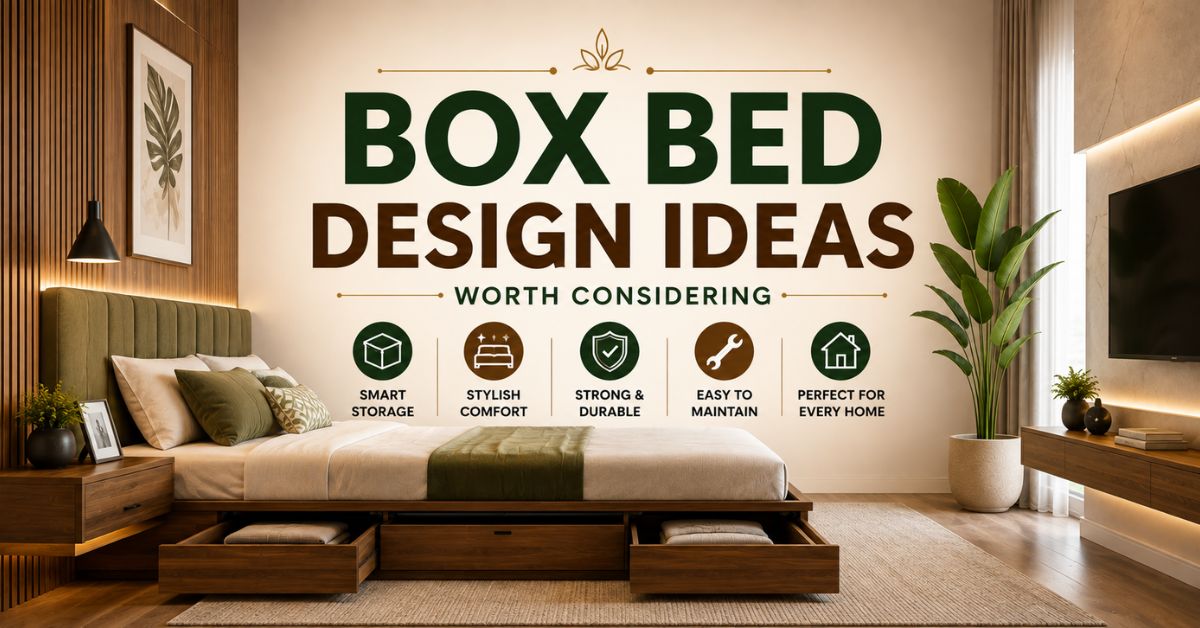
Storage remains one of the most persistent challenges in Indian homes, and box bed design offers a genuinely practical solution by turning otherwise wasted space beneath the mattress into usable storage. Unlike a standard bed frame with open legs, a box bed features a solid base with built-in storage compartments, accessed either through hinged lift-up panels or sliding drawers. This guide walks through the materials, configurations, and planning decisions that shape strong box bed design, along with the practical details worth checking before you commit to one for your own bedroom.
Why Box Bed Design Solves a Genuine Storage Problem
Many bedrooms, particularly in compact apartments, simply don’t have room for a separate storage almirah or trunk, making bed design with box storage a genuinely efficient use of available square footage. A box bed captures the entire footprint beneath the mattress, converting what would otherwise be empty, unused space into a substantial storage cavity suited to linens, seasonal clothing, or extra blankets. This approach also reduces visual clutter in a bedroom, since items that might otherwise sit in a separate cabinet or open shelf stay concealed within the bed’s own structure. Many homeowners specifically choose box bed design for smaller bedrooms or secondary rooms where floor space needs to work considerably harder than it would in a larger, more generously proportioned space.
Materials That Shape a Strong Box Bed
Material choice affects a box bed’s durability, weight capacity, and overall appearance, and understanding the core options makes the rest of the decision considerably easier. A wooden box bed design remains the most popular choice across Indian homes, offering genuine strength alongside a warm, natural appearance that suits both classic and contemporary bedroom styles. Solid wood options like sheesham or teak provide exceptional durability, though they typically cost more than engineered alternatives. A plywood box bed design offers a strong, moisture-resistant alternative at a more accessible price point, performing particularly well in humid climates where solid wood can sometimes warp or swell over time. More broadly, wooden bed design as a category continues to dominate the market because timber handles the weight and daily use a storage bed demands considerably better than lighter, less structurally robust materials.
Popular Configurations Worth Knowing
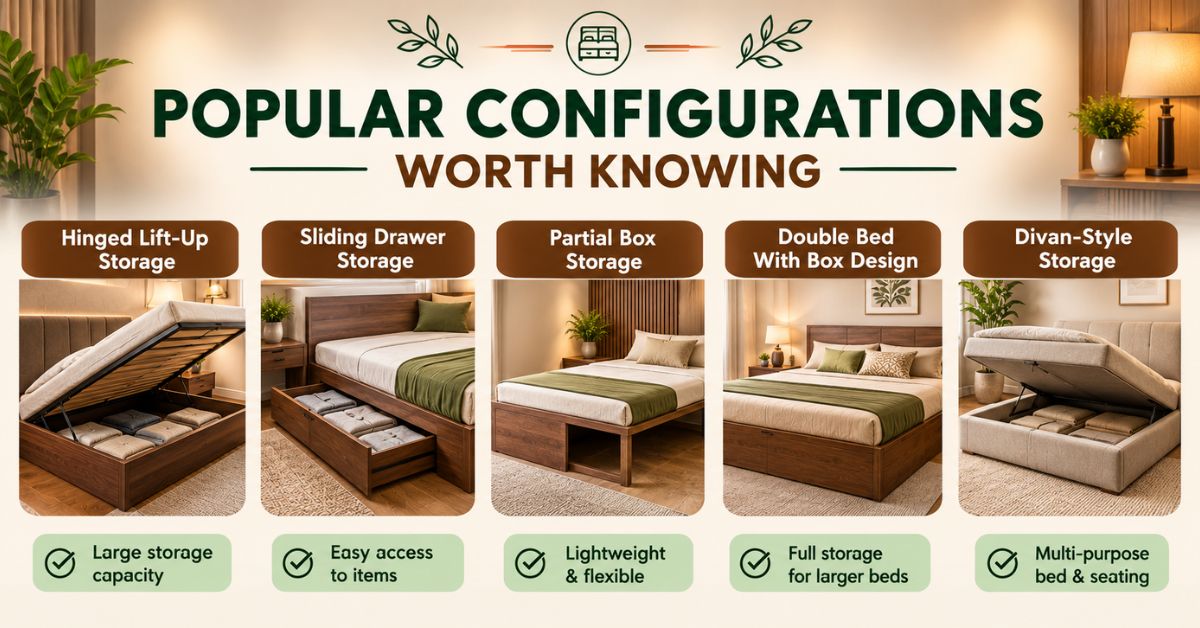
Box bed design comes in several distinct configurations, each suited to a different storage need and daily usage pattern. Reviewing these options helps clarify which direction might work best for your own bedroom.
- Hinged lift-up storage – the entire mattress platform lifts on a hinge, revealing a single large storage cavity beneath
- Sliding drawer storage – individual drawers slide out from the sides of the bed, offering easier access to specific items
- Partial box storage – storage covers only a section of the bed’s base, balancing storage with a lighter overall structure
- Double bed with box design – full storage capacity built into a larger double or queen-sized bed frame
- Divan-style storage – a lower-profile storage base that doubles as both a bed and casual seating option
Choosing between these configurations often depends on how frequently you need to access stored items, since sliding drawers suit daily-use items better while hinged lift-up storage suits bulkier, less frequently accessed belongings.
What’s New in Double Bed Designs With Box Storage
The latest double bed designs with box storage reflect a broader shift toward smarter compartmentalisation rather than a single large, undivided cavity beneath the mattress. Many newer designs now include internal dividers, separating the storage space into distinct sections for easier organisation of linens, seasonal items, and everyday belongings. Soft-close hinges have also become considerably more common in latest double bed designs with box storage, addressing the common frustration of heavy lift-up panels slamming shut unexpectedly. Gas-lift mechanisms, which use hydraulic support to make lifting the mattress platform noticeably easier, represent another meaningful improvement over older, purely manual hinge systems still found in older or more budget-focused options.
Also Read-Bedroom Curtain Ideas That Instantly Elevate Any Space
Modern Approaches to Box Bed Design
A modern box bed design typically favours clean, minimal lines over the heavier, more ornate detailing common in traditional bed frames. Slim profiles, low-set frames, and neutral wood tones or matte laminate finishes characterise much of this contemporary approach, moving away from carved headboards and bulky proportions. Modern box bed design also increasingly incorporates integrated USB charging points or built-in reading lights along the headboard, adding genuine daily convenience alongside the storage benefit. Many homeowners now pair a modern box bed design with equally minimal bedside tables and wardrobes, creating a cohesive, uncluttered bedroom aesthetic throughout the entire room.
Headboard Storage Worth Considering
Head box bed designs extend the storage concept beyond the base of the bed, incorporating additional compartments directly into the headboard structure itself. This approach adds genuinely useful extra capacity for smaller items like books, remote controls, or bedside essentials that don’t need the deeper storage space beneath the mattress. Head box bed designs often include small shelves, drawers, or open cubbies built directly into the headboard, reducing the need for a separate bedside table in particularly compact bedrooms. This combination of base and headboard storage makes exceptionally efficient use of the bed’s overall footprint, particularly valuable in secondary bedrooms or homes where every piece of furniture needs to serve more than one function.
Also Read- How to Choose the Perfect Bed Frame for Your Bedroom
Simple Box Bed Design for Everyday Homes
A simple box bed design proves that effective storage doesn’t require elaborate detailing or premium materials to genuinely serve a household well. A plain, unadorned frame with straightforward lift-up or drawer storage delivers the same practical benefit as a more elaborate design, without the additional cost heavier detailing or premium wood species typically introduce. Simple box bed design also tends to age well, avoiding the risk that a heavily detailed or trend-specific style might feel dated within just a few years of purchase. This straightforward approach suits many households well, particularly those furnishing a home within a defined budget or prioritising function over an elaborate design statement.
Key Factors to Check Before You Finalise Your Bed
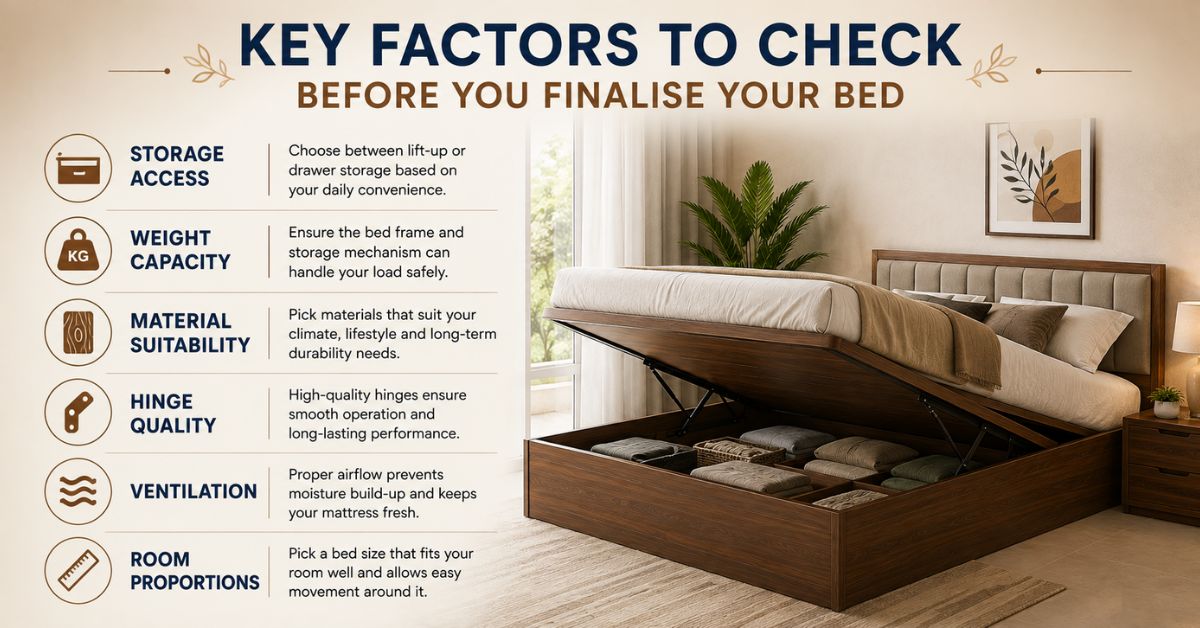
Before committing to any particular box bed design, a handful of practical checks can help you avoid costly mistakes later.
- Storage access – choose hinged or drawer storage based on how frequently you’ll need to access items inside
- Weight capacity – confirm the frame and hinge mechanism can support your mattress plus stored items without strain
- Material suitability – choose moisture-resistant materials like plywood for humid climates rather than untreated solid wood
- Hinge quality – prioritise gas-lift or soft-close mechanisms for safer, easier daily operation
- Ventilation – ensure the storage cavity allows some airflow to prevent musty odours from developing over time
- Room proportions – measure your bedroom carefully, since a box bed’s solid base can feel visually heavier than an open-frame design
Maintenance Tips for Long-Lasting Box Beds
Even a well-chosen box bed design benefits from some basic ongoing care to preserve its function and appearance over many years. Wipe the frame and headboard regularly with a soft, dry cloth, avoiding harsh chemical cleaners that can dull wood or laminate finishes. Check hinges and lift mechanisms periodically for smooth operation, addressing any stiffness before it worsens with continued daily use. Air out the storage compartment occasionally, particularly in humid climates, to prevent trapped moisture from causing musty odours or affecting stored fabrics. Avoid overloading the storage cavity beyond its rated capacity, since excess weight can gradually strain hinges or affect the frame’s structural alignment.
Also Read- Diwan Bed Designs: A Complete Guide to Style, Comfort & Smart Living
Common Mistakes to Avoid in Box Bed Design Selection
Many homeowners choose a box bed purely based on appearance, without considering how the specific hinge mechanism or storage access will suit their actual daily habits. Avoid selecting a heavy lift-up design without a gas-lift mechanism if you plan to access the storage frequently, since a purely manual hinge becomes genuinely tiresome with regular use. Do not overlook material suitability for your climate, since untreated solid wood can warp or swell in consistently humid conditions where a plywood box bed design would perform better. Skipping a check on ventilation within the storage cavity is another common misstep, often leading to musty odours affecting stored linens over time.
Bringing It All Together
Box bed design brings together genuine storage function and lasting daily convenience, making it a practical choice for bedrooms of nearly any size. From choosing the right material and configuration to considering hinge quality, ventilation, and headboard storage, every decision shapes how well the finished bed serves your household for years to come. Taking the time to compare a few options, check practical factors like weight capacity and material suitability, and match the design to your room’s proportions ensures the box bed design you choose serves your home well for a long time ahead.
Explore Express Builders ongoing residential projects across Noida and Greater Noida West. See the quality and planning behind every home firsthand.
Book a free site visit today with Express Builders. Walk through our ongoing projects and see construction quality up close. Check out floor plans, amenities, and location advantages in person. Meet our team and get your property-related questions answered directly. Schedule a visit at your convenience.
Frequently Asked Questions
1. What is the best material for a box bed in a humid climate?
A plywood box bed design generally performs better than untreated solid wood in humid conditions, resisting warping and swelling more effectively.
2. Are gas-lift mechanisms worth the extra cost for box bed design?
Yes, particularly if you access the storage frequently, since gas-lift mechanisms make lifting the mattress platform considerably easier and safer.
3. Can head box bed designs replace a separate bedside table?
In smaller bedrooms, yes, since headboard storage often provides enough space for books and essentials without needing extra furniture.
4. What is the difference between hinged and drawer box bed storage?
Hinged storage offers one large cavity suited to bulkier items, while drawers provide easier access to frequently used belongings.
5. Does a simple box bed design cost less than more detailed options?
Generally yes, since simple designs avoid the additional labour and material cost that heavier detailing or premium wood species require.
