
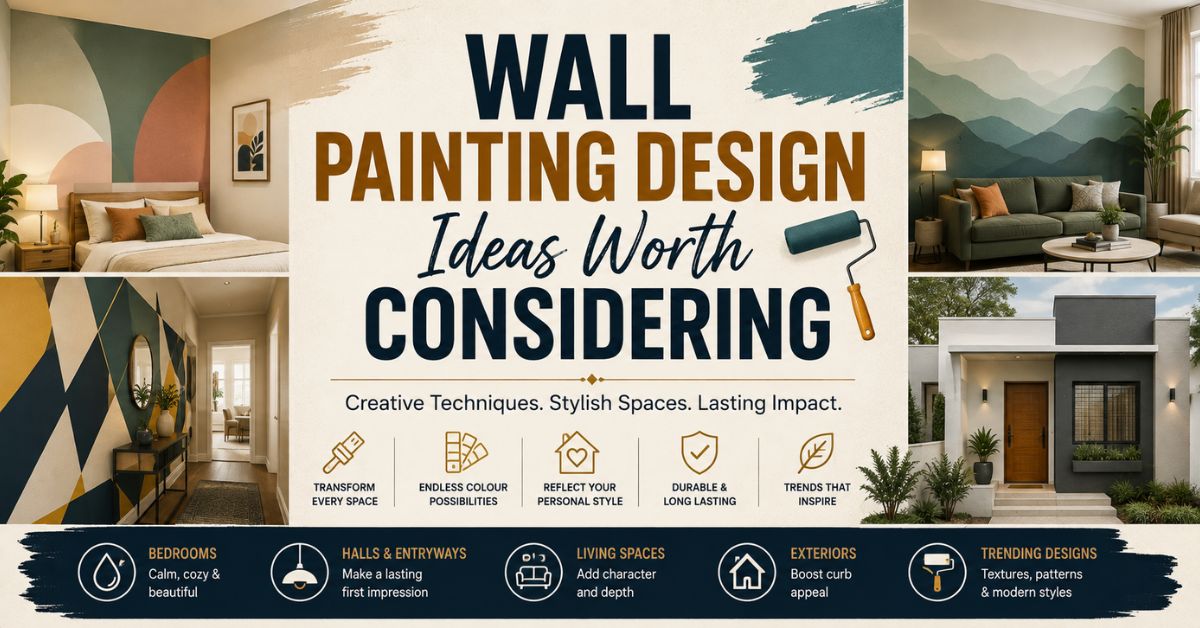
Paint remains one of the most affordable and effective ways to transform a room, and wall painting design offers homeowners genuine creative range without the cost or disruption of structural changes. Beyond a single flat colour, today’s wall painting design options span everything from subtle two-tone treatments to bold geometric patterns and hand-painted murals, giving every room its own distinct character. This guide walks through the techniques, styles, and planning decisions that shape strong wall painting design, both indoors and along a home’s exterior, along with the practical details worth checking before you commit to a direction for your own walls.
Why Wall Painting Design Deserves Real Thought
Many homeowners default to a single, safe colour across every wall without considering how much a more deliberate wall painting design could elevate the same room without any additional structural cost. A well-planned painted wall adds genuine visual interest and can define a specific zone within an open-plan home, drawing attention to a feature wall without requiring construction or added materials. Beyond aesthetics, thoughtful wall painting design also helps disguise minor surface imperfections when patterns or textures are used strategically, offering a practical benefit alongside the visual one. Treating paint as a genuine design tool, rather than a purely functional finish applied as an afterthought, opens up considerably more creative possibility for a fraction of the cost other renovation choices typically require.
Also Read- Main Gate Colour Paint: Best Choices for 2026
Techniques Used to Create Painted Patterns
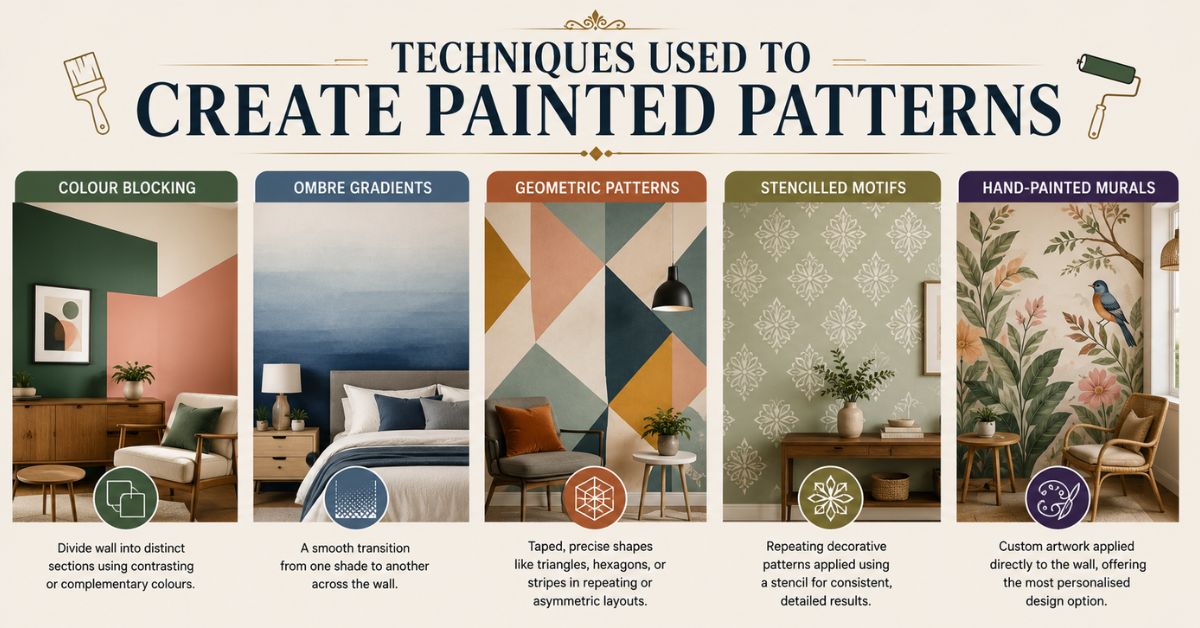
Wall paint design ideas span a genuinely wide range of techniques, each offering a different visual effect and level of installation complexity. Reviewing these options helps clarify which approach might suit your own space and skill level.
- Colour blocking – dividing a wall into distinct sections using contrasting or complementary paint colours
- Ombre gradients – a smooth transition from one shade to another across the wall’s surface, often light to dark
- Geometric patterns – taped, precise shapes like triangles, hexagons, or stripes applied in a repeating or asymmetric layout
- Stencilled motifs – repeating decorative patterns applied using a stencil for consistent, detailed results
- Hand-painted murals – custom artwork applied directly to the wall, offering the most personalised design option
Choosing between these wall paint design ideas often depends on your budget, the level of permanence you want, and how much visual boldness your specific room can comfortably support without feeling overwhelming.
Bringing Painted Patterns Into the Bedroom
Wall painting designs for bedroom applications generally favour softer, more restrained approaches that support a calm, restful atmosphere rather than a bold visual statement. A single accent wall behind the headboard, painted in a muted tone or a subtle two-tone pattern, often works particularly well without introducing the busyness a heavily patterned surface might bring to a space meant primarily for rest. Simple wall painting designs for bedroom applications, such as a soft colour block or a gentle ombre gradient, deliver genuine visual interest while still respecting the room’s need for a calming environment. Many homeowners choose a wall painting design for bedroom spaces that echoes the room’s bedding or furniture tones, creating a cohesive palette rather than an isolated, disconnected feature.
Also Read- House Painting Design: Colours and Ideas to Transform Your Home in 2026
Making a Statement in the Hall
Wall painting designs for hall spaces and entryways offer a particularly effective opportunity to make a strong first impression, since this is often the very first interior surface a visitor encounters upon entering a home. A bold geometric pattern or a striking colour block treatment in an entryway sets an immediate tone for the rest of the home’s interior style, whether that means a vibrant, energetic welcome or a more understated, sophisticated one. Because hallways typically see less furniture than other rooms, the wall itself carries more visual weight than it might elsewhere, making a wall painting design for hall spaces a particularly efficient way to add character without needing additional decor. Lighting deserves particular attention in hall applications too, since a well-placed fixture can dramatically enhance how a painted pattern reads throughout the day.
Also Read- Metal Wall Decor Ideas: Styles, Types and Placement Tips
Taking Paint to the Exterior
Front wall paint design plays an outsized role in shaping a home’s overall curb appeal, since this surface represents the very first design element a visitor or passerby actually notices about the property. Weather-resistant exterior paint matters considerably more here than for interior applications, since front-facing walls face direct sun, rain, and temperature fluctuations that interior surfaces never encounter. Many homeowners choose a front wall paint design that combines a neutral base tone with a contrasting accent section around the entrance, drawing the eye toward the main door without overwhelming the entire facade. Coordinating this exterior colour scheme with the home’s roofline, window frames, and any grill work creates a considerably more cohesive overall appearance than a colour chosen in isolation.
What’s New in Wall Painting Design
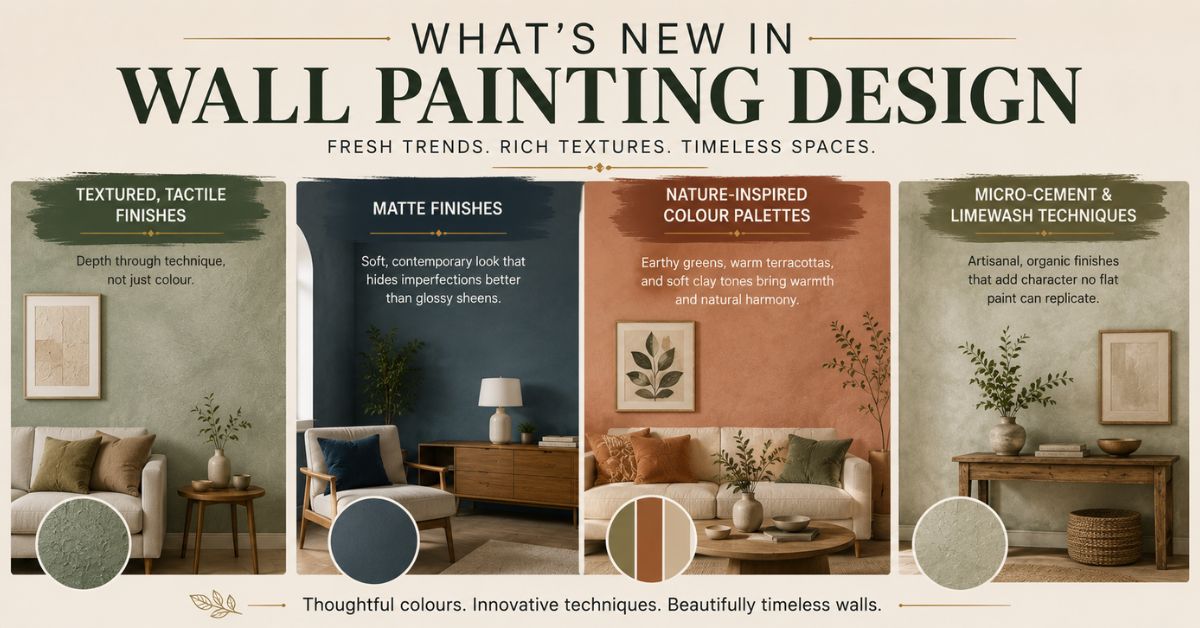
A new wall painting design trend worth noting is the shift toward textured, tactile finishes rather than purely flat colour applications, adding depth through technique rather than pattern alone. Matte finishes continue gaining ground over glossy alternatives across most rooms, offering a softer, more contemporary appearance that also tends to hide minor surface imperfections better than reflective sheens. Nature-inspired colour palettes, drawing on earthy greens, warm terracottas, and soft clay tones, have also grown considerably in popularity, replacing the starker whites and greys common in earlier years. Micro-cement and limewash techniques, once reserved for premium commercial projects, have increasingly found their way into residential wall painting design, offering an artisanal, organic quality that flat paint alone cannot replicate.
Also Read- Wall Texture Design Ideas for Every Room in 2026
Key Factors to Check Before You Finalise Your Design
Before committing to any particular wall painting design, a handful of practical checks can help you avoid costly mistakes later.
- Surface preparation – confirm the wall is properly cleaned, primed, and free of cracks before any pattern work begins
- Paint quality – choose washable, durable paint for high-traffic areas like hallways and children’s rooms
- Lighting interaction – consider how natural and artificial light will affect your chosen colours and patterns throughout the day
- Room function – match the design’s boldness to the room, favouring calmer patterns for bedrooms and bolder ones for entertaining spaces
- Application skill – confirm your chosen painter has genuine experience with the specific technique you’re planning to use
- Weather rating – prioritise exterior-rated paint for any front wall paint design facing direct sun and rain
Maintenance Tips for Long-Lasting Painted Walls
Even a beautifully executed wall painting design benefits from some basic ongoing care to preserve its appearance over many years. Dust painted surfaces periodically with a soft cloth, since accumulated dust can dull colours and make patterns appear less crisp over time. Clean marks or smudges promptly using a gentle, appropriate cleaner for your specific paint finish, avoiding harsh scrubbing that could damage matte or textured surfaces. Touch up chipped or scratched areas as soon as they appear, keeping a small amount of matching paint on hand specifically for this purpose. Repaint exterior surfaces, including any front wall paint design, every few years to maintain both appearance and weather protection.
Common Mistakes to Avoid in Wall Painting Design
Many homeowners choose a bold pattern purely from a photograph, without considering how the design will actually read across an entire wall under their room’s specific lighting conditions. Avoid applying heavy patterns throughout an entire room, since this can quickly feel overwhelming rather than genuinely stylish, particularly in smaller spaces. Do not skip proper surface preparation before applying paint, since existing cracks or unevenness often become more visible once a pattern or contrasting colour is added. Skipping a weather-rated product for exterior applications is another common misstep, often leading to premature fading or peeling within just a few monsoon seasons.
Bringing It All Together
Wall painting design offers a genuinely affordable way to add character and depth to both interior rooms and a home’s exterior facade. From choosing the right technique and colour palette for each specific room to planning weather resistance carefully for exterior applications, every decision shapes how the finished walls look and perform for years to come. Taking the time to compare a few wall paint design ideas, check practical factors like surface preparation and paint quality, and match design boldness to each room’s function ensures the wall painting design you choose serves your home well for a long time ahead.
Explore Express Builders ongoing residential projects across Noida and Greater Noida West. See the quality and planning behind every home firsthand.
Book a free site visit today with Express Builders. Walk through our ongoing projects and see construction quality up close. Check out floor plans, amenities, and location advantages in person. Meet our team and get your property-related questions answered directly. Schedule a visit at your convenience.
Frequently Asked Questions
1. Which rooms suit bold wall painting design best?
Living rooms and entryways generally support bolder patterns, while bedrooms typically benefit from softer, more restrained designs.
2. What are some simple wall painting designs for bedroom spaces?
A soft colour block, a gentle ombre gradient, or a single muted accent wall all deliver visual interest without overwhelming the room.
3. Is front wall paint design more expensive than interior painting?
Generally yes, since exterior-rated paint needs genuine weather resistance, which typically costs more than standard interior products.
4. Can wall painting design hide surface imperfections?
To some extent, though proper surface preparation still matters, since patterns can sometimes highlight rather than fully conceal existing issues.
5. What is trending in wall painting design right now?
Textured, tactile finishes and nature-inspired colour palettes have grown popular over the flat, stark tones common in earlier years.
