
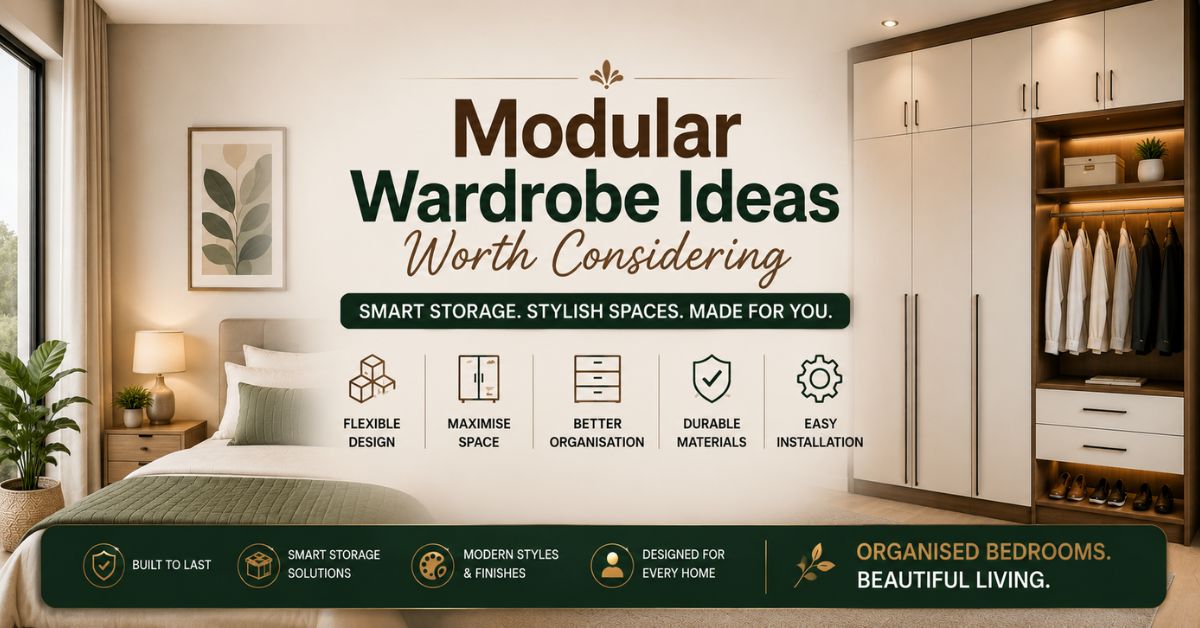
Storage shapes how organised and functional a bedroom actually feels day to day, and a modular wardrobe has become the go-to solution for homeowners wanting genuine flexibility without the extended timelines traditional carpentry often demands. Unlike a fixed, custom-built almirah, a modular wardrobe assembles from pre-manufactured components, offering a faster installation process alongside the ability to adapt configurations as storage needs change over time. This guide walks through what a modular wardrobe actually is, the materials and configurations available today, and the practical planning decisions worth considering before you commit to one for your own home.
What Is a Modular Wardrobe and How Does It Work
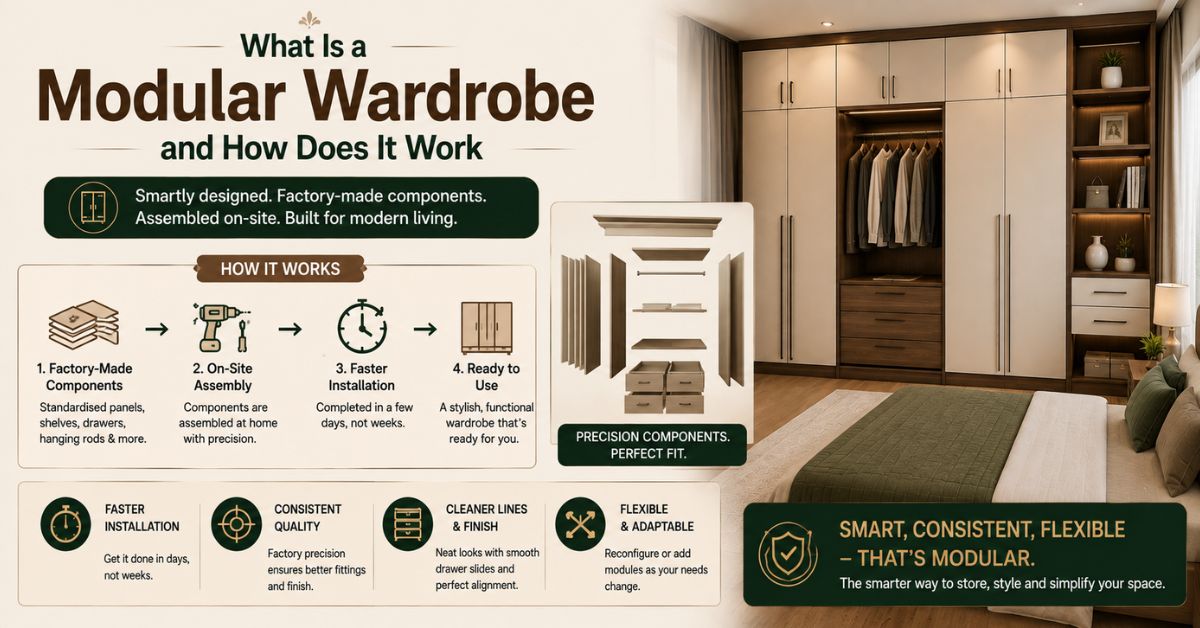
Understanding what is modular wardrobe construction actually involves helps clarify why this approach has grown so popular across Indian homes in recent years. A modular wardrobe consists of standardised, factory-made components, including panels, shelves, drawers, and hanging rods, that get assembled on-site rather than built entirely from scratch by a carpenter.
This manufacturing approach allows for considerably faster installation compared to traditional carpentry, often completing within a few days rather than the weeks a fully custom build might require. Because the components are manufactured to precise, consistent specifications, a modular wardrobe also tends to offer cleaner lines and more accurate fittings than hand-built alternatives, particularly around drawer slides and door alignment. This combination of speed, consistency, and genuine flexibility explains why modular wardrobe design has become the default choice for many new homes and renovations alike.
Read Also- L Shape Modular Kitchen Design: A Complete Guide for Every Home Size
Materials That Shape a Strong Modular Wardrobe
Material choice affects a modular wardrobe’s durability, appearance, and overall cost, and understanding the core options makes the rest of the decision considerably easier. Plywood remains one of the most popular choices for modular wardrobe construction, offering strong moisture resistance and genuine structural stability compared to less dense engineered materials. MDF, or medium-density fibreboard, provides a smooth, paintable surface at a lower price point, though it performs somewhat less well than plywood in consistently humid conditions.
Particle board sits at the more budget-friendly end of the spectrum, suiting homeowners prioritising cost over long-term durability, though it typically has a shorter functional lifespan than plywood or MDF alternatives. Laminate and veneer finishes applied over these core materials determine much of the wardrobe’s final visual character, ranging from wood-grain textures to solid colours and glossy or matte surfaces.
Popular Configurations Worth Knowing
Modular wardrobe design spans a genuinely wide range of configurations, each suited to a different room layout and storage need. Reviewing these options helps clarify which direction might work best for your own bedroom.
- Sliding door wardrobes – doors that slide along a track rather than swinging outward, ideal for rooms with limited clearance space
- Hinged door wardrobes – traditional swinging doors that offer full access to the interior when open
- Walk-in wardrobe modules – modular components arranged around a dedicated closet space rather than a single flat wall unit
- Loft storage wardrobes – extending storage above the main wardrobe body, making use of otherwise wasted vertical space
- Open shelf modules – combining closed cabinet sections with open shelving for a mix of concealed and displayed storage
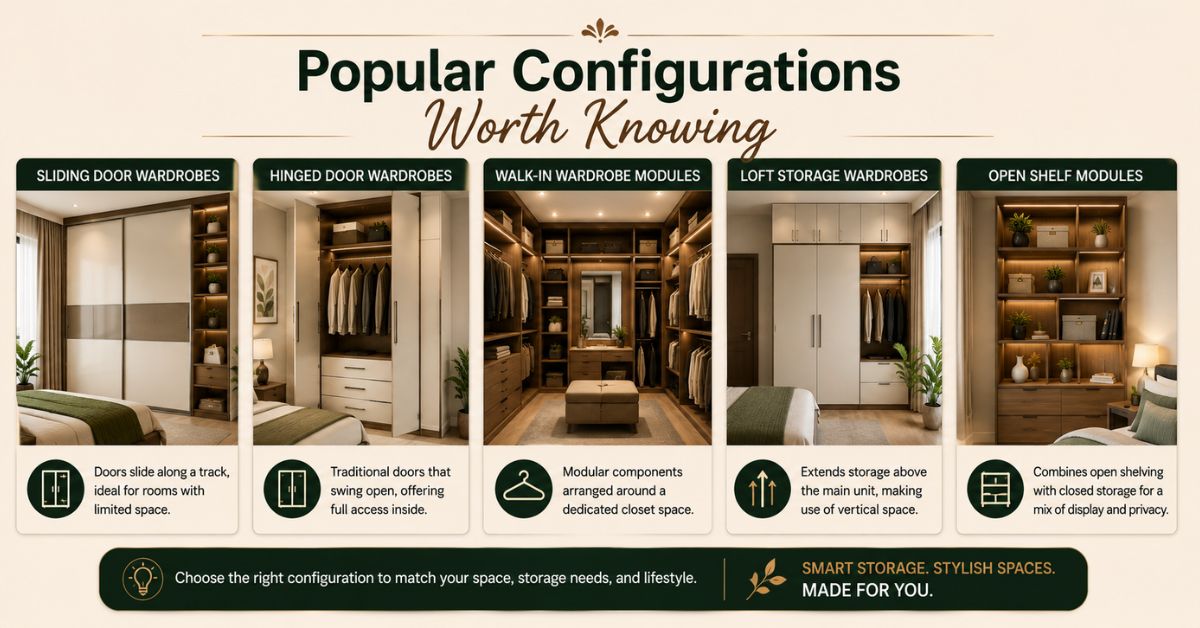
Choosing between these configurations largely depends on your room’s available clearance and how you actually use your wardrobe day to day, since sliding designs suit compact spaces while hinged doors generally offer easier full access in larger rooms.
Bringing a Modular Wardrobe Into the Bedroom
A modular bedroom wardrobe needs to balance storage capacity against the room’s overall proportions, since an oversized unit can make even a reasonably sized bedroom feel cramped and visually heavy. Modular wardrobe designs for bedroom applications increasingly favour a built-in appearance, extending from floor to ceiling and blending seamlessly with the surrounding wall rather than reading as a separate, standalone piece of furniture.
Many homeowners also coordinate their modular bedroom wardrobe finish with the room’s flooring or other furniture, creating a more cohesive overall appearance rather than an item that feels disconnected from the rest of the space. Placing the wardrobe along a wall that doesn’t interrupt natural light or window placement also helps preserve the room’s brightness, an important consideration modular wardrobe designs for bedroom spaces should always account for during the planning stage.
Also Read- Wardrobe Direction as Per Vastu for Positive Home Energy
Storage Features Worth Considering
Beyond the basic hanging space and shelving every wardrobe needs, several additional features can meaningfully improve how well a modular wardrobe serves daily use. Pull-out trouser and tie racks keep specific clothing categories organised without requiring separate storage furniture elsewhere in the room.
Dedicated shoe racks, often built into the wardrobe’s lower section, prevent footwear from cluttering the floor or occupying valuable shelf space meant for other items. Jewellery drawers with soft velvet lining add a genuinely useful, secure storage option for smaller valuable items that might otherwise get lost among larger clothing pieces. Mirror panels integrated directly into wardrobe doors also add practical value, removing the need for a separate full-length mirror elsewhere in the bedroom.
Key Factors to Check Before You Finalise Your Wardrobe
Before committing to any particular modular wardrobe, a handful of practical checks can help you avoid costly mistakes later.
- Room clearance – measure available space accurately, particularly for hinged doors that need room to swing fully open
- Material suitability – choose plywood or moisture-resistant options for humid climates rather than standard particle board
- Hardware quality – check that hinges and drawer slides are rated for smooth, long-term daily use
- Storage mix – balance hanging space, shelving, and drawers based on your actual wardrobe composition and habits
- Finish durability – confirm the laminate or veneer finish resists scratching and daily wear appropriately
- Installation timeline – confirm realistic delivery and installation dates before finalising your order
Maintenance Tips for Long-Lasting Wardrobes
Even a well-chosen modular wardrobe benefits from some basic ongoing care to preserve its appearance and function over many years. Wipe surfaces regularly with a soft, dry cloth, avoiding harsh chemical cleaners that can dull laminate or painted finishes over repeated use. Check drawer slides and door hinges periodically for smooth operation, addressing any stiffness or misalignment before it worsens with continued use. Keep the wardrobe’s interior dry and well-ventilated, particularly in humid climates where trapped moisture can affect stored clothing and the wardrobe’s internal materials alike. Avoid overloading shelves or hanging rods beyond their rated capacity, since excess weight can gradually affect the unit’s structural alignment over time.
Also Read- Walk-in Closet: A Complete Guide to Designing Your Dream Storage Space
Common Mistakes to Avoid in Modular Wardrobe Selection
Many homeowners choose a wardrobe design purely from a catalogue image, without measuring their actual room dimensions or considering door clearance requirements first. Avoid selecting a material unsuited to your local climate, since a budget particle board wardrobe in a consistently humid room can swell or warp considerably faster than plywood alternatives. Do not overlook storage planning based on your genuine clothing volume, since an undersized wardrobe quickly leads to clutter regardless of how attractive the exterior design looks. Skipping a check on hardware quality is another common misstep, often resulting in drawers or doors that stick or misalign within just a year or two of daily use.
Bringing It All Together
A modular wardrobe brings genuine flexibility, faster installation, and consistent quality to bedroom storage, making it a practical choice for most modern homes. From choosing the right material and configuration to planning storage features and checking hardware quality, every decision shapes how well the finished wardrobe serves your daily routine for years to come. Taking the time to compare a few modular wardrobe design options, check practical factors like room clearance and material suitability, and plan storage around your actual habits ensures the wardrobe you choose serves your home well for a long time ahead.
Explore Express Builders ongoing residential projects across Noida and Greater Noida West. See the quality and planning behind every home firsthand.
Book a free site visit today with Express Builders. Walk through our ongoing projects and see construction quality up close. Check out floor plans, amenities, and location advantages in person. Meet our team and get your property-related questions answered directly. Schedule a visit at your convenience.
Frequently Asked Questions
1. What is modular wardrobe construction, and how does it differ from custom carpentry?
A modular wardrobe uses pre-manufactured components assembled on-site, offering faster installation and more consistent fitting than fully custom-built furniture.
2. Which material works best for a modular wardrobe in humid climates?
Plywood generally performs best in humid conditions, offering better moisture resistance than MDF or particle board alternatives.
3. Are sliding or hinged doors better for a modular bedroom wardrobe?
Sliding doors suit rooms with limited clearance, while hinged doors generally offer easier full access in larger, more spacious bedrooms.
4. How long does modular wardrobe installation typically take?
Most modular wardrobes install within a few days, considerably faster than the weeks a fully custom carpentry build might require.
5. Can modular wardrobe designs for bedroom spaces be customised later?
To some extent, since modular components can often be reconfigured or added to, though full customisation is more limited than fully custom furniture.
