
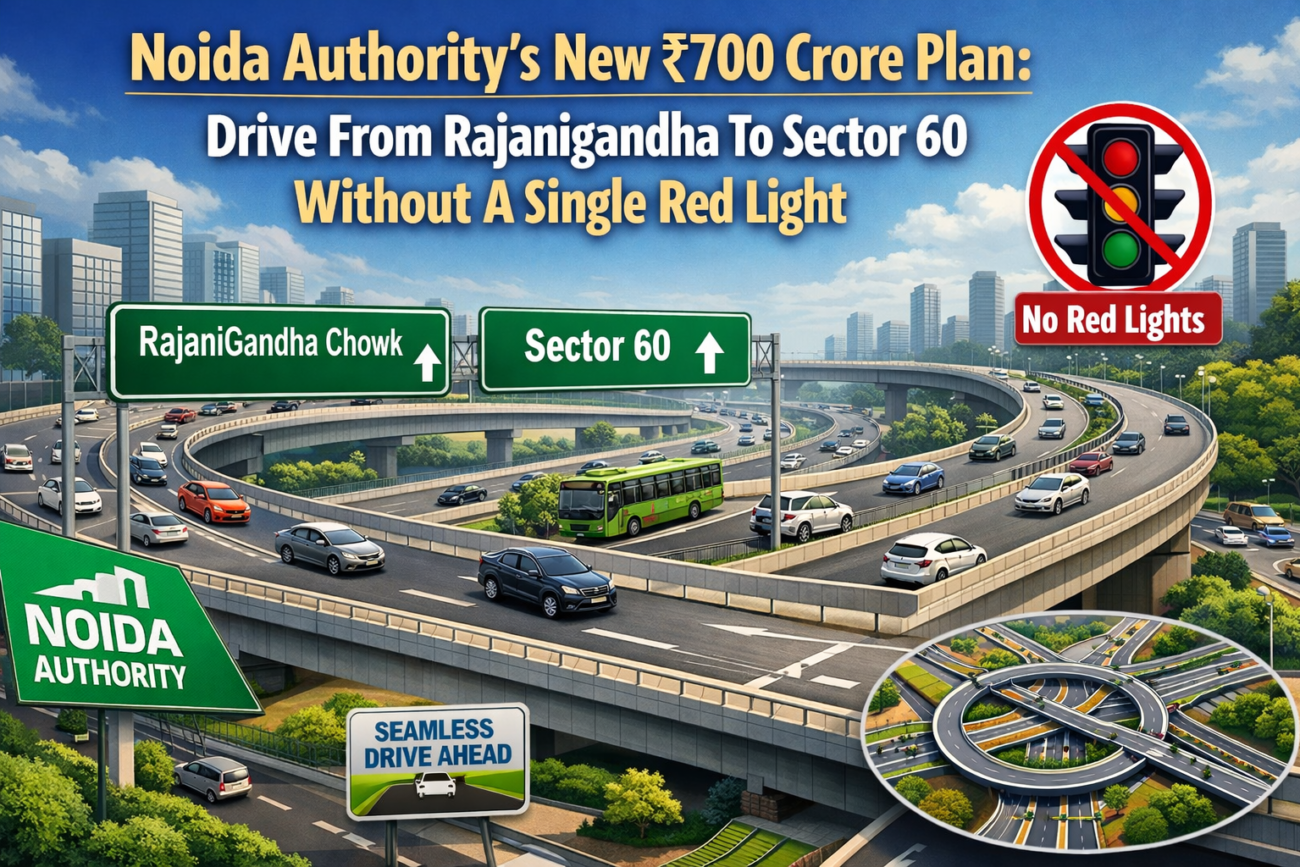
Noida’s daily commuters may soon get relief from one of the city’s most congested stretches. The Noida Authority has given in-principle approval to a 6-lane elevated road connecting Rajnigandha Underpass to Sector 60 (Uplex), an ambitious ₹700 crore project designed to let commuters travel the corridor without stopping at a single traffic signal.
What’s Been Announced
According to Noida Authority officials, the alignment for the elevated corridor has received in-principle approval. Here’s what we know so far:
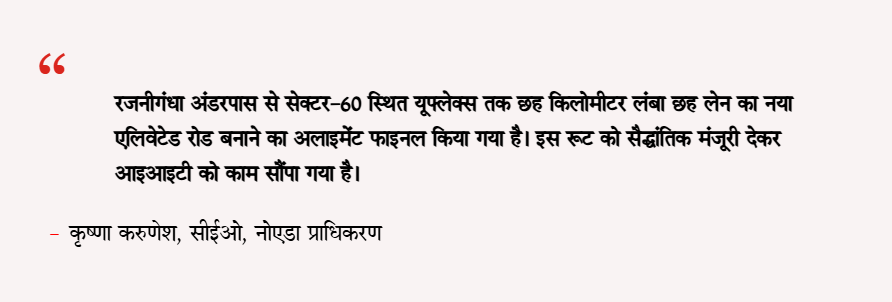
- Route: Rajnigandha Underpass to Sector 60 (Uplex)
- Length: Approximately 6 km
- Design: 6-lane, fully elevated, signal-free corridor
- Estimated cost: ₹700 crore
- Current status: IIT Roorkee has been assigned to prepare the feasibility report and Detailed Project Report (DPR); construction has not yet begun
- Areas expected to benefit: DND, Sector 57, Sector 60, Sector 95, Greater Noida West, and nearby industrial areas
It’s worth noting this is still an early-stage announcement – the project has cleared the alignment approval stage, but the feasibility study and DPR are yet to be finalized before construction timelines can be confirmed.
Part of a Broader Push to Fix Noida’s Traffic Grid
This isn’t an isolated announcement. Reports describe it as set to become Noida’s third major elevated road, part of a wider strategy by the Authority to keep pace with the city’s rapid residential, commercial, and industrial growth. A core objective is decongesting Master Plan Road-1 – one of Noida’s most heavily used arterial roads – which currently absorbs a large share of the traffic moving between the DND route, the city’s residential sectors, and its industrial belt.
Noida has, over the years, built a reputation as one of the more infrastructure-forward cities in the NCR, with a growing network of elevated roads and underpasses designed specifically to keep vehicles moving without signal stops. This project extends that pattern to one of the busiest – and, until now, least signal-free – corridors in the city.
The Engineering Challenge at Rajnigandha Chowk
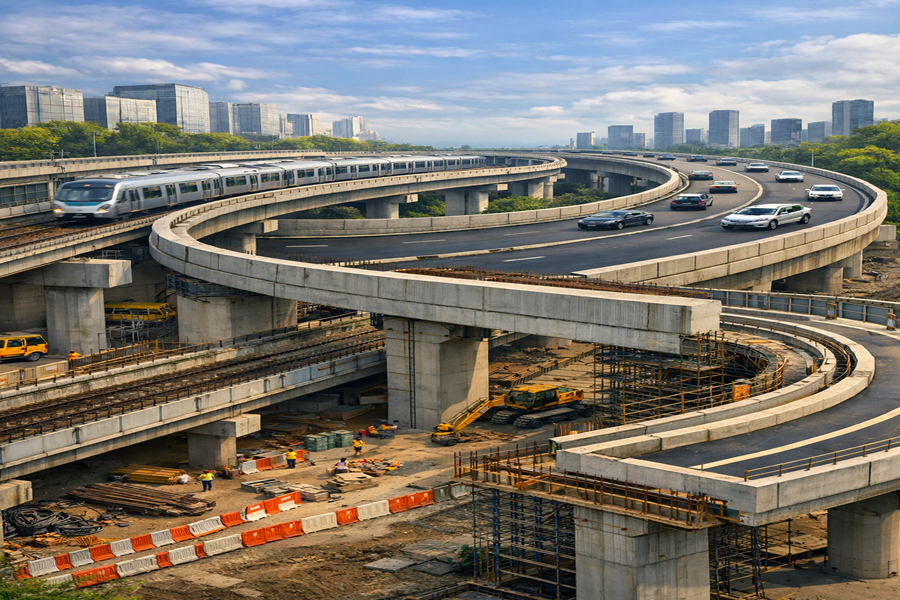
One detail that makes this project more complex than a typical elevated road is its proximity to existing metro infrastructure near Rajnigandha Chowk. Engineers and planners are reportedly evaluating multiple design options – including building the corridor in sections and adding loops or connecting ramps – to route the elevated structure around the metro line without disrupting it. This is part of why the feasibility study assigned to IIT Roorkee matters: the final alignment and construction sequencing will need to account for this constraint before a firm DPR and timeline can be issued.
Why This Stretch Needed Fixing
Anyone who commutes along the Rajnigandha–Sector 60 corridor during peak hours knows the drill: bumper-to-bumper traffic, multiple signal stops, and a trip that can easily stretch well beyond what the distance should take. This corridor connects some of Noida’s busiest residential and industrial pockets to the DND route into Delhi, which means thousands of vehicles pass through it every single day. As more residential towers, office parks, and industrial units come up along this stretch, the existing at-grade road network has struggled to keep pace with the added load.
An elevated, signal-free design addresses the core problem directly – by removing at-grade intersections and traffic lights altogether, vehicles can move continuously instead of stopping and restarting at every junction, which is typically where most of the time (and fuel) gets lost on urban roads like this one.
What This Means for Commuters
Once complete, the corridor is expected to significantly cut travel time along this stretch, turning what is currently a slow, stop-start drive into a much faster, uninterrupted one. Beyond time savings, a signal-free elevated route also tends to reduce fuel consumption, driver fatigue, and the general unpredictability that comes with heavy at-grade traffic – a meaningful quality-of-life upgrade for anyone commuting between Noida’s residential sectors, its industrial belt, and Delhi. Continuous traffic flow also generally translates to lower vehicle emissions per trip compared to stop-and-go conditions, an added benefit for a city that has been actively investing in greener urban planning.
What This Means for Homebuyers and Investors
For prospective buyers and investors tracking the Noida/Greater Noida market, infrastructure announcements like this one are worth watching closely – and here’s why:
Connectivity is a long-term value driver. Areas that gain direct, signal-free access to major routes typically see stronger demand over time, simply because reduced commute time is one of the top factors homebuyers weigh when choosing a locality. Sectors along this corridor – including those near Sector 57, Sector 60, and Greater Noida West – stand to benefit from improved access to Delhi via DND.
Which sectors are best positioned. Sector 60, home to established residential pockets like Uplex, sits at one end of the proposed corridor and would gain a more direct, faster route toward Delhi. Sector 57 and Sector 95, both mixed residential-commercial zones, are also named as beneficiaries, while Greater Noida West – already one of the fastest-growing residential corridors in the region – would gain an additional, less congested link back toward central Noida and Delhi.
There’s precedent for this kind of connectivity-led growth. Noida’s own Noida–Greater Noida Expressway corridor is a useful reference point: the area around this expressway has, over time, emerged as a major growth corridor, drawing significant residential development and investor interest largely on the back of the connectivity it provides. A well-executed signal-free link between Rajnigandha and Sector 60 could plausibly follow a similar trajectory, though on a smaller geographic scale.
Timing matters, but patience matters more. It’s important to set realistic expectations: this project is still at the feasibility/DPR stage, not under construction. Historically, infrastructure-linked property appreciation tends to build gradually – often starting with early interest once a project receives formal approval, and strengthening further as construction progresses and completion nears. Buyers evaluating property in these sectors should treat this as a positive long-term signal rather than an immediate catalyst.
Industrial and commercial spillover. Because the corridor also serves Noida’s industrial areas, improved connectivity here can support demand not just for residential property, but for commercial and mixed-use developments along the route as well.
How This Fits Into Noida’s Broader Infrastructure Push
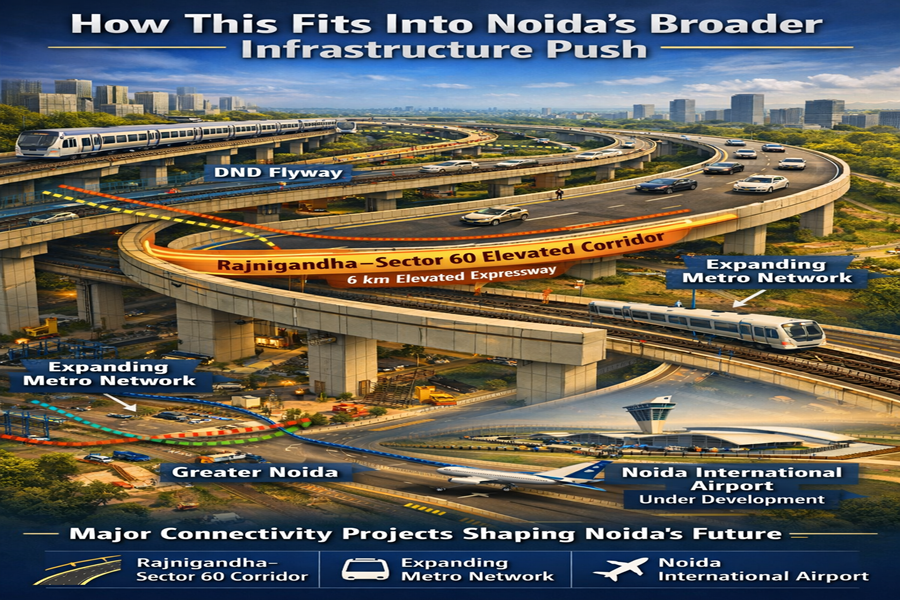
The Rajnigandha–Sector 60 corridor is arriving at a time when Noida and Greater Noida are pursuing several large connectivity projects in parallel – including ongoing metro network expansions and the developing Noida International Airport in the wider region. None of these projects move in isolation from a real estate standpoint: each incremental improvement in connectivity tends to reinforce demand in the sectors it touches, and buyers increasingly evaluate properties not just on their immediate surroundings but on how well-connected the broader corridor is likely to become over the next several years.
Express Builders’ Perspective
At Express Builders, we track infrastructure developments like this closely because they directly shape where the next wave of demand in Noida and Greater Noida is likely to emerge. As more clarity comes through on the DPR and construction timeline, we’ll continue to share updates on how this corridor could influence property decisions in the area.
The Bottom Line is..
The proposed Rajnigandha–Sector 60 elevated corridor is one of the more significant infrastructure announcements for Noida this year – a ₹700 crore, 6-lane, signal-free route with the potential to reshape commute patterns across several sectors, while also feeding into the city’s broader ambition to become one of the most well-connected urban centers in the NCR. While it’s still early days, and the engineering challenges around Rajnigandha Chowk’s metro infrastructure will need careful resolution, it’s a project worth watching for anyone with an eye on Noida’s real estate landscape.
Frequently Asked Questions
Has construction started on the Rajnigandha–Sector 60 elevated road?
Not yet. The project currently has in-principle approval for its alignment. IIT Roorkee is preparing the feasibility report and DPR, after which construction timelines will be finalized.
Which areas will benefit most from this project?
Sectors along the corridor – including Sector 57, Sector 60, Sector 95, and parts of Greater Noida West along with the DND route and nearby industrial areas, are expected to see improved connectivity.
Why is a signal-free design significant?
Removing traffic signals along a route allows continuous vehicle movement instead of repeated stopping and starting, which is typically the biggest contributor to travel-time loss on congested urban stretches.
What makes this project more complex to build than a typical elevated road?
Its proximity to existing metro infrastructure near Rajnigandha Chowk means planners have to design around the metro line, potentially building the corridor in sections with additional loops or connecting ramps – a factor the ongoing feasibility study is expected to address.
Is this Noida’s first elevated road project?
No. Reports indicate this will be Noida’s third major elevated road, reflecting the city’s broader, ongoing push to reduce at-grade traffic congestion across its busiest corridors.
Should I factor this into a property investment decision right now?
It’s a positive long-term connectivity signal, but since the project is still pre-construction, it’s worth treating it as one factor among several rather than the sole basis for a decision and to keep an eye on DPR and construction updates as they come.
Looking to explore residential options in well-connected Noida sectors? Get in touch with Express Builders to learn more about our current projects and upcoming launches in the region.
