
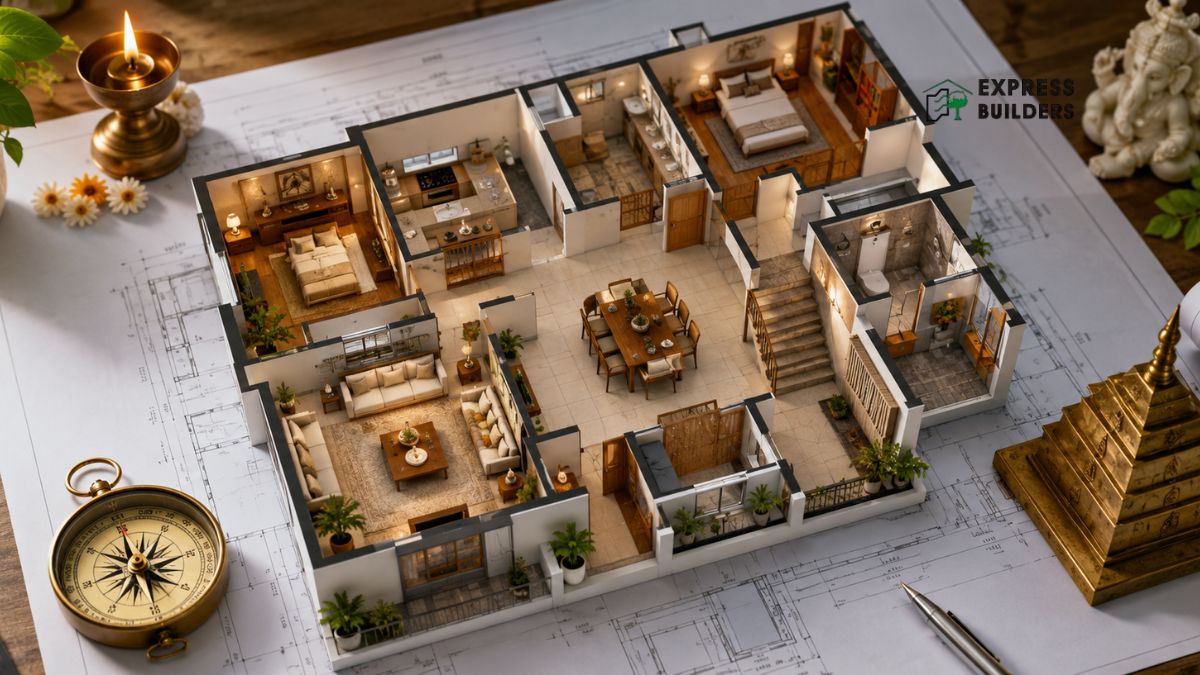
Building a home is one of the biggest decisions of your life. You want your home to radiate positivity, peace, and prosperity. That is exactly what Vastu for house plan aims to deliver. Vastu Shastra is an ancient Indian science of architecture. It aligns your living space with natural energies. When you apply Vastu principles to your house plan, you invite harmony into every corner. Read on and plan your dream home the right way.
What Is Vastu Shastra?
Vastu Shastra literally means the science of architecture. It dates back thousands of years to ancient Vedic texts. The system studies how space, direction, and nature interact. It focuses on five core elements: Earth, Water, Fire, Air, and Space. Each element governs a specific direction and function. When these elements stay balanced, your home supports good health and wealth. A well-designed Vastu for house plan taps into this natural balance.
Why Does Vastu for House Plan Matter?
Modern homes often overlook ancient wisdom. Yet, Vastu principles remain highly relevant today. Here is why they matter for your house plan:
- Balanced Vastu improves mental peace and reduces stress.
- Correct room placement promotes better sleep and productivity.
- Proper directional alignment enhances financial stability.
- Good Vastu supports physical health and emotional well-being.
- A Vastu-compliant plan increases the resale value of your property.
Ignoring Vastu during planning is far more costly than correcting it later. Plan smart from the very beginning.
The Eight Directions and Their Significance
Vastu divides space into eight primary directions. Each direction carries a unique energy. Understanding them is the first step to a great house plan.
| Direction | Governing Element / Deity | Best Used For |
| North | Water / Kuber (Wealth) | Living room, treasury, study |
| North-East | Water / Ishaan (Spirituality) | Prayer room, open space |
| East | Air / Indra (Power) | Main door, balcony |
| South-East | Fire / Agni | Kitchen, electrical appliances |
| South | Earth / Yama | Master bedroom, storage |
| South-West | Earth / Nirrti | Master bedroom, heavy storage |
| West | Water / Varuna | Children’s room, dining area |
| North-West | Air / Vayu | Guest room, garage |
Vastu Tips for the Main Entrance
The main entrance is the gateway to energy. It plays the most critical role in your Vastu for house plan. Follow these essential tips:
- Face the main door toward the North, East, or North-East direction.
- Keep the entrance well-lit and clutter-free at all times.
- Place a nameplate outside the main door for positive identification.
- Avoid placing a mirror directly opposite the main entrance.
- Use a threshold (doorstep) to symbolically protect the home.
- Ensure the door opens inward and swings clockwise.
A strong entrance sets the tone for the entire home. Get this right in your initial house plan itself.
Living Room Vastu Guidelines
The living room is the social heart of your home. Plan it carefully to attract positivity and good conversations.
- Position the living room in the North, East, or North-East zone.
- Place heavy furniture like sofas in the West or South-West area.
- Keep the centre of the room open and free of heavy objects.
- Face the television toward the South-East corner of the room.
- Use light and soothing colours like cream, white, or light yellow.
- Avoid placing a fish tank or water feature in the South zone.
Bedroom Vastu for a Peaceful Sleep
Sleep quality directly affects your health and mood. Vastu for the bedroom creates a restful sanctuary.
Master Bedroom
- Place the master bedroom in the South-West corner of the house.
- Sleep with your head pointing South or East for deep rest.
- Avoid placing mirrors directly in front of the bed.
- Use earthy tones like beige, brown, or peach for bedroom walls.
Children’s Bedroom
- Position children’s rooms in the West or North-West direction.
- Face the study desk toward the East or North for better focus.
- Avoid dark and heavy colours on the walls of children’s rooms.
Kitchen Vastu: Cooking with Good Energy
The kitchen represents the fire element in Vastu. Placing it correctly energises your entire home.
- Build the kitchen in the South-East corner of the house.
- Face the cook toward the East while cooking.
- Keep the gas stove away from the sink to avoid fire-water conflict.
- Store grains and food in the South-West for abundance.
- Avoid building a kitchen directly below or above a prayer room.
- Use bright colours like yellow, orange, or red in the kitchen.
Bathroom and Toilet Vastu
Bathrooms often create Vastu challenges. Plan them wisely to avoid negative energy.
- Place bathrooms in the North-West or West zone of the home.
- Never build a toilet in the North-East corner of the house.
- Keep bathroom doors closed at all times to contain negative energy.
- Ensure proper ventilation and natural light in bathrooms.
- Use light colours like white, light blue, or pastel green.
Prayer Room Vastu
The prayer room is the most sacred space in your home. Treat it with extra care in your house plan.
- Build the prayer room in the North-East corner of the house.
- Face the idols or images toward the East or West wall.
- Keep the room clean, bright, and filled with positive energy.
- Avoid placing the prayer room adjacent to a toilet.
- Use white, yellow, or light blue colours for this space.
Staircase Vastu Tips
A staircase connects the floors of your home. Its placement affects the energy flow significantly.
- Build staircases in the South, West, or South-West zone.
- Always design stairs to go clockwise from bottom to top.
- Avoid a staircase in the centre or North-East of the home.
- Keep the area under the staircase clean and well-organised.
- Never place a bathroom or kitchen directly under the stairs.
Vastu for Plot Shape and House Orientation
The shape of your plot greatly influences your Vastu for house plan. Choose wisely before buying land.
- Square or rectangular plots are the most auspicious shapes.
- Avoid plots with irregular, T-shaped, or L-shaped boundaries.
- Ensure the plot slopes gently from South to North or West to East.
- Keep the North and East sides of the plot open and light.
- Avoid heavy construction in the North-East corner of the plot.
Common Vastu Mistakes to Avoid
Many homeowners unknowingly make Vastu errors during planning. Avoid these common mistakes:
- Placing the kitchen in the North-East zone.
- Building a toilet in the North-East corner.
- Blocking the North and East sides with heavy construction.
- Using dark and heavy colours in the North-East area.
- Positioning the main door facing South without proper remedies.
- Constructing an overhead water tank in the North-East corner.
Applying Vastu in Modern Home Designs
Modern architecture and Vastu principles work together very effectively. You can honour traditional wisdom without compromising design. Architects today integrate Vastu at the planning stage itself. They align rooms, windows, and doors to natural directions. Open floor plans still follow directional zoning with ease. Even apartments can adopt Vastu principles in interior layouts. Talk to your architect early about Vastu for house plan integration.
Quick Vastu Reference: Ideal Room Placement
| Room / Feature | Ideal Direction |
| Main Entrance | North, East, or North-East |
| Living Room | North, East, or North-East |
| Master Bedroom | South-West |
| Children’s Bedroom | West or North-West |
| Kitchen | South-East |
| Bathroom / Toilet | North-West or West |
| Prayer Room | North-East |
| Study Room | West or North-West |
| Staircase | South, West, or South-West |
| Garage | North-West or South-East |
Frequently Asked Questions
1. Can Vastu principles apply to apartments and flats?
Yes, Vastu principles absolutely apply to apartments and flats. You may not control the entire building orientation. However, you can align interior elements like furniture, kitchen, and bedroom direction. Place your prayer corner in the North-East. Position the bed with the head toward South or East. Use Vastu-friendly colours in each room. Even small corrections create significant positive changes.
2. What is the most important direction in Vastu for house plan?
The North-East direction holds the highest importance in Vastu. Vastu experts call it the Ishaan corner. This zone governs spiritual energy, clarity, and prosperity. Keep it light, open, and clutter-free at all times. Never place a toilet, kitchen, or heavy storage in this area. Natural light and open space in the North-East attract positive energy throughout the home.
3. Does the shape of the plot affect Vastu for a house plan?
Yes, plot shape plays a major role in Vastu. Square and rectangular plots are the most auspicious choices. They support balanced energy distribution across the home. Irregular or odd-shaped plots create energy imbalances. If you already own an irregular plot, a Vastu expert can suggest remedies. Proper landscaping and boundary walls often correct minor irregularities effectively.
4. How does Vastu affect health and relationships at home?
Vastu directly impacts the physical and emotional health of residents. A bedroom in the South-West promotes stable relationships and deep sleep. A kitchen in the South-East supports the health of the cook. The North-East prayer room builds mental peace and spiritual clarity. Poor Vastu alignment creates stress, conflict, and health issues over time. Correcting room placement dramatically improves the overall atmosphere at home.
Final Words
Vastu for house plan is not just a tradition. It is a science that connects your living space to natural energy. Every room placement, every door direction, and every colour choice matters. When you plan your home with Vastu, you create a space that nurtures health, wealth, and happiness. Start your house plan on the right foot. Apply these principles from day one. Your home will thank you for generations to come.
Ready to build your Vastu-compliant dream home?
Express Builder designs every home with expert Vastu integration, ensuring prosperity, peace, and perfect energy flow. Let our architects bring your vision to life. Call us today to get started. Book a FREE Site Visit and experience the difference firsthand!
