
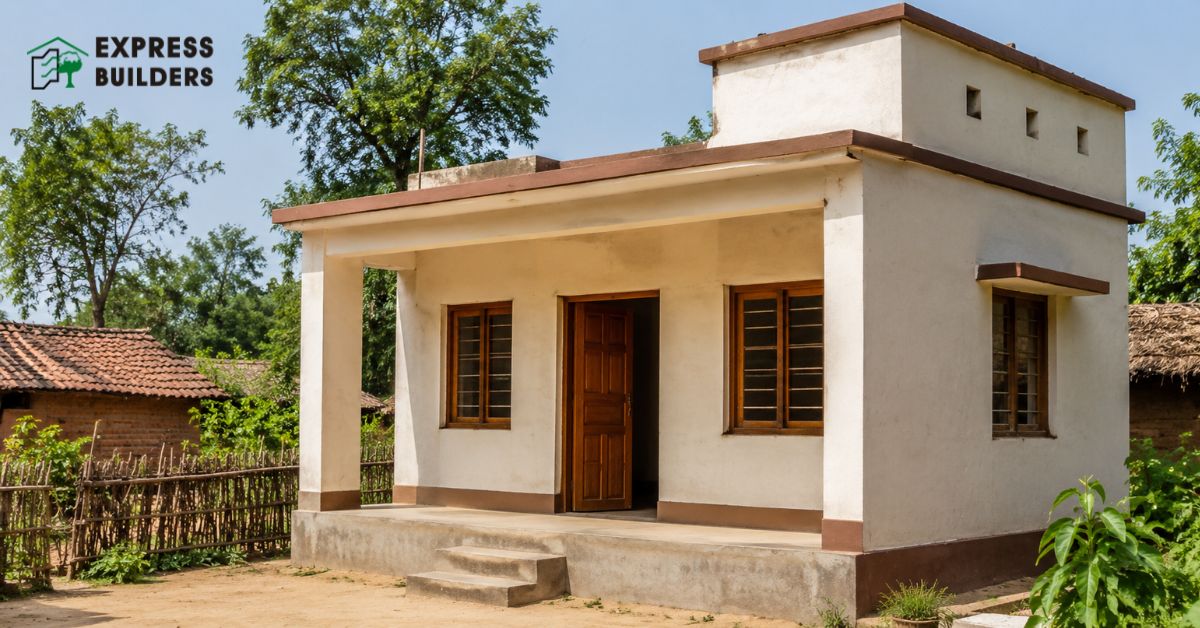
Good news has reached rural Uttar Pradesh. The central government has cleared more than six lakh new pucca houses for poor families living in villages across the state. This approval brings permanent homes closer for thousands of families who have waited years for a solid roof over their heads. The decision was announced directly in Lucknow, where the Union Agriculture and Rural Development Minister handed over the sanction letters to the Chief Minister in person. It marks one of the biggest rural housing approvals the state has received in recent times.
The Big Announcement
The Centre has sanctioned 6,18,482 houses for rural Uttar Pradesh. These homes fall under the new phase of a national rural housing scheme that runs from 2024-25 to 2028-29. Under this phase, the government plans to build two crore additional pucca houses across the entire country. Uttar Pradesh alone will receive over six lakh of these units. That single allocation opens the door to permanent housing for lakhs of poor rural families over the coming years.
The minister made the announcement during an official visit. He stressed that the survey of rural households across the state is already complete. Officials have identified eligible families who currently live in kutcha houses, meaning homes built from mud, thatch, or other weak materials. These families now move into the next stage, where priority housing gets allocated under the scheme.
Why This Number Matters
Six lakh houses might sound like a routine government figure. It is not. Each house represents a family that will finally get walls that do not crumble during monsoon season. It represents children who will study indoors without worrying about leaking roofs. It represents older residents who will spend their final years in a safe structure rather than a temporary shelter.
Uttar Pradesh carries one of the largest rural populations in India. Housing shortages here affect more people than in most other states. A sanction of this scale, therefore, carries weight beyond the headline number. It signals that the rural housing backlog in the state is finally getting addressed at a faster pace.
Who Gets These Homes
Eligibility does not work on a first-come, first-served basis. The process follows a structured path. Authorities first run a household survey to map every family living in a kutcha house. This data then goes through verification. Local Gram Sabhas review and approve the list of beneficiaries. Geo-tagging follows, which confirms the exact location of each approved house.
This multi-step process exists for a reason. It reduces duplicate claims. It also ensures that genuinely poor families, rather than influential ones, receive the benefit. Families already identified through earlier rural housing surveys form the base of this new allocation. Officials say the goal is full inclusion, meaning no eligible family should get left out during execution.
Financial Support Behind Each House
Each approved family receives direct financial assistance to build their home. Beneficiaries in plain areas typically receive an amount large enough to construct a basic but durable structure. Families in hilly or remote regions receive a slightly higher amount, since construction costs run higher there. The funds reach beneficiaries directly through bank transfers, tied to construction milestones. This direct transfer model reduces leakages and keeps the process transparent.
Beyond the house itself, the scheme links several other welfare programs together. Approved families often also gain access to cooking gas connections, electricity hookups, clean drinking water, and toilet facilities. The intention is not just to build four walls and a roof. It is to deliver a complete, livable home.
A Piece of a Much Bigger Plan
This Uttar Pradesh approval fits inside a much larger national housing mission. The Centre aims to build two crore new rural houses across India under the current phase of the scheme. Since the program first launched in 2016, it has already delivered tens of millions of homes nationwide. Uttar Pradesh has consistently ranked among the states receiving the largest allocations, given its population size and housing demand.
The minister also pointed out that this state contributes heavily to national wheat output, alongside playing a major role in rural housing delivery. Linking agricultural support and housing support in the same visit was no coincidence. Both issues sit at the center of rural welfare policy right now.
The Challenges That Remain
Approval on paper is only the first step. Execution determines whether families actually benefit. Several practical hurdles could slow things down. Land ownership remains a major concern in many villages. Numerous poor families lack clear documentation for the land they live on, which can delay or block their application even after they get identified as eligible.
Timely fund disbursement is another factor. Construction often stalls when payments arrive late or get tied up in bureaucratic delays. Quality control matters just as much as speed. A house built quickly but poorly defeats the entire purpose of the scheme. Local authorities will need strong monitoring systems to track construction stage by stage and catch problems early.
Public response to the announcement reflects this mix of hope and caution. Many welcomed the move as a solid step forward. Others pointed out that six lakh houses, while significant, still represents a fraction of the total need in a state this large. The real test, as several observers noted, lies in how smoothly the implementation goes on the ground.
What Happens Next
District-level officials will now begin the rollout process. They will finalize beneficiary lists, confirm geo-tagged locations, and start releasing construction funds in phases. The state government has assured full cooperation with central authorities to keep the process on track. Officials have also promised regular monitoring to prevent delays and address grievances quickly.
For now, the approval itself stands as a meaningful milestone. Over six lakh families have a concrete reason to expect a permanent home in the near future. Whether that promise turns into bricks and mortar on time will depend on how well the next phase gets managed. Rural Uttar Pradesh will be watching closely, and so should anyone tracking how housing policy translates into real change on the ground.
Want to stay updated on housing schemes, eligibility rules and rural development news that affects your family? Keep following trusted local updates and check your village panchayat office for survey status. Acting early on documentation can save months of delay once construction funds start moving. Contact us if you are planning to buy a property in NCR.
Frequently Asked Questions:
How many houses are there in PM Awas Yojana?
Under the Pradhan Mantri Awas Yojana (PMAY), over 5 crore houses have been sanctioned across rural and urban India. This includes about 3.86 crore rural houses sanctioned under PMAY-Gramin and over 1.27 crore urban houses under PMAY-Urban and PMAY-Urban 2.0.
Can we apply for PMAY in 2026?
Yes. You can apply for PMAY in 2026, provided you meet the eligibility criteria. PMAY-Urban 2.0 is currently active and will continue until 2029, with online applications open for eligible beneficiaries. Applicants must satisfy the income and ownership conditions specified under the scheme.
