
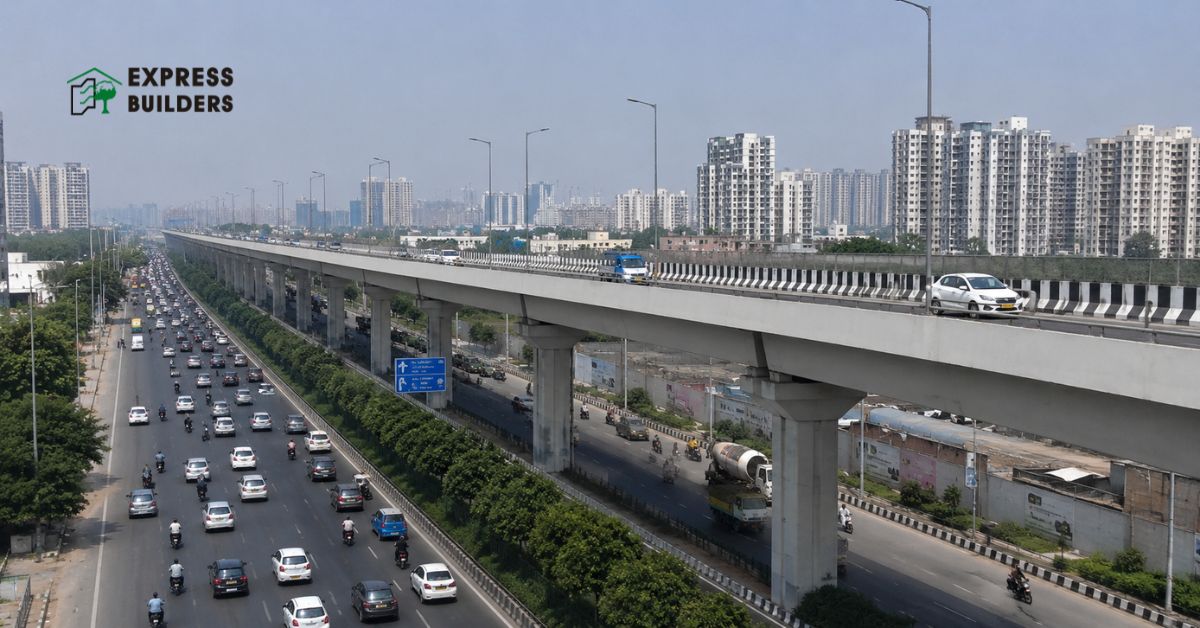
Gurugram traffic has tested everyone’s patience for years. Anyone who drives along the Southern Peripheral Road during peak hours knows the drill. Bumper to bumper. Signal after signal. A 15-minute drive can stretch into an hour without warning.
There’s finally some good news for commuters in this part of the city. The local development authority has restarted work on a long-pending elevated corridor project. After years of delays, the plan is moving forward again, and this time it looks more concrete than before.
Let’s break down what’s happening, why it matters, and what residents can expect in the coming months.
What Exactly Is Happening
The Gurugram Metropolitan Development Authority has kicked off a fresh Detailed Project Report for a major stretch of road. This stretch runs between Ghata Chowk and Vatika Chowk, covering roughly six kilometres. It sits along one of the busiest and fastest-growing corridors in the city.
This isn’t a brand-new idea. The project has been discussed since 2019. But it kept hitting roadblocks. Traffic projections changed over time. Plans had to account for upcoming metro connectivity. New infrastructure elements got added along the way. Each change meant another redesign, and another delay.
This new DPR exercise signals a genuine restart. A consultant will study the route, finalise the engineering details, and submit the report. Officials expect this process to wrap up within three months of the consultant’s appointment.
The Bigger Picture: A 12-Km Vision
This six-kilometre stretch is only part of a much larger plan. The full vision covers a 12-kilometre elevated road. It would run from Ghata Chowk all the way to National Highway-8, one of the most heavily used routes in the entire National Capital Region.
Once finished, drivers would get a signal-free run across this stretch. No more stopping at every junction. No more crawling through peak-hour jams. Just a smooth, elevated path connecting two critical points of the city.
Officials have compared the design approach to another major project in the region: the Dwarka Expressway. That project has already changed how people move through parts of NCR. Using a similar model here suggests the authority wants results that actually work, not just paperwork.
Why This Matters for Daily Commuters
Anyone who travels this route daily understands the stakes. The corridor cuts through one of Gurugram’s most rapidly developing zones. New residential towers keep coming up. Office spaces and retail hubs continue to expand. More people means more vehicles, and more vehicles mean more congestion.
An elevated road changes that equation. It separates through-traffic from local traffic. Commuters heading toward the highway won’t get stuck behind vehicles turning into local sectors. Travel times should drop noticeably once this is operational.
There’s also a safety angle. Pedestrian movement and local traffic often clash with high-speed vehicles on regular roads. Pushing fast through-traffic onto an elevated structure reduces that conflict. It makes the ground-level roads calmer and safer for everyone else.
More Than Just a Road
This project isn’t only about the elevated structure itself. The plan includes upgrades to supporting infrastructure too. Think service roads running alongside the corridor. Improved drainage systems to handle monsoon flooding, which has long been a problem in this region. Better pedestrian pathways for people who aren’t in cars at all.
These details matter as much as the elevated road. A flyover that floods every monsoon, or one without proper service roads, doesn’t actually solve traffic problems. It often creates new ones. Including these elements in the current plan suggests a more complete approach this time around.
What’s Next on the Timeline
The process now moves into a fairly standard sequence. The appointed consultant studies the corridor and prepares the DPR. This report goes through review and approval. Once cleared, the authority will float tenders for actual construction work.
Three months is the target for the DPR stage alone. Construction timelines typically extend well beyond that, especially for elevated structures of this scale. Patience will still be required. But having a fresh DPR process underway is a meaningful step after years of stalled progress.
A Catalyst for Growth Along the Corridor
Infrastructure and real estate growth tend to move together. Areas with strong road connectivity usually see faster development. Southern Gurugram has already attracted residential projects, office spaces, and mixed-use developments over the past several years.
Better mobility along this corridor could accelerate that trend further. Easier access often draws more buyers, more businesses and more investment. It’s a pattern that has played out in several other parts of the National Capital Region whenever major connectivity projects reach completion.
For residents already living along this stretch, the benefit is more immediate. Shorter commutes. Less time stuck in traffic. More predictable travel, whether heading to work, school, or the airport via the highway network.
The Bottom Line
Gurugram has seen plenty of infrastructure promises that never fully materialised. This project has its own history of delays and redesigns since 2019. That track record makes a degree of caution reasonable.
Still, this restart has a clearer scope than earlier attempts. A defined route. A reference model that has worked elsewhere. A timeline for the next stage. These are concrete signs of progress, not just announcements.
For now, commuters along Southern Peripheral Road can hold onto cautious optimism. The plan is moving again. The next few months, as the DPR takes shape, will reveal just how solid this progress really is.
Planning a move along Southern Peripheral Road? Better connectivity is finally on the way and now is the right time to explore your options. Contact us now and compare locations, check upcoming infrastructure, and make an informed decision before prices catch up with the progress.
Frequently Asked Question:
What is the SPR road in Gurgaon?
SPR Road (Southern Peripheral Road) is a major corridor in Gurgaon connecting Golf Course Extension Road to Delhi–Jaipur Expressway (NH-48). It improves connectivity between key residential and commercial hubs, reduces travel time, and has become a prime location for real estate development and investment.
What does elevated corridor mean?
An elevated corridor is a road or highway built above ground level on pillars or supports. It allows traffic to bypass congestion, reduces travel time, improves connectivity, and minimizes intersections with local roads, making travel faster and more efficient.
