
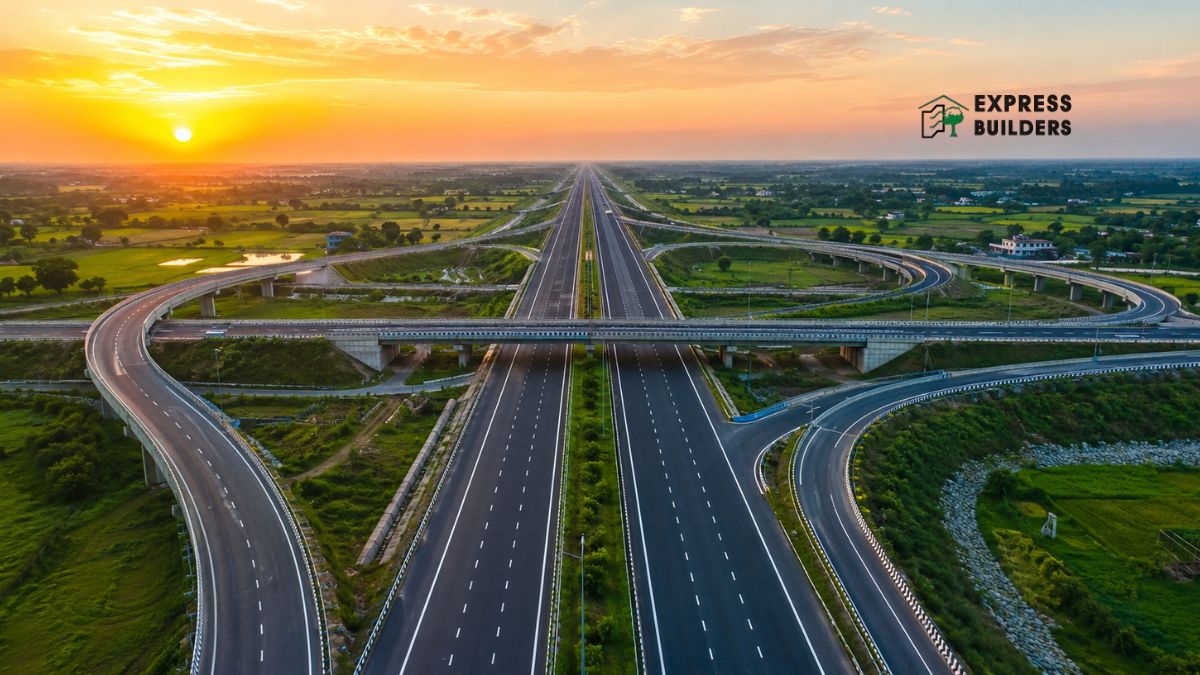
Uttar Pradesh has a new flagship expressway that is changing how the state connects. The Ganga Expressway is now open for public use. Prime Minister Narendra Modi inaugurated it on 29 April 2026 at Hardoi, Uttar Pradesh. This massive infrastructure project marks a turning point for mobility across central and eastern UP. Millions of commuters, businesses, and travellers will benefit from this corridor. If you want complete Ganga Expressway map route details, this guide covers everything in one place.
What Is the Ganga Expressway?
The Ganga Expressway is the longest expressway in Uttar Pradesh. It is a 6-lane greenfield expressway that is expandable to 8 lanes. The total length of the Ganga Expressway is 594 kilometres in Phase 1. The expressway runs broadly parallel to the sacred Ganga river. It passes through 12 districts and connects millions of people to faster and safer travel. UPEIDA, the Uttar Pradesh Expressways Industrial Development Authority, manages the project.
The project is being developed in two phases. Phase 1 connects Meerut with Prayagraj. Phase 2 will extend 110 km towards Tigri and 314 km towards Ballia near Varanasi. The expressway serves as far more than a road. It acts as a catalyst for industrial growth, real estate development, and regional transformation.
Ganga Expressway Map Route: Start Point to End Point
The Ganga Expressway starts near Meerut’s Bijauli village and ends at Prayagraj’s Judapur Dandu village. The western end connects to NH 334 in Bijauli village in Meerut district. The eastern end connects to NH 19 in Judapur Dandu village in Prayagraj district.
The expressway runs west to east across Uttar Pradesh. It covers a straight-line corridor of 594 kilometres. The route broadly follows the course of the river Ganga. This geographic alignment gives the expressway its name and its significance.
Districts Covered Along the Route
Understanding the Ganga Expressway map requires knowing which districts the route passes through. The expressway traverses 12 districts: Meerut, Bulandshahr, Hapur, Amroha, Badaun, Sambhal, Shahjahanpur, Hardoi, Unnao, Rae Bareli, Pratapgarh, and Prayagraj.
The expressway passes through 519 villages of Uttar Pradesh. Hardoi holds a special distinction along this route. Hardoi has the expressway’s longest continuous district stretch at 99.5 kilometres. PM Modi also inaugurated the expressway from Hardoi on 29 April 2026.
Each district along the route now has direct access to a high-speed corridor. This access will reshape commerce, agriculture, and real estate in each of these regions. The 12 districts collectively cover a vast population and economic base.
Key Interchanges and Entry/Exit Points
The expressway offers multiple access points across its length. The corridor features two main toll plazas and 19 entry and exit points across the 12 districts of Uttar Pradesh.
Major interchanges exist at Meerut, Hapur, Bulandshahr/Khurja, Amroha, Sambhal, Badaun, Shahjahanpur, Hardoi, Unnao, Rae Bareli, Pratapgarh, and Prayagraj. These interchange points allow smooth traffic flow at every major district. Each interchange connects the expressway to local state highways and national highways.
From Delhi, you can take the Delhi–Meerut Expressway toward Meerut. The Ganga Expressway is accessible via interchange near Bulandshahr for Delhi/Noida-side travellers. You can also enter from the Bijauli interchange in Meerut.
Noida-based travellers can use the Eastern Peripheral Expressway to reach the Delhi–Meerut Expressway. From there, the Ganga Expressway is easily accessible.
Infrastructure Highlights Along the Ganga Expressway Map Route
The Ganga Expressway is not just a strip of concrete. It packs significant infrastructure across its length.
The expressway features a 12-lane Ganga Bridge that is 960 metres long. This bridge stands on 16 pillars and connects both banks of the river.
The route features nine public convenience centres, 381 underpasses, 14 major bridges, and 126 minor bridges. There are also 28 flyovers and eight diamond interchanges.
A unique 3.5 km emergency airstrip was constructed near Shahjahanpur for Indian Air Force operations. It was successfully tested in May 2025 with multiple aircraft including Su-30MKI, Mirage 2000, MiG-29, and Jaguar fighters. This airstrip makes the expressway strategically significant for national defence.
Service roads of 3.75 metres wide run alongside the expressway for local village traffic. Nine amenity complexes offer food courts and rest facilities for travellers.
Ganga Expressway Map Route: Travel Time, Before and After
The biggest benefit of the Ganga Expressway is the massive reduction in travel time.
The expressway connects Meerut to Prayagraj and cuts travel time from 12 to 13 hours to approximately 6 to 7 hours. Delhi to Prayagraj now takes around 7 to 8 hours. Delhi to Varanasi via this route takes approximately 8 to 9 hours.
The maximum permissible speed on the expressway is 120 km/h for cars. This speed enables faster travel and also delivers 30 to 40 percent fuel savings due to smooth traffic flow.
The fastest road route from Delhi to Varanasi in 2026 is: Delhi, then Delhi–Meerut Expressway, then Ganga Expressway from Meerut to Prayagraj, then NH-19 and Purvanchal Expressway from Prayagraj to Varanasi. This multi-expressway corridor is now one of India’s most efficient inter-city road links.
Toll Rates on the Ganga Expressway
Knowing the toll structure helps you plan your journey better. The toll for a private car on the full 594-kilometre journey is approximately Rs 1,515. The rate works out to Rs 2.55 per kilometre.
The proposed rates are Rs 2.55 per km for cars. Light commercial vehicles pay Rs 4.05 per km. Buses and trucks pay Rs 8.15 per km. Heavy construction machinery pays Rs 12.55 per km. Oversized vehicles pay Rs 16.05 per km.
FASTag is mandatory on the expressway. UPI, credit cards, and debit cards are accepted at all main toll plazas. The two main toll plazas are located at Meerut and Prayagraj. Ramp toll plazas charge separately for partial trips.
Phase 2 Expansion Plans
Phase 1 covers Meerut to Prayagraj, but Phase 2 adds enormous reach to the corridor.
Spur 2 is the Prayagraj–Ballia Expressway, a 314-kilometre eastern extension from Prayagraj toward Ballia near the Bihar border. This extension passes near Varanasi. This is the segment most relevant to Delhi-to-Varanasi travellers.
A further connector called the Ganga-Yamuna Expressway, running 74.3 km from Bulandshahr to Noida, is also planned. This spur will link the Ganga Expressway directly to the Yamuna Expressway and the upcoming Noida International Airport.
When Phase 2 is fully complete, the corridor will create a continuous high-speed connection from Haridwar in the west to Ballia near the Bihar border in the east. This entire span will cover over 1,000 kilometres. That would make it one of the longest expressway corridors in Asia.
Economic and Real Estate Impact
The Ganga Expressway is doing more than cutting travel time. It is reshaping economic geography across UP.
The expressway has already attracted investment proposals worth Rs 46,660 crore. As part of this plan, 12 industrial nodes have been developed across the 12 districts along the route.
Industrial clusters, warehousing hubs, and logistics parks are now taking shape along the corridor. Districts like Shahjahanpur, Hardoi, and Unnao are witnessing fresh attention from investors. Land values near interchange points have already begun rising.
The planned Ganga-Yamuna Expressway spur will bring this benefit closer to the Delhi-NCR region as well. Areas in the western UP stretch near Meerut and Bulandshahr have seen strong interest from buyers and developers alike.
Why This Expressway Matters for NCR Home Buyers
The Ganga Expressway connects the dots between western UP and the rest of the state. For home buyers in Ghaziabad, Noida, and Greater Noida, this corridor adds to the region’s long-term value. The planned Ganga-Yamuna spur will directly link NCR to the Ganga Expressway. That connection will make the entire belt more accessible and more desirable.
Infrastructure of this scale signals long-term government commitment to UP’s development. Buyers who invest in well-located NCR properties today stand to benefit from this expanding network.
Express Builder brings you Express One in Vasundhara, Ghaziabad, a thoughtfully designed residential project in one of NCR’s best-connected micro-markets. Benefit from growing infrastructure like the Ganga Expressway corridor. Book a site visit today and explore your dream home at Express One. Visit expressbuilder.in to schedule your appointment now.
Frequently Asked Questions
Q1. What is the total length of the Ganga Expressway?
The Ganga Expressway covers 594 kilometres in Phase 1. It connects Meerut in western Uttar Pradesh to Prayagraj in eastern Uttar Pradesh. The expressway is a 6-lane greenfield corridor expandable to 8 lanes. Phase 2 will extend the route toward Haridwar in the west and Ballia near the Bihar border in the east. The full corridor will eventually span over 1,000 kilometres.
Q2. Which districts does the Ganga Expressway pass through?
The Ganga Expressway passes through 12 districts of Uttar Pradesh. These are Meerut, Hapur, Bulandshahr, Amroha, Sambhal, Badaun, Shahjahanpur, Hardoi, Unnao, Rae Bareli, Pratapgarh, and Prayagraj. The expressway also connects to 519 villages along this route. Each district has at least one interchange or entry-exit point for smooth access.
Q3. What is the toll rate on the Ganga Expressway for a car?
The toll rate for private cars on the Ganga Expressway is approximately Rs 2.55 per kilometre. A full one-way trip from Meerut to Prayagraj costs around Rs 1,515 for a car. FASTag is mandatory for all vehicles. You can also pay via UPI, credit card, or debit card at main toll plazas. Toll rates vary by vehicle category, with heavy vehicles paying a higher per-kilometre charge.
Q4. How does the Ganga Expressway connect to Delhi and Noida?
Travellers from Delhi can access the Ganga Expressway via the Delhi–Meerut Expressway and enter at Bijauli interchange in Meerut. They can also use the Bulandshahr interchange for a shorter route from the Delhi side. Noida-based travellers currently use the Eastern Peripheral Expressway to connect to the Delhi–Meerut Expressway. A planned 74.3 km Ganga-Yamuna Expressway spur from Bulandshahr to Noida will provide a direct link in the future.
